Introduction
Here’s what happens when French cheesemaking meets extreme conditions. Take abundant summer milk from mountain pastures, heat the curds to temperatures that would ruin softer cheeses, press them into wheels weighing as much as a small person, then age them for months, sometimes years, in carefully controlled cellars.
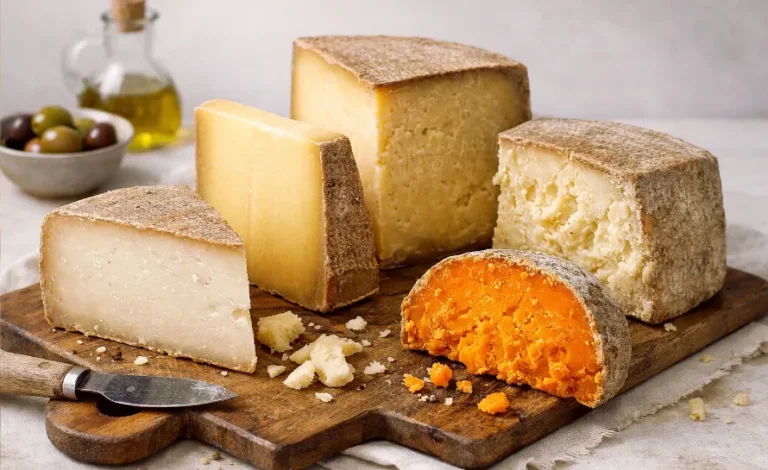
The result? Some of France’s most majestic hard cheeses. These are the great wheels that dominate fromagerie counters, the nutty, complex cheeses that grate beautifully over pasta, melt magnificently in fondues, and age so reliably they were once currency in Alpine valleys. From Comté’s subtle fruit-and-nut complexity to Beaufort’s distinctive concave edges to Emmental’s iconic holes, these are cheeses built for the long game.
Unlike their softer cousins, these cheeses don’t demand immediate consumption. They improve with patience, developing layers of flavour that reward careful aging. They’re the workhorses of French gastronomy, equally at home grated over soup, starring in a fondue, or commanding respect on a cheese board.
Whether you’re wondering about those massive wheels at the cheese shop, curious why Comté costs what it does, or ready to understand what separates truly excellent hard cheese from merely acceptable, this guide will enlighten you.
What are French pressed cooked cheeses?
In French, these are “fromages à pâte pressée cuite” pressed cooked paste cheeses. The name captures both defining characteristics: the curds are pressed to expel whey (like pressed uncooked varieties), but they’re also cooked, heated to temperatures above 50°C during production. This cooking step fundamentally distinguishes them from pressed uncooked cheeses.
The result is cheese with exceptionally low moisture content, typically 60-70% dry matter. This allows for extended aging (months to years rather than weeks to months) and creates the firm, sometimes granular texture these cheeses are known for. The cooking also eliminates potentially harmful bacteria, making these among the safest cheeses for vulnerable populations.
After cooking and pressing, these cheeses are typically formed into very large wheels, 40kg, 50kg, sometimes exceeding 110kg for Emmental. The massive size isn’t just tradition; it’s practical. Large wheels have low surface area relative to volume, which slows moisture loss and allows development of the complex flavours extended aging creates.
Explore Our Hard Cheeses Collection
This guide provides the foundation, but individual varieties deserve deeper exploration. We’ve created detailed articles covering specific types, each featuring five carefully selected varieties showcasing the category’s diversity. Discover more about hard cheeses:
- Coming soon!
The Defining Characteristics
What makes hard cheeses distinct?
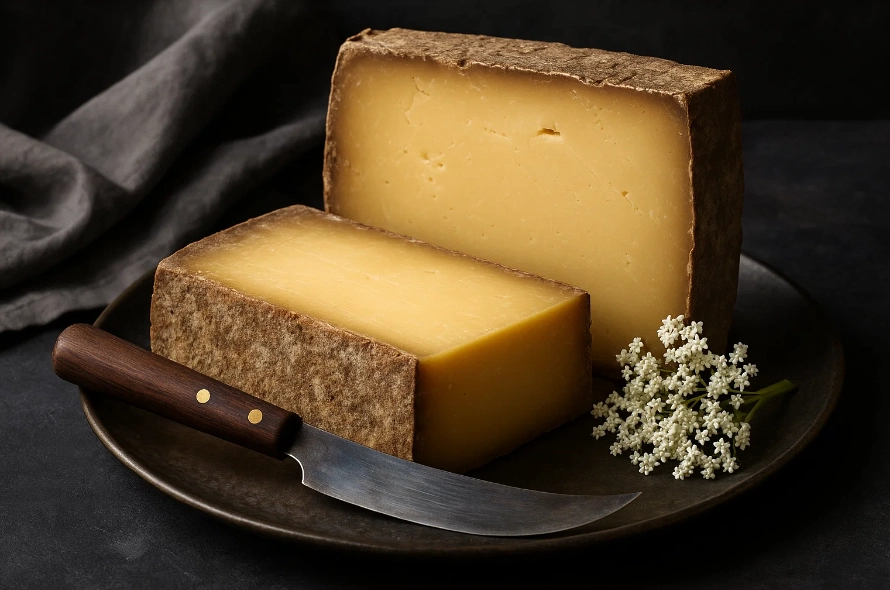
- Very hard, dense texture: Firm to the touch, slicing cleanly with smooth edges
- High-temperature cooking: Curds heated above 50°C, creating extremely low moisture
- Large format wheels: Most produced in 40-110kg wheels, though smaller formats exist
- Nutty, complex flavours: Extended aging develops layers of fruity, nutty, sometimes caramel notes
- Natural brushed rinds: Most have golden-brown rinds from months of careful tending
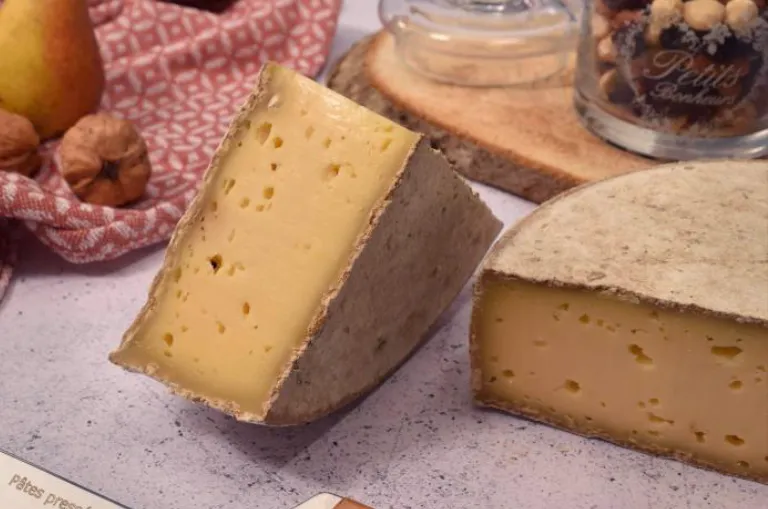
- Variable eyes: Some (Emmental) develop large holes; others (Comté, Beaufort) remain closed
- Excellent keeping qualities: The champions of cheese storage, lasting months unopened
These are cheeses defined by patience. The high-temperature cooking, heavy pressing, and extended aging create something fundamentally different from all other cheese categories, harder, denser, more complex, more stable.
How French Pressed Cooked Cheeses Are Made
The production follows precise traditional methods refined over centuries. Understanding the process illuminates why these cheeses cost more and taste different from their pressed uncooked cousins.
1. Milk collection and preparation
Production uses enormous quantities of milk, 450 litres or more per wheel of Comté. The milk must be impeccably fresh and often comes from specific breeds grazing mountain pastures. Many pressed cooked cheeses use raw milk, particularly traditional AOC varieties. The milk is often pooled from multiple farms, a day’s production from an entire valley might create just a few wheels.
2. Culturing and coagulation
The milk is warmed to around 32°C and cultured with thermophilic lactic acid bacteria, heat-loving cultures that survive the high cooking temperatures to come. For varieties with eyes (Emmental), propionic acid bacteria are also added at this stage. Rennet is added, and coagulation proceeds for 30-45 minutes.
3. Cutting the curd
The curd is cut into very small grains, sometimes rice-sized, sometimes even smaller. The smaller the grains, the more whey releases and the firmer the final cheese becomes. The cutting must be thorough and even, inconsistent grain size means uneven moisture throughout the cheese.
4. Cooking the curd
This is the defining step. The curd-whey mixture is gradually heated to 52-55°C whilst being stirred continuously for 30-60 minutes. This cooking contracts the curd grains, expelling even more whey and creating the characteristic dry, dense texture. The exact temperature and timing profoundly affect the final cheese, this is where cheesemaker expertise becomes critical.
5. Draining, Molding, and Pressing
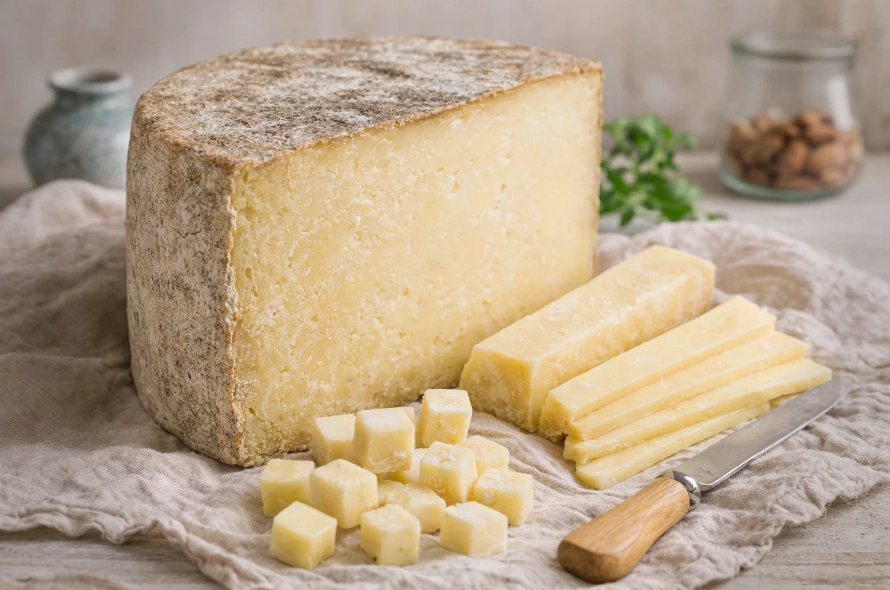
After cooking, the whey is drained away. The cooked curd grains are gathered in traditional linen cloths and transferred to large molds. Heavy pressing follows, sometimes for 20+ hours. The cheese is turned multiple times, and pressure is gradually increased, forcing out remaining whey and helping the curd grains fuse into cohesive, dense wheels.
5. Salting
After pressing and demolding, the cheeses are immersed in brine for days, the length depends on wheel size. The salt content in pressed cooked cheeses is quite low compared to other varieties, deliberately allowing the bacteria needed for proper aging to thrive during maturation.
7. Aging
Here’s where time transforms these cheeses. Initial aging happens in cool, humid cellars (10-15°C). The wheels are regularly turned, brushed, and sometimes wiped with salt brine. This develops the rind and begins flavour maturation.
For eye-forming varieties (Emmental), there’s a critical warm room phase. After initial aging, wheels are transferred to warmer cellars (18-24°C) for several weeks. This heat activates propionic acid bacteria, which consume lactic acid and produce propionic acid, acetic acid, and carbon dioxide. The CO2 forms bubbles that expand into the characteristic large, glossy eyes. Once eye formation is complete, wheels return to cooler storage.
For closed varieties (Comté, Beaufort), aging remains in cool cellars throughout. The cooler temperatures inhibit propionic bacteria, preventing eye formation and creating dense, closed paste.
Extended aging continues for months, premium Comté ages 18-24 months, sometimes 30+ months. Beaufort ages 5-12 months minimum. During this time, wheels are turned regularly, rinds are tended, and slow enzymatic processes develop the complex nutty, fruity, sometimes caramel flavours these cheeses are prized for.
The Spectrum of French Uncooked Pressed Cheeses
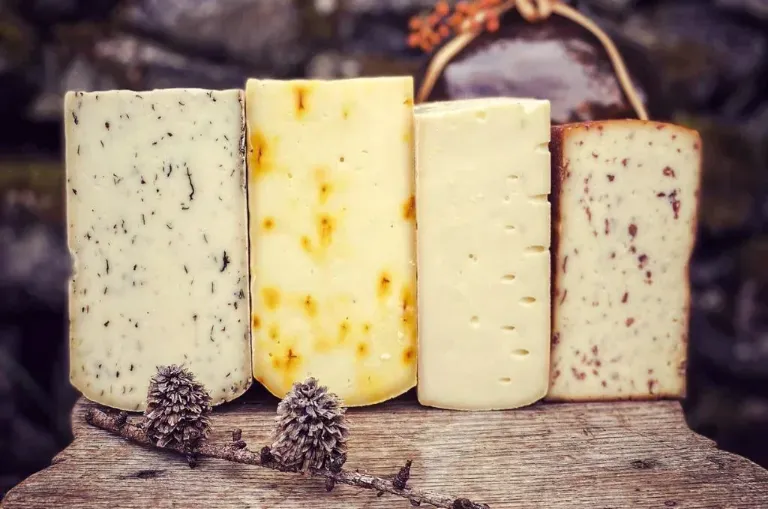
Despite sharing fundamental production methods, pressed cooked cheeses display remarkable variety.
By Eye Formation
Large Eyes (Emmental-Style)
These are the cheeses with dramatic holes, cherry-sized to walnut-sized glossy eyes scattered throughout the paste. The eyes form during warm room aging when propionic acid bacteria produce carbon dioxide. The cheese’s elastic texture allows gas to expand into bubbles rather than escape or crack the paste.
Expect mild to moderately nutty flavours with slightly sweet notes. The propionic fermentation creates characteristic fruity esters and the nutty-sweet profile Emmental-style cheeses are known for. The texture is firm but supple, and these are often the largest format pressed cooked cheeses, with wheels sometimes exceeding 80-100kg.
Small or No Eyes (Comté/Beaufort-Style)
These varieties age entirely in cool cellars, preventing significant propionic fermentation. The result is cheese with at most a few small, irregular holes scattered through otherwise dense, closed paste.
The flavour profiles tend toward greater complexity and subtlety. Without dominant propionic character, you taste more nuanced fruit, nut, and sometimes floral notes developed through extended aging. These cheeses often command higher prices because the slow, cool aging and manual care required creates exceptional quality.
The texture is denser than eye-forming varieties, truly hard cheese that feels solid. Well-aged examples develop slight graininess and occasionally small crunchy crystals (amino acid formations that indicate proper aging).
By Aging Period
Young Aged (4-8 months)
The minimum for pressed cooked cheeses, this represents cheese with proper character but remaining relatively mild. The texture is firm, the flavours gentle and approachable, milky sweetness with developing nutty notes.
Medium Aged (8-18 months)
This is where most pressed cooked cheeses hit their stride. Enough aging to develop complex, layered flavours, but not so much that they become expensive or challenging. The texture is properly firm, the nutty character is well-developed, and fruit notes have emerged. These represent excellent value and work in virtually any context.
Long Aged (18-36+ months)
Extended aging transforms pressed cooked cheeses into something special. The flavours concentrate and evolve, developing remarkable complexity, pronounced nuttiness, complex fruit notes, occasional caramel or toffee undertones, beautiful savoury depth.
The texture becomes drier, harder, sometimes developing that pleasant granular quality and crunchy crystals highly prized by enthusiasts. These command premium prices but deliver extraordinary depth. They excel grated where a little provides maximum impact.
By Regional Character
Jura Mountain Cheeses
The Jura produces Comté, perhaps France’s most celebrated pressed cooked cheese. Made from raw milk, Comté develops extraordinary complexity during 12-30+ month aging in traditional caves. The flavour emphasizes fruit and nut complexity, hazelnuts, walnuts, sometimes tropical fruit notes in summer-milk cheeses, more caramel and brown butter notes in winter production. The paste is dense and golden.
Savoie Alpine Cheeses
Savoie produces distinctively different pressed cooked cheeses. Beaufort has smooth, slightly elastic texture and distinctive fruity character. Its concave heel, created by traditional wooden molds, makes it instantly recognizable.
Three varieties exist: Beaufort (year-round), Beaufort d’été (summer milk, June-October), and Beaufort d’alpage (summer production from single herds at altitude above 1,500m, the most prized). Summer varieties develop more floral, complex flavours from diverse alpine pasture grazing.
Emmental Varieties
True Swiss Emmental AOP follows strict traditional methods with raw milk and extended aging. French Emmental, whilst excellent, often uses pasteurized milk. Both feature dramatic eyes and mild, nutty-sweet character. The wheels are massive (70-110kg) making them the largest format pressed cooked cheeses.
How to Buy French Pressed Cooked Cheeses
Buying pressed cooked cheese requires different considerations than softer varieties.
What to Look For
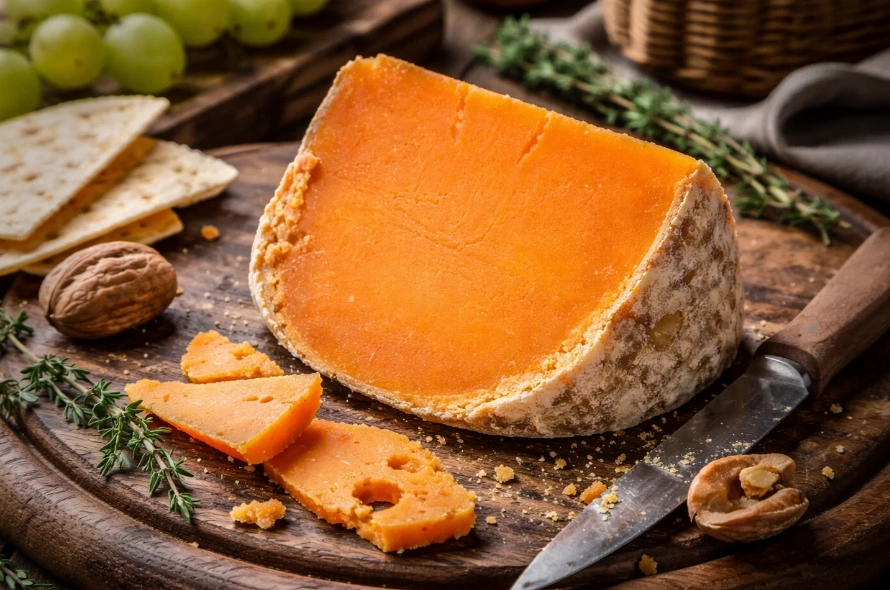
The rind should look healthy, golden brown to darker brown, relatively smooth (brushed regularly during aging), without excessive cracking or odd discolouration. Some surface mold is acceptable, but grey or black patches suggest storage problems.
Ask to see the interior. The paste should look uniform, even colour throughout, no dark spots or excessive cracks. For Emmental-style cheeses, eyes should be round and glossy, evenly distributed rather than clustered.
Press gently on a cut surface, it should feel very firm, almost hard. The cheese shouldn’t feel sticky, wet, or overly dry and crumbly.
Smell is revealing. These cheeses should smell pleasant, nutty, fruity, complex, inviting. Avoid cheeses with ammonia smells, excessive sharpness, or musty odors.
Look for crystalline texture in aged varieties. Small white crystals scattered through well-aged Comté or Beaufort are signs of proper aging and exceptional quality, not defects.
Reading the Labels
AOC/AOP designations are crucial. These protections guarantee traditional production, specific milk sources, aging minimums, and geographic authenticity. Check the grading when visible. Comté wheels carry colored bands: green (15+ points, superior quality) or brown (12-15 points, good quality).
Note the aging period. “Jeune” (young, 4-8 months) means milder flavour; “fruité” suggests medium aging (8-12 months); “vieux” or “réserve” indicates extended aging (12-24+ months) and complex flavour.
Raw milk (lait cru) versus pasteurized affects flavour complexity. Raw milk varieties typically offer more nuanced flavours but aren’t suitable for pregnant women or young children.
“Fruitière” indicates cooperative production (traditional); “laitier” means larger dairy production. For pressed cooked varieties, cooperative production often delivers superior quality.
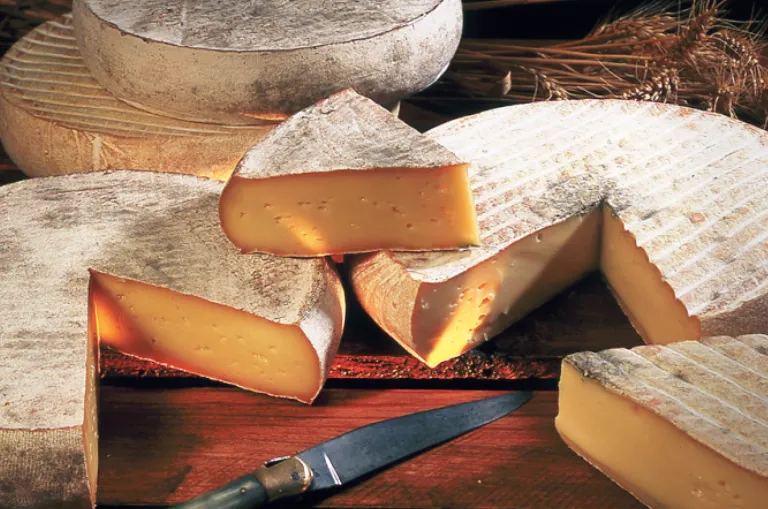
How to Store French Pressed Cooked Cheeses
Pressed cooked cheeses are remarkably forgiving about storage, they’re the most stable cheese category.
Temperature and Location
Refrigeration at 4-7°C is ideal. The vegetable drawer works well, providing good temperature stability. These cheeses tolerate slight temperature fluctuations better than softer varieties and are less concerned about breathing than soft cheeses. Keep them away from very strong-smelling foods, though they’re less susceptible to odor absorption than softer cheeses.
Packaging and Containers
Cheese paper or parchment paper works excellently. Wrap well to prevent excessive drying, then place in a loose plastic bag or container. Change wrapping if it becomes damp, though this is rare with pressed cooked varieties. For cut pieces, wrap the cut surface particularly well to prevent drying. The natural rind protects uncut surfaces; cut surfaces need extra attention.
Shelf Life and Signs of Spoilage
Pressed cooked cheeses are storage champions. Unopened, they can last months beyond sell-by dates. Once opened, consume within 4-6 weeks for best quality, though very hard aged varieties often last 2-3 months. Surface mold on hard pressed cooked cheese can be cut away safely, trim at least 2-3cm around and below moldy areas. If mold penetrates deeply, discard the cheese.
Drying is the primary storage concern. If cheese develops very hard, dried exterior areas, trim these away and use the interior. Very dried cheese works well grated into cooking.
Check for off-smells. Pressed cooked cheeses should smell nutty, fruity, pleasant. Ammonia, sour, or unpleasant musty smells indicate problems.
Can You Freeze Pressed Cheese?
Pressed cooked cheeses freeze better than most varieties, though quality still suffers. Cut into portions you’ll use completely, wrap very well, and freeze for no more than 6 months. Thaw slowly in the refrigerator.
Frozen-then-thawed pressed cooked cheese works well grated into cooking where texture changes matter less. The harder and more aged the cheese, the better it freezes.
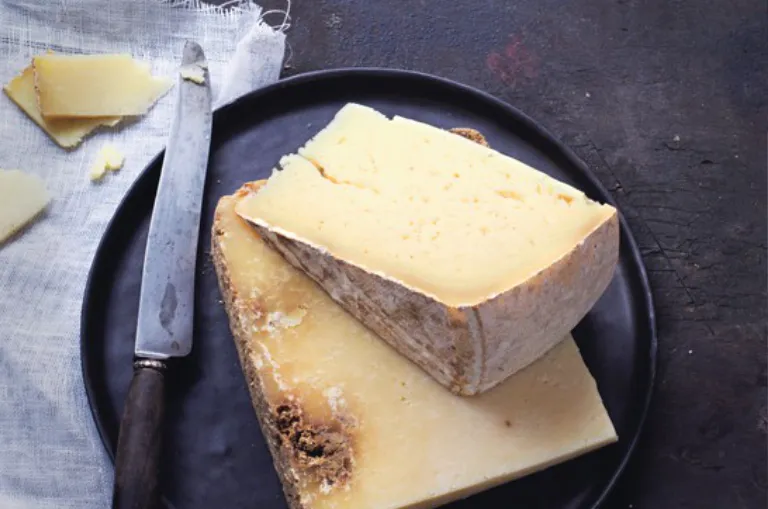
Serving French Pressed Cooked Cheeses
Serving pressed cooked cheese properly showcases their complex character.
Temperature Matters
Remove from refrigeration 45-60 minutes before serving, these dense, hard cheeses need longer than softer varieties to warm through properly. Cold pressed cooked cheese has muted flavours and tough texture. At room temperature, subtle complexities emerge, the texture softens slightly, and you experience the full character months of aging created.
Presentation
Pressed cooked cheeses present beautifully. They slice cleanly, hold their shape perfectly, and look impressive. Provide a sharp knife dedicated to hard cheeses.
The Rind Question
Most pressed cooked cheese rinds are technically edible but not particularly enjoyable, they’re quite hard after months of aging and can taste concentrated and sometimes bitter. Most people trim them before eating.
However, save rinds for adding to stocks, soups, or sauces where they contribute deep savoury flavour. A Comté rind in vegetable stock adds remarkable umami depth (I personally prefer to eat it together with my cheese).

Cooking with French Pressed Cooked Cheeses
Pressed cooked cheeses excel in cooking, their concentrated flavours, reliable melting (particularly younger varieties), and grating properties make them kitchen essentials.
Gratins
Pressed cooked cheeses create magnificent gratins. Grated over potatoes, vegetables, or pasta before baking, they melt into golden, flavourful crusts whilst providing savoury depth throughout. Mix varieties for complexity, combining young (for melting) with aged (for flavour intensity) creates excellent results.
Gougères
These cheese puffs showcase pressed cooked cheese beautifully. Grated Comté or Gruyère mixed into choux pastry creates light, airy puffs with intense cheese flavour. The concentrated flavour means you need less than softer varieties.
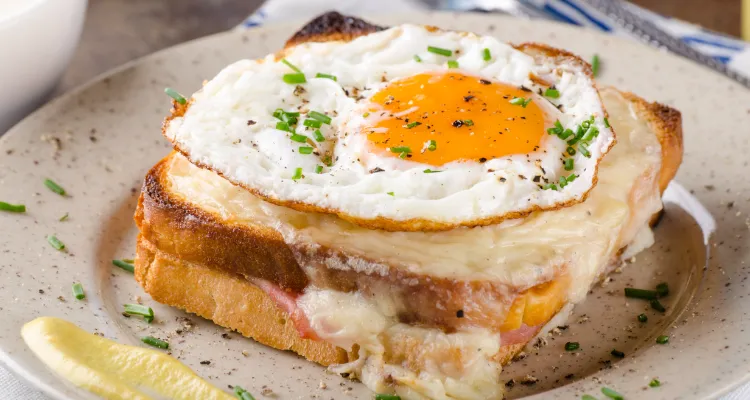
Cooking Tips
Pressed cooked cheeses melt best at moderate temperatures. Gentle, even heat prevents greasiness or separation. For sauces, grate cheese finely and add off heat, stirring until melted. The residual heat is often sufficient.
Very aged pressed cooked cheeses don’t melt as smoothly as younger ones, they’re better grated over finished dishes than used in recipes requiring smooth melting. When baking with pressed cooked cheese, save some for topping. It creates attractive golden crusts whilst cheese mixed throughout provides flavour and texture.
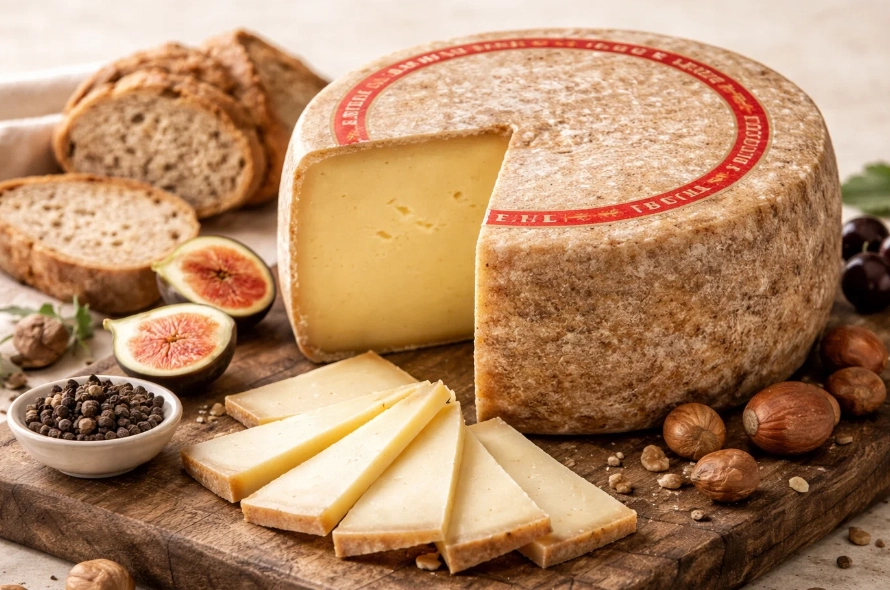
Health Benefits of French Pressed Cooked Cheeses
Pressed cooked cheeses offer exceptional nutritional value, though moderation remains important.
Nutritional Profile
These are among the most concentrated protein sources in the cheese world, typically 27-29g protein per 100g. This exceptional protein content makes them valuable for vegetarian diets and anyone needing efficient protein sources.
They’re extraordinarily rich in calcium, providing 900-1,200mg per 100g, more than almost any other cheese type. This represents 90-120% of daily recommended calcium intake in just 100g.
Pressed cooked cheeses provide excellent vitamin B12, phosphorus, vitamin A, zinc, and vitamin K2. The combination of calcium, phosphorus, and K2 is particularly valuable for bone health.
The fat content is substantial, typically 28-34g per 100g with significant saturated fat. The calorie density is high, typically 380-420 calories per 100g.
Safety for Vulnerable Populations
The high-temperature cooking (above 50°C for 30-60 minutes) effectively eliminates harmful bacteria including Listeria monocytogenes. This makes pressed cooked cheeses among the safest varieties for pregnant women, even raw milk versions are generally considered safe because the cooking step pasteurizes the cheese.
For pregnant women, pressed cooked cheeses are excellent choices. They provide exceptional calcium and protein without safety concerns. Just trim the rind before eating.
Young children can safely enjoy pressed cooked cheeses. They provide crucial calcium and protein for growing bones and bodies.
Protein Quality and Digestibility
The protein is high-quality, containing all essential amino acids. During extended aging, proteolysis partially digests these proteins, creating peptides and free amino acids that may be more readily absorbed.
The protein contributes significantly to satiety, pressed cooked cheese satisfies hunger efficiently without requiring large portions.
Despite being dairy products, well-aged pressed cooked cheeses are essentially lactose-free. The cheesemaking process removes most lactose with the whey, and months of aging consume the remainder. They’re digestible for most people with lactose intolerance.
Final Thoughts
Pressed cooked cheeses represent French cheesemaking at its most patient and precise. These aren’t cheeses you make quickly or casually. They demand enormous quantities of exceptional milk, precise temperature control, months of careful aging, and expertise refined over generations.
What you get in return is remarkable. These are cheeses that improve with time, developing layers of complexity that reward the patience invested in their creation. They’re cheeses you can rely on, for storage, for cooking, for impressing guests who appreciate subtle sophistication.
Start with young to medium-aged varieties if you’re exploring the category. A 12-month Comté offers pressed cooked character, firm texture, nutty complexity, satisfying depth, without requiring you to appreciate the subtle nuances very long aging creates. Try it fresh on a cheese board, then grate some over soup or pasta to experience its versatility.
As your appreciation develops, explore older varieties. The 24-month Comté that costs twice as much delivers genuinely different experience, more complex, more layered, more rewarding for those who’ve learned to recognize what extended aging achieves.
You might discover what generations of Alpine communities knew: these cheeses are worth the investment. They’re worth the time. They’re worth seeking out the best examples rather than settling for adequate ones.
Start with one excellent pressed cooked cheese. Let it reach room temperature. Taste it attentively, noting the layers of flavour months of aging created. Then use some in cooking to experience its versatility. Welcome to the wonderfully complex, satisfyingly reliable world of French pressed cooked cheeses.

A Complete Hosting Guide
This complete guide takes the intimidation out of French cheese and wine hosting, so you can create an impressive, memorable evening that feels effortless.
Just so you know, a few links here earn us a commission. Doesn’t cost you anything extra, and we only link to things that are actually worth your time.