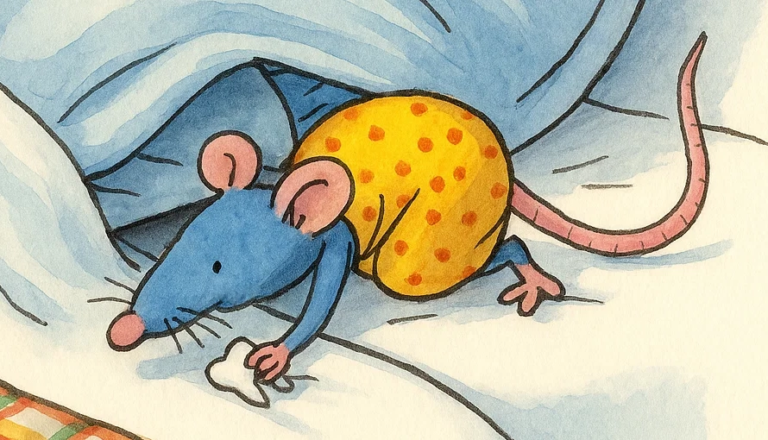
France does not have a tooth fairy. It has a mouse.
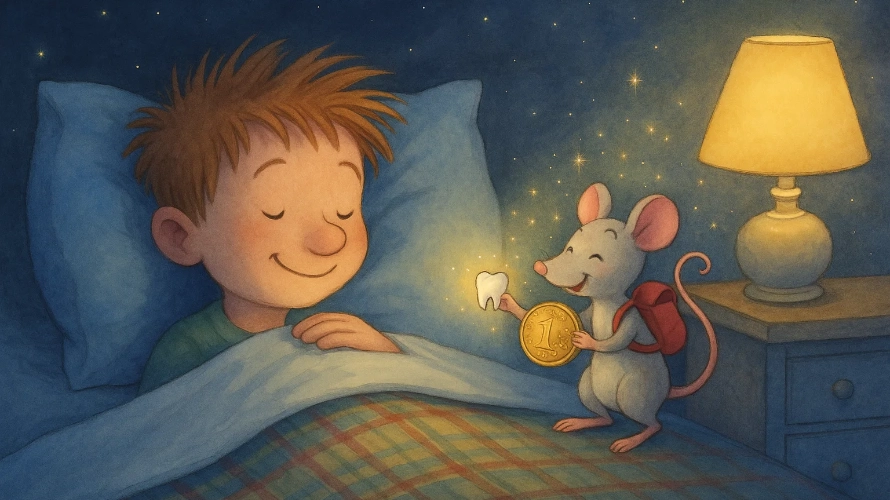
La petite souris, the little mouse, is the creature French children leave their baby teeth for. She visits at night, collects the tooth from under the pillow, and leaves a coin in its place. The exchange is simple. The tradition is centuries old. And it turns out that a small mouse is considerably more logical than a fairy with wings, for reasons that French folklore explains with characteristic precision.
Who is la petite souris?
La petite souris is not just any mouse. She is a specific cultural figure, recognisable to every French child and every French adult who remembers being one. She is small, discreet, and reliable. She works at night. She does not leave a mess. She is, in this sense, the ideal visitor.
The tooth mouse tradition exists across the entire French-speaking world. In Belgium, Switzerland, Morocco, Algeria, and Luxembourg, the same small mouse performs the same nightly service. French-speaking children on multiple continents grow up with la petite souris as a shared reference point, which makes her one of the more widespread tooth fairy traditions in the world, even if she is less well-known outside francophone culture than her winged Anglo-Saxon counterpart.
Where the tradition comes from
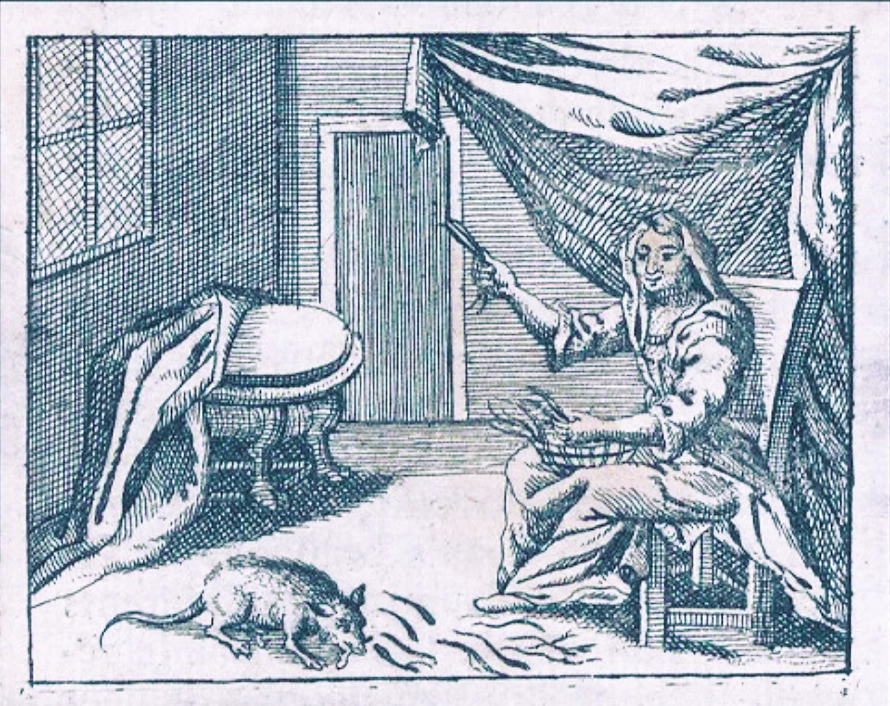
The tooth mouse is older than most people realise. The earliest literary reference to la petite souris comes from 1697, when French baroness and storyteller Marie-Catherine d’Aulnoy published La Bonne Petite Souris, The Good Little Mouse. In her tale, a fairy transforms into a mouse and sneaks under a king’s pillow to extract his teeth. The story is more about justice and transformation than the gentle tooth-swap ritual we know today, but the connection between mice, pillows, and teeth was already established enough that d’Aulnoy could use it as a recognisable framework.
The folk belief behind the tradition runs deeper still, predating that 1697 story by centuries. Across Europe, children’s baby teeth were traditionally offered to rodents as a protective charm. The logic was straightforward: rodents’ teeth never stop growing. They are hard, sharp, and durable. Giving your lost tooth to a mouse was believed to pass those qualities on to the permanent teeth that would grow in its place. It was practical folk medicine dressed in story form, and it worked: children who participated in the ritual were presumably also thinking about their teeth, which is no bad thing.
Over time, the practical folk belief and the storybook mouse merged into the la petite souris tooth fairy rituals French children know today. The mouse kept her association with strong teeth. The exchange of tooth for coin formalised the transaction. And the whole thing settled into the permanent furniture of French childhood.
What actually happens
The ritual is straightforward, which is part of why it has survived so long.
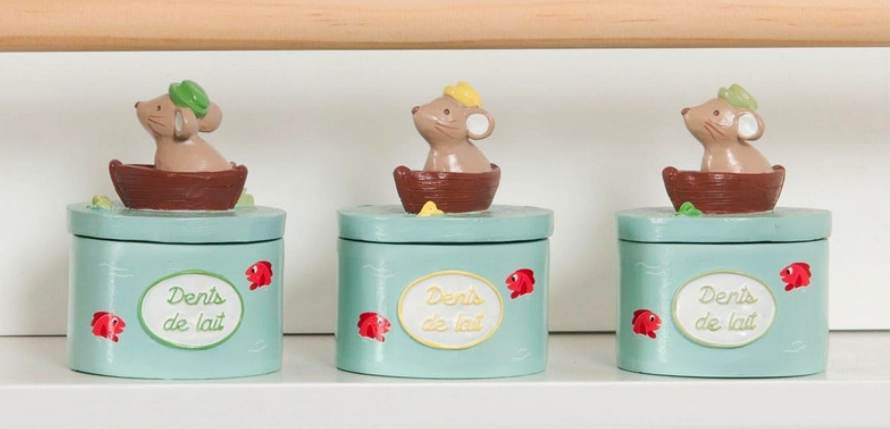
When a French child loses a tooth, they place it under their pillow before bed. Sometimes it is wrapped in a small piece of tissue. Sometimes it is placed in a tiny container specifically designed for the purpose. Parents remind them to sleep and not to peek. La petite souris, like most effective legends, works best when not observed directly.
Come morning, the tooth is gone. In its place is typically a coin, usually a euro in modern France, though the amount varies by family. Some parents leave a small toy or trinket instead. The exchange is the point: something of the child’s goes out, something else comes in, and the transaction has been completed by an invisible third party in the night.
The ritual creates a moment. It gives the slightly unsettling business of losing teeth a framework that makes it safe, even exciting. The tooth does not just fall out and disappear. It goes somewhere specific, to someone who wanted it, and something comes back in return.
The book worth reading together
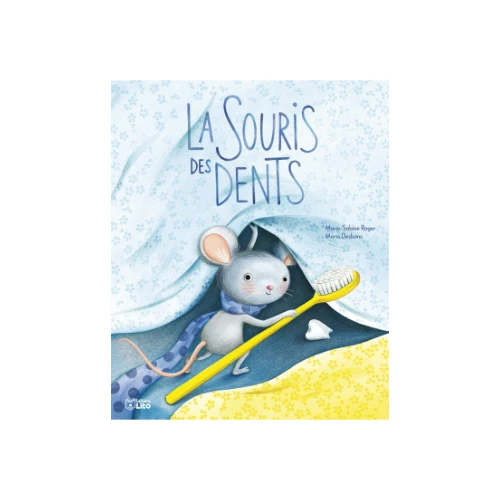
If you want to bring la petite souris to life for a child, the picture book La Souris des Dents is the perfect introduction. A lovely read for the moment a first tooth starts to wobble, and the kind of book that makes the tradition feel real before the first visit even happens.
Why a mouse and not a fairy?
This is the question English-speaking visitors to France tend to ask, and the answer is rooted in the same folk logic described above. A fairy is magical and arbitrary. A mouse is logical: it has teeth, it knows about teeth, it has a professional interest in teeth. The exchange makes sense on its own terms.
The tooth fairy traditions of the English-speaking world emerged from a different cultural context, one that favoured winged supernatural figures as the agents of childhood transitions. The French went with something smaller, more domestic, and more rationally motivated. Neither approach is wrong. They simply reflect different ways of wrapping the same childhood experience in story.
What is interesting is that where French is spoken in Canada, particularly in Quebec and Acadia, the fée des dents, the tooth fairy, often takes precedence over la petite souris. The proximity to English-speaking culture has blended the traditions in those regions, making them a point of contact between two different sets of tooth fairy rituals.
La petite souris around the world
The tooth mouse is not exclusively French. Similar figures appear in cultures across the world, often independently of each other.
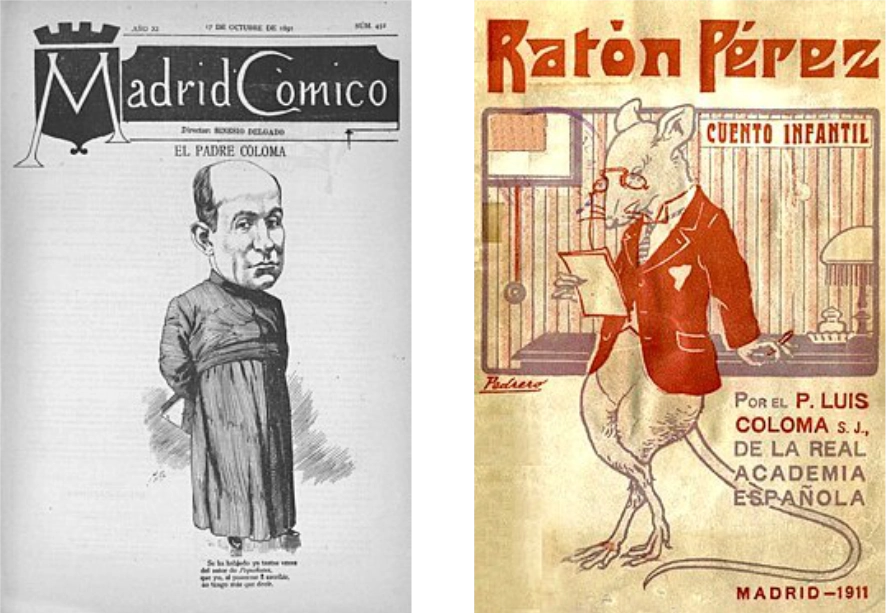
In Spain and many Latin American countries, Ratoncito Pérez performs the same function. He was made famous by an 1894 story written by Luis Coloma for King Alfonso XIII, who was eight years old when he lost his first tooth. Ratoncito Pérez has since become one of the most recognised tooth fairy traditions in the Spanish-speaking world.
In Italy, traditions vary by region. A fatina, a small fairy, is often preferred to a topino, a little mouse. In Catalonia, small angels called els angelets sometimes take the tooth instead. The diversity of figures across cultures performing essentially the same role tells you something about the universality of the underlying moment: children lose teeth, parents want to make it meaningful, and cultures find their own way to do that.
The convergence on a mouse in so many independent traditions suggests the folk logic behind the choice is genuinely widespread. Rodents and their perpetually growing teeth make sense as the receptors of lost baby teeth across cultures that never shared the tradition directly.

The scale of la petite souris’s work
French children typically lose their baby teeth between the ages of six and twelve. Each child loses around 20 baby teeth over those years. With France’s birth rate producing roughly 700,000 children annually, millions of teeth end up under pillows every year across the country alone.
Dental health statistics add context to why the ritual matters beyond the story. Between 30% and 40% of French children aged six to twelve experience tooth decay or enamel erosion. The gentle encouragement of dental awareness that comes with la petite souris, the knowledge that someone is paying attention to your teeth, that they have value, that they are worth collecting, is not nothing. French parents and educators use the figure actively, incorporating her into conversations about brushing, diet, and dental care. Books, cartoons, and songs featuring la petite souris frame dental hygiene as part of a story rather than a chore.
My own petite souris memory
I still remember when she visited me. She left what was then a 10 franc coin under my pillow, which I promptly spent on sweets from my favourite shop. The irony of using a tooth-related payment to buy sugar has only become clearer with time.
But the memory is specific and intact in a way that general childhood memories often are not. I remember the morning, the coin, the feeling that something had been completed properly. That is what the ritual does. It gives the moment a shape that makes it memorable, which is ultimately what all good traditions are for.
A living tradition
What makes la petite souris genuinely interesting from a cultural perspective is how stable it has remained. Despite the globalisation of childhood culture and the widespread reach of the English-language tooth fairy through films, books, and television, French children still overwhelmingly know la petite souris as their figure. The tradition has not been displaced. It has, if anything, been elaborated: petit souris boxes and pouches for storing dents de lait, the milk teeth, are now sold throughout France, adding a material dimension to the ritual that parents and children create together.
The tooth mouse endures because it makes sense on its own terms. She is small. She works at night. She has a professional interest in teeth. She rewards the transition from baby teeth to adult ones with something tangible. And she connects French children to a tradition that stretches back centuries, across continents, through generations of families who remembered exactly the same morning, the same coin, the same sense that something had been properly concluded.
What about you? Do you have a childhood memory of a similar tradition? Did a little gift from a visitor bring you a treat or a cherished moment? I’d love to hear your stories, share them in the comments!
Disclosure: Just so you know, this post contains sponsored content and/or affiliate links, If you make a purchase through these links, I may receive a small commission. Doesn’t cost you anything extra. I only link to things that are actually worth your time. All opinions are my own!