The beating heart of the French table
I grew up in France. I have eaten baguettes in other countries. And I will say it plainly: there is only one real baguette, and it is French.
The french stick found elsewhere looks familiar enough. The shape is right. The colour is sometimes close. But if you think it compares to what comes out of a French boulangerie at seven in the morning, you are in for a genuine disappointment. No matter how long I have lived outside France, stepping into a French bakery still feels like an event. The smell, the warmth, the sound of a crust cracking under your fingers. There is nothing quite like it.
The baguette is not just bread in France. It is a national symbol, a daily ritual, a social contract. From the corner boulangerie to the Elysée Palace, from quick lunches by the Seine to long family dinners, the baguette is both background and star. Here is what actually lies behind this everyday loaf, why a “tradition” baguette is a different thing entirely from a regular one, and what the rules are that govern it.
Where does the baguette come from?
The baguette’s history is, like many French classics, a mix of documented fact and entertaining myth.
The Napoleon story
One version claims Napoleon demanded a bread soldiers could carry in their uniforms, leading bakers to create long, slender loaves practical enough for a coat pocket. It is a good story. Historians are sceptical. But it has stuck around for a reason.
The Paris Metro story
Another version credits the construction of the Paris Metro in the early 20th century. Workers from different neighbourhoods with long-standing rivalries were brought together on the same sites. Knife fights were a genuine problem. Knives were eventually banned on site, and bakers supplied loaves that could be torn by hand rather than cut. The baguette as peacekeeper. Whether true or not, it says something about how embedded the bread already was in daily French life.
The official version
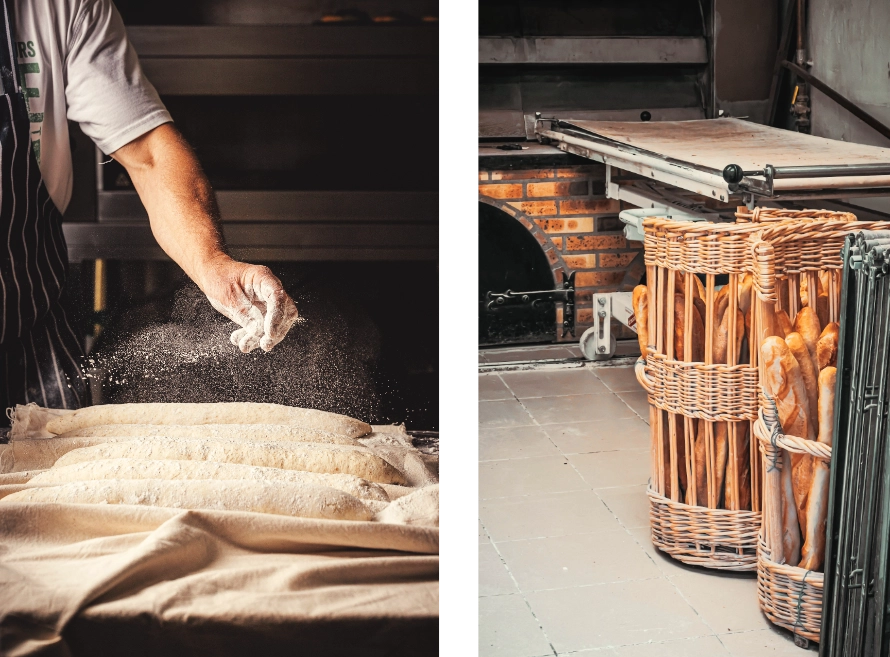
The word “baguette” first appeared in Parisian law in August 1920, specifying weights and prices. But long, baton-shaped breads existed in France well before that. The shape developed during the 18th century and the signature crust and crumb came with Viennese baking techniques introduced in the 19th. By 1920, the law simply caught up with public taste and the french food baguette, in name and in code, was officially born.
The law and how France protect their daily bread
France’s relationship with the baguette runs deep enough that they wrote it into law. Not just guidelines. Actual enforceable law.
In 1993, the Décret Pain established strict rules governing what can and cannot go into an authentic baguette, particularly the “Baguette Tradition.” You cannot just knead dough, call it a tradition baguette, and charge accordingly. The rules cover ingredients, methods, and production process.
Baguette tradition vs. regular baguette
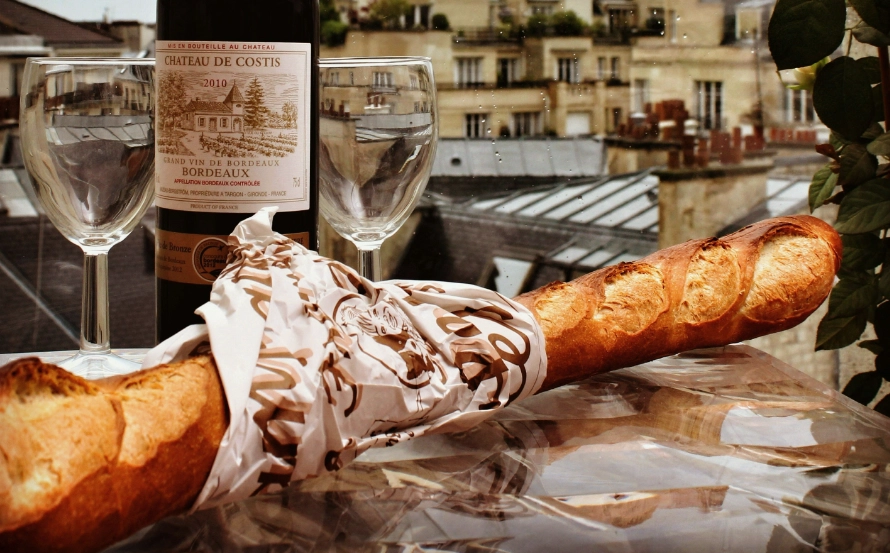
The tradition baguette costs more and is worth it. The longer fermentation produces a flavour and texture that a quick industrial loaf simply cannot replicate.
The physical requirements of a real french baguette
France does not just regulate what goes into the baguette bread. It regulates the bread itself.
Length
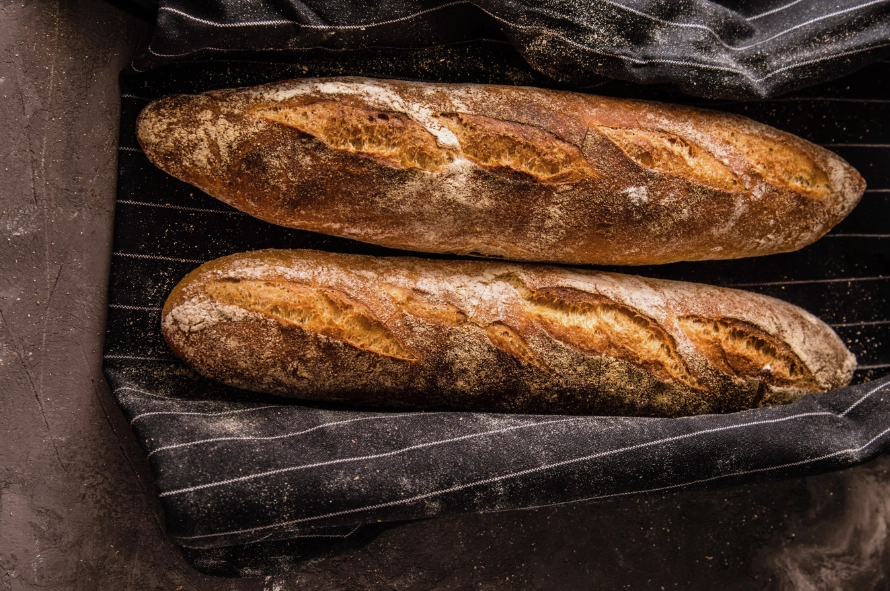
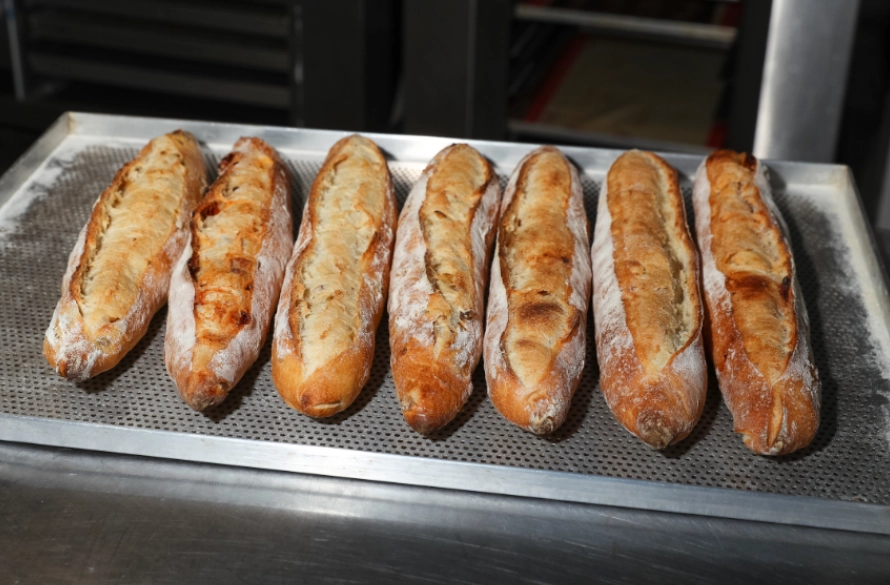
Between 55 and 65 centimetres. That iconic baton shape ideal for tucking under your arm on the walk home.
Weight
Between 250 and 300 grams. Not too substantial, not too slight.
Crust
Must deliver an audible crack when squeezed. That sound is not incidental. It is the whole point.
Crumb
Irregular and open, not dense, not dry. The soft interior that soaks up soup, absorbs butter, and supports a slab of Comté without falling apart.
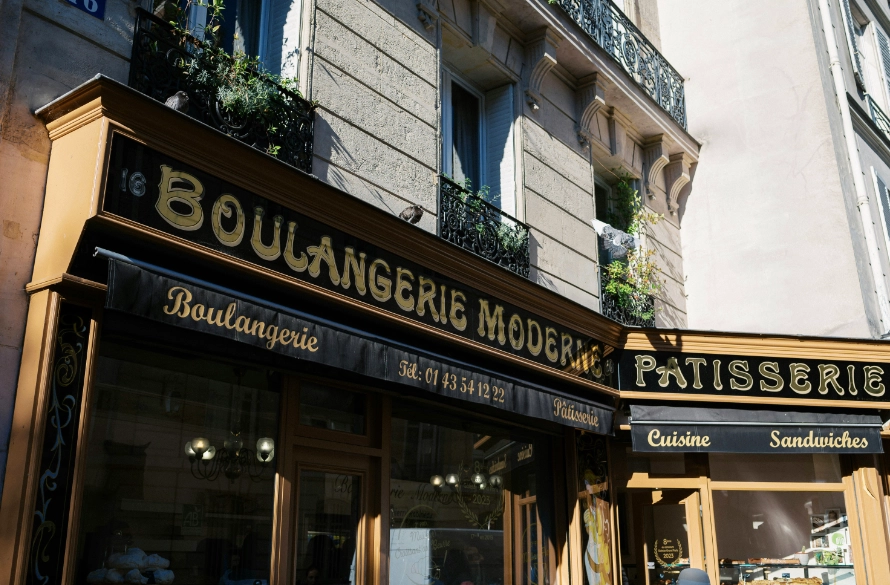
The name “Boulangerie” is also protected
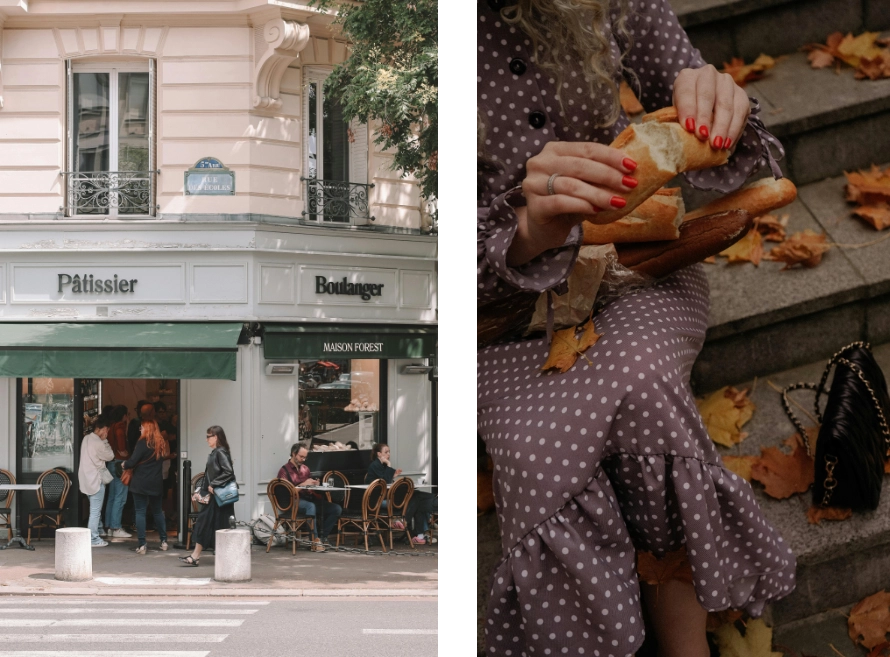
The bread itself is regulated, and so is the place that makes it. Not anyone can open a shop and call it a boulangerie. The title is legally protected in France. To use it, the bakery must meet specific requirements: all bread must be mixed, kneaded, shaped, leavened, and baked entirely on the premises. No outsourced production, no pre-made frozen dough, no industrial shortcuts. The “boulangerie” label guarantees that what you are buying was made that morning, in that building, by someone who knows what they are doing.
Bakery requirements
To officially use the name “boulangerie” for a business in France, there are clear requirements:
- On-site production
All bread must be mixed, kneaded, shaped, leavened, and baked entirely on the premises. No part of the process can be outsourced or performed using pre-made, frozen dough. - No industrial shortcuts
The use of industrial methods, pre-baked, or frozen bread is prohibited if you want the “boulangerie” label.
French authorities enforce this. The protections exist to safeguard artisanal bakers, protect consumers, and preserve a tradition that is genuinely part of the national identity.
France’s annual baguette competition
Every year, Paris holds the Grand Prix de la Baguette, where bakers from across the city compete for the title of best baguette. The winner receives prize money and a genuinely significant honour: a year’s contract supplying the Elysée Palace with their bread. The bread of presidents. Competition does not get more French than that.
France’s never-ending love affair with the baguette
320 per sec
320 baguettes every second is how fast the bread is eaten and produced across France, 10 billion annually.
32,000
France hosts over 30,000 official boulangeries, more than the number of communes (towns) in the country.
1/2 per day
An average of half a baguette per person, per day is eaten by the French. It’s not a stereotype, it’s real.
70%
70% of all bread sold in France is the classic baguette, making it by far the nation’s favourite loaf.
UNESCO
“Baguette craftsmanship” earned a place on the UNESCO Representative List of the Intangible Cultural Heritage of Humanity.
Price
In 2024, a supermarket baguette costs as little as €0.29, while most artisanal versions are just under €1.
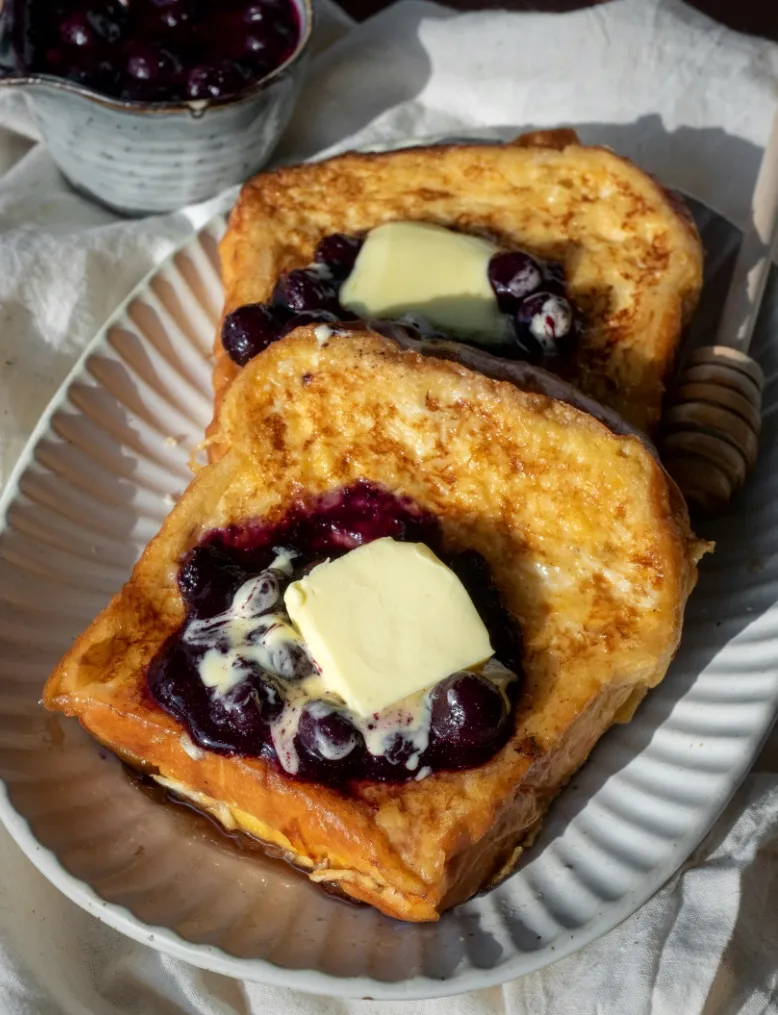
What happens when the baguette goes stale?
Nothing gets wasted in a French kitchen. A baguette that has dried out becomes the base for something else. Stale baguette bread gets dunked in soup, turned into pain perdu (French toast), made into croutons for a salad, or grated into breadcrumbs for a gratin topping. The baguette’s life cycle in a French kitchen is efficient and complete. The fact that it goes stale quickly is not a flaw. It is why you buy a fresh one every day.
The rituals and etiquette
And at last, here are some rituals and etiquettes on how to manage your beloved baguette.
No slicing
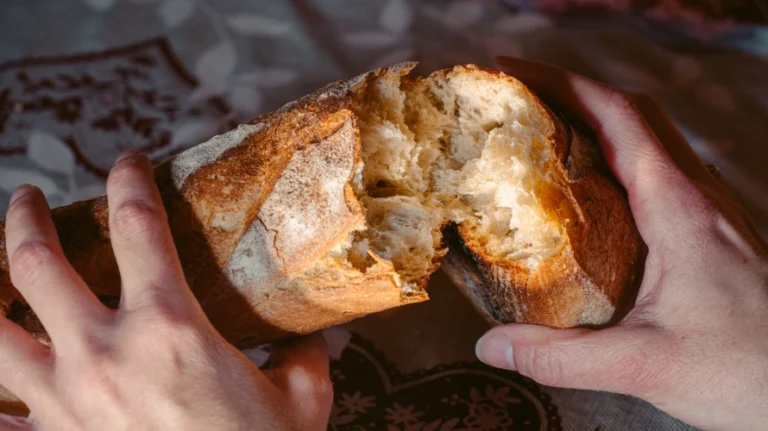
A bread knife is rare at a French table. Tearing pieces by hand is the norm, a mark of conviviality rather than laziness.
The tip
The end of the baguette, called the quignon in most of France, is a delicacy. It frequently disappears on the walk home from the bakery. Arriving with a baguette that is missing its tip is considered entirely acceptable. It means you could not help yourself, which everyone understands.
Utensil
The baguette is used at the table as a third hand: pushing food onto the fork, mopping up sauce, guiding things around the plate. This is not considered bad manners. It is considered practical.
No bread plate
In French homes and most bistros, bread sits directly on the table next to your plate. A separate bread plate is reserved for formal settings. Crumbs on the tablecloth are not a problem.
Small pieces
Tear off only what you intend to eat in one or two bites. Using a full slice to construct a sandwich at the meal table is considered slightly gauche in French food culture.
Mopping
Using bread to mop up sauce or vinaigrette, “saucer son assiette,” is not just acceptable but seen as a compliment to the cook. Do it at the end of the meal, not throughout.
Cheese course
The cheese course comes after the main and before dessert in a French meal. Do not eat all your bread before it arrives. A few bites alongside a piece of Camembert or Comté is non-negotiable.
Freshness
Many French people buy a baguette twice a day: one in the morning and one in the evening. Turning up to dinner at someone’s house with a baguette that was baked that morning is acceptable. Turning up with yesterday’s bread is not.
Final thoughts
The baguette is one of those things that sounds simple until you understand what actually goes into it. Four ingredients, centuries of technique, a legal framework protecting every centimetre of its length and every gram of its weight, and a culture that has made it part of daily life in a way that nothing else quite matches.
Now, I’d love to hear from you. Is there a topping or a pairing that makes you genuinely happy, whether it’s salty butter for breakfast, thick slices of Comté at lunch, or a cheeky swipe of chocolate for an afternoon pick-me-up? Maybe you’ve tried something utterly unconventional with a baguette, or perhaps there’s a bakery near you that’s an absolute hidden gem? Share your thoughts in the comments and let us know!
Disclosure: Just so you know, this post contains sponsored content and/or affiliate links, If you make a purchase through these links, I may receive a small commission. Doesn’t cost you anything extra. I only link to things that are actually worth your time. All opinions are my own!