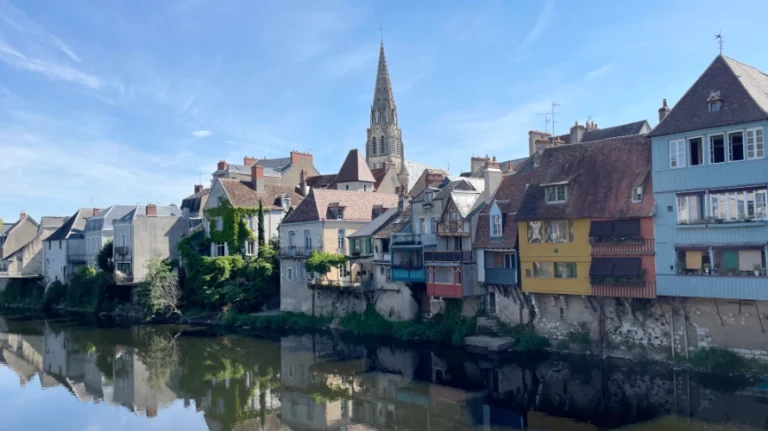
I’ve never been to Venice, so I can’t say for sure how fair the comparison is, but I have visited Argenton-sur-Creuse, and while it does share some charming features, calling it “the Venice of Berry” might be a touch generous. What I do know is that Argenton-sur-Creuse is definitely worth a visit and the town is absolutely stunning.
The old houses lean out over the Creuse on wooden balconies, the medieval bridges arch across the water, and on a still morning the whole lot doubles itself in the reflection. It’s one of the prettiest river frontages in central France. It’s definitely picturesque.
It’s better described as what it actually is: an unhurried little town in the middle of France that has been getting on with things for two thousand years, and which has more layers to it than the postcard. There’s a Roman city on the hill above it. There’s a museum about shirts, which sounds like a joke but has a fascinating story. And there’s a day in June 1944 that the town has never stopped marking.
Table of Contents
The Roman city on the hill
Before Argenton there was Argentomagus, and it’s the reason everything else happened here.
It sits on the Mersans plateau just above the town, in what’s now Saint-Marcel, and it was a proper Gallo-Roman town in the 2nd century: streets, houses, temples in the Celtic tradition, a forum and basilica, an aqueduct, a monumental fountain, a necropolis, and a theatre. Not a garrison or an outpost. A town, with people living ordinary lives in it.
The museum opened in 1990 and it’s built directly on top of one of the old quarters, which is cleverly done. You walk down through it and the exhibition takes you from prehistoric deposits in the Creuse valley, more than a million years of them, forward into the Roman town. Then you get to the archaeological crypt underneath, where there’s a Gallo-Roman domestic altar that is the only one of its kind in Gaul, still standing exactly where it was dug up in 1986.
That’s the thing to see. Not a household shrine reassembled in a display case in Paris, but one still sitting in the room where a family used it.
Outside there’s the site itself, which you walk through in the open air, and a small Roman garden behind the museum planted with around 150 species the Romans actually grew: aromatics, medicinal plants, dye plants. It smells wonderful in July and makes the whole period feel a lot less abstract.
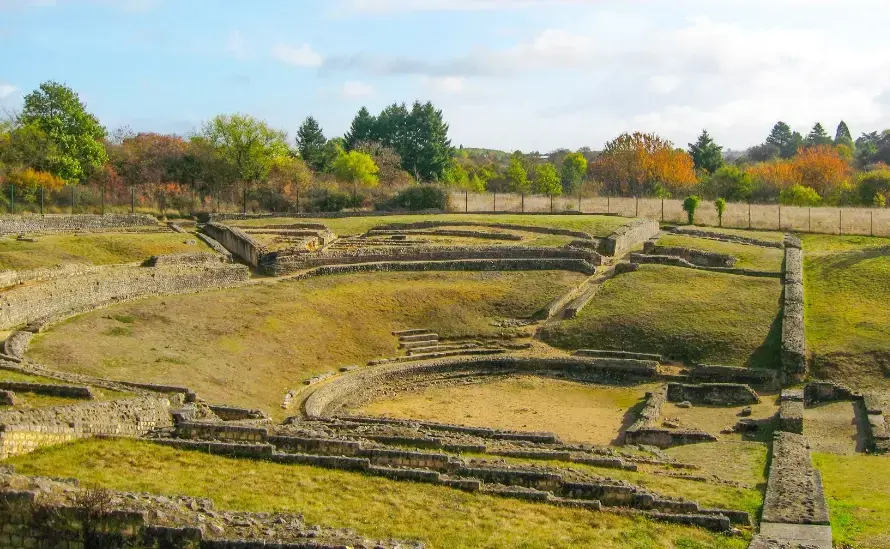
Argentomagus © Jean Faucheux
The Théâtre du Virou is nearby and was built twice, first in the 1st century and then enlarged in the middle of the 2nd because they needed more seats. There’s a summer festival where costumed troupes perform ancient plays in it. Check before you go, though, because access to the theatre has been restricted at times in recent years.
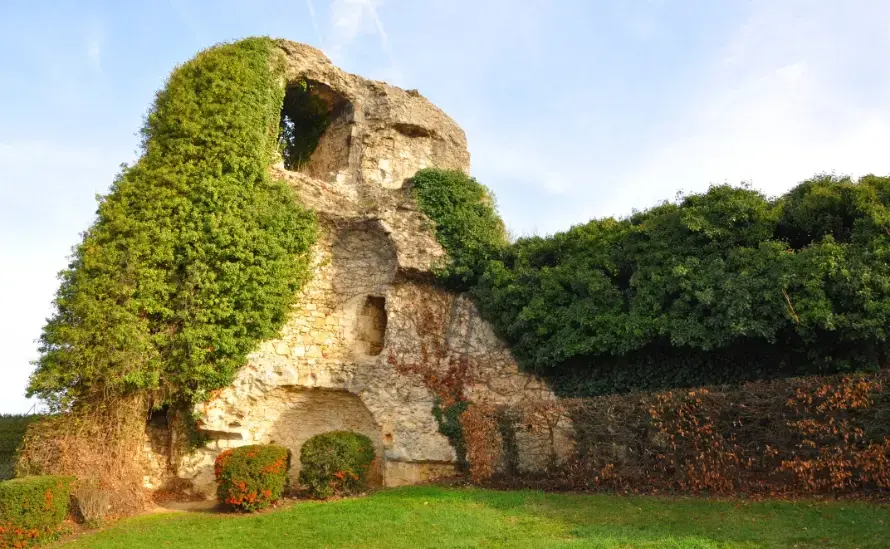
Ruins of the Château d’Argenton-sur-Creuse © Jean Faucheux
From Roman town to medieval fortress
The Roman town faded and the settlement shifted down towards the river, onto a defensible spur. In 761 Pepin the Short took the hilltop castle, which sets the tone for the next eight hundred years: sieges, sackings, royal visits, changes of hands. By the 12th century the fortified upper town was a serious piece of military architecture with a large château looking down the valley.
Then Cardinal Richelieu had it pulled down in the 17th century, which he did to a great many French castles for exactly the reason you’d expect. What’s left is fragments, old towers and stretches of wall showing up between later buildings once you know to look for them.
From the 15th century the town spread across both banks, joined by the Vieux Pont. The lower town filled up with houses, chapels and markets, and the river did the work: tanneries, watermills, the whole industrial life of a place that had water and knew what to do with it.
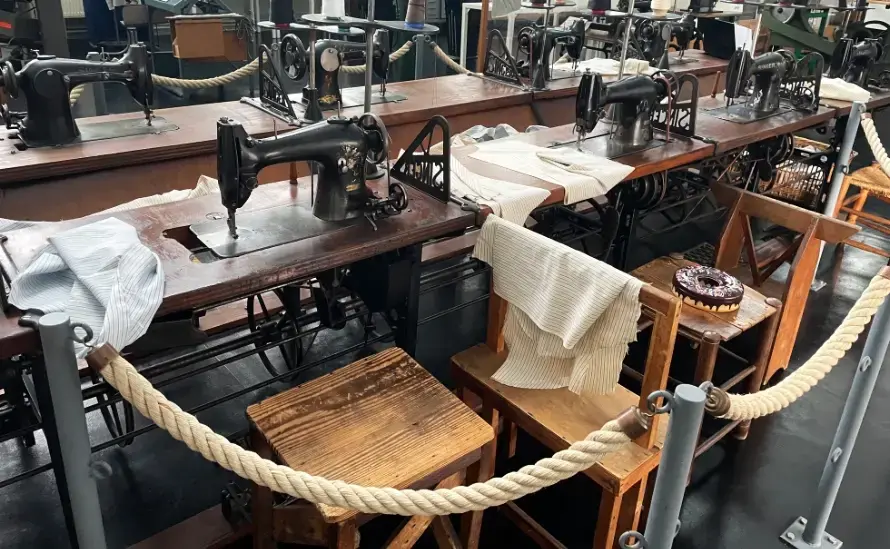
The city of shirts
Fast forward to the 19th and 20th centuries, and Argenton-sur-Creuse completely reinvented itself as the “City of Shirts.” Mechanised workshops arrived, and by the Belle Époque thousands of workers, the great majority of them women, were making shirts here for Paris and well beyond. The town was known as the cité de la chemiserie, the city of shirt-making, and that industry shaped it far more recently and far more deeply than any castle did.
I know a bit more about this than I probably should, and it’s entirely because of my neighbours.
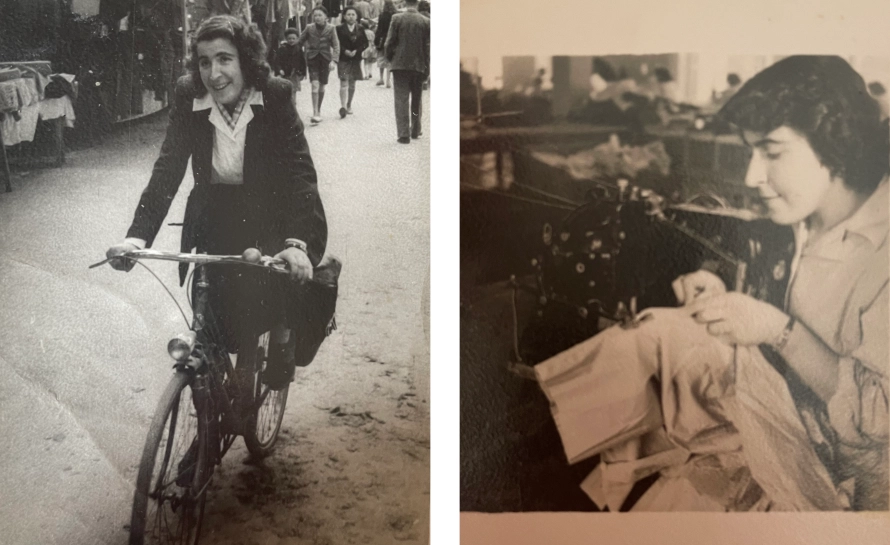
Jeanne whom you can see on the pictures above, is ninety-seven and she worked in the factory. She’s shared with me photographs of what it was like, and the thing I keep coming back to is the scale of it: five hundred women, in one building, in a town this size. She cycled there on her beloved bicycle from her house which was quite far, and I still admire her for that. I would like to see most people manage her trip today without a battery. She talks about it the way you talk about something completely ordinary, because to her it was just her daily job with her friends colleagues.
Funny enough, my other neighbour Nathalie, who some of you will recognise as the undisputed queen of the apéro, runs the museum. She’s the director. Which means I get a message every time there’s a new exhibition, and I have never once not gone. I’ve learned more about the clothes of that period standing in a room with her than I would have from any amount of reading.
So when I tell you the Musée de la Chemiserie et de l’Élégance Masculine is worth your time even though the subject sounds dry, I’m not being polite about a local institution. You just have to be brave enough to ask questions to the lovely people that work there to get the juicy stories. I do have to say, don’t expect a grand museum, it’s quirky and personal, it’s small and old but if you like fashion and history, it’s going to fit right into your alley.
It’s about the women as much as the men’s shirts. The machines, the garments, the working lives, and then the wider story of how men have dressed across the centuries and why. It’s an unusual museum for a town of five thousand people, and it exists because Argenton is proud of their heritage. It’s a fascinating window into a side of French life that’s often overlooked, and a reminder of how industry and artistry can go hand in hand.
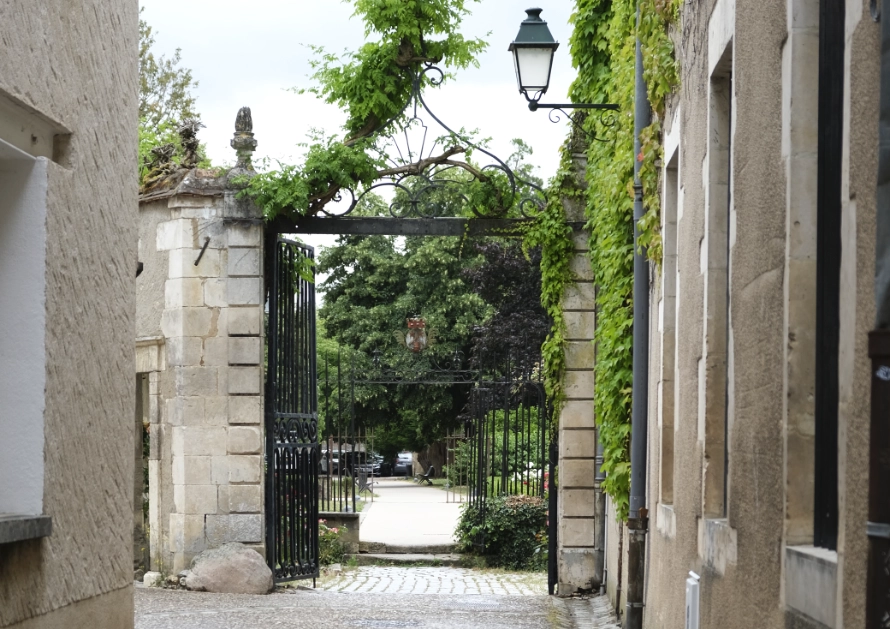
9 June 1944
Something significant happened three days after the Normandy landings, the 2nd SS Panzer Division Das Reich was moving north from Montauban towards the front. On 9 June a detachment reached Argenton, following a Resistance action against a fuel train. Sixty-seven people were killed that day, fifty-six of them civilians. The youngest was three months old. The oldest was eighty-nine.
The next day, the same division destroyed Oradour-sur-Glane.
Almost everyone has heard of Oradour. Very few people outside the Indre have heard of Argenton, which happened the day before and to the same people’s neighbours.
There are stories from that day that stay with you. The stationmaster, a Monsieur Vautrin, spoke German and used it repeatedly through the afternoon to talk his railway staff out of being taken or shot.
There’s a memorial in the town. And in June 2024, for the 80th anniversary, the shopkeepers of Argenton wrote all sixty-seven names on their shop windows in white marker, each one with the same two words in front of it: Passant, souviens-toi. Passer-by, remember.
I don’t think you can write about this town honestly and leave that out. If you visit, the memorial takes five minutes and it’s the right five minutes to spend.
The Croquette Argentonnaise
And now, because a town is all of its things at once, let’s talk about biscuits.
The croquette argentonnaise is the local sweet, an almond biscuit filled with praline, and it was invented in 1871 by a Monsieur Guillon at his bakery on the rue Gambetta. Seven generations of bakers later it’s still being made, at the Maison du Wladimir.
I was talking to the owner recently and she told me they post them all over the world to people who’ve had them once and can’t get them anywhere else. I’ve sent boxes to friends in the Netherlands and they’re always a massive hit.
If you visit the town, you have to go buy some. They are a bit on the high price, but considering the work and history in them, they are totally worth it. They also travel well, which is more than most French pastry manage!
A riverside town full of surprises
The setting is the point, and it’s best at either end of the day. Early morning and late afternoon the light comes down the valley and along the water, and the balconies and the roofs and the bridges all get reflected at once.
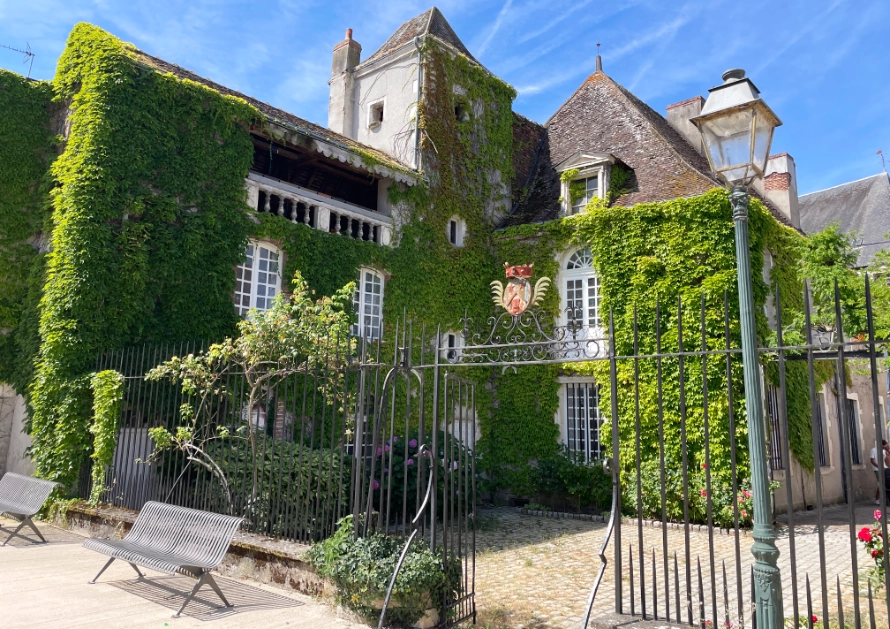
Walk the old town on the right bank, where the medieval houses are, and look for the Hôtel de Scévole from the 17th century and the 16th-century Hôtel Duperthuis near the end of the old bridge, with its staircase tower and watchtower. Rue Raspail is the nicest street for wandering, a mix of old buildings and current shops.
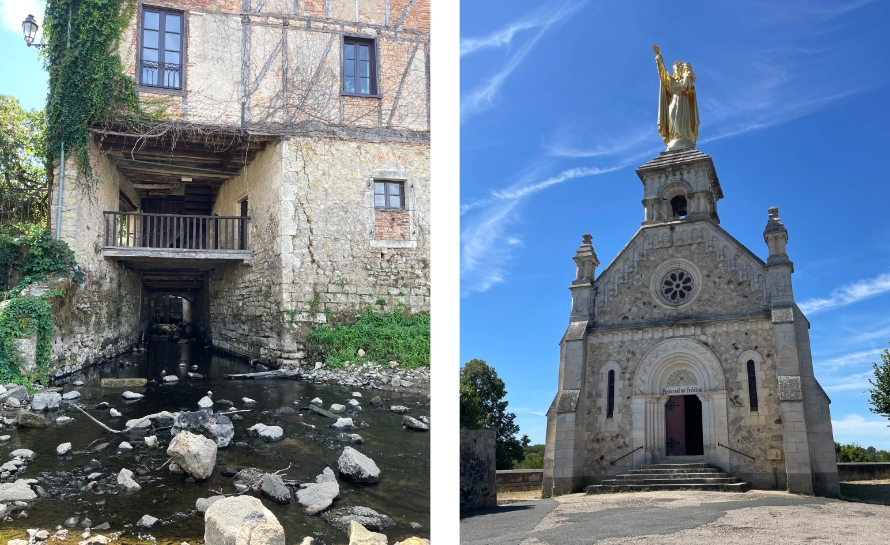
Then climb up to the Bonne-Dame chapel, because the esplanade there gives you the whole town at once, the river, the roofs, the valley beyond. It’s the photograph everyone takes and it deserves to be.
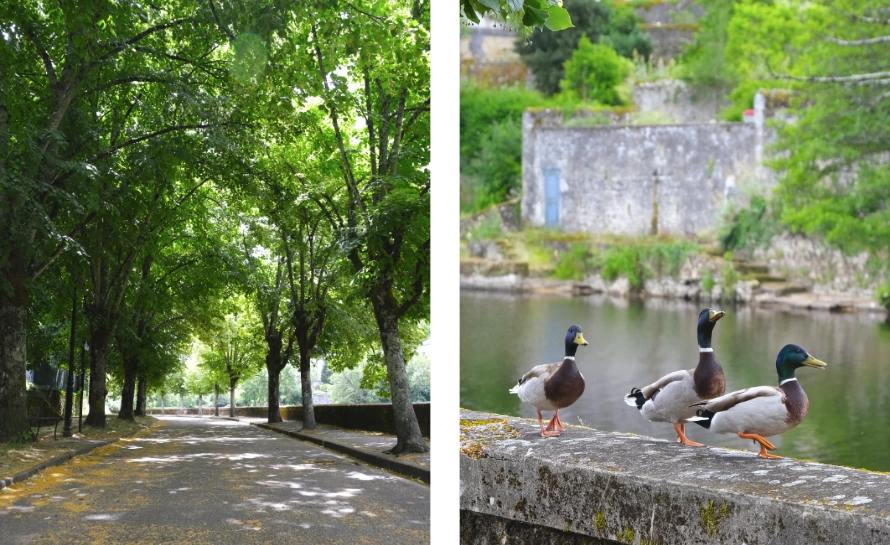
The riverside path takes you past old watermills and, if you look, the remains of a Roman-era bridge. Two thousand years of people crossing the same river in roughly the same place.
What to see and do in Argenton-sur-Creuse
- Argentomagus archaeological site and museum (Saint-Marcel)
The Gallo-Roman town, the archaeological crypt with the domestic altar, the Roman garden. Half a day if you do it properly. - Musée de la Chemiserie et de l’Élégance Masculine
Check out the town’s textile history at this unique museum. Learn how Argenton became the “City of Shirts,” see cool old sewing machines, and trace the story of men’s fashion. - Église Saint-Sauveur
Visit this impressive Romanesque church, dating back to the 11th century, with its soaring vaults and colourful stained glass. It’s a peaceful spot for reflection and a fine example of medieval architecture. - Chapel of Saint-Benoît
This 15th-century chapel, now used for art exhibitions, is worth a visit for its tranquil setting and beautiful architecture. It’s also a lovely spot to pause and take in the view. - Wander the historic streets
Get lost in the old town. The medieval houses, timbered fronts, and cobbled lanes create a timeless feel. Don’t miss Rue Raspail and the river-side balconies, perfect for a relaxed walk. - The old bridge (Vieux Pont) and the riverbank
Stroll across the medieval bridge that links the two sides of the town. The views of the river and the overhanging houses are some of the most picturesque in Berry. - The 1944 memorial
- Panorama from the Bonne-Dame chapel
Climb up to the chapel for the best view in town. The esplanade offers a stunning panorama over Argenton, the river, and the surrounding hills, a must for photographers and romantics alike. - Local food and treats
Sample regional specialities like the “Croquette Argentonnaise” at Maison du Wladimir, or enjoy a great lunch at L’Agora on the center square. The town’s markets and bakeries are perfect for picking up a picnic or a sweet souvenir.
Practical information
- Getting there
Argenton-sur-Creuse is easy to get to by train, there are direct services from Paris Austerlitz (about 2.5 hours), with three trains a day. By car, it’s right off the A20 motorway, making it a convenient stop between Paris and Toulouse. - When to visit
The town is nice all year, but spring and autumn are especially good, with mild weather and fewer crowds. The annual Harp Festival in nearby Gargilesse each August is a cultural highlight, and the riverside is lively in summer with outdoor events. - Accommodation
Argenton offers a range of guesthouses, small hotels, and gîtes, as well as options in nearby villages. Booking ahead is wise during summer and festival periods.
FAQ
How do you get from Paris to Argenton-sur-Creuse?
Direct trains from Paris Austerlitz take around 2h30, on the Paris to Toulouse line, with several services a day. By car it’s straight off the A20 at exit 17, about three hours from Paris.
Why is Argenton-sur-Creuse called the Venice of Berry?
Because of the old houses with wooden balconies overhanging the Creuse and the medieval bridges crossing it. The reflections on a still morning are what earned it the nickname. It’s a very pretty river frontage, though the comparison is generous.
What is Argentomagus?
A Gallo-Roman town on the Mersans plateau just above Argenton, in Saint-Marcel. It had streets, houses, Celtic-tradition temples, a forum and basilica, an aqueduct, a monumental fountain, a necropolis and a theatre. The museum, opened in 1990, is built directly on one of its quarters.
What happened in Argenton-sur-Creuse in 1944?
On 9 June 1944, three days after the Normandy landings, a detachment of the 2nd SS Panzer Division Das Reich killed 67 people in the town, 56 of them civilians, aged from three months to eighty-nine. The same division destroyed Oradour-sur-Glane the following day. There is a memorial in the town.
What else is nearby?
Gargilesse-Dampierre, one of the Plus Beaux Villages de France, is about 30 minutes. Nohant and La Châtre, for George Sand, are about 45. Saint-Benoît-du-Sault is 20 minutes.
What is a croquette argentonnaise?
A local almond biscuit filled with praline, created in 1871 by Monsieur Guillon at his bakery on the rue Gambetta. It’s still made by the Maison du Wladimir, seven generations on, and they ship worldwide.
Over to you
What I like about Argenton-sur-Creuse is how much is packed into a town of under five thousand people. A Roman city on the hill with an altar you can’t see anywhere else in France. A museum about shirts that turns out to be about women’s working lives. A biscuit from 1871 that gets posted around the world. A day in 1944 the town refuses to let go of. And a river frontage with a lovely walk to decompress and enjoy the serenity and the views.
Have you stopped here, or is it new to you? And if you’ve been to Argentomagus, tell me what you made of it, because I think it’s one of the most underrated Roman sites in France!