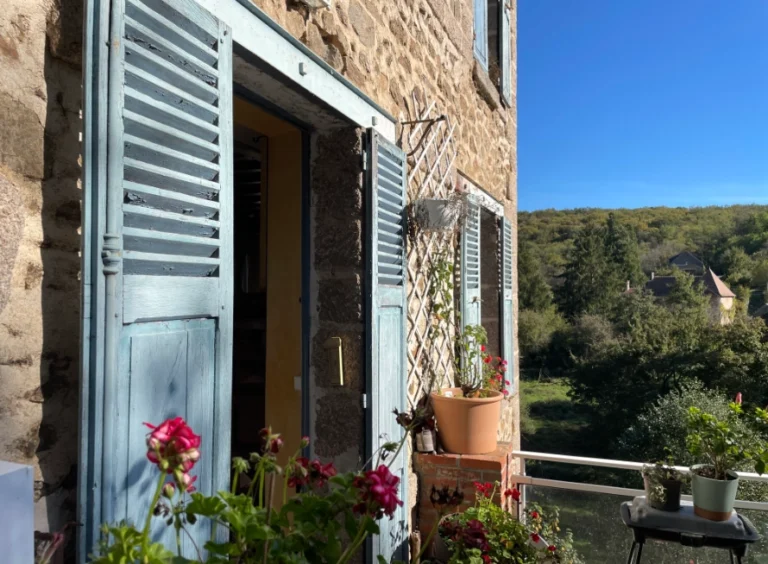
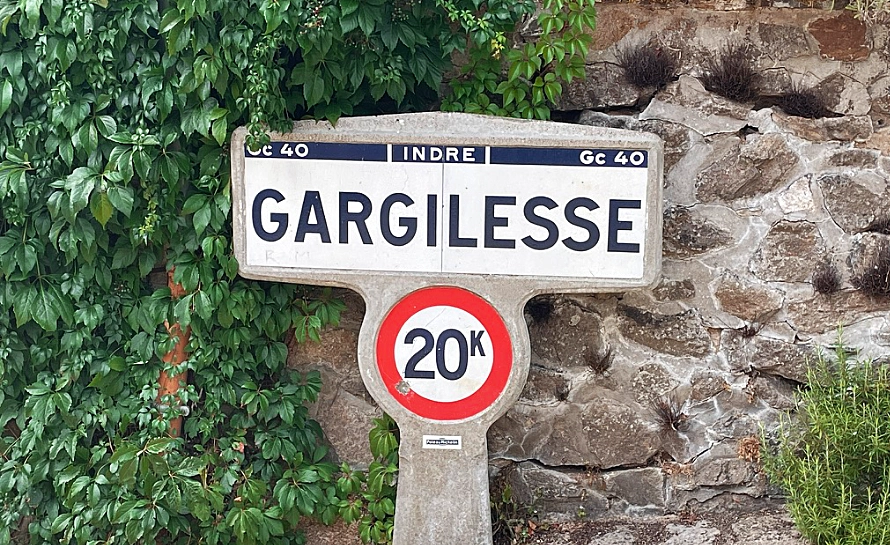
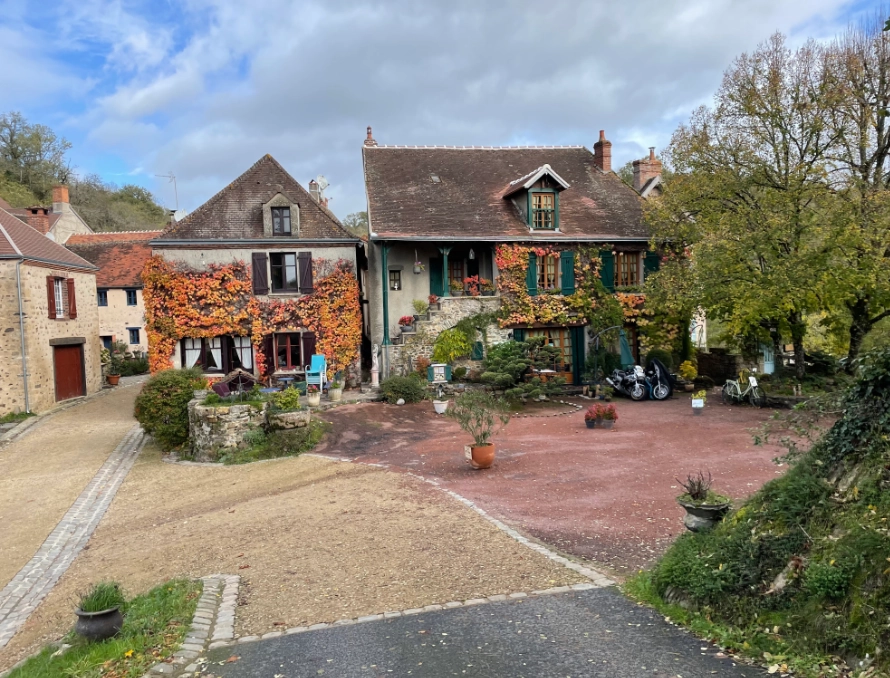
The road to Gargilesse in is half the pleasure. You come off the main route near Argenton-sur-Creuse and drop down through the trees on a lane that keeps folding back on itself, and then the valley opens and there it is: a huddle of steep tiled roofs on a spur of schist, a church tower, a château, and the Creuse running below it all.
We go regularly, to slow down and smell the roses.
Gargilesse has about 260 people in it. It has been pulling in painters and writers for the best part of two hundred years, it carries the Plus Beaux Villages de France label, and somehow it has managed all of that without becoming unbearably touristy, which in my opinion is the nicest part of the town.
Here’s what’s actually there, what’s worth your time, and one thing that gets repeated everywhere online that isn’t quite true.
Table of Contents
The history of Gargilesse
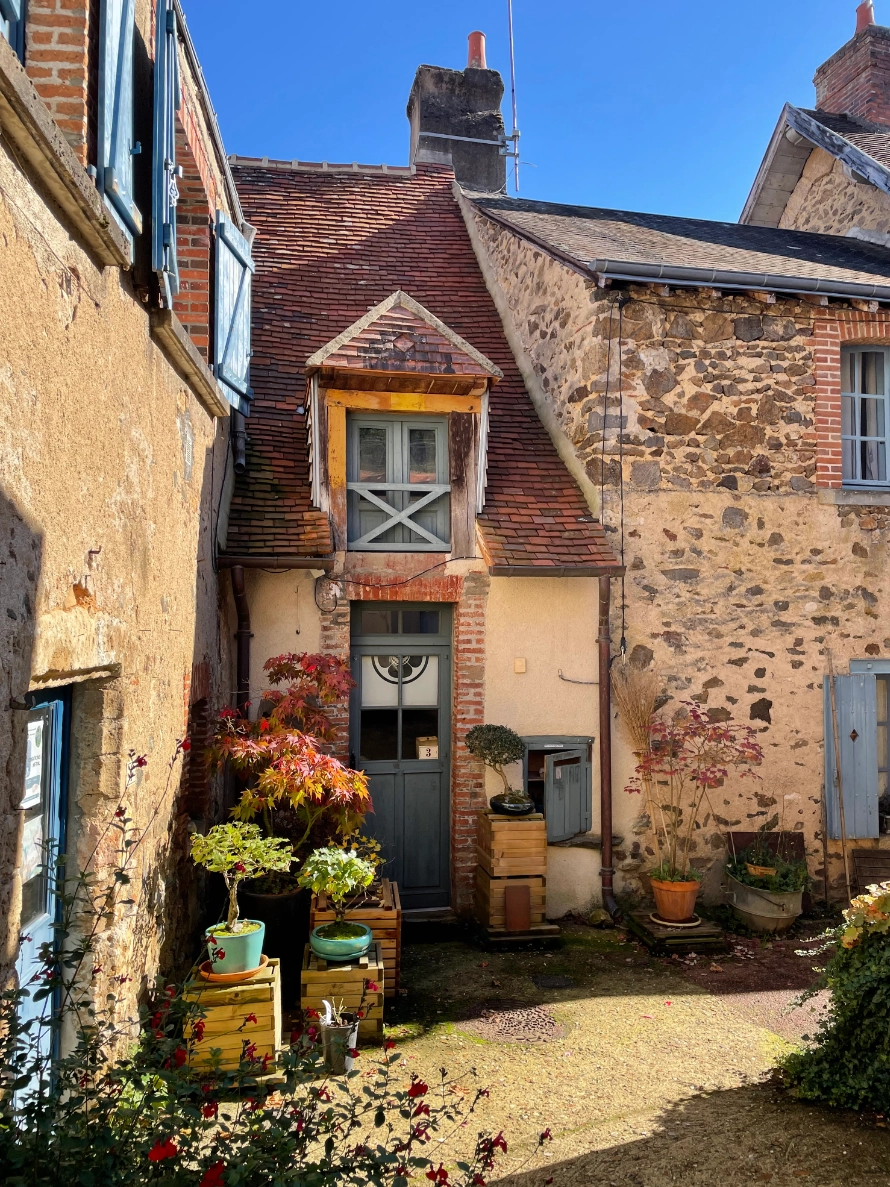
Gargilesse’s history goes back well over a thousand years. The village grew up around a strategic position overlooking the river Creuse, and its name is thought to come from a local Roman or early medieval figure named Gargilius.
By the 12th century the lords of Gargilesse had a castle here and the place became a minor but important stronghold. Over the centuries, Gargilesse’s castle saw its share of conflict. The castle was knocked about during the wars of religion, and in the 17th century it was besieged by Turenne’s troops because whoever owned it at the time had picked the Fronde’s side, which turned out to be the wrong one. They took it, burned it and pulled it down.
In 1750 Olympe de Chevigny built the elegant manor that stands there now on top of the ruins, which is what you’re looking at when you look at the château. The 17th-century square tower to the east survived and is still there too. The manor now hosts exhibitions, so the whole site has ended up back where it started, more or less, as the thing the village organises itself around.
The church and the crypt
Don’t skip this. It’s the best thing in the village and people walk past it to get to the George Sand house. But it’s what I associate Gargilesse with the most after the famous writer.
The Notre-Dame is a 12th-century Romanesque church, who started life as the castle chapel, built in the 12th century by Hugues de Naillac to house a Byzantine Virgin he’d been given by a monk in Constantinople. It was inside the castle walls and connected to the château at ground level through the crypt, though that door was bricked up long ago. Prosper Mérimée put in the request that got it restored in 1849.
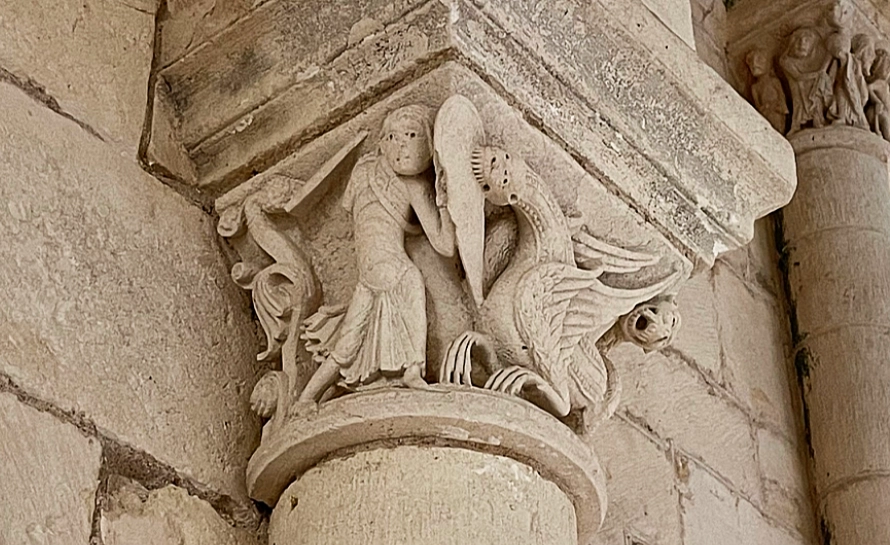
Inside there are around 129 carved capitals, one of the finest sets in the whole of Berry. Fantastic beasts, lions, centaurs and birds, tangled up with scenes from the Old and New Testaments. There’s a Daniel in the lion pit, and in the north apsidiole the whole childhood of Christ. A comic strip cut into stone for a congregation who couldn’t read a word.
Now look up. This is the bit almost everyone misses, and I say that as someone who has been in this church many times and had to be told.
At the top of the pillars where the transept crosses, on eight capitals, are the twenty-four Elders of the Apocalypse. Three to a face, eight capitals, twenty-four Elders. They’re crowned and seated on thrones. They were carved paying homage to God, who would have been painted on the dome above them. That paint has gone completely. So the Elders are still up there worshipping something that isn’t there any more.
There’s also the recumbent effigy of Guillaume de Naillac, lord here from 1238 to 1266. It’s badly worn, and not from age: women who wanted children came and scraped at the stone, for generations, until they wore it away. The same instinct that filled the fountain at La Châtre with candles and also similar to the tomb at Saint-Léonard-de-Noblat.
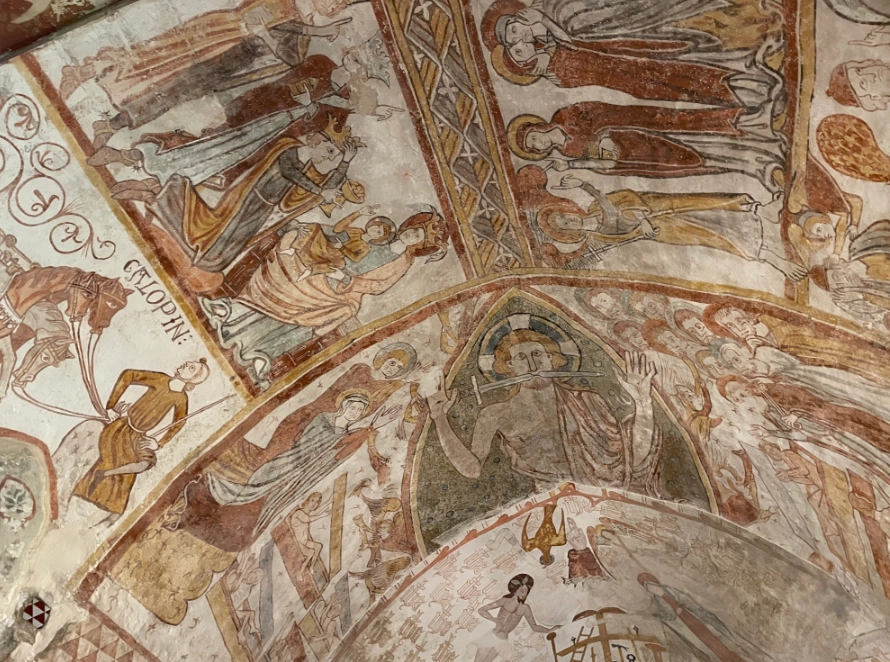
Then go down the stairs. Under the chevet there’s a big crypt with stunning frescoes on the vaults, 13th to 16th century, well lit and in really beautiful colours.
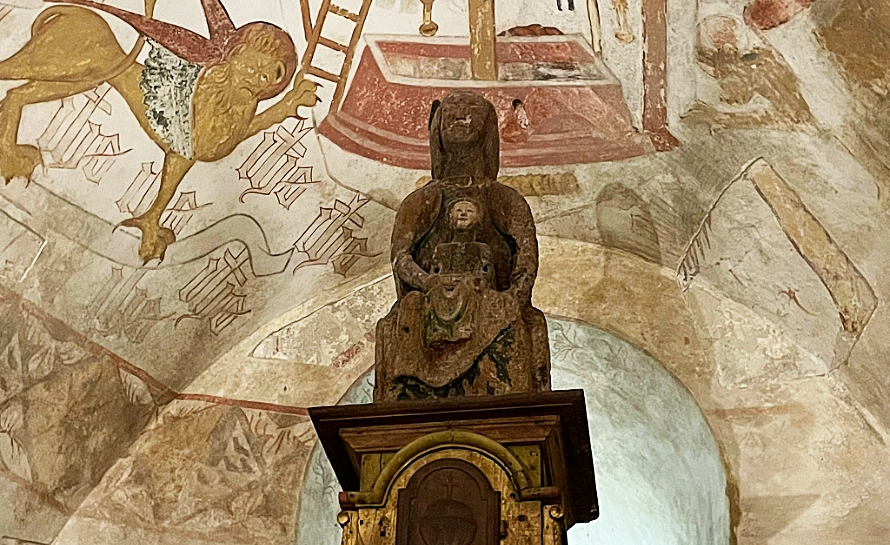
And the Virgin herself is down there too, carved in walnut in the 12th century, possibly the oldest statue in the whole Indre and listed since 1975. She’s the reason the building exists.
Twenty minutes minimum and worth every second in my opinion.
George Sand’s retreat in Gargilesse
In June 1857, George Sand and Alexandre Manceau were walking along the Creuse and came into Gargilesse at sunset.
Manceau bought her a small house and she called it the Villa Algira, after a rare grey-striped butterfly they’d spotted on one of their walks. It became her escape from Paris and from Nohant, from family and visitors and the sheer volume of her own life. She worked on several novels here and kept coming back until Manceau died in 1865.
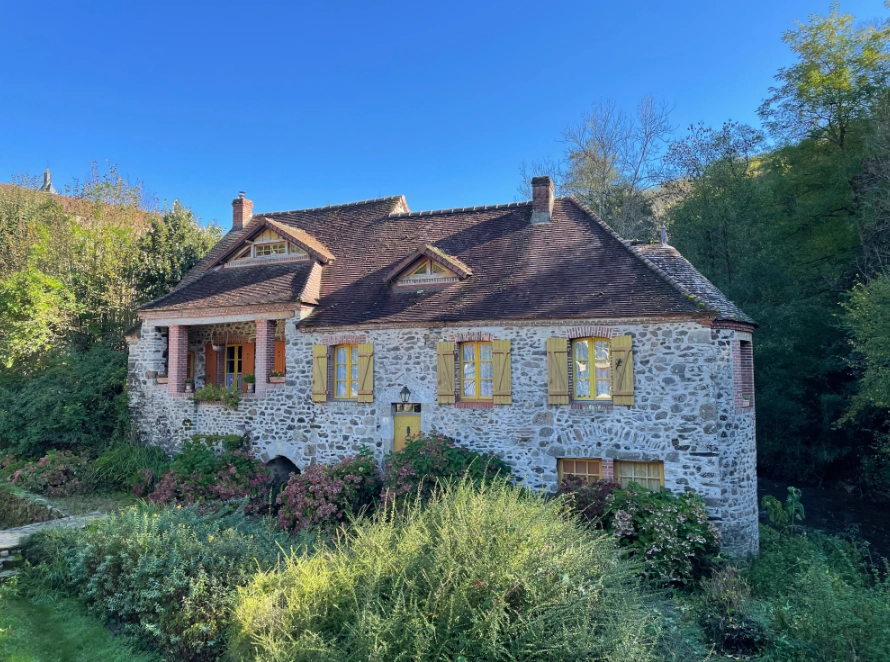
It’s tiny and only has four rooms, dry-stone walls and local tiles on the roof. I think it tells you more about George Sand than any biography does, because underneath all the scandals and the cigars and the seventy novels, was a woman who needed a modest and quiet room in order to work. She found one there, up a lane, in a village of two hundred people. It’s a small space but it feels personal.
It’s a museum now and it’s a good one, not the usual roped-off furniture affair. Her desk is there. Her books, her letters, drawings by her son Maurice, her naturalist collections. It feels like a place someone actually used rather than a display about someone who used it.
She wrote afterwards that you have to arrive at sunset, because everything has its moment for being beautiful. If you can time it, do.
I’ve written more about George Sand’s life and where to start with her books, as I find her story fascinating and I admire the woman as well as the writer.
La Vallée des Peintres
Monet came to the Creuse valley in 1889, at the urging of the critic Gustave Geffroy, and stayed at Fresselines, about forty kilometres upstream in the Creuse department. He was there from 5 March to 19 May, working obsessively on the confluence of the Grande and Petite Creuse, and came away with around twenty-five canvases of the same view in different light. Fourteen of them hung at his joint show with Rodin in Paris that July, and it was the first time critics used the word series about his work. So that valley is where the idea of the Monet series was born, which is a considerable thing to have happened forty kilometres up the road.
Armand Guillaumin is the other big name, and he settled at Crozant from the early 1890s and painted the area for thirty years. He wrote to a friend that there might be somewhere in the world as beautiful as Crozant, but he couldn’t believe there was anywhere more so.
Gargilesse belongs to the same story. The standard reference book on all of this is called L’École de Crozant: les peintres de la Creuse et de Gargilesse, and its author counted around four hundred painters working in this valley between 1850 and 1950. Gargilesse’s own painter is Léon Detroy, who made the village his home and whose work fills the small Maison de Léon Detroy in the centre.
What all this means practically: if you’re coming for the painters, Gargilesse is one stop on a route that runs up to Crozant and Fresselines. Do the three and you’ve done the Vallée des Peintres properly.
Why artists are still here
The tradition kept going, which is the unusual part. Plenty of places had an artistic moment in 1880 and now have a plaque about it.
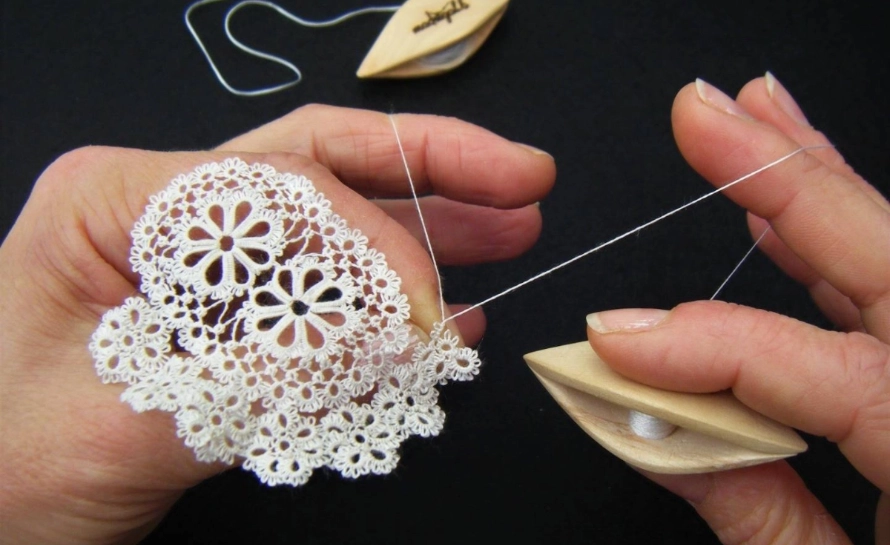
Gargilesse has working studios and galleries scattered through the lanes, and several are open to visitors. I’ve met Sabine Halm, who does meticulous and gorgeous textile and lace work. You definitely need to go see her work!
The harp festival
Every August the Romanesque church fills up with harps, because the great French harpists Pierre Jamet moved to Gargilesse in the early 1960s to teach harp from his own house, and friends eventually talked him into putting on a festival. It’s still going. Hearing harp music in a 12th-century church with a crypt full of frescoes underneath your feet is not something you forget. If your dates are flexible at all, do plan around it, it’s a special and memorable moment to experience.
What to see and do in Gargilesse
- Church of Notre-Dame
Explore the Romanesque architecture and don’t miss the crypt with its frescoes. It’s a fascinating spot. - Villa Algira
Step inside George Sand’s home and museum. The house is small but packed with history and personal touches. - The château
The 18th-century manor hosts exhibitions and offers lovely views over the valley. It’s worth a stroll through its gardens, too. - Maison de Léon Detroy.
The village’s own painter, in a small museum in the centre. - Village streets
Take your time to browse the galleries and studios. The village is small enough to explore on foot but rich enough in detail to keep you interested. - Café Ô Gargilesse
This friendly café is popular with locals and visitors alike. It’s a great place to soak up the view, enjoy some regional food, and watch the world go by. - Walk along the river Creuse
The Creuse valley offers pleasant riverside paths. It’s a peaceful way to experience the landscape that has inspired so many.
Practical information
- Getting there
Best by car. About 30 minutes from Argenton-sur-Creuse, which is on the Paris to Toulouse line. The lanes in are narrow and steep, and parking is at the edge of the village rather than in it, which is exactly as it should be. - When to visit
The village is pleasant year-round. Spring and autumn offer mild weather and fewer crowds. The annual Harp Festival in August is a cultural highlight. - Accommodation
There are several guesthouses and small hotels in Gargilesse and nearby villages. Booking in advance is advisable during summer.
FAQ
Where is Gargilesse-Dampierre?
In the Indre department (36) in Centre-Val de Loire, where the Gargilesse stream meets the river Creuse. It’s about 30 minutes from Argenton-sur-Creuse and 40 minutes from Nohant and La Châtre. A car is much the easiest way to get there.
Is Gargilesse one of the Plus Beaux Villages de France?
Yes! Gargilesse-Dampierre carries the Plus Beaux Villages de France label, one of only a handful in the Indre.
Why is Gargilesse famous?
Three reasons. George Sand had a small house here, the Villa Algira, which is now a museum. The Romanesque church has one of the finest sets of carved capitals in Berry and a crypt of medieval frescoes. And the village has been part of a painters’ colony in the Creuse valley since the 1850s.
Did Monet paint at Gargilesse?
No, though it’s widely repeated. Monet worked at Fresselines, about forty kilometres upstream in the Creuse department, from March to May 1889, producing around twenty-five canvases of the confluence of the two Creuses. Gargilesse belongs to the same painters’ valley but Monet didn’t paint there. The village’s own painter is Léon Detroy.
Can you visit George Sand’s house in Gargilesse?
Yes! The Villa Algira is a museum containing her desk, books, letters, naturalist collections and drawings by her son Maurice. It’s a four-room house and takes about half an hour. Hours are seasonal, so check before travelling.
What is there to see in the church at Gargilesse?
Around 129 carved Romanesque capitals, including the twenty-four Elders of the Apocalypse arranged three by three, the tomb of Guillaume de Naillac, and a small 12th-century Romanesque window. Down the stairs, the crypt has frescoes from the 13th to 16th century and a 12th-century wooden Virgin.
When is the Gargilesse harp festival?
Every August, in the Romanesque church. It was founded by the harpist Pierre Jamet, who moved to the village in the early 1960s to teach from his own home.
How many people live in Gargilesse?
Around 260, down from about 400 in the late 1960s.
Over to you
What gets me about Gargilesse is the serenity and beauty of this village. It’s one of the best sets of Romanesque capitals in Berry, the crypt full of medieval frescoes is stunning, you can visit the famous novelist’s writing room, there’s a painters’ tradition that’s still runs today, and something you won’t find anywhere, a harp festival. That’s a serious amount of stuff for a village you can cross in a quarter of an hour!
Have you been, or is this corner of the Indre new to you? What is your favourite small French village? Have you been to the house of George Sand? Let me know in the comments!