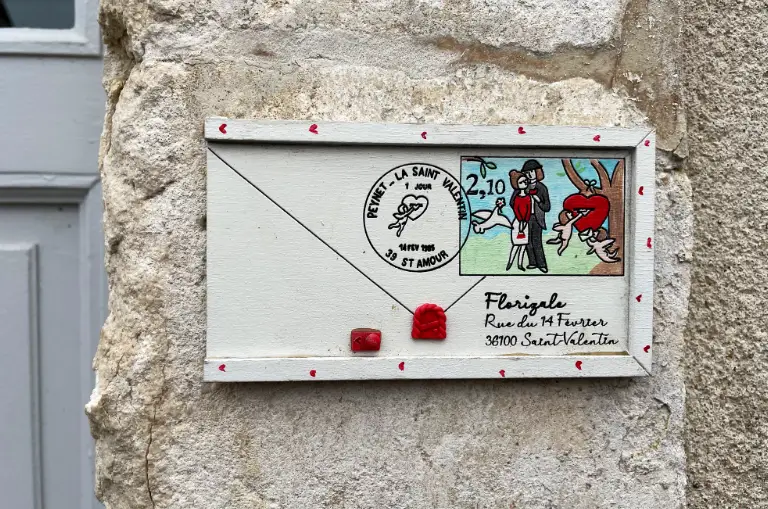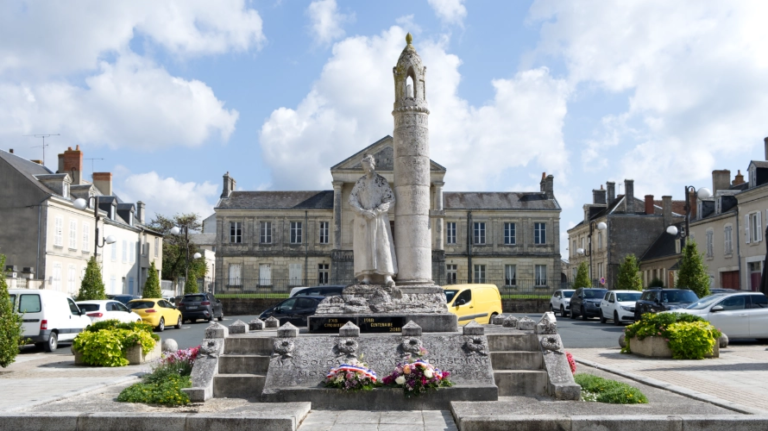
There’s a particular small French town that people drive through on the way to somewhere else, glance at, think “that looked nice”, and never come back to. But if you pass through La Châtre don’t make that mistake, and go visit.
It’s a charming little village with crooked medieval lanes, old achitecture, a Saturday market that fills the square with vegetables and cheese. With a little over 4,000 people, it is big enough to have its own character and small enough to feel like you have found something special. Give it an afternoon. That’s genuinely all it asks.
Table of Contents
One thing to know before you go
I need to lead with this, because if you’ve read anything else about La Châtre online it’s probably out of date and you could end up standing outside a locked door.
The Musée George Sand et de la Vallée Noire is closed. Not “closed on Mondays” closed but closed for years.
Why? Because the museum has existed since 1876 and lived inside the old donjon from 1937 until 2016, when the tower had to shut for conservation and access reasons. A small “musée de poche”, a pocket museum, opened in the Hôtel de Villaines in 2020 to keep some of the collection visible in the meantime. That pocket version closed for good on 21 September 2025 so that the real work could start.
The plan is a proper new museum spread across the whole Hôtel de Villaines site and the square next to it, around 2,400 square metres, holding a collection of nearly 6,000 pieces. Reopening is currently pencilled in for 2029 or 2030.
So if George Sand is the reason you’re coming, you need to go to Nohant instead, which you should be doing anyway. More on that below.
None of which means don’t come to La Châtre. It just means come for the town instead.
Wait, who was George Sand?
If you’re French this is a silly question, and if you’re not there’s a decent chance the name means nothing to you, which is a shame because she was extraordinary.
The very short version is that George Sand was a writer. She was born Aurore Dupin in 1804, wrote more than seventy novels, and was one of the most famous writers in 19th-century France. She grew up in this corner of the Indre, wrote most of her books here, and gave the countryside around La Châtre the name it still carries: la Vallée Noire, the Black Valley. It isn’t an official term on any map. It’s hers, out of her novels, and everybody knows.
I’ve written about her life and her books properly over here, because she deserves more than a paragraph. For now, all you need to know walking round La Châtre is that this landscape is hers.
Nohant, and why you have to go
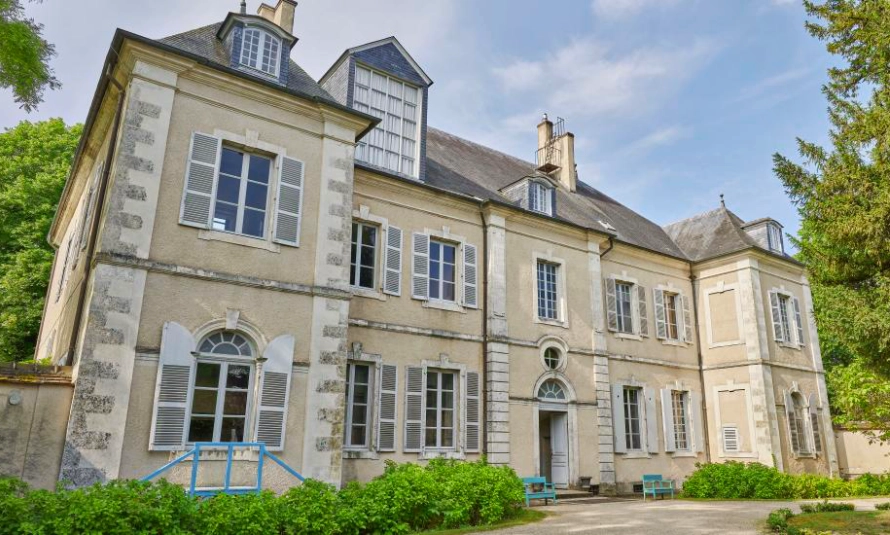
Six kilometres up the road, in Nohant-Vic, is the house George Sand grew up in and came back to all her life. It’s a Centre des Monuments Nationaux site now, and with the town museum shut it’s the reason to be in this part of the Indre at all.
I’ve written about the house and everyone who passed through it separately, so I’ll keep this to what you need for the drive.
The house is by guided tour, about an hour, and booking is strongly advised in summer. Hours move with the season, roughly 10am to 5pm in winter and 9.30am to 6.30pm in high summer, and it’s closed on 1 January, 1 May and 25 December. Entry is free for EU residents under 26.
The park is six hectares with a Jardin Remarquable label and you can walk it freely without doing the house tour, which is worth knowing if you arrive between slots or you’re travelling with someone who’d rather be outside.
If your dates are flexible, the Nohant Festival Chopin runs in June and July, and hearing that music played in the house it was written in is a different experience from hearing it anywhere else.
It’s ten minutes from La Châtre. Do both in a day.
The Maison Rouge
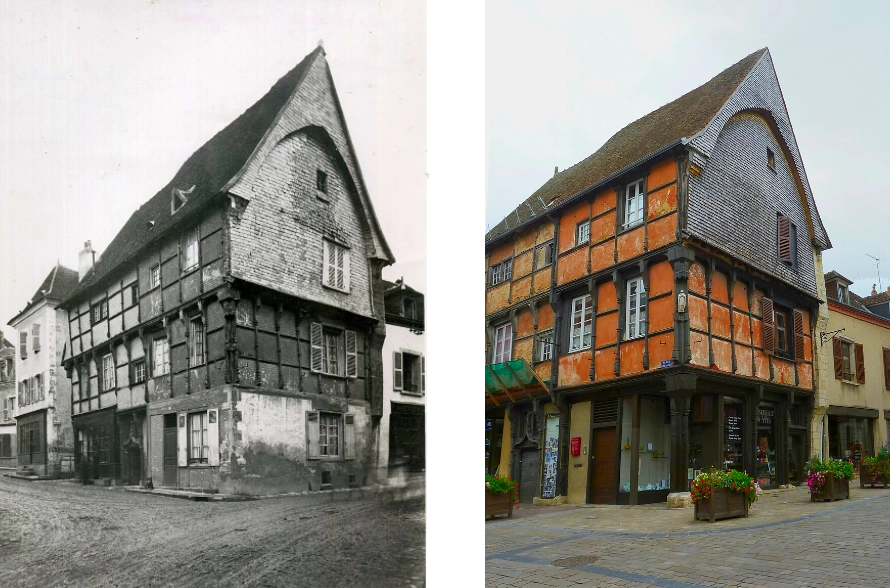
The Maison Rouge is the building you notice first, and you remember afterwards. It is a half-timbered merchant’s house standing where three streets meet in the centre, all beams and angles and slightly improbable geometry. The timbers were painted red in the 19th century, which is when it really started turning heads, but the bones are older and belonged to a successful merchant family.
Look at the doorway rather than just the building. There are carved vines and grapes around it that reward standing still for a minute.
George Sand used it as a setting in her novel André, and once you’ve seen it you understand why she wanted it in a book. The house nearly went the way of so many old buildings, but local people and businesses pulled together to save and restore it. Today it is home to the Confiserie Saint‑Yves, which is alone a good reason to plan a stop.
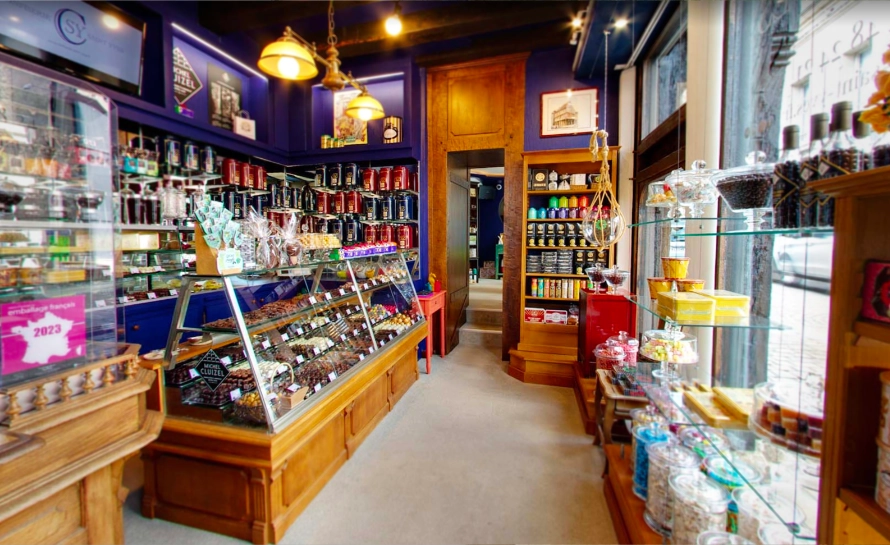
Confiserie Saint-Yves
The Maison Rouge now houses a confiserie, which is the best use for a beautiful old building.
Confiserie Saint-Yves has been a family-run chocolatier and sweet shop for decades and you can feel the care in it, right down to how things are laid out in the window. Handmade chocolates, nougat, regional sweets. It’s a shop where regulars come in for “the usual” and you find yourself slightly wishing you lived close enough to become one.
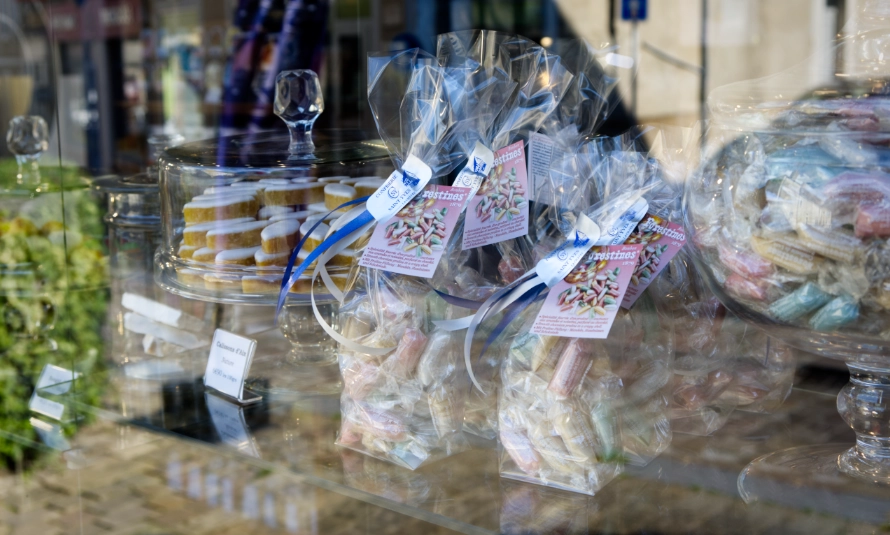
The Calissons d’Aix are particularly irresistible, the owner is passionated and was so kind to give us two to try for free as I told her I was going to write about her beautiful shop. Calissons are from Aix, not from Berry but this sweet shop makes the best ones in my opinion! You really have to stop and get yourself some sweets, you’ll be glad you did, I promise.
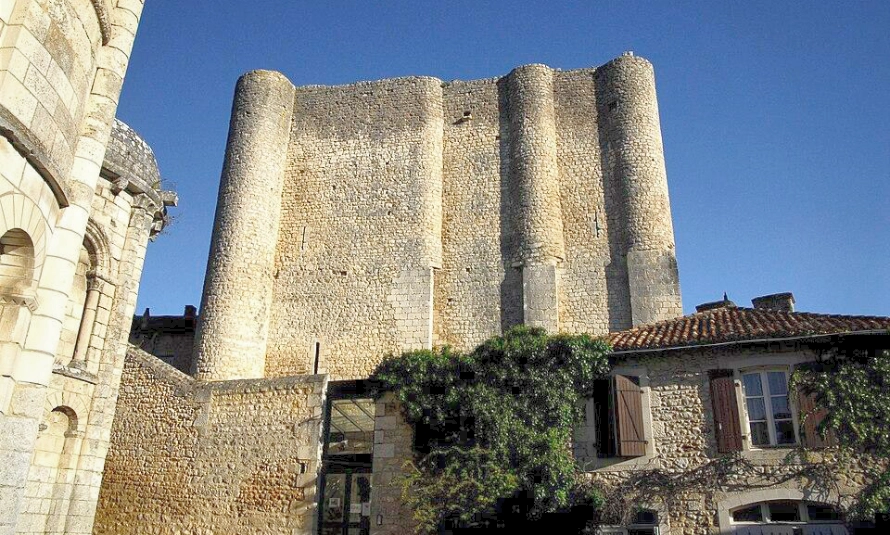
The donjon and the fountain
A short walk away the Donjon des Chauvigny rises up in solid grey stone, 15th century, with walls thick enough that you understand its purpose without anyone explaining it.
Its afterlife is the interesting part. It was a prison, right into the 20th century. Then a local collector turned it into a tribute to George Sand and left it to the town, which is how it became the first home of the museum in 1937. Fortress, prison, museum. History here seems to move in circles rather than lines.
The tower closed in 2016 and the museum moved out, so you’re looking at it from the outside. It’s still worth the walk.
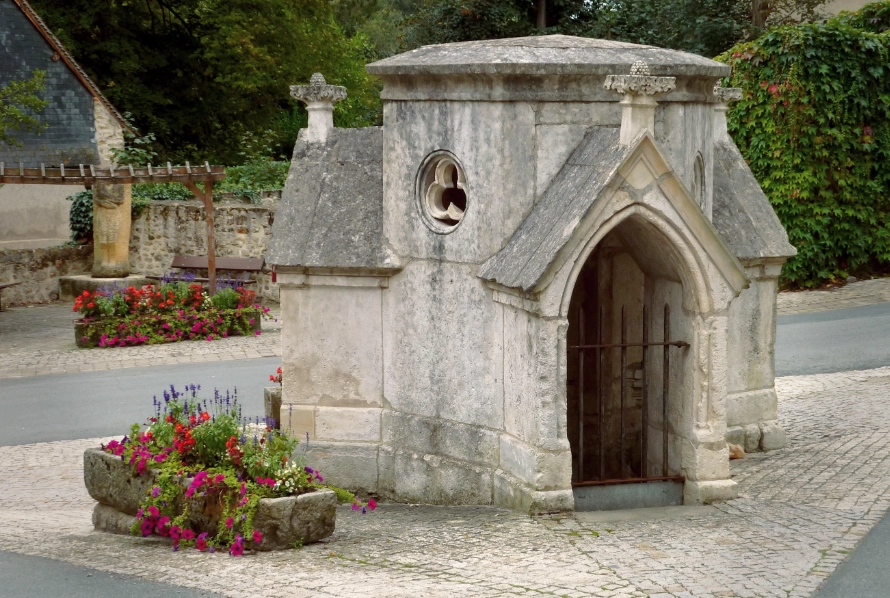
Tucked at the base of it is the Fontaine Sainte-Radegonde, and you will walk straight past it if nobody tells you it’s there. It’s a small neo-Gothic structure on much older foundations, with a statue of Sainte Radegonde under a little canopy of niches, above a spring.
Women once came here to light candles and ask for safe deliveries for mothers‑to‑be; the belief in the water’s protective powers lingered locally for a long time. It has been listed as a historic monument for a century now, and it still feels very personal standing there imagining the ones who asked for it’s blessings.
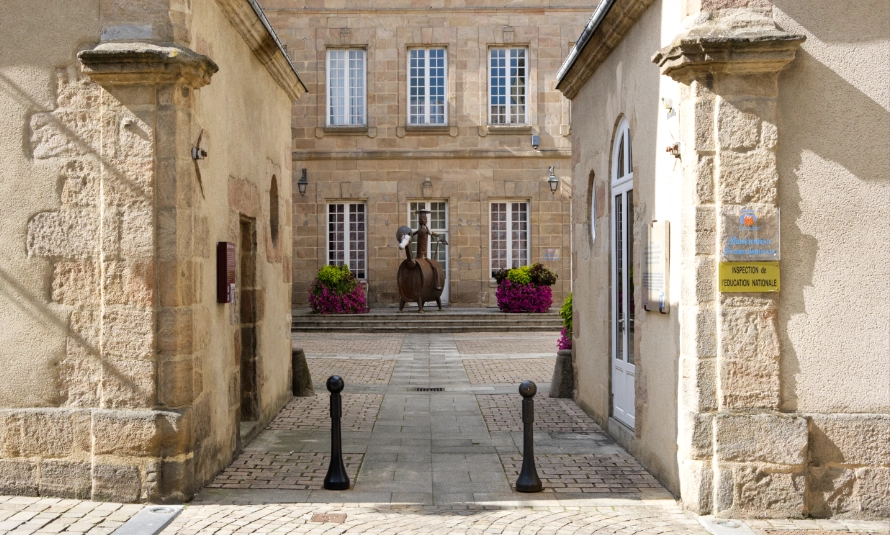
The Hôtel de Villaines
Round the corner, the Hôtel de Villaines is the most interesting building in town if you like buildings that have had several lives.
It began as an 18th‑century noble residence, passed through revolutionary turbulence, became a school in the 19th century. It held the pocket museum from 2020 to 2025. And it’s now being rebuilt into the new George Sand museum for 2029 or 2030.
You stand looking at a perfectly calm façade and think about how many completely different things have happened behind it without the address ever changing. Nothing to go inside for at the moment, but worth a look on your way past.

The brocante, and the café
Jour D’Occase is a brocante that feels like an Aladdin’s cave. The shelves and tables are piled with old books, scarves, glassware, and objects whose stories you want to ask about. The owner is friendly and happy to talk, and the prices are refreshingly reasonable. It is very easy to lose half an hour here and come out with a book from the 1950s and a bowl you definitely did not need but could not leave behind.
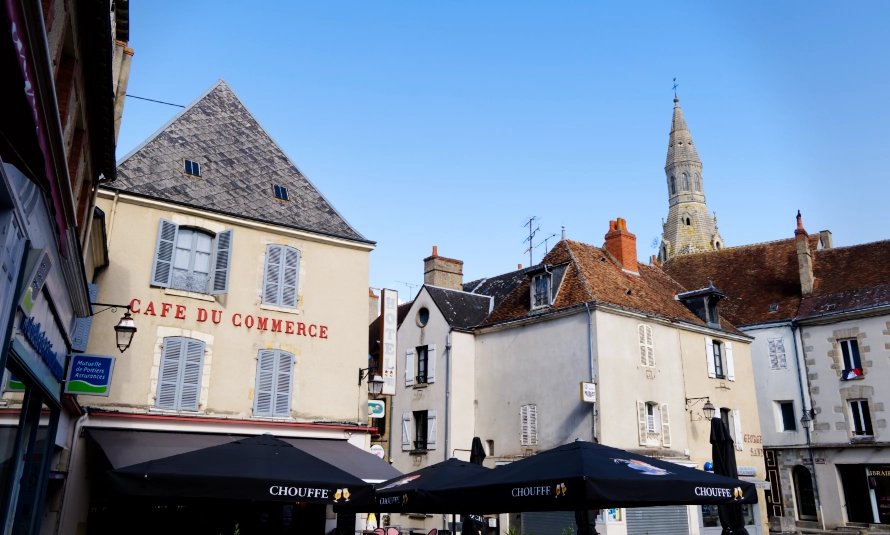
When you are ready for a pause, Café du Commerce on the main square is exactly where you want to land. The terrace looks straight onto the middle of town, and it is entirely acceptable to sit there with a coffee and eat the sweets you just bought while watching people cross the square. Upstairs, the small hotel offers simple, well‑kept rooms and a relaxed welcome. It is not grand, but it is central, friendly, and practical, which is often exactly what you need.
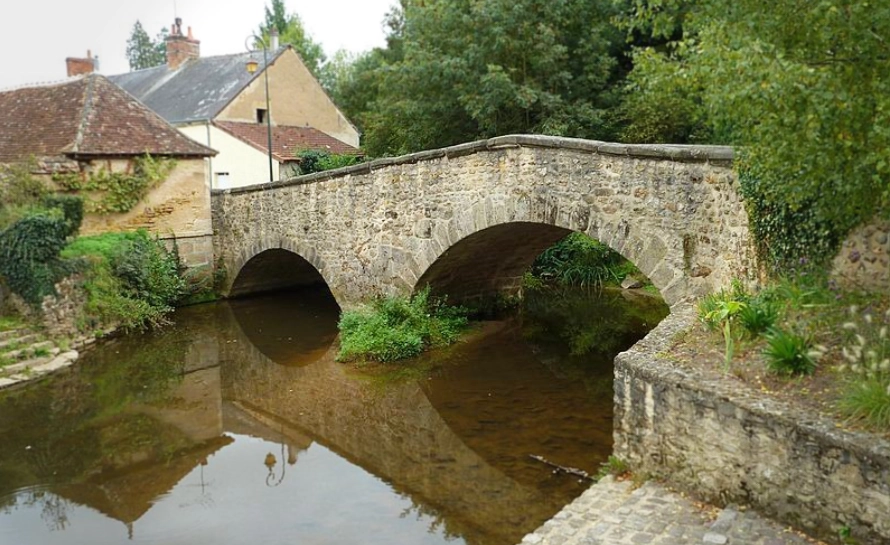
The Pont-aux-Laies
Down from the place de l’Abbaye, a medieval bridge crosses the Indre on two stone arches, and it’s easy to file it under “just another old bridge”. Two things make it worth stopping though.
First, there was a major Roman road through here, running from Argentomagus down towards Châteaumeillant, and archaeologists have traced long stretches of it. What nobody has ever found is where it crossed the Indre. This bridge is one of the two candidates. So you’re standing on a maybe, which I find very interesting historically.
Secondly, the name is a mystery too and nobody can explain it. It’s been spelled Pontaulais, Pontaulay, Pont au legs, Pont aux Laies. A laie is a female wild boar, which is where the local story comes from, that boars tried to get into the town across this bridge during a drought year.
Look downstream while you’re up there: the river, its small islands, and the old tanneries along the bank, which is what La Châtre did for a living long before anyone came here for George Sand.
The Saturday market
The market is every Saturday morning, and this is when the town is most itself.
Fruit and vegetables from nearby, cheese from people who made it, charcuterie, the usual clothes and household stalls at the edges. It’s a working market for the people who live here rather than a display for visitors, so go early, take a basket and buy your lunch there.
What to see and do in La Châtre
- Tour Maison Rouge
Admire this 15th-century half-timbered house, an iconic bit of local history and architecture. - Treat yourself at Confiserie Saint-Yves
Step inside for handmade chocolates, proper French sweets, and the friendliest welcome in town. Don’t miss the Calissons d’Aix and chocolates. - Drive to Nohant
Six kilometres. George Sand’s house, kept as she left it, plus six hectares of garden. This is the one to plan around. - Walk up to the Donjon des Chauvigny
See the imposing medieval tower that once kept an eye on the town. It’s a key part of La Châtre’s story, closely linked to the George Sand Museum. - Break at Café du Commerce
Order a cup of Richard coffee, enjoy your treats from the confiserie, and take in the everyday buzz of the main square. - Browse Jour D’Occase
Hunt for treasures and bargains in this Ali Baba’s cave of old books, antiques, and vintage finds. - Find the Fontaine Sainte Radegonde
Visit this centuries-old fountain where women once prayed for easy births and good fortune. - Cross the Pont-aux-Laies
Walk across this historic two-arched stone bridge and imagine the stories of travellers and townsfolk who’ve crossed here for centuries. - Explore the market (Saturdays)
Mingle with locals and stock up on fresh fruit, veg, cheese and regional produce at the lively Saturday market.
Practical information
- Getting there
La Châtre is on the D943, about 45 minutes south-east of Châteauroux, and a car is much the easiest way. There’s a regular bus from Châteauroux if you’d rather not drive. Once you’re here the centre is small and completely walkable, and parking near the main squares is usually straightforward. - When to visit
Spring and autumn give you mild weather and the best light on the old stone. Summer brings festivals and more people. For the quietest, most atmospheric version, come midweek outside the school holidays. - Where to stay
The Hôtel du Commerce in the centre is the most convenient option and well-reviewed for its welcome and location. For more space and quiet, countryside gîtes and chambres d’hôtes just outside town are widely available and give a better sense of the Berry landscape that George Sand wrote about. - Check before you travel
The George Sand museum is shut until 2029 or 2030 and Nohant’s hours change several times a year. Two minutes on their websites will save you a wasted drive.
FAQ
Is the Musée George Sand in La Châtre open?
No. The museum closed its pocket version at the Hôtel de Villaines on 21 September 2025 and is being rebuilt into a much larger space across the whole site. Reopening is planned for 2029 or 2030. Until then, the place to go for George Sand is her house at Nohant, six kilometres away.
Where is La Châtre?
In the Indre department (36) in Centre-Val de Loire, on the D943 about 45 minutes south-east of Châteauroux. It has just over 4,000 residents and sits in the landscape George Sand named the Vallée Noire.
What is there to see in La Châtre?
The Maison Rouge with its red-painted timbers and carved doorway, the Confiserie Saint-Yves inside it, the Donjon des Chauvigny, the Fontaine Sainte-Radegonde at its base, the Hôtel de Villaines, the Pont-aux-Laies, and the Saturday market. Half a day covers the town comfortably.
How far is Nohant from La Châtre?
About six kilometres, a ten-minute drive. George Sand’s house at Nohant-Vic is a Centre des Monuments Nationaux site and is the main reason most visitors come to this part of the Indre.
When is the market in La Châtre?
Saturday morning. Fruit, vegetables, cheese and charcuterie from local producers, plus the usual household and clothing stalls. It’s a working market rather than a tourist one.
What is the Vallée Noire?
The name George Sand gave to the countryside around La Châtre in her novels. It isn’t an official geographical term, but it stuck, and it’s still used locally and in the museum’s name.
How long do you need in La Châtre?
Half a day for the town. A full day if you’re combining it with Nohant, which is the sensible way to do it.
Is La Châtre worth visiting?
If you like small working French towns rather than polished tourist ones, yes. It’s medieval lanes, a genuine market and a handful of good buildings, and it pairs naturally with Nohant next door. If you need a lot of attractions to fill a day, treat it as half of a day rather than all of one.
Over to you
La Châtre isn’t going to overwhelm you and it isn’t trying to. What it does is reward slowing down: a doorway with vines carved into it, a fountain at the foot of a prison tower, a bridge where a Roman road used to be, a bag of chocolates eaten on a café terrace while the square gets on with its morning.
Then you drive six kilometres up the road and stand in the room where Chopin worked.
Have you been to this part of the Indre, or is the Vallée Noire new to you? And if you’ve read George Sand, tell me which one, because I’d like to know where people start with her!
This post may contain affiliate links. If you buy through them I earn a small commission at no extra cost to you, and it helps keep this blog running. Please read my disclosure policy for more information. I am grateful for your support.