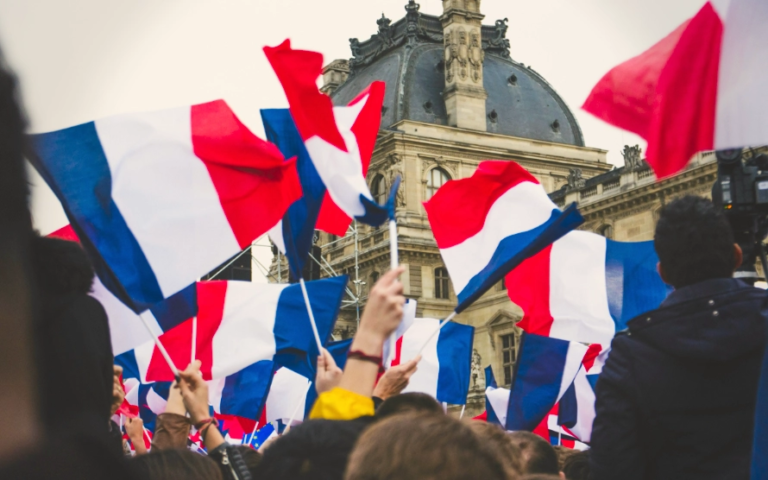
Every year on the 14th of July, France stops. Fireworks light up the sky above every city, town, and village in the country. The military parade on the Champs-Élysées draws thousands of spectators. Firefighters open their stations for dancing that goes on until morning. And the French, who are not always given to public displays of patriotism, allow themselves a day of genuine, uncomplicated national pride.
Bastille Day is France’s most important public holiday, its equivalent of an independence day, though what it commemorates is not independence from a foreign power but something arguably more radical: the moment the French people rose against their own king.
What exactly is Bastille Day?
Bastille Day, known in France simply as le 14 juillet, marks the anniversary of the storming of the Bastille prison on July 14th, 1789. The Bastille was a fortress in Paris used by the Bourbon monarchy to imprison people, often without trial, particularly those who challenged royal authority. By 1789, it had become a powerful symbol of everything wrong with the old regime.
On that July morning, thousands of Parisians gathered outside its walls demanding weapons and ammunition. Within hours, the fortress had fallen. The governor was killed, the few prisoners inside were freed, and the crowd had made its point with unmistakable clarity.
The event did not end the French Revolution. It started it. Within weeks, feudal privileges were abolished. Within months, the Declaration of the Rights of Man and Citizen had changed the legal and social landscape of France forever. The bastille holiday we celebrate today commemorates not just one morning in Paris but the beginning of modern France.
The celebrations also honour the Fête de la Fédération, a vast festival held exactly one year later in 1790, which celebrated national unity and the new freedoms the Revolution had won. Bastille Day was officially designated a french national day in 1880 and has been celebrated without interruption ever since, making it one of the oldest national holidays in the world.
Why the Bastille mattered
To understand why the storming of the Bastille became France’s defining moment, you need to understand what France looked like before it.
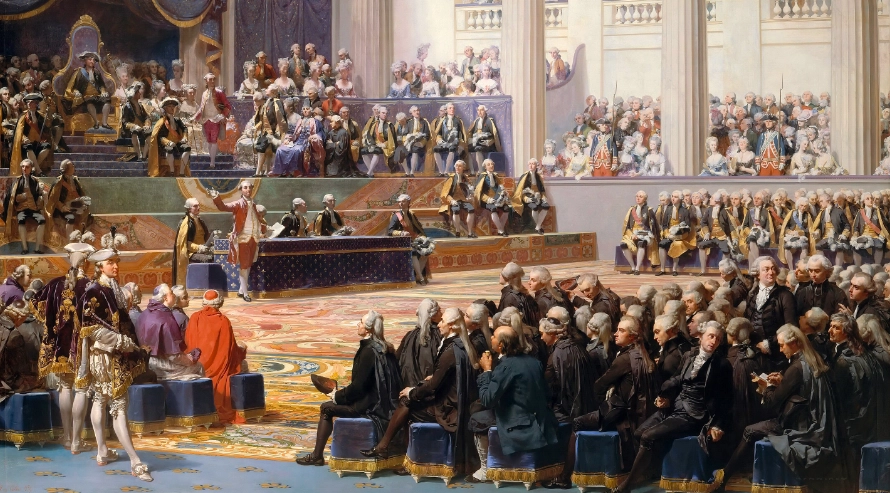
The system that preceded the Revolution was called the ancien régime, the old regime. Power was concentrated in the king, the nobility, and the church. Society was formally divided into three estates.
The First Estate was the clergy, who enjoyed enormous privileges including exemption from most taxes. The Second Estate was the nobility, also largely exempt from taxation despite controlling much of the country’s land and wealth. The Third Estate was everyone else: farmers, labourers, merchants, and the educated middle class. They constituted the vast majority of the population, paid most of the taxes, and had almost no political representation.
The financial situation made everything worse. France had spent heavily on wars, including its support for the American Revolution, and the royal court’s expenses were extraordinary. By the late 1780s, the country was effectively bankrupt. Poor harvests had sent bread prices soaring. Ordinary people were going hungry while the nobility continued to live off rents and privileges.
At the same time, Enlightenment ideas were spreading rapidly through educated French society. Writers and philosophers argued that all people deserved liberty and equality before the law, that governments existed to serve the people rather than the other way around. These ideas did not cause the Revolution directly, but they gave it a language and a set of values that have shaped France ever since.
By the summer of 1789, the frustration had been building for decades. The storming of the Bastille was the moment it broke.
What happened on July 14th, 1789
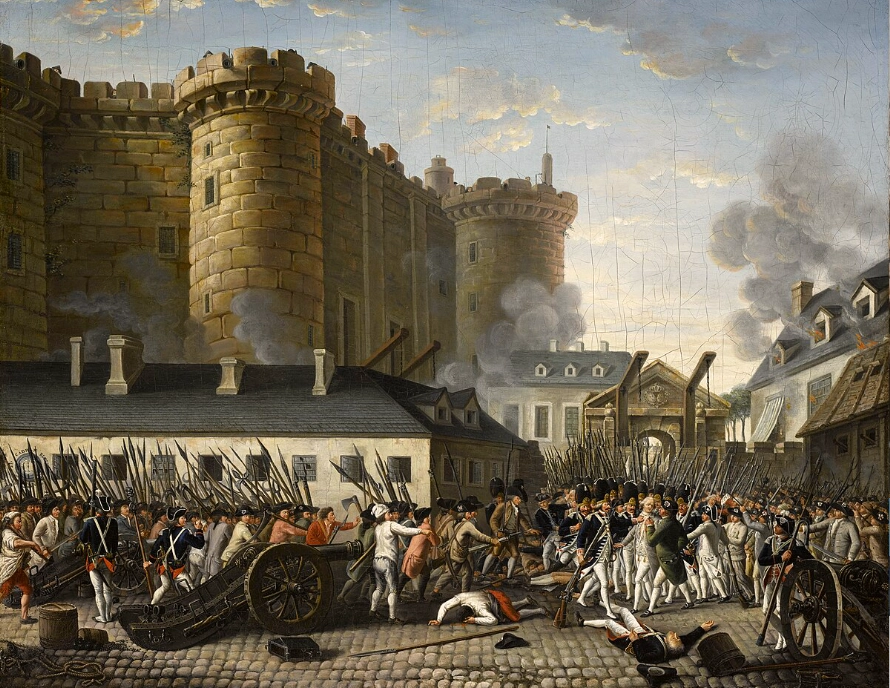
The morning of July 14th, 1789 began with a crowd outside the Bastille demanding that its weapons be handed over to the people. Negotiations between the crowd and Governor de Launay went on for several hours. By afternoon, the situation had turned violent.
Official records show that around 100 people on the attacking side were killed during the assault. Only one defender died. By late afternoon, de Launay had surrendered. He was killed by the crowd shortly afterwards. The Bastille’s weapons were seized, its prisoners freed, and the fortress itself was demolished over the following months.
When King Louis XVI was told what had happened, his initial response was reportedly to say nothing was happening at Versailles that day. His advisors corrected him. The storming of the Bastille was not a riot. It was a revolution, and everyone who was paying attention understood it immediately.
The Bastille prison no longer exists. It was demolished stone by stone after the storming, and some of those stones were used in buildings elsewhere in Paris. The Place de la Bastille now stands where the fortress once stood, with the Colonne de Juillet, the July Column, at its centre, commemorating those who died during subsequent uprisings rather than 1789 itself.
How Bastille Day became France’s national holiday
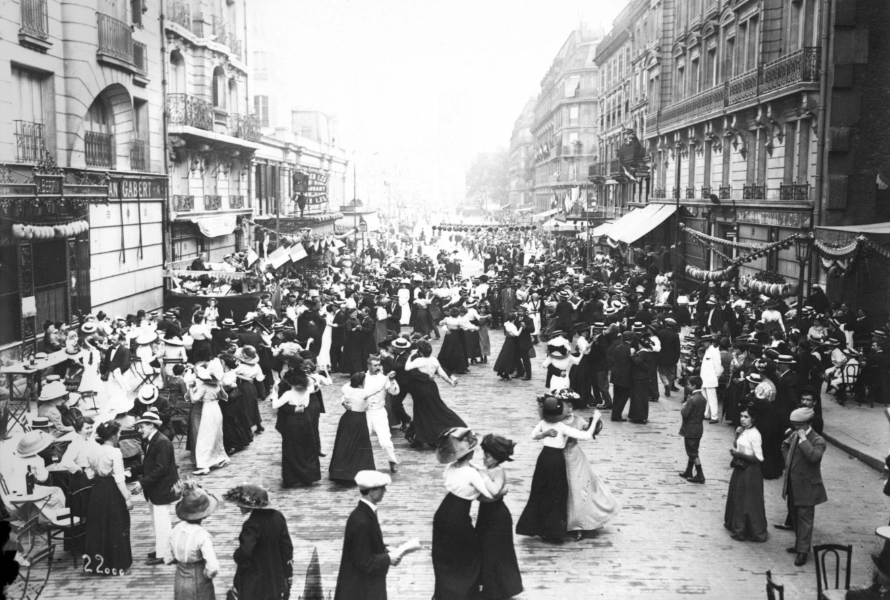
The storming of the Bastille sparked immediate celebrations in Paris and across France, but it did not become an official bastille day holiday until nearly a century later. Bastille Day was formally declared France’s french national day in 1880, a deliberate political choice by the Third Republic to cement the values of the Revolution into national life.
The choice to combine the memory of July 14th, 1789 with the Fête de la Fédération of July 14th, 1790 was also deliberate. The 1789 event represented rupture and revolt. The 1790 event represented unity and the construction of something new. Together, they gave the bastille holiday a more complete meaning: not just destruction of the old but celebration of what replaced it.
Since 1880, the Military Parade on the Champs-Élysées has been one of the centrepieces of Bastille Day. It is the oldest and largest military parade in Europe, featuring thousands of troops, military vehicles, and aircraft from the French armed forces and often from allied nations as well.
How Bastille Day is celebrated today
The french national day is one of the liveliest days in the French calendar, and it operates at every level simultaneously: grand official ceremonies and small local traditions, Paris spectacle and village firemen’s dances.
The Military Parade, Paris
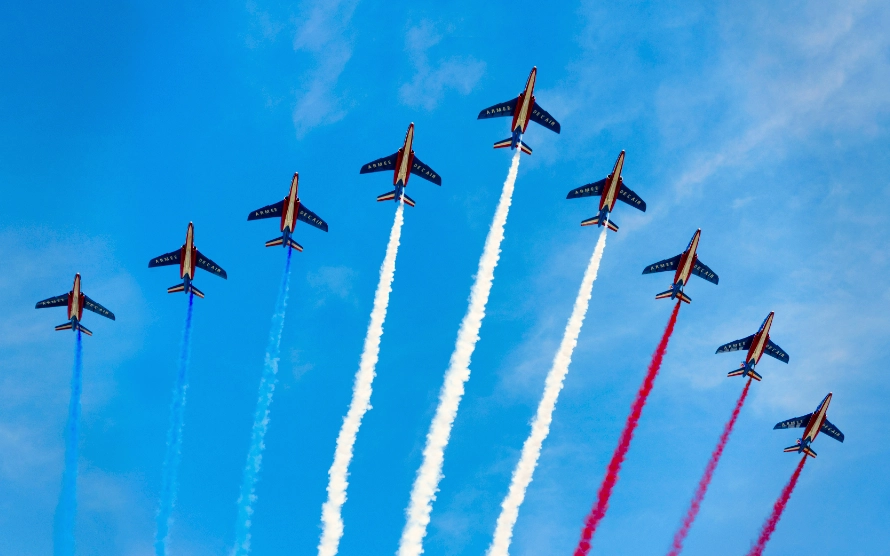
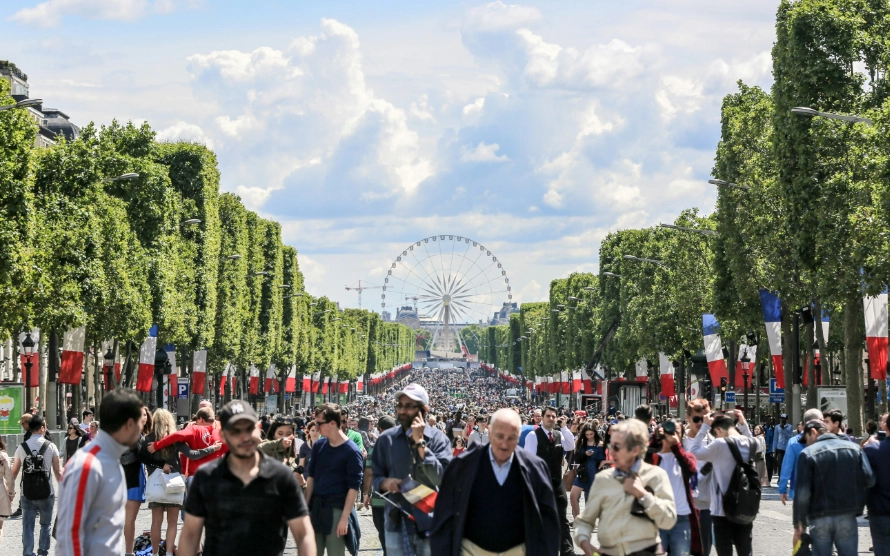
The parade on the Champs-Élysées is the official centrepiece of Bastille Day. It begins at the Arc de Triomphe and moves down the avenue towards the Place de la Concorde, watched by the French President, foreign dignitaries, and thousands of spectators. Over 4,000 military personnel participate, alongside vehicles and a flyover by the Patrouille de France, France’s aerobatic display team, trailing smoke in the blue, white, and red of the tricolore.
The Eiffel Tower Fireworks, Paris
The fireworks display from the Champ de Mars is watched by hundreds of thousands of people in person and millions on television. Thirty minutes of pyrotechnics choreographed to music, with the Eiffel Tower at the centre of it all. Parisians arrive hours early to claim spots on the grass. For a quieter view, Montmartre, the Trocadéro, and rooftop terraces throughout the city all give good angles.
Bals des Pompiers
One of the most distinctive Bastille Day traditions is the bals des pompiers, the firemen’s balls. Fire stations across France open their doors the night before and the night of July 14th for public dances. Firefighters become hosts, bands play, wine is poured, and the dancing goes on until the early hours. It is a tradition that has nothing to do with military parades or official ceremonies and everything to do with local life and community, which is exactly why it has lasted.
Fireworks everywhere
Every city, town, and village in France holds its own fireworks display on the bastille holiday. The scale varies from the 30-minute Eiffel Tower spectacular to a handful of rockets over a village square, but the intention is the same everywhere.
Celebrate Bastille Day Wherever You Are
You do not need to be in France to mark the french national day properly. Whether you are hosting a French dinner, a garden party, or just want to bring a little tricolore spirit to your street, the right decorations make all the difference.
String flags draped across a garden or terrace immediately set the scene. These France string flags are the simplest way to transform any outdoor space into something that feels unmistakably French on July 14th.
For a more traditional display, small handheld French flags are perfect for waving during a parade, handing to children, or simply dotting around a table as decoration. They are what you see in the hands of the crowds lining the Champs-Élysées every July 14th.
If you are hosting a Bastille Day dinner, French flag toothpicks are a small detail that lands well on quiche slices or canapé platter. And a French garden flag staked into a flower bed or lawn gives the outdoor space a finishing touch that stays up all summer.
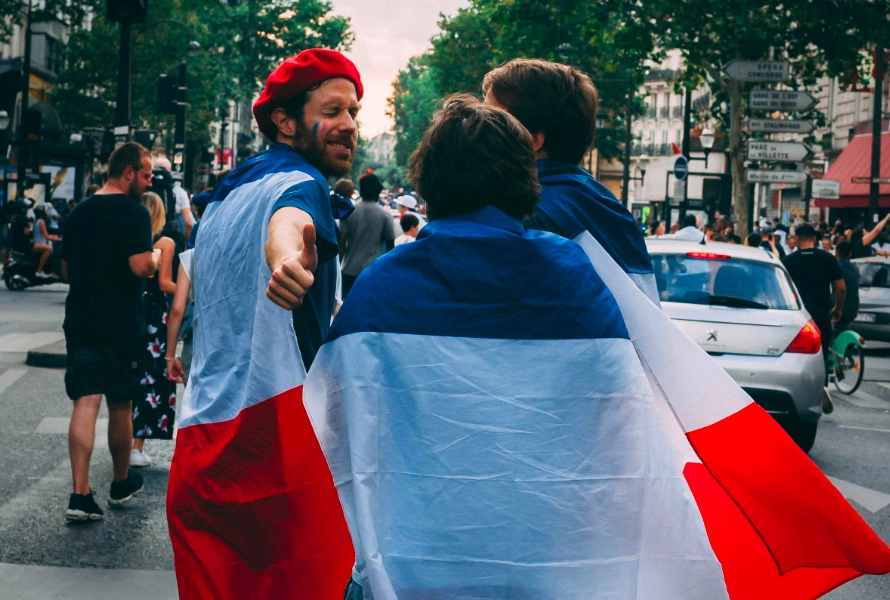
For the guests themselves, a French flag lapel pin is a neat way to dress for the occasion without going full costume. And if you want to go full costume, a French beret is the most universally understood symbol of French style in the world. Wear it unironically. The French will respect you for it.
Wherever you are on July 14th, the bastille holiday is worth marking. Put up the flags, open something French, and raise a glass to liberté, égalité, fraternité.
What Bastille Day means to the French
France independence day is a phrase that captures something real even if the French do not use it themselves. What Bastille Day commemorates is not independence from a foreign power but the moment the French people claimed independence from their own system: from an absolute monarchy, from a society structured to serve the few at the expense of the many, from a world in which ordinary people had no voice in how they were governed.
The values that emerged from the Revolution, liberté, égalité, fraternité, are not just historical slogans. They are the foundations of the French Republic and are written into its constitution. Bastille Day is the day France reminds itself of where those values came from and what they cost.
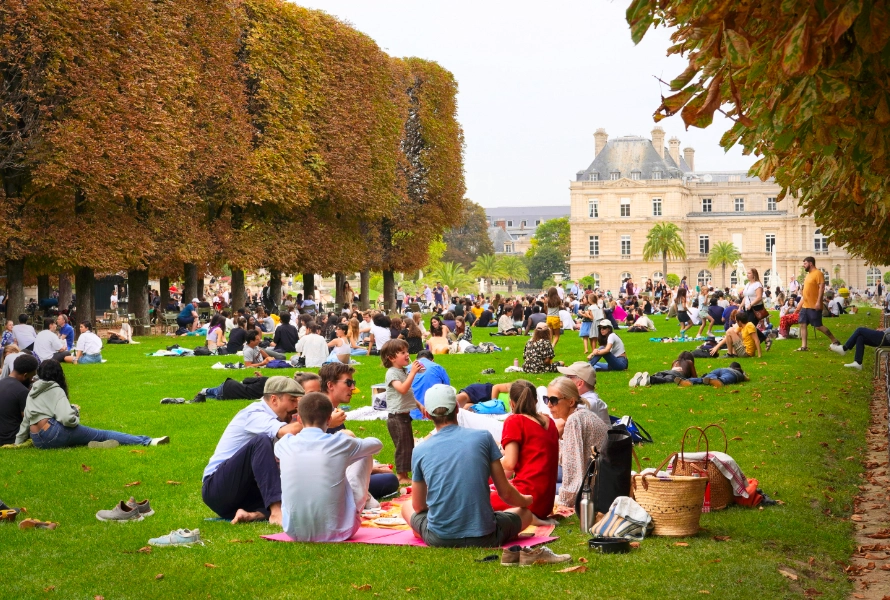
For most French people, it is also simply a very good day out: fireworks, music, food, dancing, and the pleasure of being French in France in the middle of summer. The history and the celebration are not in tension. They are the same thing.
Where are you spending this Bastille Day? Tell me in the comments.
Disclosure: Just so you know, this post contains sponsored content and/or affiliate links, If you make a purchase through these links, I may receive a small commission. Doesn’t cost you anything extra. I only link to things that are actually worth your time. All opinions are my own!