Fresh French Cheeses: Fromage Frais and 4 Classics
Fresh cheese is what I eat daily in many shapes and form. These cheeses have no rind, need no ageing and don’t come with stories about medieval monks, because they’re made from milk, cultures, a little time and sometimes cream, and they’re eaten within days.
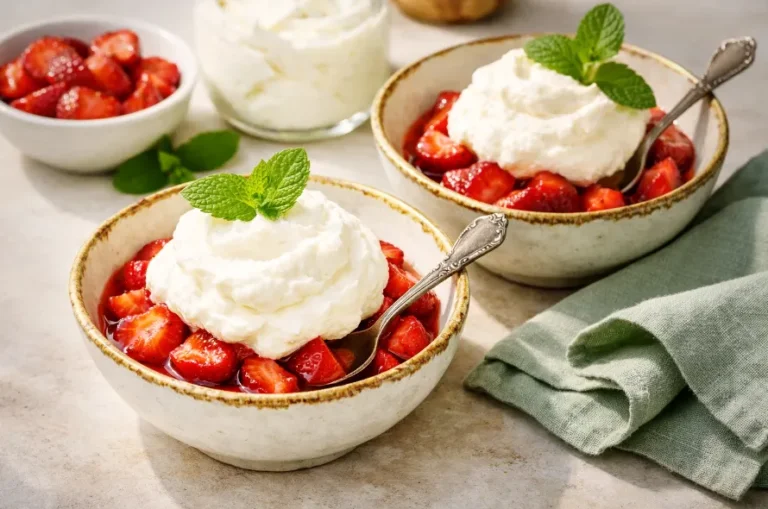
Every French supermarket has a whole chilled aisle of them, and I have them for breakfast with honey, at lunch with herbs and a salad, and at dinner as dessert with homemade apple compote or a spoonful of jam. I’ve put them in order from the lightest and most everyday to the richest and saltiest, starting with fromage frais, the name that covers them all. If you’d like the basics of how fresh cheese is made first, my fresh cheese guide explains it.
Table of Contents
Fromage frais
Where it comes from
Fromage frais just means “fresh cheese”, and in France it’s more of a family name than a single cheese. Under French cheese rules, a fermented fresh cheese can be sold as frais or fromage frais as long as it still contains live cultures when you buy it, which is why the words appear on so many different tubs and packets.
In practice, the French use fromage frais for the smooth, spoonable white cheese sold in tubs (often the same thing as fromage blanc), but also for creamy spreads in little squares or tubs, plain or with garlic and herbs. Each of the four cheeses that follow is a type of fresh cheese with its own name and character, so think of fromage frais as the starting point.
What it tastes like
A plain fromage frais is clean, milky and gently tangy, with a smooth texture somewhere between thick yoghurt and a soft cream cheese. The light versions are fresher and more acidic, while the richer ones, with cream added, taste rounder and more like a mild, spreadable butter.
How to eat it
The French eat it at any time of day, sweet or savoury. Stir in honey, sugar or fruit for breakfast or dessert, or season it with salt, pepper, chives and a little garlic as a dip for crudités, and use it in cooking as a lighter alternative to crème fraîche in sauces and fillings.
In the UK, most supermarkets sell a fromage frais, though it’s often sweetened for children, so look for a plain one. In the US, plain quark or a thick plain yoghurt is the closest substitute if you can’t find it.
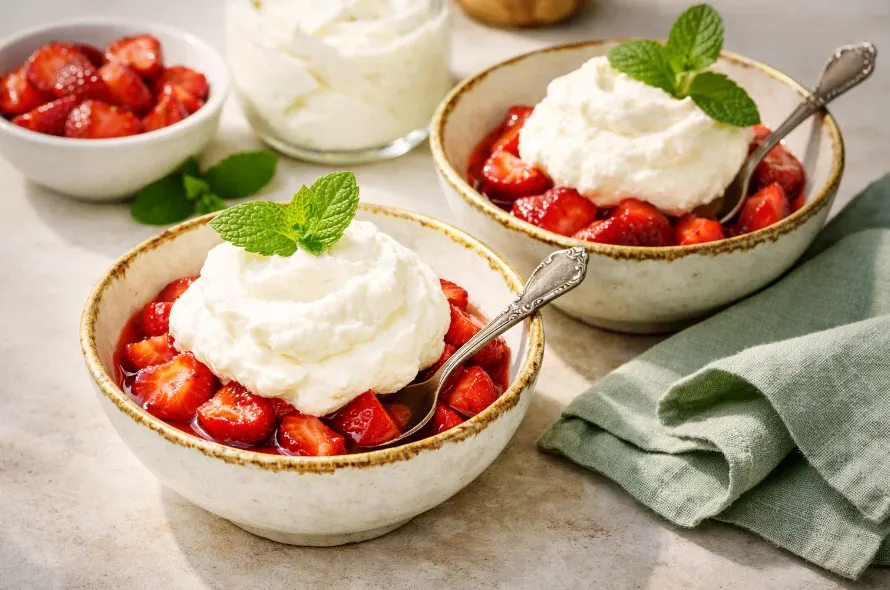
Fromage Blanc
Made in
All over France
Milk
Mostly cow’s milk, sometimes goat’s or sheep’s
Aged
Not aged
AOP/PDO Status
No
Fat content
Usually 0%, around 3% or around 8% per 100 g, depending on the version
Best time
All year
Where it comes from
Fromage blanc means “white cheese”, and it has its own legal definition in France: a cheese that isn’t ripened and, when it’s fermented, has gone through a mainly lactic fermentation. It’s made all over the country by souring milk with cultures and a little rennet, then draining off part of the whey.
You’ll usually find it in two textures. Fromage blanc battu is whipped until perfectly smooth and glossy, while fromage blanc en faisselle or moulé is left in curds that are still a little lumpy (more on that in the next cheese). Most fromage blanc on sale is pasteurised, but some farms still make their own with raw milk and sell it at markets.
What it tastes like
It’s fresh, milky and lightly sour, with a clean finish. The fat-free version is quite tart and slightly thin, while the richer ones are creamy and smooth, more like a light, set cream than a cheese.
How to eat it
In France, fromage blanc is one of the classic desserts: a bowl of it with sugar, honey, homemade apple compote, jam or red fruit to finish a meal. In Lyon it’s beaten with herbs, shallot, garlic, oil and a dash of vinegar to make cervelle de canut, a spread for bread, and in Alsace and the north it goes into a baked cheesecake called tarte au fromage blanc.
It’s harder to find in the UK and US, though some cheesemakers produce it, and quark is the closest substitute.
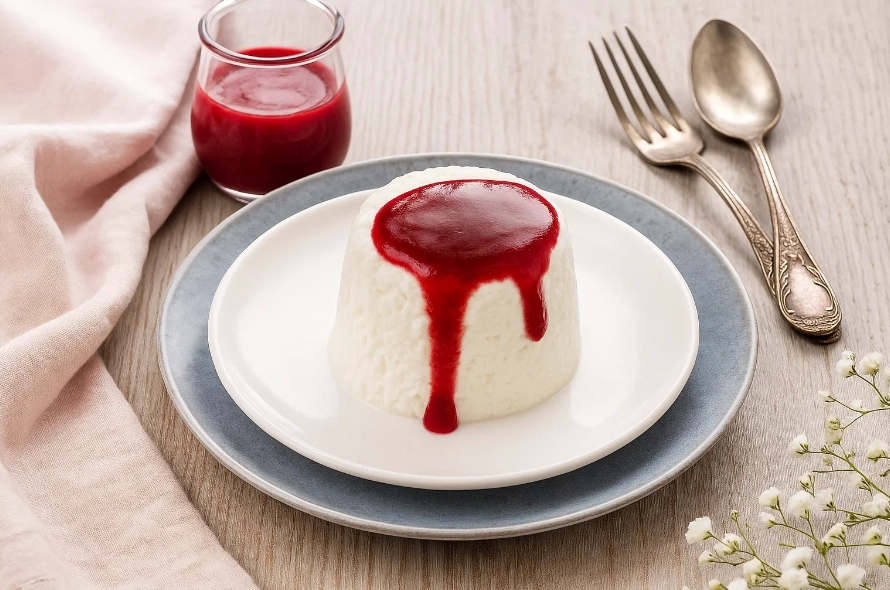
Faisselle
Made in
All over France
Milk
Mostly cow’s milk, sometimes goat’s, rarely sheep’s
Aged
Not aged
AOP/PDO Status
No, although a Label Rouge faisselle exists
Fat content
Varies by brand; stated per 100 g on the label
Best Time
All year
Where it comes from
A faisselle is the small perforated mould that fresh curd is drained in, and the cheese takes its name from it. It’s fromage blanc that has been ladled into the mould and only lightly drained, then sold still sitting in its mould, inside a tub that catches the whey as it keeps dripping.
It’s unsalted and very fresh, and it was originally a farmhouse cheese made wherever families kept a cow or a few goats. Today it’s made by dairies all over France, and there’s even a Label Rouge version, made to stricter rules on the milk and the fat.
What it tastes like
Faisselle is moist, soft and slightly grainy, with delicate curds that break apart on the spoon. It tastes milky and gently tart, lighter and fresher than a whipped fromage blanc, and it’s a little wobbly, a bit like a very soft set custard.
How to eat it
Lift the mould out of the tub, let it drain for as long as you like (the longer, the firmer it gets), then turn it out into a bowl. The French eat it with cream and sugar, honey, homemade apple compote or jam, or the savoury way, with salt, pepper, chopped herbs, a drizzle of olive oil and some tomatoes on the side in summer.
You may find it in the UK in larger supermarkets or French delis, but it’s rare in the US, where fresh curd cheese or a soft ricotta drained in a sieve gives a similar idea.
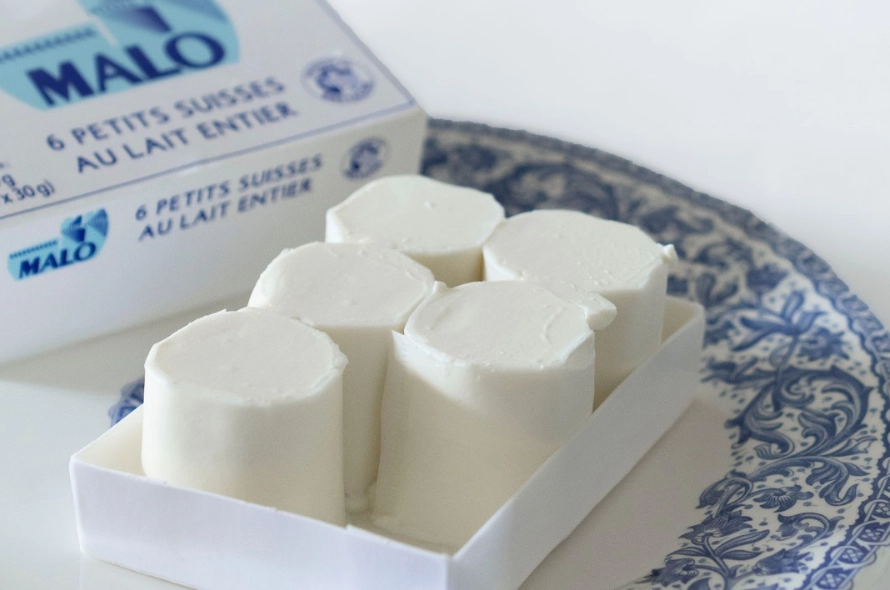
Petit Suisse
Made in
Normandy, now all over France
Milk
Cow’s milk, enriched with cream
Aged
Not aged
AOP/PDO Status
No
Fat content
Around 40% fat in the dry matter, roughly 10% per 100 g
Best Time
All year
Where it comes from
Despite its name, petit-suisse (“little Swiss”) is entirely French. According to the usual story, it was born in the 1850s at a dairy in Auvilliers, in the Pays de Bray in Normandy, when a young Swiss employee suggested adding cream to the fresh curd to make it richer. The little cheeses were sold in Paris wrapped in thin paper and packed in sixes, and were known as suisses.
You’ll recognise them straight away: small white cylinders of about 30 g or 60 g, each still wrapped in a band of paper and sold in packs of six or more.
What it tastes like
Petit-suisse is dense, smooth and very creamy, richer than fromage blanc, with a mild, milky, almost sweet taste and only a light tang. When you turn it out, it holds its little drum shape, and it melts on the tongue like a firm mousse.
How to eat it
As a French child I always knew the routine: unwrap the paper, turn the petit-suisse out into a bowl, sprinkle it with sugar or add a spoonful of jam, and mash it all together. My English husband found it strange that their was a paper band in the packaging! Adults eat them the same way at breakfast or as a quick dessert, and cooks use them to add creaminess to stuffings, sauces and fillings.
Outside France they’re hard to find, so a mix of fromage blanc or quark with a little cream gets you close.
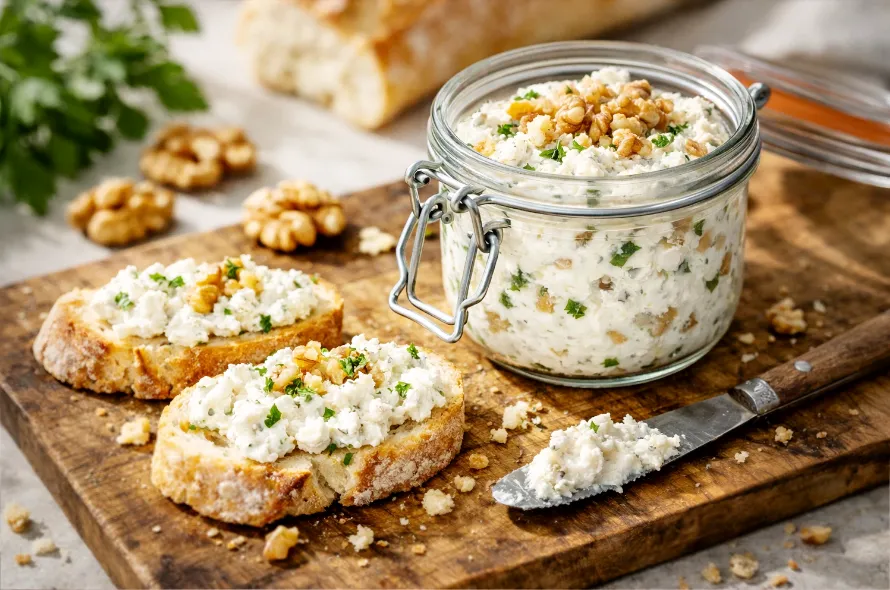
Demi-sel
Made in
Normandy, now all over France
Milk
Cow’s milk, often enriched with cream
Aged
Not aged
AOP/PDO Status
No
Fat content
Varies by brand; stated per 100 g on the label
Best Time
All year
Where it comes from
Demi-sel means “half-salt”, and it’s a fresh cheese that’s been lightly salted, around 1.5% salt according to French dairy trade usage, just enough to season it. It has long been associated with Normandy, the same dairy country as petit-suisse, and is usually sold as small squares or rectangles wrapped in foil.
It’s the fresh cheese that leans towards the savoury side, and it has its own definition in French cheese rules, separate from ordinary fromage frais.
What it tastes like
Demi-sel is smooth, dense and spreadable, a little like a soft butter, with a creamy, milky flavour, a light tang and a gentle salty edge. The salt brings out the taste of the cream, so it tastes richer than its size suggests.
How to eat it
Spread it on fresh bread or toast at breakfast, or serve it as a snack with crunchy radishes and a pinch of pepper. It’s also lovely mixed with chopped herbs and garlic for a spread, stirred into mashed potatoes or dotted into a quiche, and with smoked salmon on blinis it makes an easy French apero.
Outside France, a plain cream cheese with a pinch of salt is the nearest substitute.
Conclusion
These five are the cheeses the French come back to every day, because they’re easy, inexpensive, always in the fridge and as happy with jam as with herbs. If you’re curious, start with a pot of plain fromage blanc and eat half sweet and half savoury, then try a faisselle for the texture and a petit-suisse for the creaminess.
They’re also the ones to look for at a French market, where a farm-made fromage blanc or faisselle, made that week, tastes noticeably fresher than anything from a supermarket.
Which of these five have you tried, and is there another French fresh cheese you’d like to see in a future list? Tell me in the comments!
A Complete Hosting Guide
This complete guide takes the intimidation out of French cheese and wine hosting, so you can create an impressive, memorable evening that feels effortless.
Just so you know, a few links here earn us a commission. Doesn’t cost you anything extra, and we only link to things that are actually worth your time.