Cuzion is a village of fewer than a hundred people on a normal weekend. The kind of place where not much happens, where the streets are quiet, the church is old, and the surrounding Berry countryside does what Berry countryside does: sits in that particular combination of dark forest and misty marsh that has been generating strange stories for centuries.
Then October arrives. And fifteen hundred people turn up to celebrate witches.
The Fête des Sorcières in Cuzion is one of the most genuinely enjoyable events in rural France, a witch festival that manages to be funny, atmospheric, historically rooted, and properly communal all at once. If you are anywhere near the Berry region on the third weekend of October, this is where you should be.
Why Berry and witches go together
Berry has always had a reputation for the mysterious. The region sits in the geographic heart of France, far enough from any major city that for centuries its villages developed their own traditions, their own stories, and their own relationship with the unexplained.
The landscape plays a role. Dense forests, flat marshes that fill with mist in autumn and spring, isolated hamlets where the nearest neighbour might be several kilometres away. In that environment, where illness could strike without warning and doctors were scarce, people developed explanations for what they could not understand and remedies for what medicine could not fix.
French witches in Berry were not simply figures of fear. They occupied a complicated social position. The healers, known as guérisseurs, rebouteux, or barreurs de mal, worked with herbs, prayers, and inherited knowledge. They were consulted for burns, skin conditions, pain that conventional treatment could not reach. Many people in rural Berry still know someone who uses these traditional healers today. When we lived in the region, our neighbour would visit one whenever life got difficult. It was simply part of how things worked.
That ambiguity, between folk healer and witch, between useful knowledge and dangerous power, runs through the history of Berry and gives the witch festival france celebrates here its particular depth.
The 16th and 17th centuries
The darker history of france witchcraft in Berry belongs to the period of the witch trials. In the 1600s, fear and superstition drove prosecutions across the region. One of the most notorious cases occurred near Bué, at a place called the Carroi de Marloup, where a boy’s testimony that he had witnessed a witches’ sabbath led to five men being executed. It is a story people in Berry still tell, a reminder of how quickly fear can become lethal.
Those trials did not extinguish the traditions they targeted. They drove them underground for a while, but the folk knowledge and the folklore survived, passed through families and communities in ways that official persecution could not reach.
George Sand and Berry’s magical tradition
The writer George Sand, who spent much of her life in Berry and set many of her novels in the region, was deeply interested in its folklore. Her novel La Mare au Diable drew directly on local legends, myths, and the particular atmosphere of the Berry countryside. She understood that the stories people tell about a place are as much a part of its character as its geography or its history. The france witchcraft tradition of Berry gave her some of her richest material.
The Fête des Sorcières in Cuzion
The witch festival started in 1995 when a group of local residents decided Cuzion needed an event. They wanted something that would bring people together, raise money for the church, and celebrate the region’s long association with witches and magic. Critically, they did not want a tourist attraction. They wanted something with humour and heart, rooted in the community and open to neighbours and strangers equally.
Thirty years later, it is still exactly that. The event is run by volunteers, organised by the same community it serves, and it shows in every aspect of how the day unfolds.
What happens at the witch festival
The morning procession
The day begins quietly, with a walk from the village chapel through the streets to the calvary for a blessing. It is a deliberately traditional opening, a gesture that ties the festival back to its religious and historical roots before the more theatrical elements of the day begin.
The market
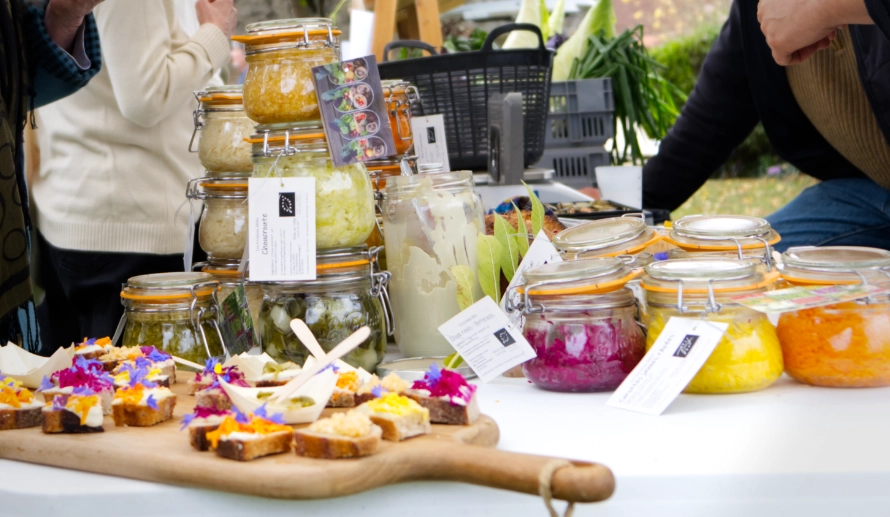
The market stalls are the first place most visitors head, and for good reason. Local cheese, homemade jams, honey, sausages, charcuterie, and crafts made by producers from across the Berry region. These are not souvenir stalls. They are working producers selling what they make and grow, and regulars know to arrive early before the best things sell out.
Live entertainment
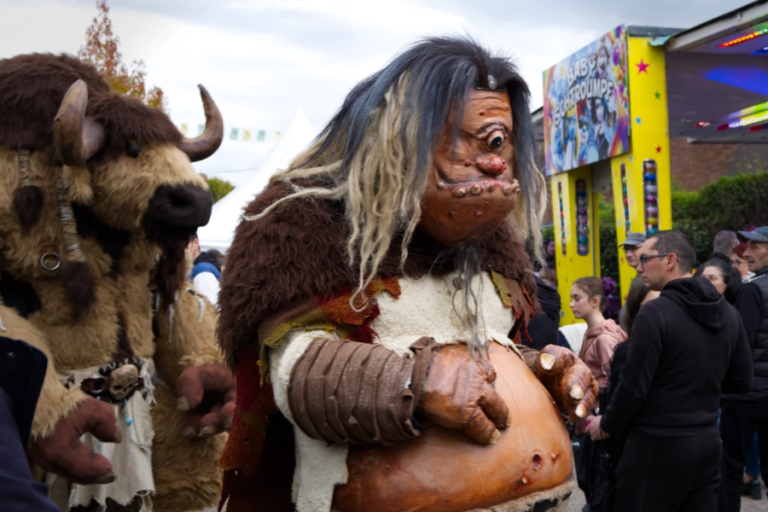
Performers appear throughout the afternoon. Magicians work the château barn at set times. Street musicians move through the crowds. Comedians on stilts weave between visitors. Costumed artists contribute to the general atmosphere of organised theatrical chaos. The entertainment is genuinely good, not the kind of thing that feels like it is going through the motions for a small village event.
Magic shows and storytelling
The magic acts in the château barn draw adults as readily as children. Alongside them, storytellers share Berry’s considerable collection of witches in france myths and legends, the birettes in their white shirts, the will-o’-the-wisps in the marshes, the stories that have been circulating in the region for five centuries. For anyone interested in french witches and their cultural context, this is the best possible introduction.
The château park tours
For something quieter, guided walks through the Bonnu château park offer a different experience. Local guides lead small groups through wooded grounds, pointing out rare plants and hidden corners while working in the odd legend. The park in autumn is genuinely beautiful.
Activities for children
Face painting, arts and crafts, broom-making workshops, and a mini witch parade that has been one of the highlights for families since the festival’s early years. Children are well catered for throughout the day, which means parents can enjoy the market and the entertainment without managing boredom.
Food and drink
Lunch in the witch restaurant is the obvious choice, and yes, it is actually called that. Alternatively, graze through the market on black pudding, local bread, and pastries, then head to the drinks tent for Berry wines or regional cider. The evening communal dinner pulls the whole day together: noisy, friendly, filling, and the kind of meal that strangers become temporary friends over.
The burning of the witch
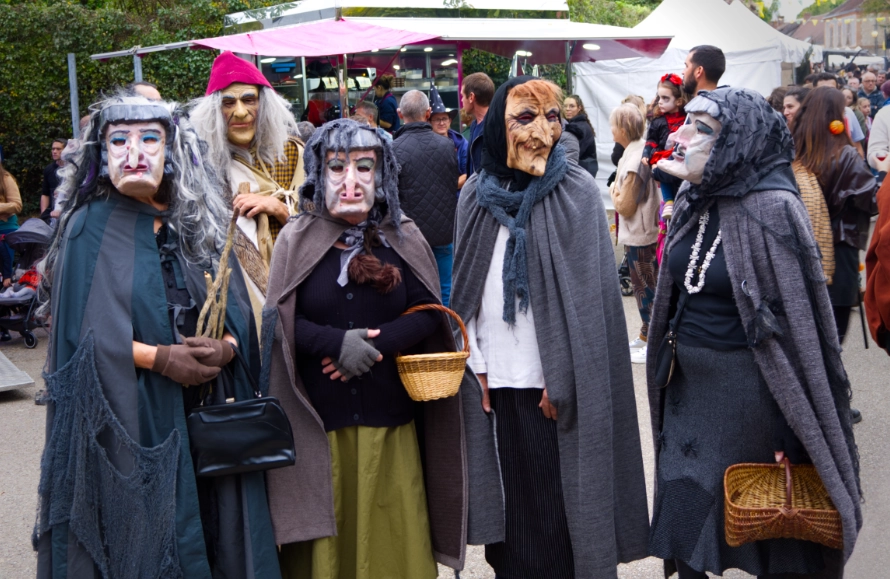
Towards evening, the festival’s most dramatic moment arrives. A procession of costumed witches leads visitors through the village, carrying a large handmade figure. At the end of the procession, the figure is set alight on a bonfire. It is symbolic and theatrical and entirely in good humour, and the crowd that gathers for it is invariably large.
The Maison de la Sorcière
The Witch’s House, run by volunteers who genuinely know their material, offers local legends, curiosities, and a few well-judged frights. It is not a haunted house in the commercial sense. It is more like a living archive of the region’s supernatural folklore, interpreted by people who grew up with it.
Fireworks at the château
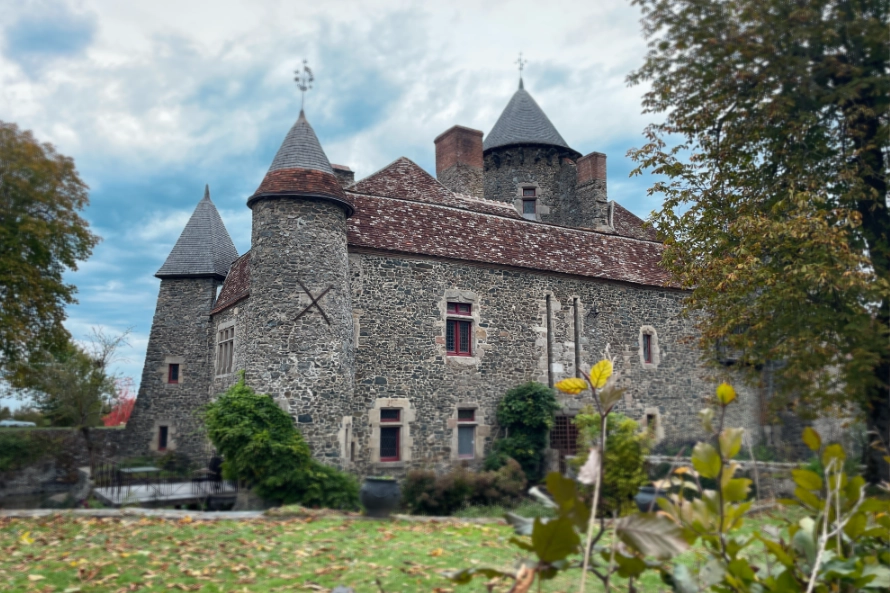
When darkness falls, the crowd moves to the castle. A parade leads up to the walls, and then the fireworks begin. The castle provides an exceptional backdrop for the display, and the combination of illuminated medieval stonework and fireworks overhead is one of those sights that justifies the trip on its own.
Dressing up
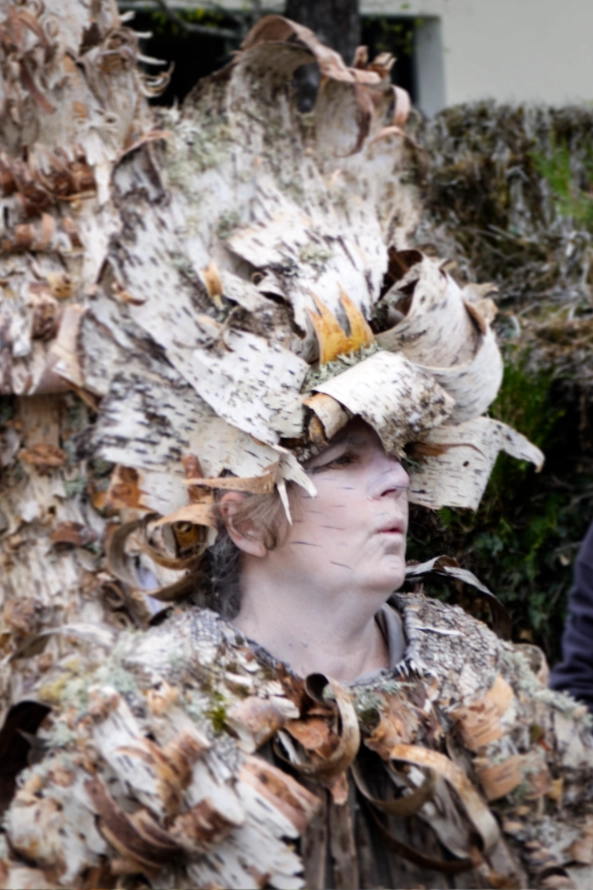
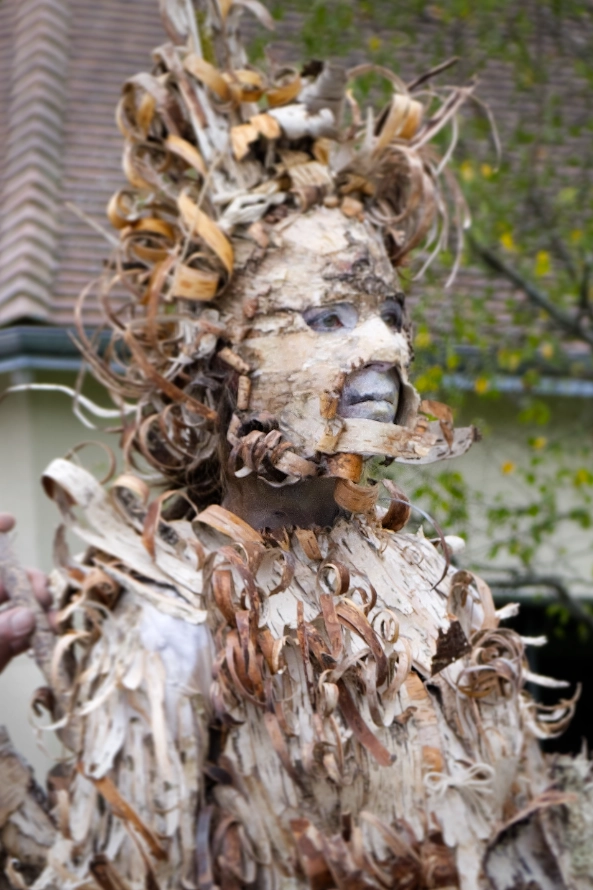
Costumes are everywhere and entirely welcome. From a simple black hat to full elaborate witch regalia, you will fit in at any level of commitment. Harry Potter appears regularly. So does everything from classic pointed hat and broomstick to genuinely impressive handmade costumes that the wearer has clearly been working on since last October. Even a scarf with stars on is enough. The festival does not judge.
The broader tradition of witches in France
The Cuzion festival sits within a much older French relationship with witches and magic. French witches occupy a specific cultural space that is distinct from the Halloween-influenced imagery most international visitors arrive with.
In Berry and across rural France, the figure of the witch was historically ambiguous: feared for the harm she could cause, consulted for the good she could do, and respected for knowledge that no one else possessed. The france witchcraft tradition was not primarily about evil. It was about power at the margins of society, about people who operated outside conventional structures and were simultaneously useful and threatening because of it.
The Fête des Sorcières understands this. It celebrates the witches of Berry not as monsters but as figures of local heritage, complicated and human and worth remembering.
Disclosure: Just so you know, this post contains sponsored content and/or affiliate links, If you make a purchase through these links, I may receive a small commission. Doesn’t cost you anything extra. I only link to things that are actually worth your time. All opinions are my own!