Foire des Hérolles, a celebration of French rural life
Our French neighbours invited us to a market they described as something special. We assumed they meant good cheese and a few vegetable stalls. They were not wrong about the cheese, but they had undersold it considerably.
The Foire des Hérolles, held in the small village of Coulonges-les-Hérolles, is one of the largest and oldest markets in France. It has been running since 1484. That is more than 500 years of farmers, traders, and local people converging at the same crossroads, doing the same business, in roughly the same way. Coming from a country where a market that has been going since the 1980s gets called historic, that is genuinely impressive.
Where is Coulonges-les-Hérolles?
Coulonges-les-Hérolles sits in the far eastern part of the Vienne department, at the point where three French regions meet: Poitou-Charentes, Berry (now part of Centre-Val de Loire), and Limousin (now New Aquitaine). That geographical position is not incidental. It is precisely why the market started here and why it has continued here. A crossroads between three regions is a natural place to trade.
The village itself has fewer than 300 residents. It is split between two settlements about six kilometres apart, one of which is the hamlet of Les Hérolles where the fair is held. Almost all of the surrounding land is agricultural: pastures, arable fields, mixed crops. The landscape looks exactly like what it is, the working countryside of central France, and the market fits into it without any sense of performance or tourism.
The history of the Foire des Hérolles
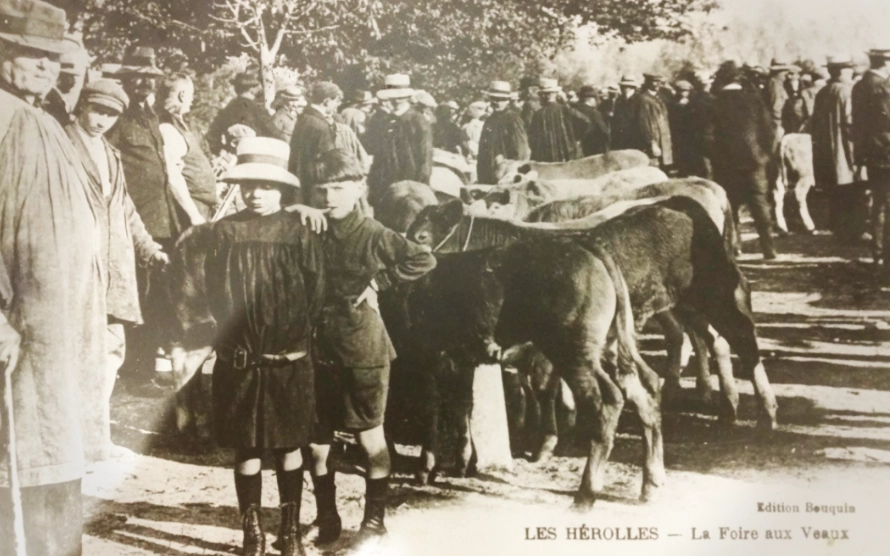
The fair began as a livestock market in the late 15th century, focused primarily on cattle, sheep, and pigs. It received formal recognition in 1484 and has operated regularly since, making it one of the longest-running fairs in France and a genuinely significant piece of rural French history.
In its early centuries, the Foire des Hérolles was a strictly agricultural event. Farmers came to trade animals and supplies. The crossroads location meant that traders from three different regional economies could meet and exchange, which gave the market a breadth that purely local fairs lacked.
Over time it expanded to include local produce, artisanal goods, and general market stalls. The french market we visited today is considerably more varied than the livestock fair of 1484, but the livestock element remains its heart and the reason it exists at all.
The scale of it
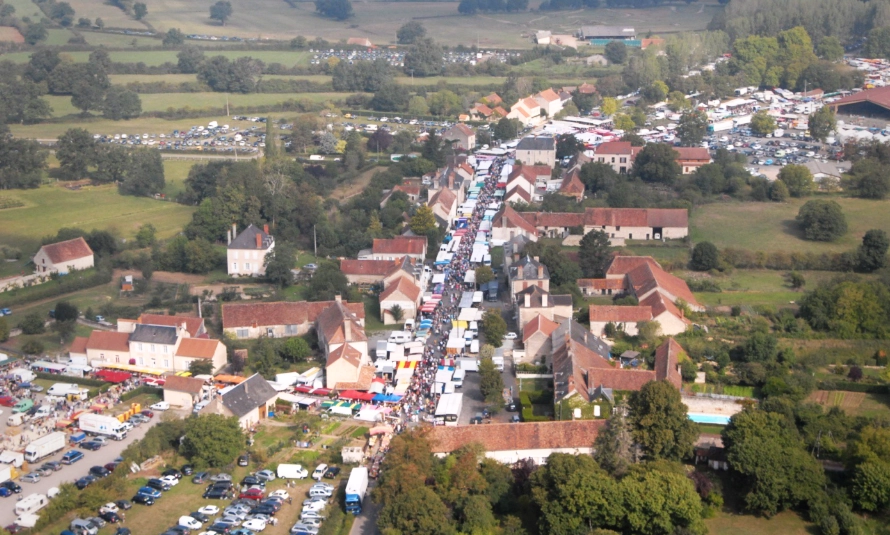
The Foire des Hérolles takes place on approximately 11 hectares of land. Every month on the 29th, more than 400 exhibitors set up: livestock farmers, food producers, artisans, and traders of all kinds. Attendance varies between 8,000 and 18,000 visitors depending on the season, with the warmer months drawing higher numbers.
For a village of fewer than 300 people, that is an extraordinary volume of activity. The transformation that happens on market day, the roads filling with cars and vans, the fields filling with animals and stalls, the air filling with the smell of livestock and fresh bread and wood smoke, is one of those things that is difficult to describe to someone who has not seen it.
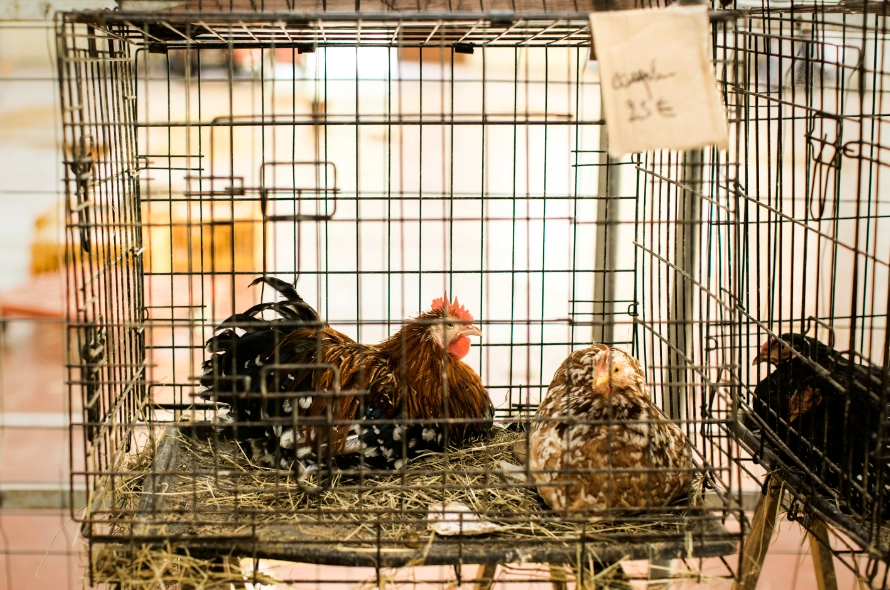
Our neighbours come regularly. One of them picks up pigeons and ducks for the farm. Another comes specifically for the poultry. If you want geese for Christmas or pigeons that will fly home to the UK, this is the right place to find them, at a price set by people who know what they are worth.
The livestock auction
The livestock auction is the original reason the Foire des Hérolles exists, and it is still very much the centre of it.
The auction takes place in the marché au cadran, a purpose-built hall designed specifically for efficient livestock sales. Cattle, sheep, and pigs are brought in by farmers from a wide area, some travelling considerable distances for the chance to find good buyers at a fair price. The auction operates on a timed system: each batch of animals is presented, buyers have a brief window to bid, and the highest bid wins.
The atmosphere is businesslike rather than theatrical. Butchers, breeders, and traders move through carefully, assessing animals, calculating costs, making decisions that will affect their businesses for months. There is nothing performative about it. It is the real economic engine of the french livestock market, running the same way it has for centuries.
For a visitor who has never seen a livestock auction, it is genuinely worth watching, not as a spectacle but as a window into a world that most people in France, let alone outside it, no longer have access to. The Foire des Hérolles is one of the places where French rural life is still operating on its own terms.
Local produce and crafts
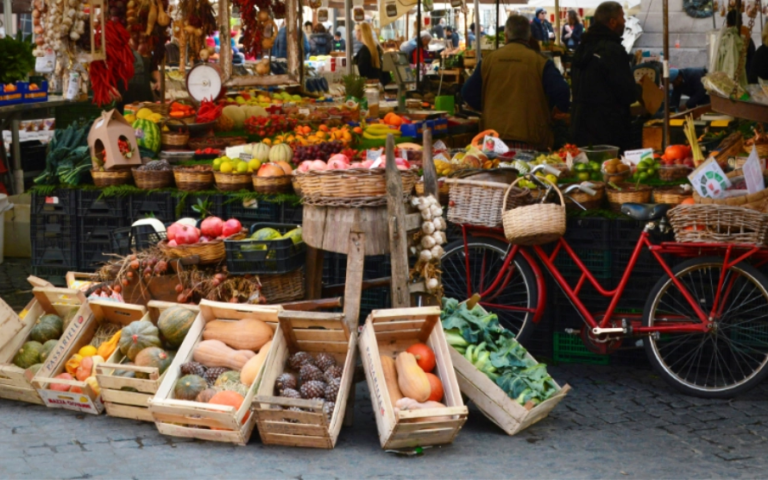
Beyond the livestock, the Foire des Hérolles offers everything you would want from a proper french market.
Fresh vegetables and fruits
Vegetables and fruits from nearby farms fill many stalls, varying with the season. Spring and summer bring a flood of fresh vegetables and herbs. Autumn delivers late fruits, mushrooms, and preserves. Winter shifts the focus to cured goods and baked items. The range reflects the agricultural calendar of central France rather than the demands of a tourist economy.
Cheese
The region has a solid reputation for dairy, particularly goats’ cheeses made using traditional methods. Producers bring their cheeses fresh to the market, and the quality is noticeably different from anything that has spent time in a distribution chain. This is the kind of cheese buying that makes you understand why French people take it so seriously.
Charcuterie
Sausages, hams, and cured meats from local pigs, made using recipes and techniques passed through generations. The charcuterie at a market like this is not decorative. It is functional, made by people who know exactly what they are doing and sell it to people who know exactly what they want.
Wine and cider
Wines from nearby vineyards, primarily reds and whites reflecting the local terroir, alongside apple-based ciders and other regional drinks. Not a vast selection, but a genuine one.
Crafts
Pottery, woodworking, and textiles from local makers. The pottery ranges from everyday bowls to decorative pieces. The woodwork covers carved utensils and larger furniture. The textiles are woven or embroidered by hand. What makes buying here different from buying at a general market is the ability to speak directly with the person who made the thing you are considering. You get real answers about materials and methods, and the objects carry that provenance with them.
What it feels like to be there
We arrived at 7:30 in the morning. It was already busy, and people were already eating. Specifically, several visitors were enjoying a sandwich andouillette with a glass of wine at that hour, which is a level of commitment to the French market experience that deserves acknowledgment.
We are both vegetarians, so the andouillette was not for us. But even as non-meat-eaters, the smell of the market that early in the morning, the mixture of fresh bread, coffee, animals, wood smoke, and cold autumn air, was genuinely evocative. The Foire des Hérolles does not try to be picturesque. It does not need to.
The fair runs from around 8am until early afternoon, typically 1pm to 1:30pm. That is the full morning, and it is packed throughout. If you want to see the livestock auction at its busiest and the market at its most complete, arrive early. The atmosphere before 10am is different from what you find later in the morning, and both are worth experiencing.
Why the Foire des Hérolles matters
There are thousands of markets in France. Most of them are pleasant, some are excellent, and a handful are genuinely important. The Foire des Hérolles sits in that last category, not because of its size or its age alone but because of what it represents.
Rural France has changed enormously since 1484. The agricultural communities that the Coulonges-les-Hérolles fair served in its early centuries look very different now. But the fair itself has continued, adapting as it needed to while keeping its essential character intact. The french livestock market still functions as a real economic event. The producers are still selling things they grew or made themselves. The buyers are still making decisions that matter to their businesses and their families.
That continuity across 500 years is not nothing. It is, in fact, quite a lot.
Practical information for visitors
- Arrive very early
Especially if you want to see the livestock auction and avoid the midday crowd. - Be prepared for some walking as the fair spans a large area!
- Bring cash, since some smaller vendors may not accept cards.
- The market is open regardless of weather or public holidays, which is handy to know for planning.
Disclosure: Just so you know, this post contains sponsored content and/or affiliate links, If you make a purchase through these links, I may receive a small commission. Doesn’t cost you anything extra. I only link to things that are actually worth your time. All opinions are my own!