Foire des Hérolles | French Livestock Market Since 1484
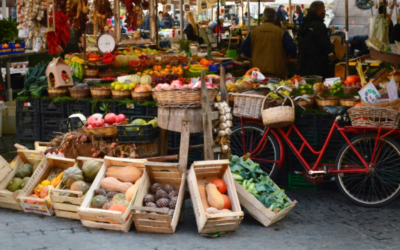
Foire des Hérolles is a French livestock market held the 29th of every month at Coulonges-les-Hérolles.
Event Type: Event
Event Attendance Mode: OfflineEventAttendanceMode
Event Status: EventScheduled
Performer: Organization
Performer Name: Coulonges-les-Hérolles
Performer URL: https://www.instagram.com/coulonges_les_herolles/
Start Date: 2026-09-28 13:39
End Date: 2026-09-28 13:39
Availability: InStock
Availability Starts: 29-08-2026
Our neighbours invited us to a market they said was “something special”. We assumed that meant a few good cheese stalls and some decent vegetables. They were right about the cheese but they had wildly undersold everything else!
The Foire des Hérolles takes place in a hamlet of a village of fewer than 300 people, and on the 29th of every month (expect when the 29th falls on a Sunday, it moves to the Monday) it pulls in an audience somewhere between eight and eighteen thousand people. It has been doing this, in some form, since at least 1484. When you come from a country where a market that started in the 1980s gets called historic, you obviously have to go.
Here is what we learned going, what nobody tells you before you arrive, and how to visit properly.
Table of Contents
What it actually feels like
We got there at about 7:30 in the morning, which we thought was early. But i was already buzzing with life!
People were standing at trestle tables eating andouillette sandwiches with a glass of red wine, before eight o’clock. You have to admire that level of commitment to the market day.
We are both vegetarian, so the andouillette stayed out of reach, but the smell of the place is half the experience whether you are eating meat or not: fresh bread, coffee, animals, wood smoke and cold air all layered on top of each other. That combination is exactly why people get out of bed for this.
What struck me most was that nobody was performing. There is no bunting, no signage explaining the heritage, no one in costume. It is a working fair that happens to be older than most European countries, and it is entirely uninterested in telling you so.
Where is Coulonges-les-Hérolles?
The commune is Coulonges, in the far east of the Vienne, and the fair happens in the hamlet of Les Hérolles, which is why the whole thing is known by the hamlet’s name rather than the village’s.
It sits almost exactly where three departments meet: the Vienne, the Indre and the Haute-Vienne, with the Creuse not far off. Historically that was the meeting point of three old provinces, Poitou, Berry and the Limousin, and later of three administrative regions. Since the 2016 reorganisation those regions are now Nouvelle-Aquitaine and Centre-Val de Loire, but the crossroads logic is unchanged and it is the entire reason the fair is here.
A market grows where three territories touch. Traders from all three can reach it in a morning, nobody has home advantage, and everybody comes.
Around it is working countryside: fields, pasture, mixed farming. Nothing landscaped, or arranged for visitors. The fair just sits in the middle of it and makes perfect sense.
Fun fact
You will hear people call it the foire aux Zérolles. That is the French liaison doing its work on “aux Hérolles”, and it has stuck so firmly that plenty of people say it without thinking. Use it and you will get a smile.
The history: older than 1484
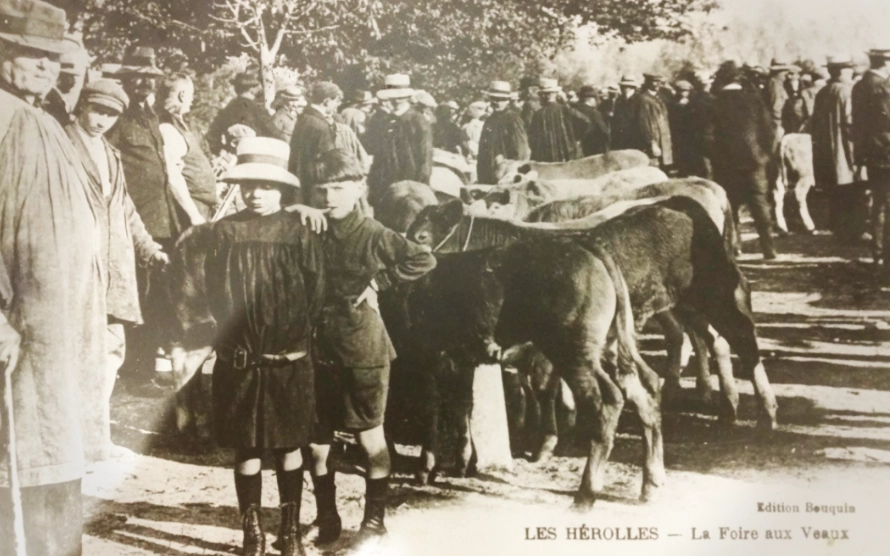
The date everyone quotes is 1484. It is the year of the first written mention of the fair, in a document that refers to fairs already taking place here. So 1484 is when it first appears on paper, not when it started. The real beginning is earlier and nobody knows by how much.
For centuries it was a fair rather than a market, held a handful of times a year, dealing in cattle, sheep and pigs. The 19th century was its golden age, and the change that made it what it is today came in 1868, when the fair became monthly. That is the moment the 29th entered the calendar of every farming family in the Montmorillonnais, the Berry and the Limousin, and it has stayed there ever since.
Over time the general market grew up alongside the livestock, so what you walk through now is far broader than the original fair. But the animals are still the reason it exists.
The scale
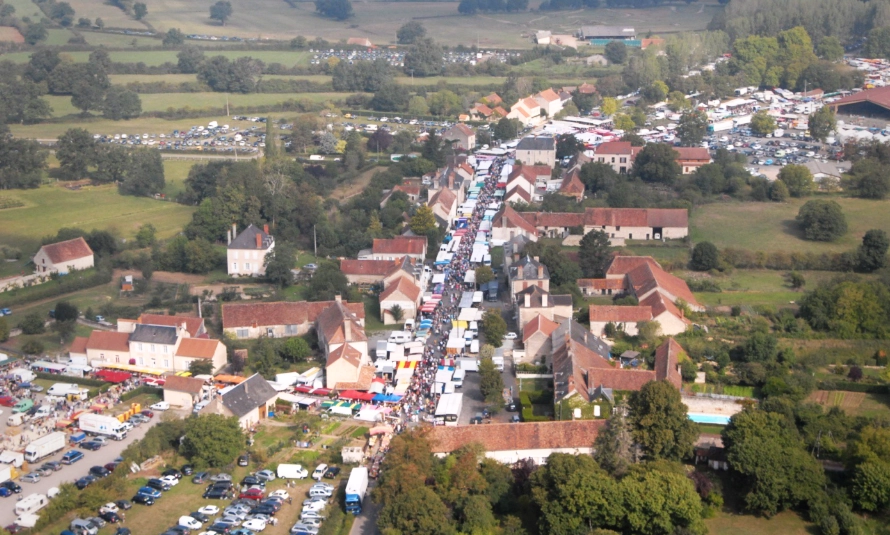
The Foire des Hérolles spreads over about 11 hectares and more than 400 exhibitors: livestock farmers, food producers, artisans, and all kinds of traders. Depending on the month and the weather, between 8,000 and 18,000 people pass through.
For a hamlet of 300 residents, those numbers are astonishing. On the 29th, quiet roads fill with vans, fields fill with pens and stalls, and a place that is silent for twenty-eight days a month becomes, briefly, one of the busiest spots in the department.
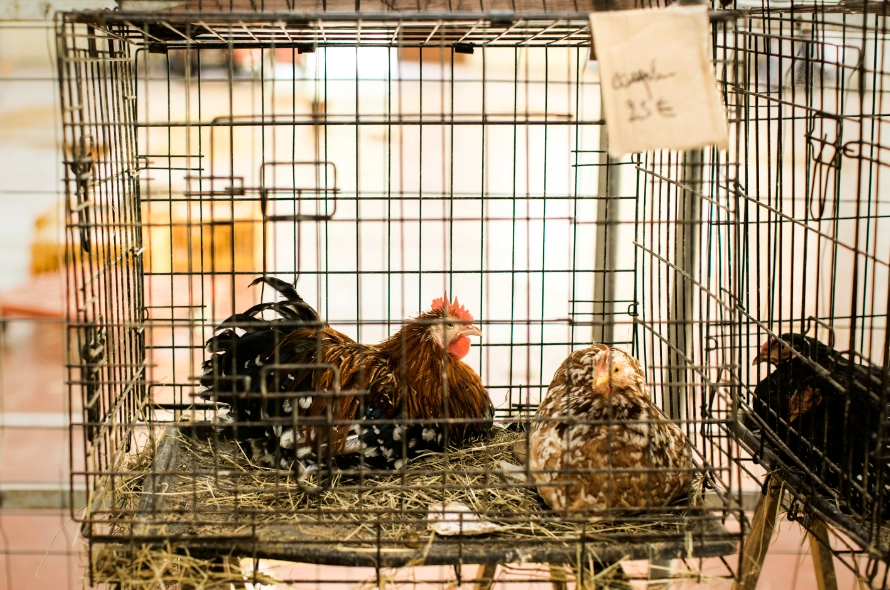
Our neighbours treat this as completely unremarkable and totally normal. One goes for pigeons and ducks and another goes for poultry, and when the time comes, geese for Christmas. If you want birds that will actually fly home with you or stock for a proper farmyard, this is where you come and deal with people who know exactly what they are selling and to whom.
Two livestock markets, and the difference
This is the part I got wrong before going, and it is the thing most articles about the fair get wrong too. There are two separate livestock operations at Les Hérolles, and they run on different days.
The market on the 29th
There is the historic market or the marché de gré à gré, which means sale by direct agreement. Buyer and seller face each other, look at the animal, and negotiate a price between themselves. This is the medieval model and it is what happens on fair day. It is also where you will find the poultry market, at the top of the rue marchande, starting very early.
The marché au cadran
This is the purpose-built auction hall, and here is the surprise: it is not ancient at all. It opened on 15 June 2015, cost 3.33 million euros, and was built by the communauté de communes du Montmorillonnais after a group of local breeders campaigned for it.
Cadran means clock face, and that describes the mechanism. Prices are displayed on a large electronic dial, bidding is anonymous through handsets, and the auction is usually descending: the price starts high and falls until somebody stops it. It is fast, transparent, and the seller can still refuse the final price. The first market of this type in France opened at Saint-Pol-de-Léon in 1961. The mood is all business, butchers, breeders, and traders move through, looking over animals and doing the maths in their heads.
Tip
The cadran does not run on the 29th. Cattle sales are on Mondays from 1.30pm, sheep sales every other Thursday from 9.30am. So unless the 29th happens to fall on a Monday, going to the fair will not get you the electronic auction.
If you have never seen a livestock auction before, it is absolutely worth watching. Go on a Monday afternoon, it is open to the public and curious onlookers are entirely normal.
Why it was built is the interesting part. Gilles Rousseau, the breeder who led the project, said afterwards that the financial argument mattered but the social one mattered more. Farmers in this part of France had become isolated, and what they wanted, as much as a better price, was somewhere to turn up and talk to each other. There are something like 110,000 suckler cows within forty kilometres of the ring, mostly Limousine and Charolaise, and 200,000 within seventy.
What to eat there
I could not eat the two most famous things at this fair, which I find genuinely funny being French, so consider this a report from a very interested bystander.
Tête de veau
Tête de veau is the dish of the Foire des Hérolles. Calf’s head, slow-cooked, served with sauce gribiche, eaten sitting down in the middle of the morning by people who have been up since four. The tradition is over thirty years old at the fair itself and it has spread outward into restaurants all around the area, which is how you know it is the real deal. If you eat meat and you have ever wanted to try tête de veau in the correct setting, this is it.
Madeleines
This one I love and make myself too! There is a madeleine stand run by a firm that has been making them for around 170 years. Obviously buy a bag and compare them with the ones you make with this Madeleines recipe.
Andouillette sandwiches
Yup, everyone is eating them at eight in the morning, with a glass of red. That’s just crazy to me. And even though I’m a vegetarian, the smell of it is really nice and everyone raves about them, so make sure to try them out too!
And the rest of it: bread, coffee, and the general smell of a fair that has been feeding people since long before anyone thought to write it down.
The market stalls
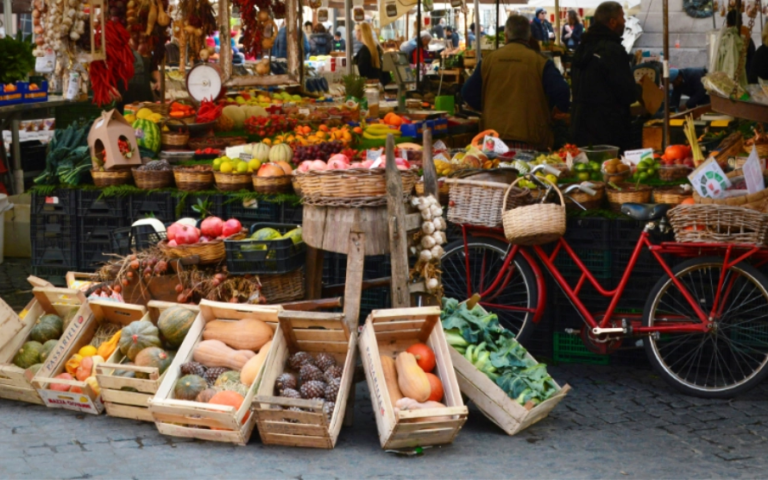
Once you leave the animals behind, you get everything a proper French market should be.
Fresh vegetables and fruits
Fruit and vegetables from farms nearby, moving with the season. Greens and herbs in spring, everything at once in summer, mushrooms and late fruit in autumn, cured and preserved things through winter.
Cheese
And especially goat’s cheese, sold by the people who make it. This is Poitou and Berry country, so you are near the home of Pouligny-Saint-Pierre, Sainte-Maure and Valençay. The difference from supermarket cheese is obvious at the first bite. My favourite one is Sainte-Maure with it’s straw inside it’s log.
Charcuterie
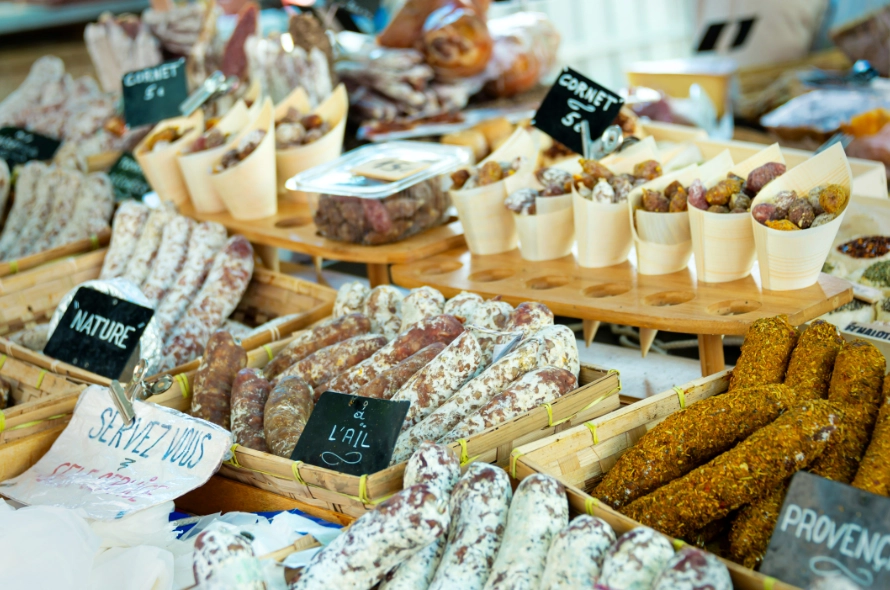
Everything from local pigs. Sausages, hams, cured cuts, made to old recipes and sold to people who know exactly what they want them to taste like.
Wine and cider
Wine and cider from the region. Not hundreds of labels, but bottles that genuinely reflect where they come from. We’ve tried the cider and it tasted so fresh and unbelievable, I highly recommend it, even that early!
Crafts and brocante
Crafts and brocante, which have grown considerably in recent years. Pottery, carved boards and spoons, textiles, plus a proper brocante section for anyone who enjoys rummaging. The best part is being able to ask the maker how something was made and what from.
Why the Foire des Hérolles matters
France is full of markets. Many are pleasant, some are excellent, and a very small number feel genuinely important. The Foire des Hérolles belongs in that last group.
It is not the age on its own. It is that the fair is still doing the job it was set up to do more than 500 years ago. Rural France has changed beyond recognition since 1484, and much of what remains of country life is preserved rather than lived. Here, once a month, farmers and traders use the fair for exactly what it was built for. Animals are bought and sold. Cheese and charcuterie change hands. People make decisions that matter to their farms, their shops, and their families.
And the 2015 auction hall is part of that rather than a betrayal of it. A fair that has run for five hundred years has done so by adapting. Building a three-million-euro electronic ring because breeders needed one is precisely the behaviour that got it this far.
That sense of unbroken continuity is rare. Standing there, watching it all happen, you realise you are not just visiting a “nice market.” You are seeing a piece of living rural history still working the way it always has.
Practical information for visitors
- When: The 29th of every month, without exception, whatever the weather and regardless of public holidays. If the 29th is a Sunday it moves to the Monday. Note that February gets its 29th only in leap years.
- Hours: Officially 8am to about 1.30pm. In practice the poultry market and the traders are going well before that, and by half past seven it is already alive. By midday the atmosphere has changed completely.
- Getting there: Les Hérolles, commune of Coulonges, 86290, Vienne. Roughly 45 minutes from Poitiers, an hour from Limoges, and easily reachable from the Indre. You will need a car.
- Parking: In fields, and it fills. Another argument for arriving early.
- Bring cash. Plenty of the smaller producers do not take cards, and there is no reliable cashpoint.
- Wear proper shoes. Eleven hectares, much of it grass and mud, and you will walk all of it.
- Take a bag or a basket, and a cool bag if you plan to buy cheese or charcuterie and have any distance to drive.
- Go early. Before ten it is farmers doing business and regulars greeting each other. After ten it becomes a more general market day. Both are worth seeing, but only one of them is why the fair exists.
FAQ
When is the Foire des Hérolles?
The 29th of every month, from 8am to around 1.30pm. If the 29th falls on a Sunday the fair moves to the Monday. It runs in all weather and on public holidays. February only has a 29th in leap years.
Where is the Foire des Hérolles?
In the hamlet of Les Hérolles, in the commune of Coulonges, Vienne (86290), where the Vienne, Indre and Haute-Vienne meet. About 45 minutes from Poitiers and an hour from Limoges. You need a car.
How old is the Foire des Hérolles?
The first written record dates from 1484, in a document referring to fairs already being held there, so it is older than that. It became a monthly fair in 1868, which is when the 29th became fixed in the local calendar.
How big is the fair?
Around eleven hectares, with more than 400 exhibitors and between 8,000 and 18,000 visitors depending on the month. The village has fewer than 300 residents.
Can you watch the livestock auction?
Yes, but not on the 29th. The electronic auction in the marché au cadran runs on Mondays from 1.30pm for cattle and every other Thursday from 9.30am for sheep. On fair day itself the livestock trading is de gré à gré, meaning buyer and seller negotiate directly rather than bidding.
What should I eat at the Foire des Hérolles?
Tête de veau is the signature dish and has been a fixture for over thirty years, to the point that restaurants around the area now serve it too. Andouillette sandwiches are eaten from about seven in the morning. For anyone not eating meat, there is a madeleine stand run by a firm that has been making them for around 170 years.
Do I need cash?
Yes. Many of the smaller producers do not take cards and there is no reliable cashpoint on site.
What time should I arrive?
Before eight if you can. Before ten the fair is farmers doing business and regulars greeting each other. After ten it becomes a more general market day, busier and with more casual visitors.
Over to you
If you are anywhere near the Vienne on the 29th of a month, go. Take cash, wear boots, arrive before eight, and give yourself four hours you had not planned on.
Have you been to the Foire des Hérolles, or to another French fair that still works the way it always did? I would love to hear which ones, because the good ones never seem to be the ones in the guidebooks, and they’re often more interesting!
This post may contain affiliate links. If you buy through them I earn a small commission at no extra cost to you, and it helps keep this blog running. Please read my disclosure policy for more information. I am grateful for your support.