If you think French confectionery means fancy macarons, you are missing the point entirely. The real thing, the confections that French people actually care about, comes from small towns you have probably never heard of, made by families who have been doing it since before your great-grandparents were born.
We are talking about pralines that predate the French Revolution, caramels invented by a chocolatier who simply asked what happens if you add salt, and nougat so protected by law that you cannot use its proper name unless you follow strict ingredient ratios. This is not chocolate-box prettiness. It is serious business.
Here is your guide to the French confectionery actually worth seeking out: the ones locals queue for, the ones with centuries of history, and the ones you genuinely cannot find anywhere else.
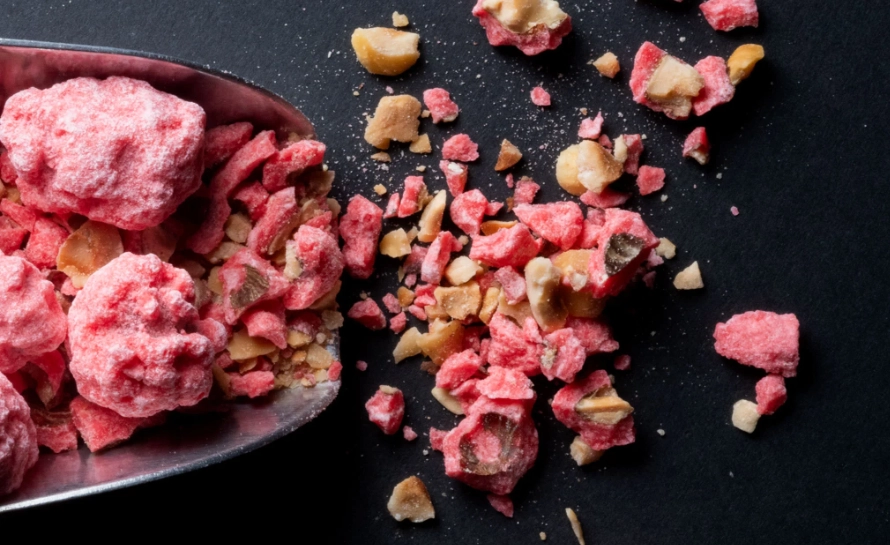
Pralines Roses de Lyon
Bright pink almonds the size of large peas, coated in vivid pink sugar. They are everywhere in Lyon, piled in shop windows and baked into brioches. The story goes that an 18th-century Lyonnais pastry chef, inspired by rose gardens, decided to tint his pralines pink.
In Lyon, these pralines are baked into things more often than eaten as sweets. The tarte aux pralines is crushed pink pralines cooked with cream in a pastry shell: ridiculously sweet, gooey, and worth every calorie. There is also the Praluline, a brioche studded with pink praline pieces, created by Auguste Pralus in 1955 and still one of the most sought-after things in the city.
Historic makers like Chocolaterie Voisin still produce them using artisanal methods in copper equipment. One or two are fine. A handful will make your teeth ache. That is not a reason to stop at one or two.
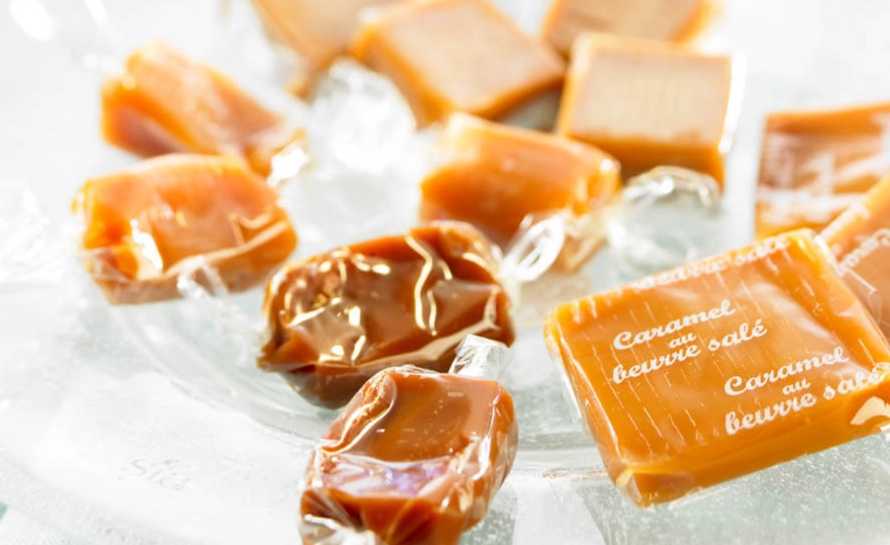
Caramels au Beurre Salé de Bretagne
Henri Le Roux invented salted butter caramels in 1977 in Quiberon, Brittany. His CBS (Caramel au Beurre Salé), made with crushed almonds, hazelnuts, and walnuts in salted butter caramel, won Best Sweet in France in 1980.
The backstory explains everything. Brittany was historically exempt from France’s salt tax, so the region had been using salted butter for centuries while the rest of France used unsalted. Le Roux made what seemed obvious in Brittany: caramels with local salted butter. The rest of France caught up eventually, but these original Breton caramels remain the benchmark.
The recipe is unchanged and known only to a select few. Made in copper cauldrons using artisanal methods, the sweet-savoury combination with crunchy nut fragments against soft caramel is instantly addictive. Now available internationally but still made in Brittany. This is the french confectionery category that launched a global trend from one small shop in Quiberon.
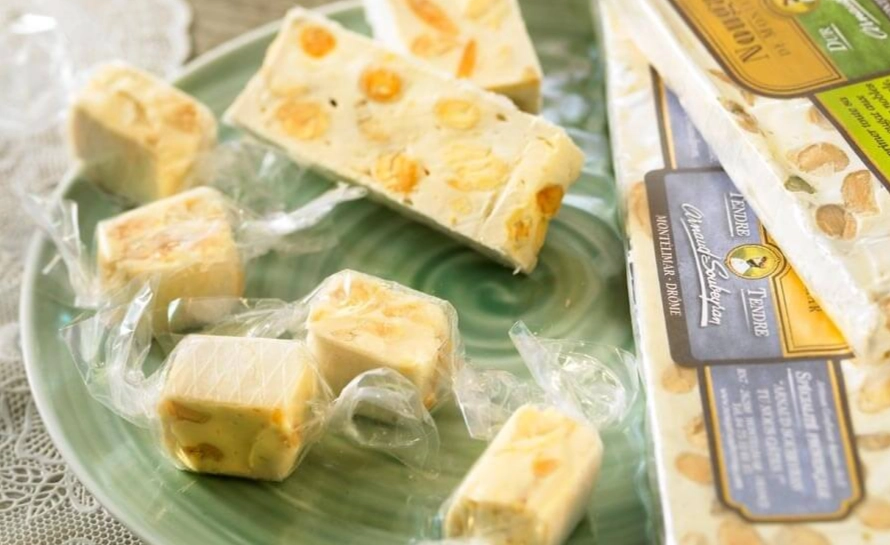
Nougat de Montélimar
White nougat made with honey, almonds, and egg whites, cooked slowly for five hours in copper cauldrons. To be called Nougat de Montélimar, it must contain at least 30% almonds and 32% honey, with a minimum of 7% lavender honey. It has Protected Geographical Indication status.
The nougat became famous partly through presidential intervention. Émile Loubet, Montélimar’s former mayor and later President of France, offered it to every foreign head of state who visited the country. The Beatles mentioned Montélimar in their song Savoy Truffle. When a sweet appears in a Beatles lyric, it has achieved a particular level of cultural penetration.
There is also black nougat: caramelised honey with almonds, cooked at high heat to produce something darker, crunchier, and with a burnt caramel flavour. Both white and black nougat are part of Provence’s traditional 13 Christmas desserts. If you are anywhere near Montélimar, the nougat shops on the main road are not a tourist trap. They are the actual product.
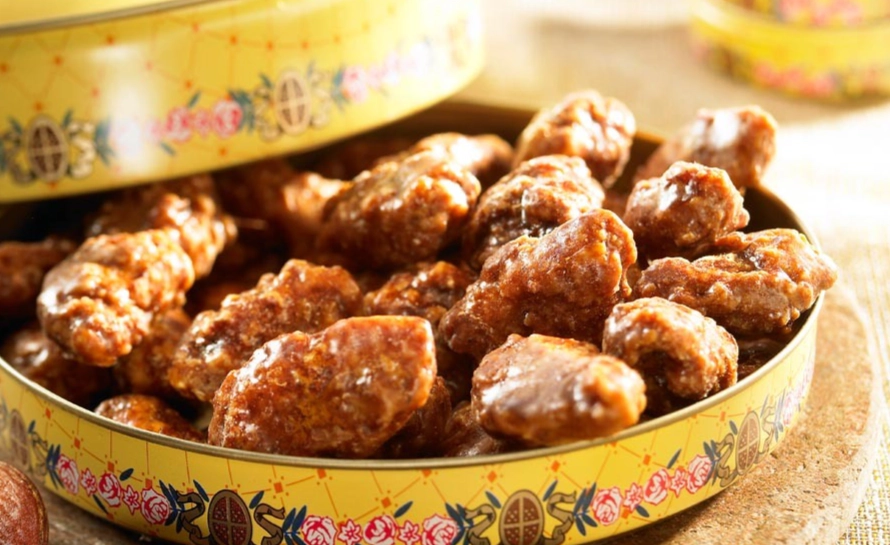
La Praline de Montargis
The original praline, created in 1636 by Clément Jaluzot, chef to the Duc de Plessis-Praslin. The story goes that the duke’s cook coated almonds in caramelised sugar, and the sweet took the duke’s name: praslin becoming praline.
These are not the pink Lyon pralines or the Belgian chocolate pralines that most people think of when they hear the word. Montargis pralines are whole roasted almonds individually coated in smooth caramelised sugar with a glossy finish. Crunchy, not too sweet, with the almond flavour coming through clearly beneath the sugar coating. They taste nothing like any mass-produced praline you have encountered.
The Maison Mazet in Montargis has been making them since 1903, in copper cauldrons, by hand, with almonds from Provence. Each praline goes through several coating stages to achieve that perfect shell. The town is sufficiently proud of its invention that it runs praline-themed walking tours. If you are passing through the Loiret region, Montargis is worth the stop.
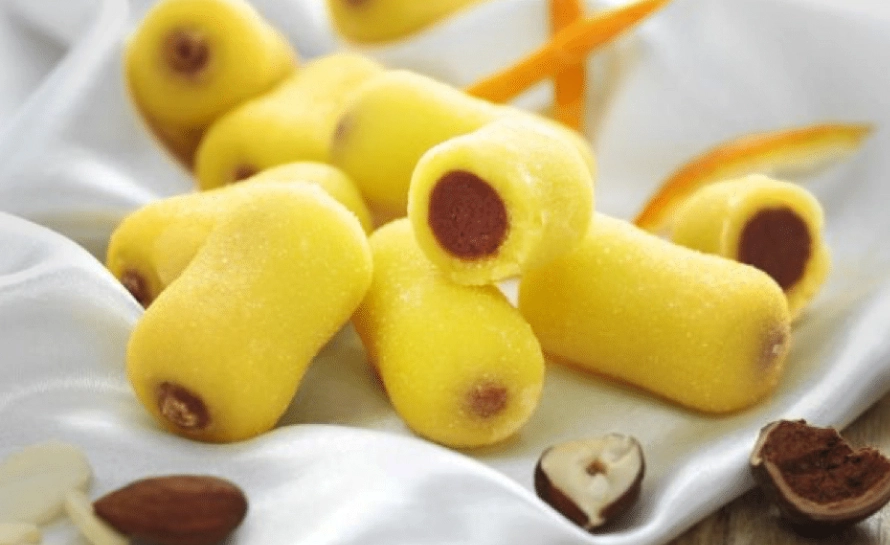
Les Cocons de Lyon
Small chocolates shaped like silkworm cocoons, created in the 19th century as a tribute to Lyon’s historic silk industry. Lyon was Europe’s silk capital, and the canuts, the silk workers who made it so, are commemorated in the name and shape of this particular confection.
They are made from chocolate-covered almond or hazelnut praline paste, moulded into oval cocoon shapes and dusted with cocoa powder or icing sugar. Some versions have a crunchy praline centre, others a smoother ganache. Various Lyon chocolatiers make their own versions. Voisin, which also makes the pralines roses, is one of the best-known producers.
They are elegant, refined, and considerably better than the slightly odd concept might suggest.
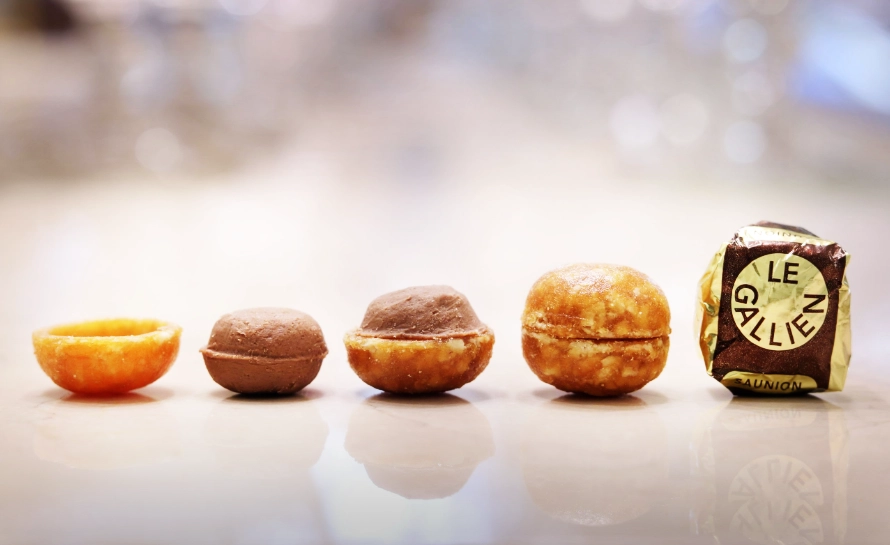
Le Gallien de Bordeaux
A chocolatey caramel sweet from Bordeaux, created in 1818 by a confectioner named Gallien. Small, round, with a soft caramel centre flavoured with chocolate and vanilla, wrapped in shiny foil. The kind of french confectionery you offer guests with coffee.
The caramel is soft and melting, the chocolate flavour genuine rather than artificial, and the whole thing has a reputation for sophistication that it has maintained for two centuries. These caramels were apparently popular with Bordeaux’s wine négociants, who offered them during tastings as a palate cleanser between wines. The Gallien family made them for generations. The recipe was eventually bought and is now produced by Saunion.
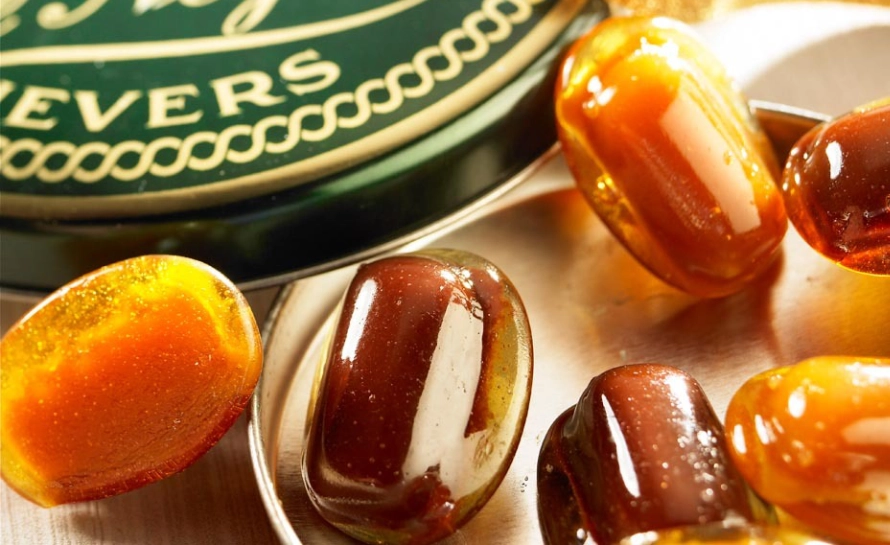
Négus de Nevers
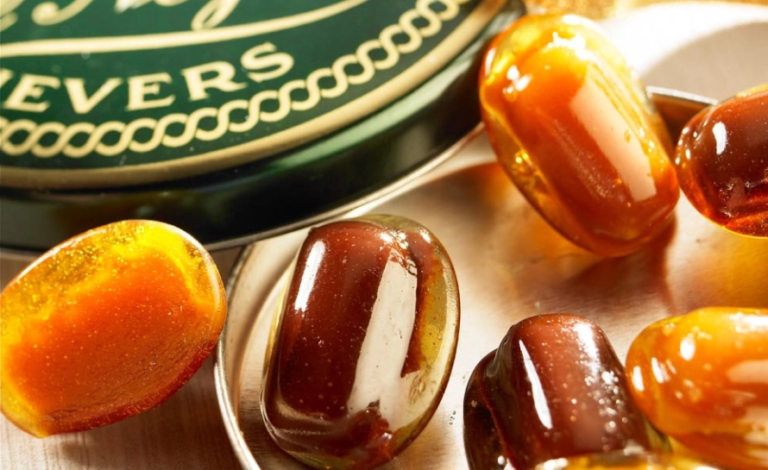
A soft chocolate or coffee caramel wrapped in a shell of hard caramel. Created in 1902 by Maison Grelier to commemorate the Ethiopian emperor known as the Negus, who visited Nevers that year. The coffee version is called L’Abyssin, after Abyssinia.
The outer shell is amber, crunchy, and requires a proper bite to reach the soft centre. They are sensitive to humidity, which is why they come in sealed metal tins with desiccant packets. The recipe is not written down. It is passed orally between generations and apparently cannot be mechanised, which is why À La Mère de Famille bought the company in 2013 specifically to preserve it.
If you want to understand what genuine French confectionery heritage looks like, a tin of Négus de Nevers is a good starting point.
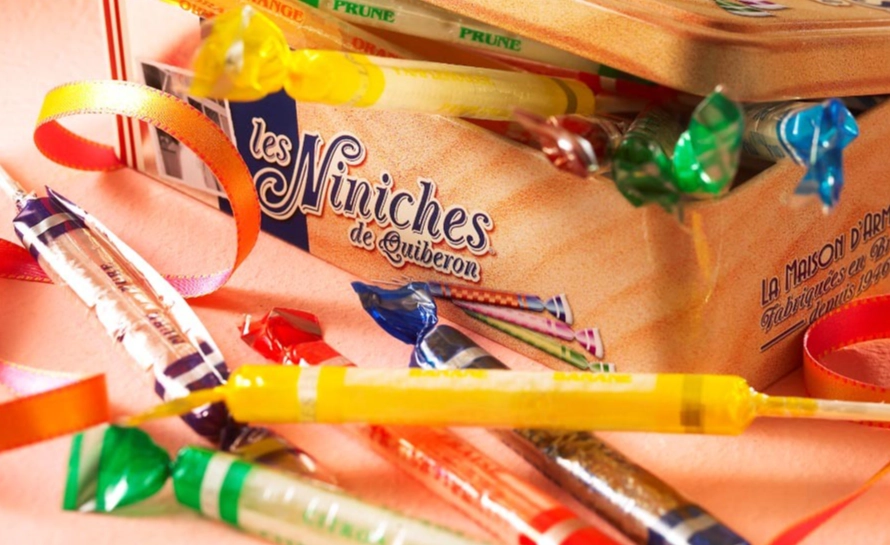
Niniches de Quiberon
Long, twisted sticks of buttery caramel from Quiberon, Brittany. Created in the 1920s, softer and chewier than hard sweets but firmer than fudge. Made with Breton salted butter, cane sugar, and milk in copper cauldrons.
The name comes from a Breton word, and these are classic seaside sweets: the kind you buy at the beach as a child and remember for decades afterwards. Henri Le Roux, the same person who invented the CBS salted butter caramels, used to make these before he became famous for his more sophisticated work. They come in various flavours now, pear, lemon, coffee, hazelnut, but the original salted butter version remains the best.
Less known internationally than the CBS caramels but beloved locally. The two confections together represent Quiberon’s particular contribution to French confectionery.
Les Coucougnettes de Pau
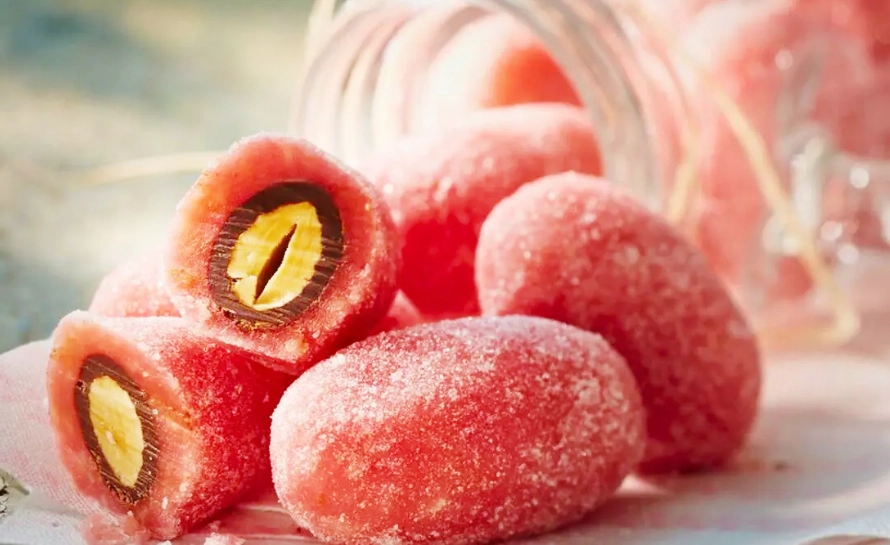
Pink oval confections from Pau in the Pyrénées, created by Francis Miot and SG Sender, Gaston Lenôtre’s pastry chef, as a tribute to Henri IV. The name comes from an old Béarnais word meaning to cuddle, cajole, or cherish. A coucougnette is, technically, a little moment of love.
Three concentric layers: a roasted almond at the centre, covered in dark chocolate at 70% cocoa, all rolled by hand in a pink almond paste flavoured with raspberry, ginger, and Armagnac. The combination sounds unusual and works brilliantly. The fruitiness of the raspberry, the kick of ginger and Armagnac, and the crunch of the almond underneath.
They won Best Sweet in France in 2000 at the 45th International Confectionery Salon. The pink colour and the name are a nod to Henri IV, who was born in Pau and earned the nickname le Vert Galant for reasons that the French find charming rather than scandalous. Perfect as a gift for someone with a sense of humour.
La Brique du Capitole de Toulouse
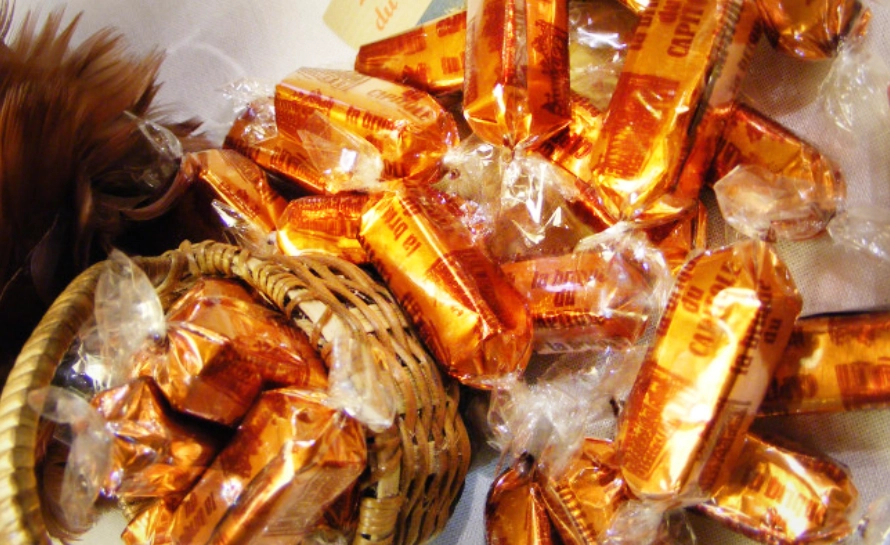
A confection shaped like the terracotta bricks that give Toulouse its nickname La Ville Rose. Created in 1951 by Nougalet, it is a crispy, flaky sweet made from sugar, almonds, hazelnuts, and vanilla, with a texture somewhere between praline and brittle.
The shape and colour deliberately reference the traditional terracotta bricks used to build Toulouse’s iconic pink buildings, including the Capitole itself. The flavour comes from precisely controlled cooking temperatures that have been maintained the same way since 1951. It is the most architecturally specific piece of french confectionery on this list, and one of the most distinctive.
Marrons Glacés
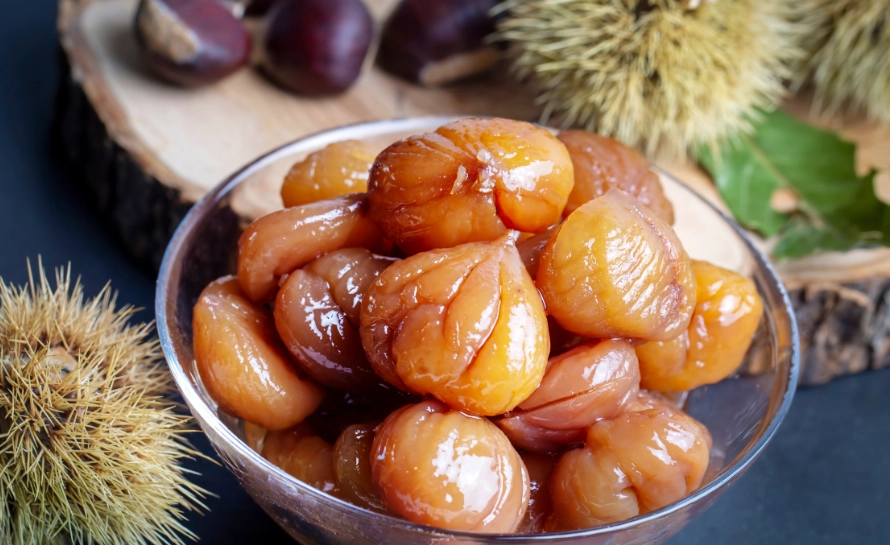
Whole chestnuts preserved in sugar syrup, then glazed. One of the most labour-intensive and luxurious confections in France, made since the 16th century, with the Ardèche region particularly renowned for them.
The process takes days. Fresh chestnuts are carefully peeled whole, then slowly candied in sugar syrup through multiple stages. Each day the syrup concentration increases slightly, allowing the sugar to penetrate the chestnut without collapsing its structure. Finally, they are glazed to produce that characteristic glossy finish.
Sweet but not cloying, with the earthy, slightly smoky chestnut flavour still present beneath the sugar. Soft, yielding, almost buttery. Delicate enough that many break during the candying process, which is partly why they are expensive.
Properly made marrons glacés cost a significant amount because of the time, skill, and failure rate involved. They are traditionally given as gifts at Christmas or New Year, in elegant wooden boxes. If you receive a good box of marrons glacés as a gift, you are genuinely liked by the person who gave them.
So, what’s your pick?
If you can only try three of these, the salted butter caramels from Brittany, the pralines from Montargis, and the nougat from Montélimar give you the best introduction to what serious French confectionery actually is. Each one represents a different region, a different technique, and a different moment in French culinary history.
Beyond that, the Négus de Nevers for the sheer improbability of the concept, and the Coucougnettes if you want the best story to tell when you get home.
France has hundreds of regional confectioners making things that most French people outside the immediate area have never tried. If you have a favourite that is not on this list, tell me in the comments. The list is never finished.
Disclosure: Just so you know, this post contains sponsored content and/or affiliate links, If you make a purchase through these links, I may receive a small commission. Doesn’t cost you anything extra. I only link to things that are actually worth your time. All opinions are my own!