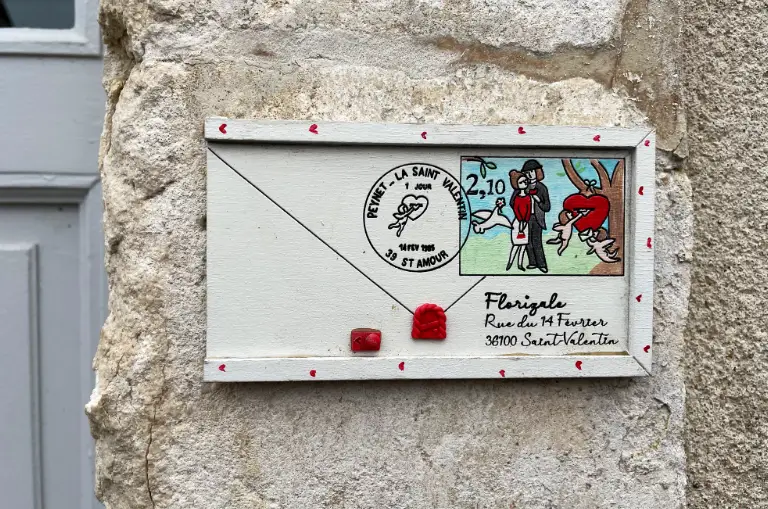
Growing up in France I was called all sorts of things by my parents, my cousins, and complete strangers in shops. It was only when I started learning other languages that I realised how particular those French words for my love actually are, and how much they meant to me.
I tried translating a few for my husband, and they just fell flat. “My little cabbage” is not a thing you can say to an Englishman. And it goes the other way too: I cannot bring myself to call him miel, even though “honey” works perfectly well in English.
What I can do, though, is share some of these French terms of endearment with you. What they mean, who they’re for, how to actually say them, and which ones you should absolutely not try on a colleague.
Table of Contents
How the French do it
The French have what feels like an entire farmyard, greengrocer, and pastry shop’s worth of affectionate nicknames, and they use them freely. Partners, kids, close friends, and sometimes even colleagues get swept up in this vocabulary if the mood is right.
If you are new to French culture, brace yourself. At some point you will be someone’s cabbage. You might be their flea. You could easily end up their shrimp too. And somehow it all sounds tender rather than insulting.
In French, using diminutives and slightly silly words is one of the normal ways to show affection. Where an English speaker might hesitate to call a grown partner “my little chicken,” a French speaker will say it quite casually. It does not feel childish or over the top; it is just another way of being close.
The language itself encourages it, with its love of diminutives. Add “‑ette” or “‑ou” and suddenly a word is smaller, cuter, more precious: “poule” becomes “ma poulette,” “loup” becomes “mon loulou.” French almost dares you to make things adorable.
How to say “my love” in French
If you only want one, it’s mon amour. Say it mon-ah-MOOR. It’s the closest direct equivalent to “my love” in English, though it’s not a word you scatter about: it’s for partners and for children, not for the person at the next desk.
The other three you can’t go wrong with:
French
Pronounciation
Meaning
Good for
Mon amour
mon-ah-MOOR
my love
Partners, children
Mon chéri
mon shay-REE
my darling
Partners, children, close friends
Ma chérie
ma shay-REE
my darling
Partners, children, close friends
Mon cœur
mon KUHR
my heart
Partners, children
Ma belle
ma BELL
my beautiful
Partners, children, close friends
Chéri and chérie sound identical, so you don’t have to worry about getting that one right out loud. Only in writing.
Ma belle is the one I’d tell you to learn. It’s used constantly, between friends, between family, and it never sounds like too much. Its male counterpart mon beau exists but you’ll rarely hear it, so don’t reach for it expecting the same warmth.
Feminine or masculine
Before the lists, one rule, because it saves a lot of confusion. The mon or ma matches the word, not the person, you’re talking to.
Chou is a masculine word, so it’s mon chou whoever you’re saying it to, including a woman. You never adjust it to ma chou. Likewise puce is feminine and it’s ma puce every single time. The word decides, not the person.
One extra wrinkle. If a feminine word starts with a vowel, it takes mon anyway, because French hates two vowel sounds bumping into each other. That’s why it’s mon amie, mon âme, mon étoile, all feminine words wearing mon.
Get that and you’ll never have to guess again. It also means the columns below tells you the gender of the word, which is all you need to pick the right possessive.
The animals
A lot of French terms of endearment come from animals, not grand creatures like lions or eagles, but small, familiar ones.
The animals
French
Pronounciation
Meaning
F/M
Ma puce
ma POOSS
my flea
Feminine
Mon lapin
mon la-PAN
my rabbit
Masculine
Ma lapine
ma la-PEEN
my rabbit
Feminine
Ma biche
ma BEESH
my doe
Feminine
Mon chaton
mon sha-TON
my kitten
Both
Mon chat
mon SHA
my cat
Both
Ma poule
ma POOL
my hen
Feminine
Mon poulet
mon poo-LAY
my chicken
Masculine
Ma cocotte
ma ko-KOT
my little hen
Feminine
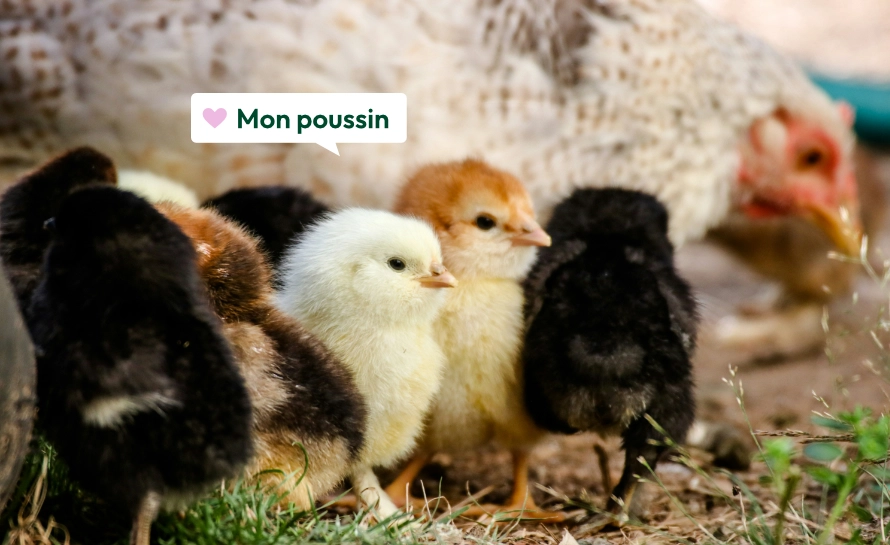
Mon poussin
mon poo-SAN
my chick
Both
Mon canard
mon ka-NAR
my duck
Masculine
Ma tourterelle
ma toor-tuh-REL
my turtledove
Feminine
Ma colombe
ma ko-LOMB
my dove
Feminine
Mon pigeon
mon pee-ZHON
my pigeon
Masculine
Ma puce is the big one. It sounds ridiculous in English but in French it’s about as warm as a word gets. The idea is something tiny that jumps about and sticks to you, which if you have children is precisely accurate. Once you stop picturing an actual flea it’s lovely.
Mon lapin carries a hint of flirtation, for reasons involving rabbits and their reputation.
One warning: Ma chatte has a second meaning in French exactly like the English one, so unless you know what you’re doing, use mon chaton instead. Same for mon minou, which you may see in the dictionary.
The food
If the farmyard wasn’t enough, French pet names raid the kitchen too.
The food
French
Pronounciation
Meaning
F/M
Mon chou
mon SHOO
my cabbage
Both
Mon petit chou
mon puh-tee SHOO
my little cabbage
Both
Mon bout de chou
mon boo duh SHOO
my bit of cabbage
Both
Mon chouchou
mon shoo-SHOO
my darling
Both
Ma chouchoute
mon sha-TON
my kitten
Feminine
Ma crevette
ma kruh-VET
my shrimp
Feminine
Ma praline
ma pra-LEEN
my praline
Feminine
Mon chou is the one everybody has heard of.
There’s a lovely English footnote too. Prince Philip apparently called the Queen “cabbage”, and it’s thought he picked it up from mon chou, having spent seven years of his childhood in France.
The classics
Not everything is poultry and pâtisserie. There’s a whole set of straightforwardly romantic ones.
The classics
French
Pronounciation
Meaning
F/M
Mon amour
mon ah-MOOR
my love
Both
Mon chéri
mon shay-REE
my darling
Masculine
Ma chérie
mon shay-REE
my darling
Feminine
Mon cœur
mon KUHR
my heart
Both
Mon petit cœur
mon puh-tee KUHR
my little heart
Both
Mon ange
mon AHNZH
my angel
Both
Mon trésor
mon tray-ZOR
my treasure
Both
Ma perle
ma PERL
my pearl
Feminine
Mon étoile
mon ay-TWAL
my star
Both
Ma belle
ma BELL
my beautiful
Feminine
Ma douce
ma DOOSS
my sweet one
Feminine
Ma moitié
ma mwa-TYAY
my other half
Both
Ma princesse
ma pran-SESS
my princess
Feminine
Mon prince
mon PRANSS
my prince
Masculine
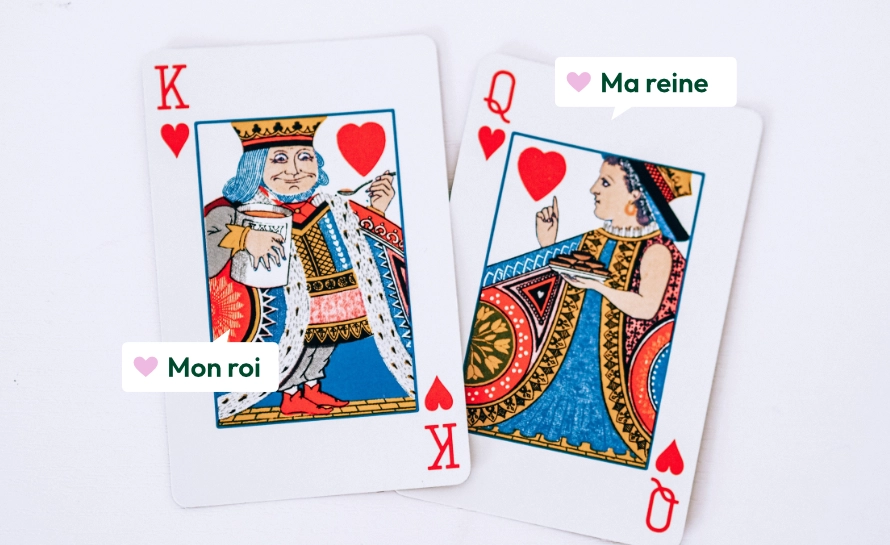
Ma reine
ma REN
my queen
Feminine
Mon roi
mon RWA
my king
Masculine
Mon trésor is the one I’d defend hardest. My treasure. It sounds almost too much written down in English, and in French it doesn’t at all: it’s what you say to a child who has just handed you a drawing, and it’s what you say to someone at the end of a long day.
Ma moitié rarely makes English lists and it should. It means “my half”, and it’s what French people say where English has “my other half”, except it’s said with rather more feeling and rather less eye-rolling.
The quirky ones
Then there’s a whole category of french terms of love that don’t quite translate at all. These are pure French linguistic playfulness.
The quirky ones
French
Pronounciation
Meaning
F/M
Mon doudou
mon doo-DOO
my comfort blanket
Masculine
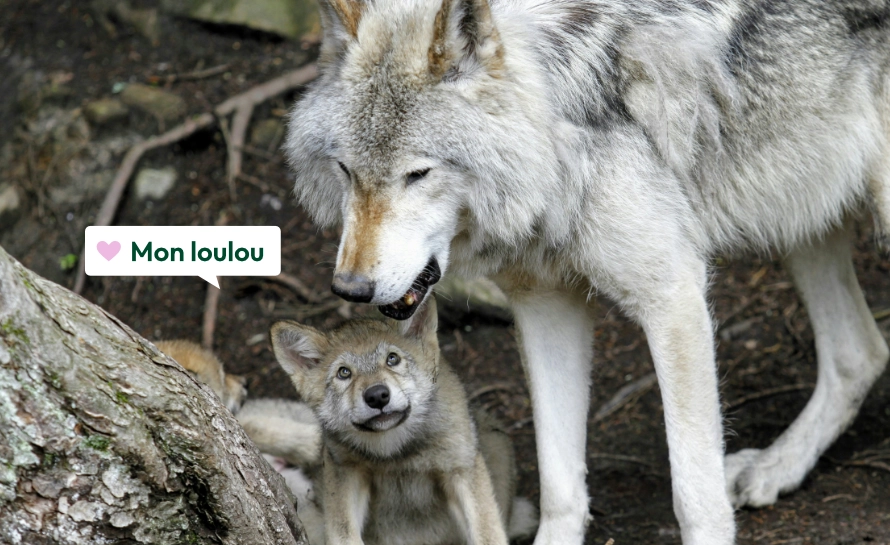
Mon loulou
mon loo-LOO
untranslatable
Masculine
Ma louloute
ma loo-LOOT
untranslatable
Feminine
Mon pitchoun
mon pee-CHOON
my little one (southern)
Masculine
Ma pitchoune
ma pee-CHOON
my little one (southern)
Feminine
Mon ti-bout
mon tee-BOO
my little bit
Both
Bébé
bay-BAY
baby
Both
Ma poupée
ma poo-PAY
my doll
Feminine
Ma nenette
ma nuh-NET
my girl
Feminine
Ma nana
ma na-NA
my girl
Feminine
Ma bibiche
ma bee-BEESH
My doe
Feminine
Ma chipie
ma shee-PEE
my cheeky one
Feminine
Mon kiki
mon kee-KEE
untranslatable
Masculine
Mon doudou is enormous. A doudou is a child’s comfort blanket or soft toy, and the word has expanded to cover any beloved person. Partners use it, parents use it, and it always sounds like being wrapped in something.
Mon loulou and ma louloute are just as common and genuinely nobody agrees where they came from. You’ll hear mon loulou d’amour when someone wants to lay it on thick.
Mon pitchoun comes from Occitan and you’ll hear it constantly in the south, especially for children.
Ma chipie is what you call a girl who’s being cheeky, and it’s said with complete affection even when she’s just done something she shouldn’t have.
A word of warning for learners
“Gros” and “grosse” are affectionate in French.
Yes, they literally mean fat. And French couples call each other mon gros and ma grosse with total tenderness and no insult intended whatsoever. I’d still not be the first person in a relationship to try it.
“Je t’aime” and “je t’aime bien” are not the same thing.
This catches out every learner and it’s the reverse of what you’d expect. Je t’aime is I love you. Je t’aime bien is I like you, as a friend, and adding bien actually makes it weaker rather than stronger. If you tell a French person je t’aime bien while gazing into their eyes, you have just gently friend-zoned them.
Safe and unsafe to use
Some of these are safe anywhere. Some really are not.
Safe to use fairly freely: mon chéri, ma chérie, mon amour, mon cœur, ma belle, mon ange. These are the classics and nobody will find them strange.
Warm but casual, fine with friends: mon chou, ma puce, doudou, ma poule, ma cocotte.
Only for people you’re genuinely close to: ma crevette, mon lapin, mon bout de chou, anything from the food list.
Never at work. Not one of them. It doesn’t matter how friendly the office is.
And a small honest note about pronunciation. Something about being called “my shrimp” in a heavy accent doesn’t land the way you’d hope. But most French people are genuinely delighted when a non-native speaker has a go at these, even a bad go, because it means you’re willing to play along with something quite silly and quite French.
Being willing to look daft is, frankly, most of what these words are about.
If you want to go further
If this side of French culture interests you, there’s a whole world behind it. The way the French use language to show warmth, keep distance and create intimacy is the subject of a very good book called The Bonjour Effect by Julie Barlow and Jean-Benoît Nadeau. It isn’t a grammar book. It’s a guide to the unwritten rules of French conversation, including when these words come out and when they absolutely don’t.
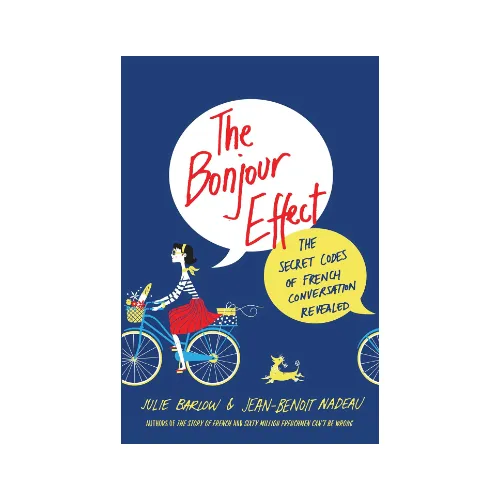
The Bonjour Effect
Julie Barlow and Jean-Benoît Nadeau
Find it on Amazon >
FAQ
How do you say “my love” in French?
Mon amour, pronounced mon-ah-MOOR. It works for anyone regardless of gender and is the closest direct equivalent to the English “my love”. Mon chéri or ma chérie (my darling) and mon cœur (my heart) are the other two you can use safely in almost any affectionate context.
Why do the French call people “mon chou”?
Chou means cabbage, but the endearment almost certainly has nothing to do with the vegetable. It’s usually said to be short for chou à la crème, a cream puff, though that doesn’t fit the dates. Linguists more plausibly trace it to chchch, the shushing sound used to settle a crying baby, which also gave French chut (hush). On that reading, mon chou originally meant something like “my baby”.
Do you say “mon” or “ma” for French pet names?
It depends on the gender of the noun, not the person you’re speaking to. Puce is feminine so it’s always ma puce, even to a man. Chou is masculine so it’s always mon chou, even to a woman. Feminine words beginning with a vowel take mon anyway, which is why it’s mon amie and mon étoile.
What is the most common French term of endearment?
Mon chéri and ma chérie are the most universal. Ma puce and mon chou are the most distinctively French, and both are used constantly for children, partners and friends alike.
What does “ma puce” mean?
Literally “my flea”. It’s one of the warmest everyday French endearments, suggesting something small that jumps about and sticks to you. Used for children, partners and close friends.
What is the difference between “je t’aime” and “je t’aime bien”?
Je t’aime means I love you. Je t’aime bien means I like you, as a friend. Adding bien weakens it rather than strengthening it, which is the opposite of what most learners expect.
Are French terms of endearment used outside romantic relationships?
Very much so. Parents use them with children constantly, friends use them with each other, and shopkeepers will use them with customers. Ma belle, ma puce, mon chou and ma cocotte are all common between friends and family with no romantic meaning at all.
Over to you
Ma puce has always been my favourite. Small and silly and soft all at once.
Ma belle is what I use for the women I love in my life, my neighbours, my family, my friends. They really are beautiful, inside and out, and the word fits them.
So now you have a toolbox of French words for my love, whether you’re in France for Valentine’s Day or just want to smuggle a bit of French tenderness into your everyday life.
What about you? Tell me, have you been called any of these by a French person? And have any romantic French words successfully made it into your English vocabulary? Share your stories in the comments!
This post may contain affiliate links. If you buy through them I earn a small commission at no extra cost to you, and it helps keep this blog running. Please read my disclosure policy for more information. I am grateful for your support.