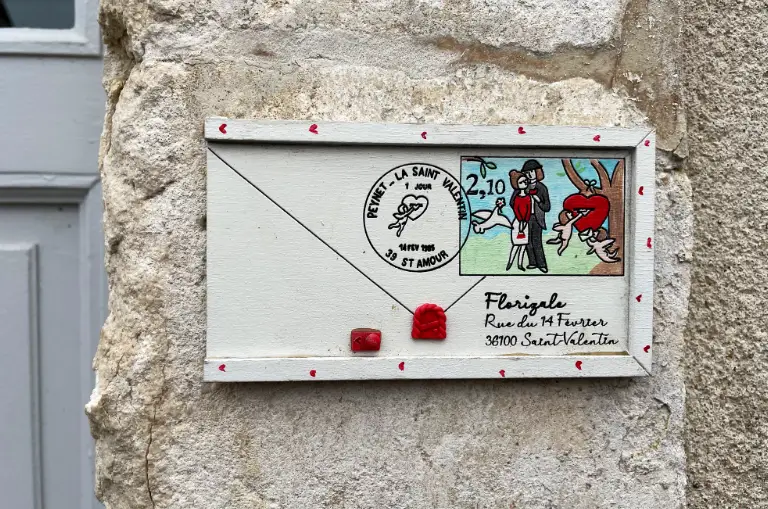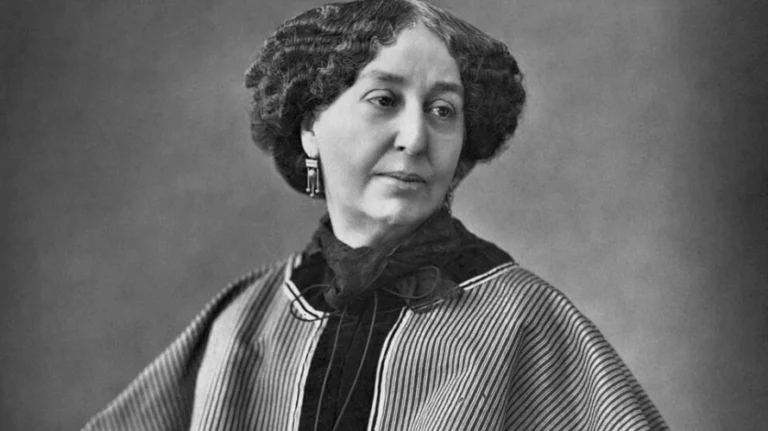
Near Argenton-sur-Creuse, Gargilesse became a regular escape. A short drive up winding country roads to a tiny village in the valley of the Creuse, where the world slowed down and the lanes were cobbled and the roofs steeply pitched. And at the centre of it, a small house that once belonged to one of France’s most extraordinary writers.
George Sand’s house in Gargilesse is modest. Four rooms, dry-stone walls, a roof of local tiles. But it tells you more about who she was than any biography could, because George Sand, for all her fame and scandal and brilliance, was a woman who needed quiet in order to work. And she found it here.
Who was George Sand?
George Sand was not born with that name. She started life as Amantine Lucile Aurore Dupin, born in Paris in 1804 but raised largely at Nohant, her family’s estate in the Berry region of central France. That childhood in the countryside shaped everything: her writing, her politics, her sense of what mattered and what did not.
By the time she was in her late twenties, she had already remade herself. After a brief literary collaboration with writer Jules Sandeau, she published her first solo novel, Indiana, in 1832 under the pen name George Sand. It was a calculated choice and a statement simultaneously. In an era when women writers were expected to publish under male names or not at all, she chose a name that was unambiguously masculine and stuck with it for the rest of her life.
The author George Sand who emerged from that decision was one of the most prolific and controversial figures in 19th-century French literature. She wrote more than 70 novels, along with plays, political essays, letters, and a sprawling autobiography called Histoire de ma vie. By the 1840s, she was more famous in England than either Victor Hugo or Honoré de Balzac. That is not a minor achievement. That is an extraordinary one.
A life lived on her own terms
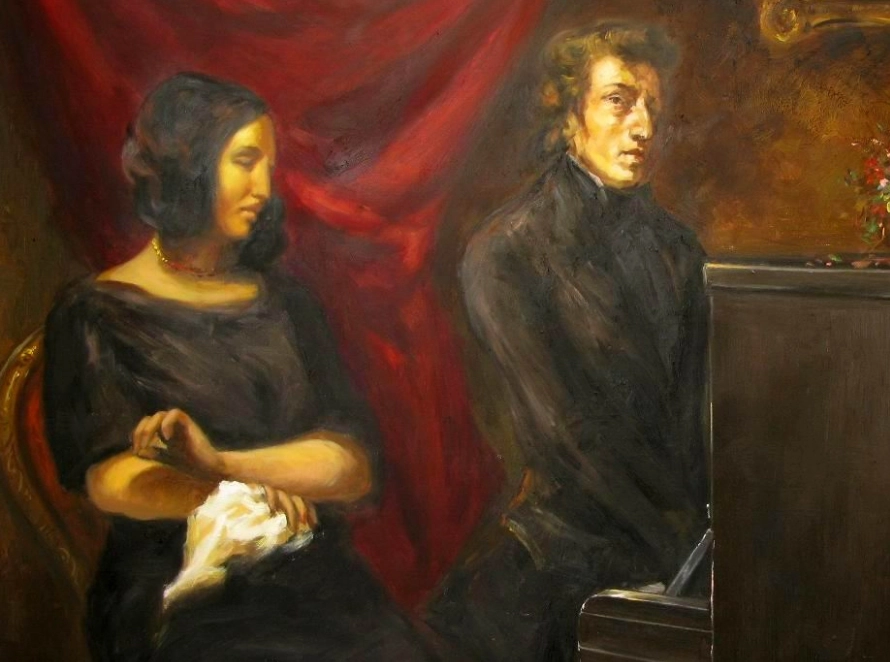
The George Sand bio that most people know focuses on the scandals, and there were genuine scandals. She married young, found the marriage suffocating, and left her husband. She wore trousers and smoked cigars at a time when both were considered outrageous for a woman. She took lovers openly: the poet Alfred de Musset, the philosopher Pierre Leroux, and most famously, the composer Frédéric Chopin.
The relationship between Chopin and George Sand lasted nine years, from 1838 to 1847, and is one of the most analysed romantic partnerships in the history of European culture. They spent winters in Mallorca and summers at Nohant, and Chopin composed some of his most significant work during the years they were together. George Sand wrote about their time in Mallorca in her memoir Un hiver à Majorque, a book that is still read today. Whether the relationship was good for Chopin has been debated since his death in 1849. What is clear is that it was the most artistically productive period of both their lives.
She raised her children independently, managed her own finances, and held political opinions she expressed without apology. She was a republican and a socialist at a time when both positions were genuinely dangerous. During the Revolution of 1848, she wrote political pamphlets and corresponded with the provisional government. She believed that literature had a social function and used hers accordingly.
The writing
The George Sand novelist who emerges from her body of work is more varied than the reputation suggests. She was not simply a romantic novelist. She was a writer who moved between registers and genres throughout her career, always returning to the countryside of Berry as her most reliable subject.
Her early novels, Indiana (1832) and Lélia (1833), were confrontational. Indiana attacked the institution of marriage directly, presenting a heroine who refuses to accept her husband’s authority over her inner life. Lélia was more radical still: its protagonist rejects both marriage and motherhood, choosing intellectual and emotional freedom over social respectability. The novel was considered so scandalous that it was banned in some places. George Sand did not revise it.
Later, she shifted towards a different kind of writing. Her rustic novels, La Mare au Diable (1846), François le Champi (1847), and La Petite Fadette (1848), are set in the Berry countryside she grew up in and written with a warmth and humanity that the earlier novels sometimes sacrificed for argument. These books celebrate the lives of ordinary rural people: peasants, farmers, craftsmen, children. They are not sentimental. They are attentive, which is something different.
La Mare au Diable in particular drew on the folklore and legends of Berry, weaving the region’s supernatural traditions into a story of rural courtship. It remains the most widely read of her novels outside France, partly because it is short and partly because it is genuinely beautiful.
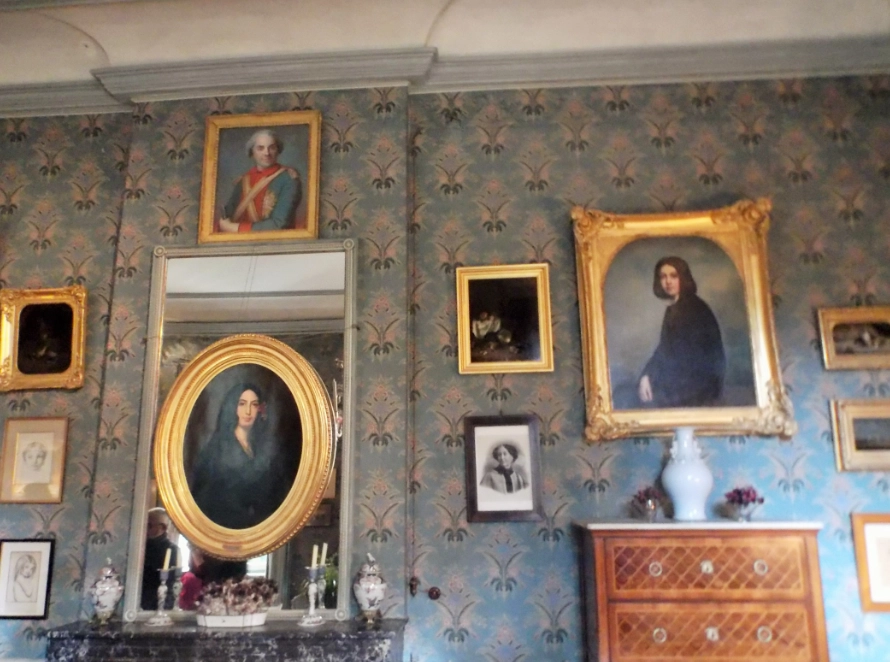
The relationship with Berry
George Sand was a Parisian by birth and a European by reputation, but she was a Berry person by identity. Nohant, the family estate where she spent her childhood and to which she always returned, sits in the Indre department of central France. The landscape of Berry, its flat marshes, dense forests, and isolated farmsteads, appears in her writing more consistently than any other setting.
She listened to the people of Berry carefully. Their dialect, their legends, their stories about witches and will-o’-the-wisps and wandering spirits found their way into her novels and gave them a texture that purely urban writers could not replicate. She was not romanticising rural life. She was observing it, which is why those novels still feel true.
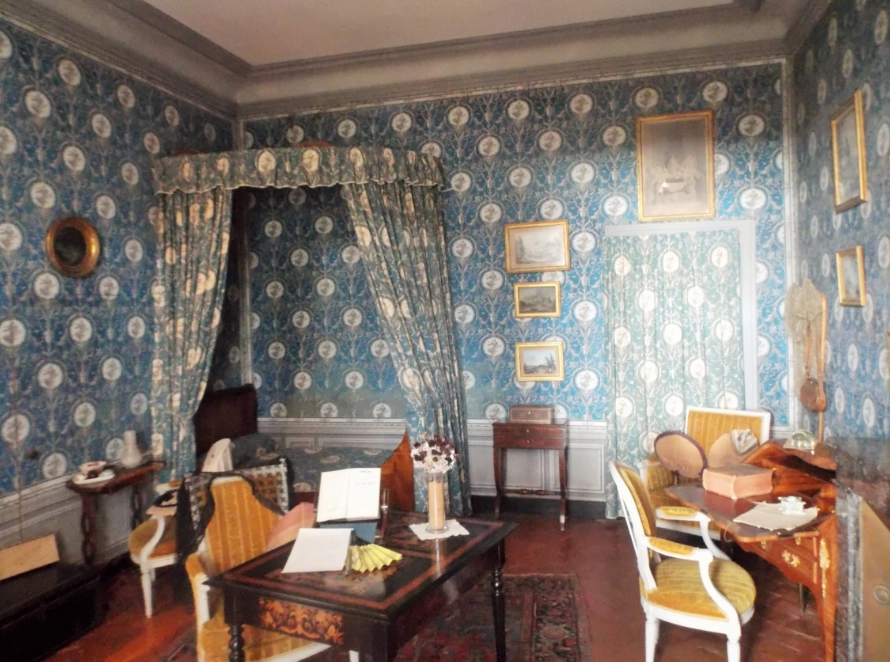
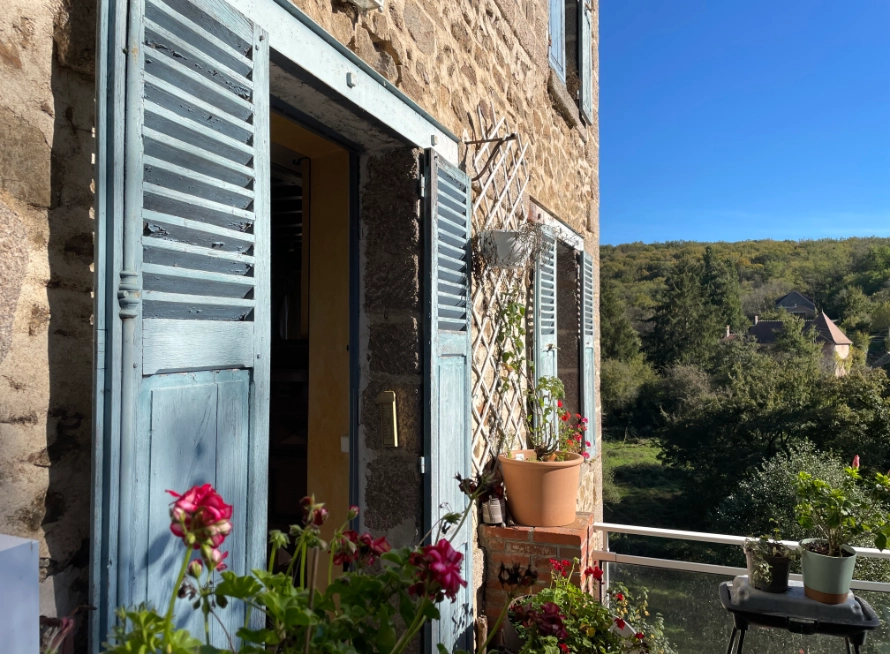
Her house in Gargilesse was the other pole of her Berry life. Smaller than Nohant, quieter, further from the demands of family and visitors. She first arrived there in June 1857, walking along the river Creuse with her companion Alexandre Manceau. “You have to arrive at sunset,” she wrote later. “Everything has its time to be beautiful.” Manceau bought her the house, which she named Villa Algira after a rare butterfly they had found on one of their walks. She worked there on several novels and returned regularly until Manceau’s death in 1865.
Chopin and George Sand: the full story
The story of Chopin and George Sand is often told as a romance and nothing more. It was considerably more than that.
They met in Paris in 1836 and began their relationship two years later. In the winter of 1838-39, they travelled to Mallorca together with her two children, seeking a warmer climate for Chopin, whose health was already fragile. The trip was difficult. The weather was cold, the accommodation poor, and Chopin’s health deteriorated significantly. George Sand nursed him and wrote about the experience in Un hiver à Majorque.
Back in France, they settled into a pattern: winters in Paris, summers at Nohant. At Nohant, Chopin had his own room and his own Pleyel piano, and he composed prolifically. The Ballade No. 3, the Fantaisie, the Barcarolle, and many of the nocturnes were written there. George Sand managed the household, raised her children, and continued writing her novels. It was a domestic arrangement that was unconventional by the standards of the time and productive for both of them.
The relationship ended badly in 1847, partly over a conflict involving George Sand’s children. Chopin died two years later, at 39, and did not speak of her before his death. She wrote about him in her autobiography with complicated feelings. The nine years they spent together remain one of the most significant artistic partnerships of the 19th century.
The legacy of George Sand
George Sand died in 1876 at Nohant, at the age of 71. Victor Hugo spoke at her funeral. Henry James and Ivan Turgenev, who had both known her, wrote about their grief. Gustave Flaubert, her close friend for the last decade of her life, was devastated.
Her influence spread well beyond France. George Eliot, who took her own male pen name partly in Sand’s example, read her work closely and admired it. Virginia Woolf wrote about her. Marcel Proust cited her. The author george sand who had been scandalous in the 1830s was, by the end of the 19th century, recognised as one of the defining figures of French literary culture.
Her political legacy is equally significant. She wrote about women’s rights, the conditions of the rural poor, and the hypocrisy of bourgeois marriage at a time when all three topics were genuinely dangerous. She did not win every argument she made. But she made them publicly, in print, under her own name, and she kept making them for more than forty years.
Visiting George Sand’s world
For anyone who wants to encounter the George Sand novelist in context, two places are essential.
Nohant is the family estate where she was raised, where she wrote most of her major novels, and where she died. It is now a museum and one of the best-preserved literary houses in France. The rooms are intact, the garden is beautiful, and the sense of her presence is strong.
Gargilesse is the smaller, quieter house. The Villa Algira is open to visitors and contains objects that belonged to her, drawings by her son Maurice, and the particular atmosphere of a retreat rather than a residence. The village itself, with its artists’ workshops and its Romanesque church that hosts a harp festival every August, is worth visiting in its own right.
Both are in the Berry region of central France. If you are passing through, neither requires much detour. And both are considerably better than reading about George Sand second-hand.
Disclosure: Just so you know, this post contains sponsored content and/or affiliate links, If you make a purchase through these links, I may receive a small commission. Doesn’t cost you anything extra. I only link to things that are actually worth your time. All opinions are my own!