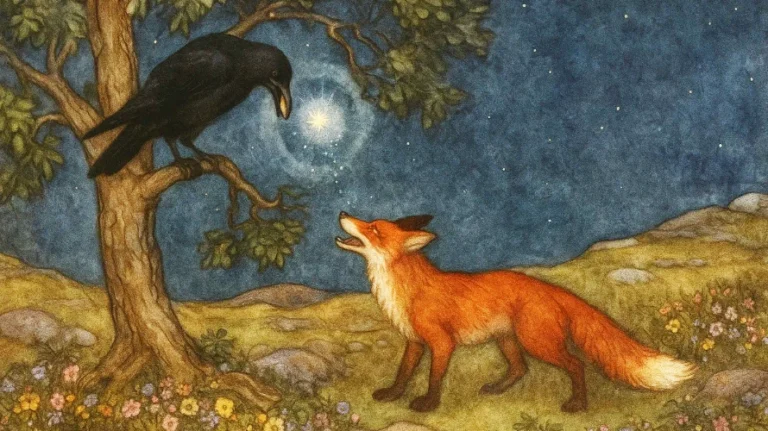
I still know them by heart. The Crow and the Fox, and The Grasshopper and the Ant. I learned them the way every French child learns them, standing up in front of a classroom with damp hands, and forty years later they are still in there, filed somewhere I cannot delete.
They surface at the strangest moments. When somebody flatters me a bit too eagerly, the fox appears. When I watch someone spend everything today with no thought at all for tomorrow, there is the grasshopper, singing away. My husband finds this funny. He did not grow up with them, and when I told him that I could still recite a 17th century poem about an insect begging for grain, he assumed I was exaggerating. I was not.
That is the strange power of Jean de La Fontaine. He wrote animal stories so precise and so human that they lodge permanently. They are given to children, and they are absolutely not children’s stories. They are about power, vanity, cruelty and the small daily compromises people make, delivered with dry humour and real insight at any age.
Table of Contents
Who was Jean de La Fontaine?
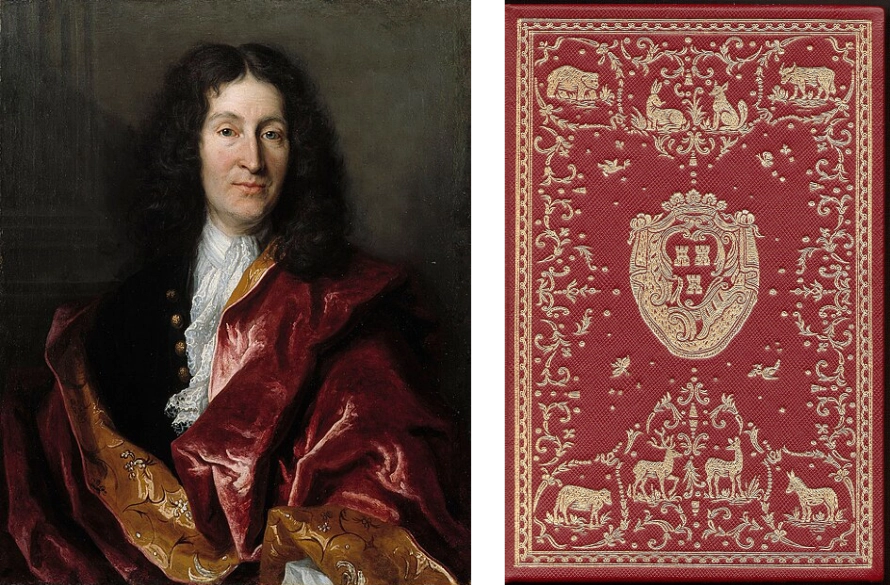
Jean de La Fontaine was born on 8 July 1621 in Château-Thierry, a small town in Champagne, and the first thing worth saying about him is that he was not some early genius destined from childhood to write fables.
He tried the Church and lasted about a year as a novice at the Oratoire before giving it up. He studied law. He inherited his father’s job as a master of waters and forests, a comfortable local post that he was, by all accounts, spectacularly bad at. He was in his late thirties before he really turned to writing, which is the age at which most people have accepted the life they have got.
What he became was the most widely read French poet of the 17th century and, arguably, of any century since. He was charming, dreamy, permanently distracted, and permanently short of money. He never once in his adult life supported himself. He moved from one aristocratic household to another, collecting protectors: Fouquet, then the Duchess of Orléans at the Luxembourg Palace, then twenty years under the roof of Madame de La Sablière in her Paris salon, then the banker Hervart, in whose house he died.
His life reads like one of his own fables. A man of enormous talent who understood perfectly well that survival meant wit, charm and knowing exactly whose table to sit at.
Molière, Racine and Boileau were close friends. He was elected to the Académie française in November 1683, taking Colbert’s chair, but Louis XIV sat on the approval for months because he had never much liked La Fontaine and liked his bawdy Contes even less. He was finally received on 2 May 1684.
He died on 13 April 1695, aged 73. There is a story that when they undressed his body they found a hair shirt underneath, the libertine poet having died a penitent. He was buried at the Saints-Innocents cemetery, and in 1817, when the city wanted to give the new Père Lachaise Cemetery some prestige, his remains were moved there and laid beside Molière’s. I say “his remains” loosely. Nobody is entirely certain they got the right ones.
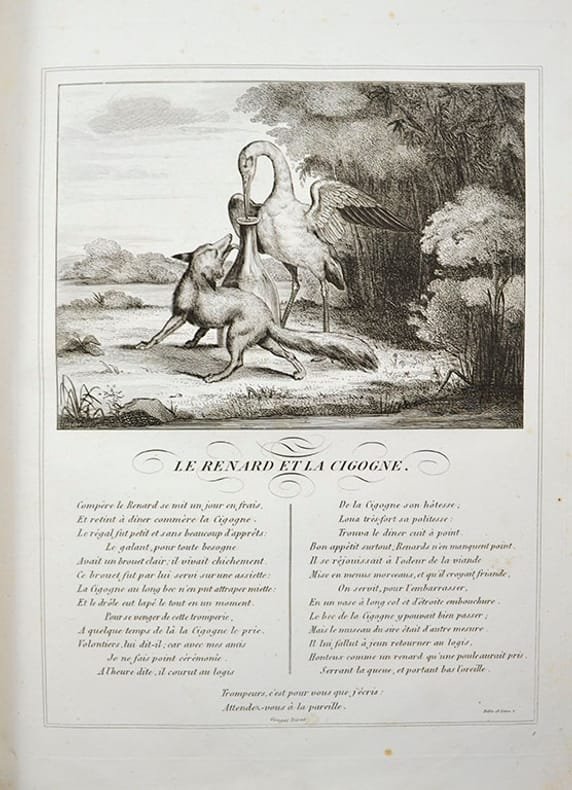
Writing under the Sun King
To understand why these fables are the way they are, you have to picture the world he was writing in, which was not a safe one.
Louis XIV’s France was one of the most dazzling and most suffocating courts Europe has ever produced. The king was absolute. Everything revolved around him. Saying the wrong thing to the wrong person could cost you your position, your freedom or more.
Jean de La Fontaine knew that very well. His patron Nicolas Fouquet, the Superintendent of Finance, threw a party at Vaux-le-Vicomte in August 1661 so extravagant that it made the young king look poor in his own kingdom which apparently offended the king. Three weeks later Fouquet was arrested, spent the rest of his life in a fortress and died there.
La Fontaine stayed loyal in public. He wrote an appeal for clemency. That was a genuinely dangerous thing to do, and it is probably why Louis XIV never warmed to him.
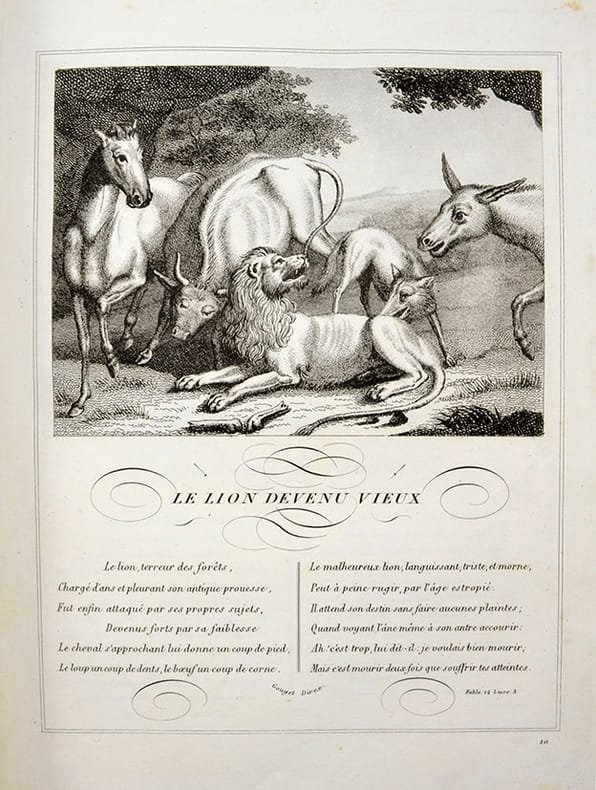
So when you read the fables, read them with that in mind. The lion who bullies the other animals and takes the largest share because he can is not only a lion. The fox flattering the crow out of its cheese is not only a fox. These stories let him say things about tyranny, vanity and the absurdity of court life that could not be said in plain prose by anyone who wanted to stay out of prison.
The animals are the disguise. The disguise is the genius of Jean de La Fontaine.
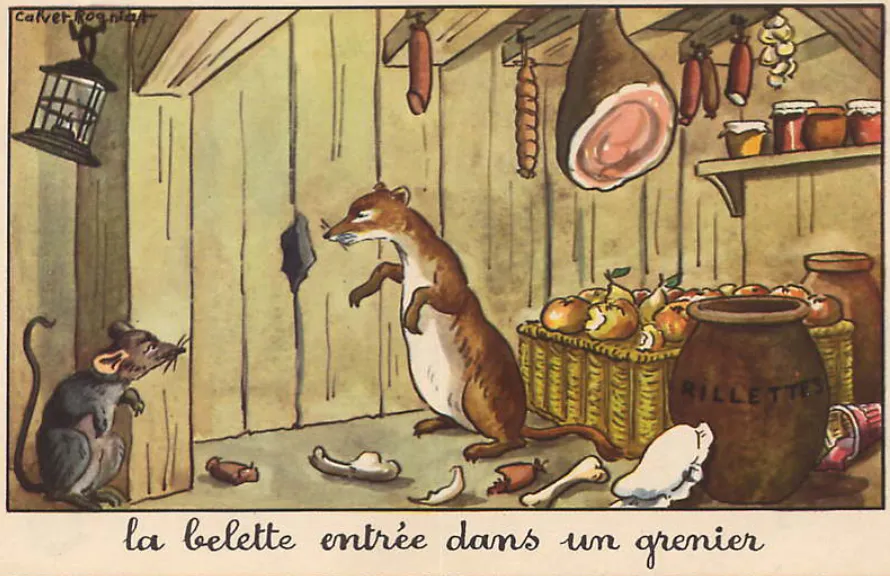
From Aesop to Jean de La Fontaine
Jean de La Fontaine never claimed to have invented the fables, quite the opposite.
The tradition goes back to Aesop, the Greek storyteller from the 6th century BC, whose animal tales had travelled in different forms across Europe and Asia for more than two thousand years by La Fontaine’s time. He also drew on Phaedrus, the Roman fabulist, and on the Panchatantra, the Sanskrit collection of animal stories that crossed into Europe through Arabic translations.
But what he did with them was something completely new.
Aesop’s fables are short, functional, and written in prose. They are the story and then the lesson, like a joke with the punchline explained. Jean de La Fontaine turned them into poems. Real poems, with music and rhythm and the natural cadence of spoken French.
And he gave the animals interior lives. Aesop’s crow is a device. La Fontaine’s crow is vain, visibly and painfully so, and you can feel it opening its beak. He added scenes and settings, and laced the stories with irony that Aesop never aimed for. The morals are not bolted on at the end like labels, instead they grow out of the story itself, which is far harder to do and far more satisfying when it works. Those small touches are the difference between a moral exercise and a scene you can see.
The first book was dedicated to the six-year-old Dauphin, the king’s heir, which helped frame the whole thing as suitable reading for children. But Jean de La Fontaine was explicit that he was writing for adults as well. The fables run on two tracks at once: simple enough for a seven-year-old to follow, layered enough to keep a philosopher busy for a whole afternoon.
The three collections
Jean de La Fontaine’s fables came out in three main waves over twenty‑six years. If you read them in order, you can feel his life and outlook shifting.
Books I to VI, 1668
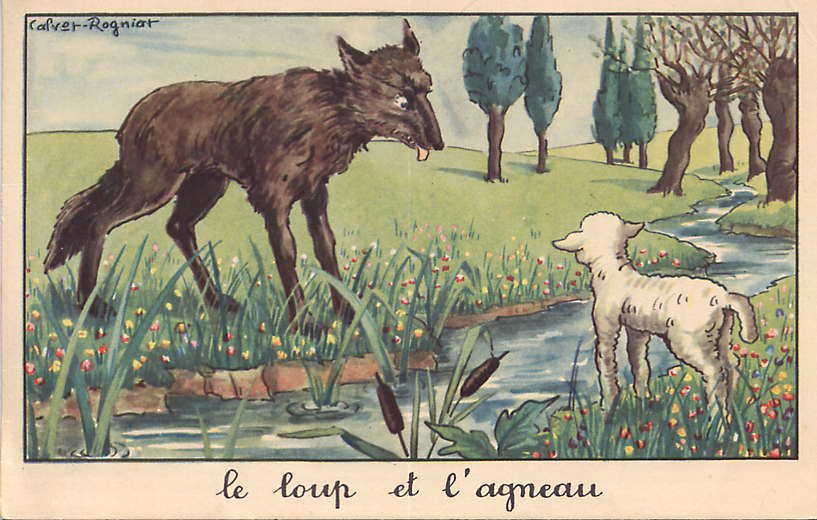
Dedicated to the Dauphin. These are the most classical, the closest to Aesop in shape, and the ones every French person can name. The Crow and the Fox is here. So is The Grasshopper and the Ant, The Wolf and the Lamb, The Oak and the Reed. This is the collection that sank into French culture and never came out again.
Books VII to XI, 1678 to 1679
Ten years on, living in Madame de La Sablière’s salon among scientists and philosophers. These are richer, longer, more digressive. The morals get less tidy and the humans move closer to the surface. This is where he stops being a fabulist and starts being a philosopher who happens to use animals.
Book XII, 1693
Jean de la Fontaine was now in his seventies. He has been seriously ill, he has publicly renounced his bawdy Contes in front of a delegation from the Académie, and he has turned toward religion. This last book is dedicated to the young Duke of Burgundy, Louis XIV’s grandson. The fables here are quieter and more inward. The wit is still there, but there is something softer underneath it, the sound of a man looking back rather than out.
All together, the twelve books hold 239 fables. They trace not just a writer’s development but also a journey through the shifting world of 17th‑century French society and court life.
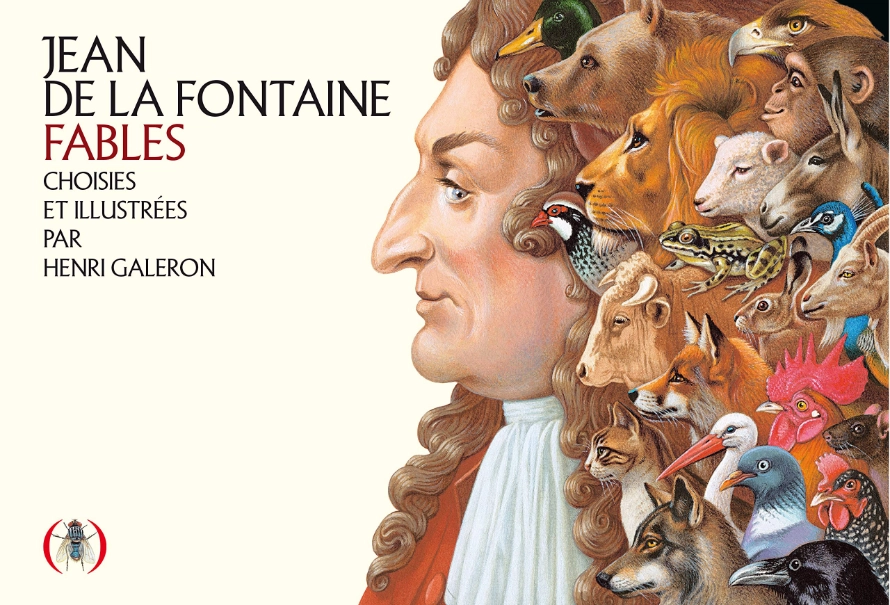
The most famous fables and what they actually mean
Out of the 239, a handful of these are so woven into French life they function like shared family stories. If you are planning to read the collection properly, skip ahead and don’t read this part, because I am going to spoil the endings.
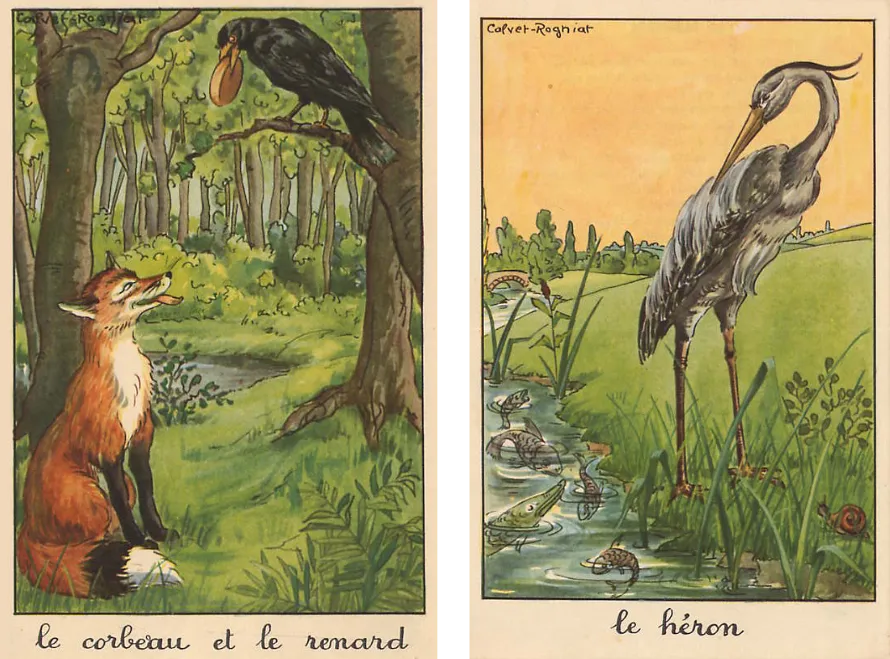
The Crow and the Fox
A crow is sitting in a tree with a piece of cheese in its beak. A fox wants it. He does not jump, he does not fight, he compliments. He praises the crow’s plumage, its bearing, and above all its marvellous voice, which he would so love to hear. The crow, glowing, opens its beak to sing, and the cheese falls.
The obvious lesson is beware of flattery. But La Fontaine goes further, and the last line is the sting: the flatterer lives at the expense of whoever listens to him. The fox only wins because the crow wanted to believe it. The responsibility is shared, that is the sting.
The Grasshopper and the Ant
Probably the most famous, and also one of the harshest.
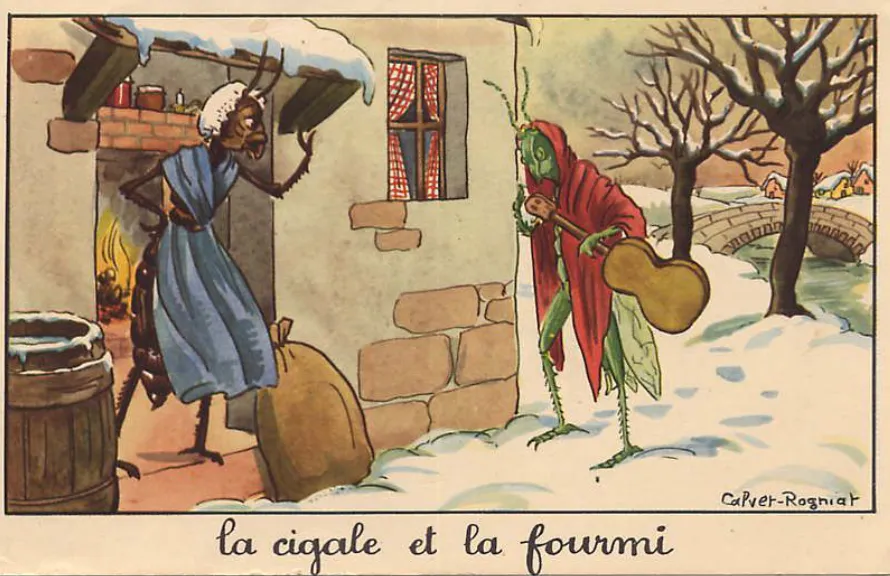
The grasshopper sings and plays all summer while the ant works hard. When winter comes, the grasshopper has nothing, and he goes to her neighbour to ask for a loan of grain until spring, promising to repay with interest. The ant asks what he was doing all summer. Singing, says the grasshopper. Well, says the ant, now you can dance.
There is no redemption and no warmth. French children get handed this at seven years old and are left to sit with it. The word cigale still means someone who lives entirely for today, and it is not a compliment. Fourmi means the opposite, and honestly that is not always a compliment either.
I have never been entirely sure whose side La Fontaine is on, and I suspect that is deliberate.
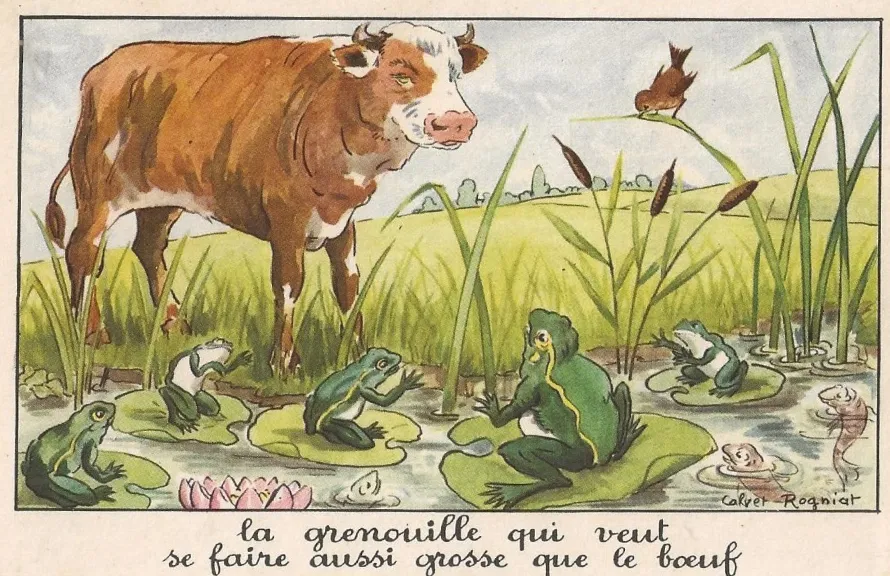
The Frog and the Ox
A small frog sees an ox and decides to match its size. She puffs herself up. Is she there yet? Not yet. She puffs again, and again, asking each time, until she bursts.
A very simple story about vanity, aimed with real precision at the social climbers of Louis XIV’s court, all of them stretching themselves to look like something they could not afford to be. He never says that outright. And he does not need to.
The Wolf and the Lamb
A wolf accuses a lamb of muddying his drinking water. The lamb points out, politely, that it is standing downstream and could not possibly have done so. The wolf invents a second grievance. The lamb answers that too. The wolf keeps going until it runs out of accusations, and then eats the lamb anyway.
La Fontaine puts the moral at the very top rather than the end: the reasoning of the strongest is always the best. It is a story about the fact that injustice does not need to make sense, because power does not require an argument, only the appearance of one. It is the bleakest thing he wrote and it is only twenty-nine lines long.
The Oak and the Reed
An oak mocks a reed for bending at the slightest breeze while he stands firm. A storm arrives and the oak, roots and all, is torn out of the ground. The reed, which bent, is still there.
This is the most beautiful of them, both in sound and in meaning. Flexibility as strength, rigidity as fatal weakness. He wrote it in the shadow of Fouquet’s fall, and you can feel that underneath every line: the enormous, magnificent, immovable man who was uprooted in an afternoon.
The fables you are quoting without knowing it
This is the part that surprises people most. A great deal of everyday French is La Fontaine, and most French people have no idea they are quoting a poem from 1668.
Quotes
Expression
Fable
Meaning
Rien ne sert de courir, il faut partir à point
The Hare and the Tortoise
No use running, you have to set off on time
La raison du plus fort est toujours la meilleure
The Wolf and the Lamb
Might makes right
Tout flatteur vit aux dépens de celui qui l’écoute
The Crow and the Fox
Flatterers live off those who listen
On a souvent besoin d’un plus petit que soi
The Lion and the Rat
You often need someone smaller than yourself
Un tiens vaut mieux que deux tu l’auras
The Little Fish and the Fisherman
A bird in the hand
Il ne faut pas vendre la peau de l’ours
The Bear and the Two Companions
Don’t count your chickens
Aide-toi, le ciel t’aidera
The Carter Stuck in the Mud
Heaven helps those who help themselves
Tel est pris qui croyait prendre
The Rat and the Oyster
The trapper trapped
If you are learning French, these are worth memorising purely as social equipment. Drop rien ne sert de courir into a conversation and you will get a look of surprised approval that no amount of correct subjunctive will earn you.
Why these moral stories are also great poetry
La Fontaine wrote in vers libres, which in the 17th century did not mean free verse in the modern sense but lines of deliberately varying length inside a rhyming structure. His contemporaries, who liked things regular, thought it was sloppy. They were wrong.
The varying lines give the poems the rhythm of somebody talking rather than somebody reciting. Short lines quicken the pace and land the blow. Longer ones slow down and let the scene breathe. The tightening and loosening tracks the story itself, hurrying you toward the moment the cheese falls and then lingering just long enough for the lesson to arrive.
His irony is just as important. Many of the fables end not with a solemn, finger‑wagging moral, but with a dry, almost amused aside. He tells the truth with a raised eyebrow, not a lecture. That lightness is what sets him apart from other moralists of his time and is a big part of why his poems still feel surprisingly modern.
Jean de La Fontaine at Versailles
Here is a lovely story that gets told constantly and is not quite true, so I want to get it right.
Versailles did have a labyrinth. André Le Nôtre built it in the gardens from 1668, on an idea from Charles Perrault, and between 1672 and 1674 it was filled with thirty-nine fountains at the junctions of the paths. Each one had painted lead animals with their mouths open, water jetting out to represent speech, and a verse on a black plaque in gold letters. Three hundred and thirty animals in total. It was extraordinary, and it was built explicitly to teach the Dauphin his fables while he walked.
But the fables were Aesop’s, not Jean de La Fontaine’s, and the verses were written by Isaac de Benserade, a court poet and Lully’s librettist. Perrault designed the programme. La Fontaine, whose fables had been published four years earlier and were already famous, was not asked.
Which is a very Louis XIV detail, and it tells you exactly how much favour La Fontaine had at court.
The labyrinth is gone. It was destroyed in the 1770s under Louis XVI to make way for an English-style garden, the Bosquet de la Reine, which is what stands there now. A dig in 2008 found the foundations of some of the basins. If you go to Versailles you can walk over the spot and see essentially nothing, which is a strange and rather La Fontaine-ish end for the thing.
How far the fables travelled
Beyond France, people argued with him and borrowed from him in equal measure.
The German thinker Gotthold Ephraim Lessing wrote his own fables partly in argument with La Fontaine’s. The Russian poet Ivan Krylov adapted many of the same stories for Russian readers, and they took root so thoroughly there that Russians tend to think of them as Russian.
Translations spread into English, German, Dutch, Spanish and far beyond. Elizur Wright’s English version, first published in 1841, was reprinted for the best part of a century on both sides of the Atlantic. Illustrators kept coming back: Grandville, Gustave Doré, and much later Marc Chagall, each finding an entirely different set of animals in the same words.
In France, the fables became school reading, which is both a triumph and a small tragedy. Anything you are made to recite at nine carries a certain classroom weight afterwards. For a lot of French adults, Jean de La Fontaine is filed permanently under homework.
Pick them up again on your own terms, with a coffee and no one testing you, and they are a completely different experience.
Where to find Jean de la Fontaine in France
Location
Why
Château-Thierry
Château-Thierry in the Aisne, is where Jean de La Fontaine was born, and his birthplace is now the Musée Jean de La Fontaine. It is a proper 16th century house, and the town leans into him thoroughly, which is charming rather than tacky.
Père Lachaise
Père Lachaise cemetery in Paris, where he lies beside Molière in division 25. The two tombs were moved there together in 1817 as a deliberate piece of marketing for a cemetery nobody wanted to be buried in. And it worked.
Vaux-le-Vicomte
And Château Vaux-le-Vicomte, if you want the other half of the story. Fouquet’s château is still there, still astonishing, and standing in those gardens you understand immediately why a young king took one look and had the man arrested.
Ready to read the fables?
If you have never really read Jean de La Fontaine, or only met him across a school desk, give him an afternoon or two and enjoy the wise lessons he has to share.
The Crow and the Fox takes two minutes. The Grasshopper and the Ant maybe three. By the time you reach The Oak and the Reed you will see why these small stories have refused to go away for three and a half centuries.
Which edition you want depends entirely on your French, so here are the three I would point you to.
The English version
The Complete Fables of Jean de La Fontaine, translated by Norman R. Shapiro, and I want to be specific about why this one rather than any other English edition.
Almost every translation of La Fontaine gives you the story and drops the poetry. The lines get evened out, the rhymes go, and what you are left with is a nice anecdote about a fox. Shapiro refused to do that. He spent more than twenty years on these, and he keeps the thing that actually makes them work: the lines that go suddenly short to land a blow, the rhyme falling on precisely the word that stings, the shift between plain speech and mock-grandeur that is half the joke. He also carries across the archaic register where Jean de La Fontaine is being deliberately old-fashioned, which almost nobody bothers with.
The American Translators Association gave it the Lewis Galantière Prize in 2008, and it is widely considered the English standard now. All 239 fables, an introduction by the poet John Hollander, and illustrations by David Schorr throughout.
If you are only ever going to own one La Fontaine in English, this is the one I would highly recommend. It is the rare translation you can read for pleasure rather than for reference.

If you want the original French
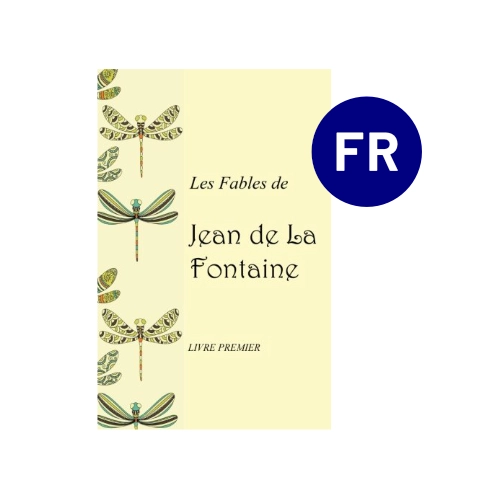
Les Fables de Jean de La Fontaine: Livre premier is Book I, the first of the twelve, in a cheap pocket-sized paperback. Worth being clear that it is not the complete works, but Book I is the collection everybody knows: The Crow and the Fox, The Grasshopper and the Ant, The Wolf and the Lamb, The Oak and the Reed are all in here.
For the price it is hard to argue with, and the format is the point. It goes in your bag or a glovebox, and these are poems that reward being read in odd five-minute gaps rather than sat down with solemnly. Read them out loud if you possibly can, even badly. So much of the pleasure is in the sound, and reading them silently is like looking at sheet music instead of hearing it played.
If you are learning French
Dover’s Selected Fables is a dual-language edition, French on one page and English facing it, with around 75 of the best-known fables.
The translation here is deliberately literal rather than poetic, line for line, and that is a feature rather than a flaw. It is not competing with Shapiro and it is not trying to. It exists so you can read the English, look across, and work out exactly how the French is doing what it does. For anyone with school French trying to get back into it, that facing-page format is very practical.
FAQ
How many fables did Jean de La Fontaine write?
239, published in twelve books across three collections between 1668 and 1693. Books I to VI came first, Books VII to XI about ten years later, and Book XII when he was in his seventies.
What is La Fontaine’s most famous fable?
Le Corbeau et le Renard, The Crow and the Fox, and La Cigale et la Fourmi, The Grasshopper and the Ant, are the two every French person can name. Both are in the first collection of 1668.
Are Jean de La Fontaine’s fables for children?
Both. The first book was dedicated to the six-year-old Dauphin and French children still learn them by heart at primary school, but La Fontaine said plainly that he wrote for adults too. The stories run on two levels at once, and the political ones about power and injustice were never really aimed at seven-year-olds.
Did Jean de La Fontaine invent the fables?
No, and he never claimed to. Most of the plots come from Aesop, from the Roman fabulist Phaedrus, and from the Sanskrit Panchatantra. What was new was turning them into poetry, giving the animals real personalities, and layering the whole thing with irony.
What is the moral of The Grasshopper and the Ant?
On the surface, that you should prepare for hard times rather than living only for the present. La Fontaine refuses to make it comfortable, though: the ant is unkind and the ending offers no redemption, so the fable also asks what prudence is worth if it comes without generosity. The French word cigale still means someone who lives for today.
Where is Jean de La Fontaine buried?
At Père Lachaise cemetery in Paris, beside Molière, in division 25. He was originally buried at the Saints-Innocents cemetery in 1695, and his remains were moved in 1817 to give the new Père Lachaise some prestige. Whether the remains are actually his is not certain.
Over to you
Did you grow up with the fables of Jean de La Fontaine, or are you meeting them for the first time? And if you are French, which one did you have to recite, and can you still do it? I would put money on yes.
This post may contain affiliate links. If you buy through them I earn a small commission at no extra cost to you, and it helps keep this blog running. Please read my disclosure policy for more information. I am grateful for your support.