Lemon Festival: France’s most bonkers citrus carnival
Every February, a small town on the French Riviera loses its collective mind over lemons. And honestly, when you see what they do with 140 tonnes of citrus fruit, you’ll get it.
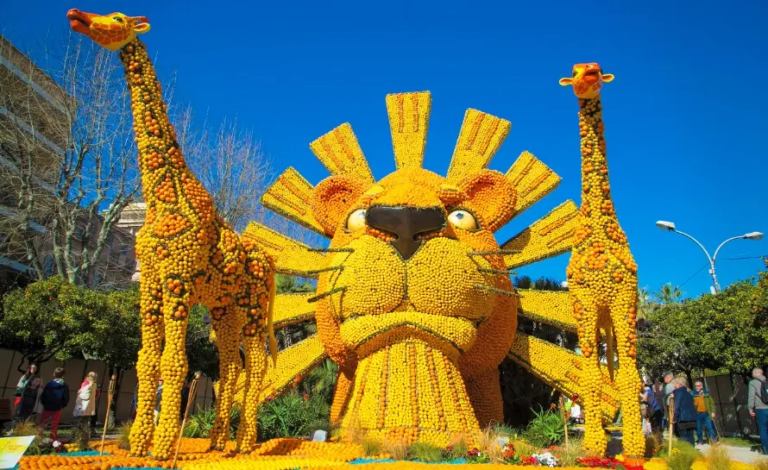
The Fête du Citron, Menton’s lemon festival, draws 200,000 visitors over two weeks. That’s a town of 30,000 people suddenly tripling in size. For lemons. But these aren’t your average supermarket lemons stuck on a float. We’re talking 10-metre-tall sculptures, parades of fruit-covered floats lit up like Vegas, brass bands, confetti cannons, and fireworks over the Mediterranean.
France’s most spectacular citrus festival, and nothing else comes close.
What Makes the Lemon Festival Menton Special
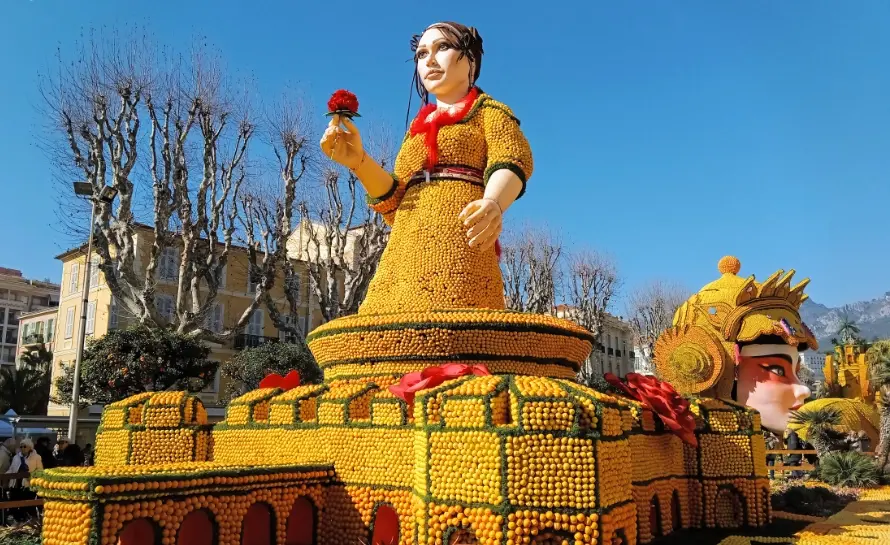
The festival requires 140 tonnes of citrus fruit, with individual sculptures using up to 18 tonnes each. That’s not a typo. One sculpture can use 18 tonnes of lemons and oranges.
These aren’t thrown together either. Around 300 professionals work on the Menton citrus festival each year, and fruits are now attached with one million rubber bands instead of the old wire method. Twelve people are employed just to check the fruit daily and replace anything that’s deteriorating.
The sculptures start as massive metal frameworks. Fifteen tonnes of metal go into building the float armatures, which are then completely covered in fruit. Every single lemon and orange attached by hand, with colour-coded rubber bands (yellow for lemons, orange for, well, you know).
And here’s the mad part: the lemons used aren’t even Menton lemons. The actual Menton lemon is protected by a PGI, like Champagne or Parma ham, and far too precious to stick on a float. The festival fruit comes from Spain. The real Menton lemons? You’ll find those in the craft market, and they’re brilliant.
The History of the Fête du Citron
Menton started holding parades in 1875 to entertain wealthy winter visitors, back when the French Riviera was where European aristocracy went to escape the cold. In the 19th century, Menton was Europe’s lemon capital. The town was nicknamed “the Lemon Rock.”
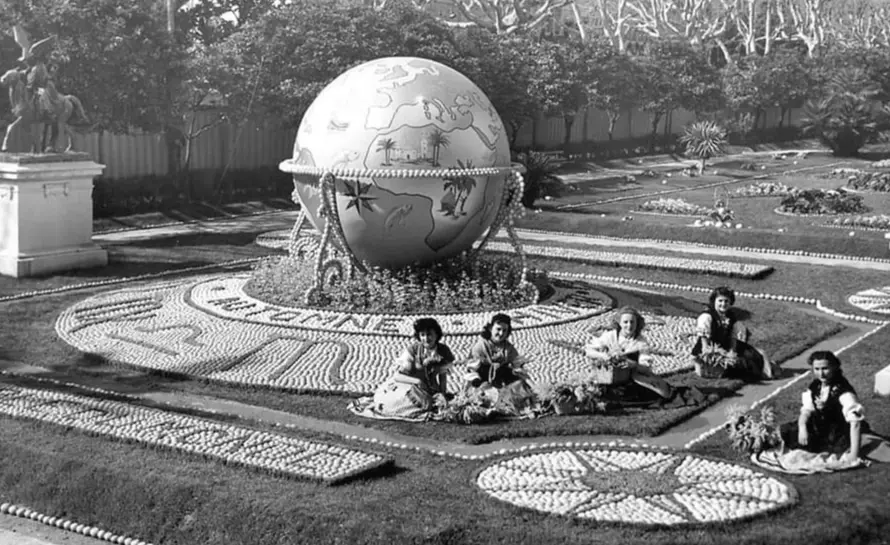
In 1928, a hotelier organised a citrus and flower exhibition in the Riviera Palace Hotel gardens. It was such a hit that the following year, the festival spilled into the streets with citrus-covered carts and local women in traditional dress. The town council made it official in 1934, naming it the Fête du Citron.
The Biovès Gardens exhibition started in 1936, and after World War II, the sculptures started getting taller and more ambitious. The citrus festival in Menton, France became international in the 1970s, and the Orchid Show was added in 1984.
The festival was recognised by France’s Ministry of Culture in 2019 and added to the inventory of intangible cultural heritage. Which sounds very official for what is essentially a fortnight-long celebration of sticking lemons on things.
The Main Events You Actually Want to See
The Biovès Gardens Exhibition (Free)
The narrow Biovès Gardens, right next to the casino, get completely taken over for the lemon festival. This is where the truly massive sculptures live, some reaching 10 metres tall, built from wire frames and thousands upon thousands of citrus fruits.
The gardens are open daily throughout the festival, from 9am to 11pm. Free admission. At night, the whole thing gets lit up with spotlights and atmospheric music. They call it the Gardens of Lights, and it’s worth seeing both during the day and after dark.
The Golden Fruit Parades (Corsos)
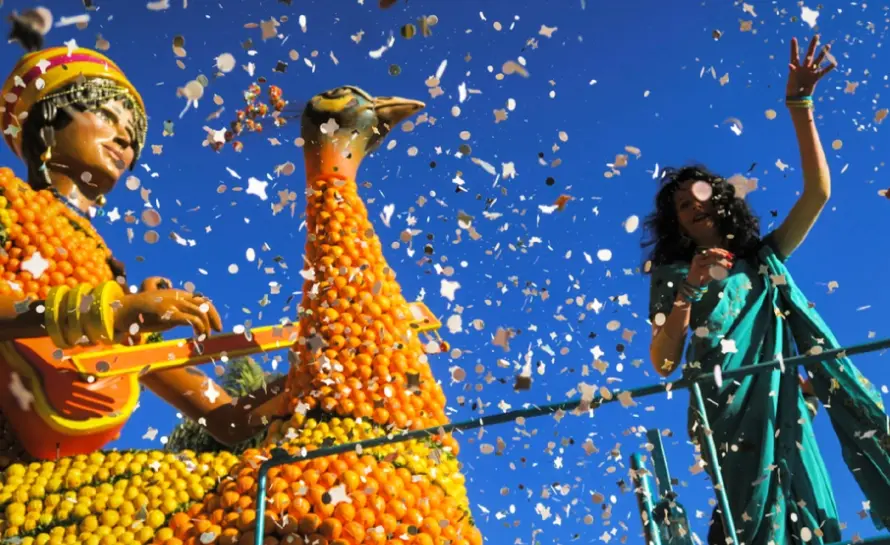
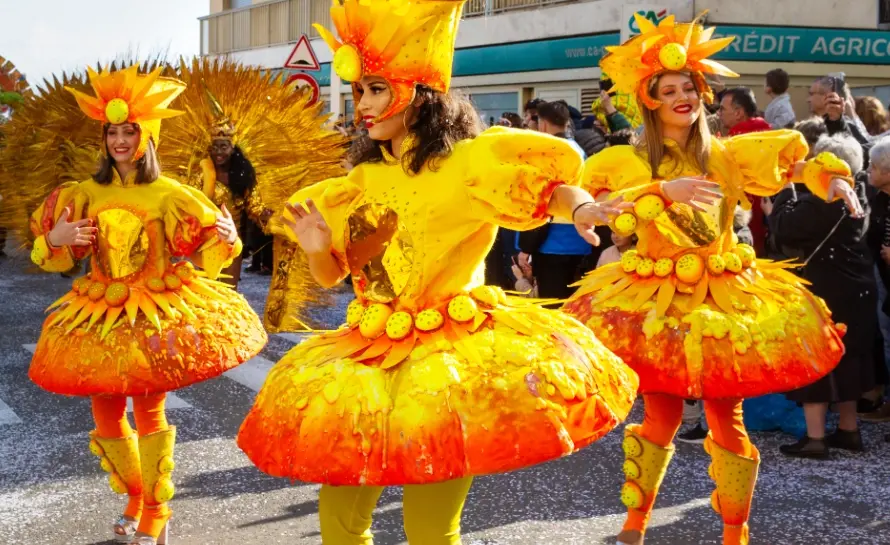
The floats, covered entirely in citrus fruit, parade down the Promenade du Soleil accompanied by dancers, brass bands, folk groups, and approximately 25,000 people throwing confetti. It’s properly chaotic in the best possible way.
Tickets cost €14-30 for grandstand seats or €8-16 for standing areas. Kids 6-12 get reduced rates, under-6s are free (though they still need a ticket). Get there early if you want a good spot. Before 11am on Sundays is the recommendation.
The Night Parades (Corsos Nocturnes)
Same route, same citrus-covered floats, completely different vibe. The floats are illuminated, the whole parade is lit up, and it ends with a fireworks display over the bay. It’s theatrical and slightly surreal watching giant lemon sculptures glide past under spotlights to brass band music.
No entry allowed 15 minutes after the start, so don’t faff about.
Free Stuff Worth Doing
The Orchid Festival runs alongside everything else at the Palais de l’Europe (10am-6pm, free). Hundreds of orchids, and a lovely quiet break from the citrus madness outside.
The Craft Market sells limoncello, lemon olive oil, lemonade, craft beer, honey, jams, basically everything local producers can make with or around lemons. This is where you’ll find actual Menton lemons if you want to try them. Intensely fragrant, more oval than regular lemons, with a peel rich in essential oils. Worth every penny.
What Happens to 140 Tonnes of Lemons?
Fair question. After the festival ends, all the citrus fruit is sold to locals and visitors at special markets. In previous years it’s been €1.50 for 3kg. The fruit gets turned into marmalade, jam, limoncello, and a lot of lemon tart. If you come home with a bag of Menton lemons from the craft market, my French lemon tart recipe is exactly what to do with them.
Nothing gets wasted, and the locals get bargain citrus for months. Quite a responsible system for what is, at its heart, a very large pile of fruit.
The Menton Lemon: The Real One
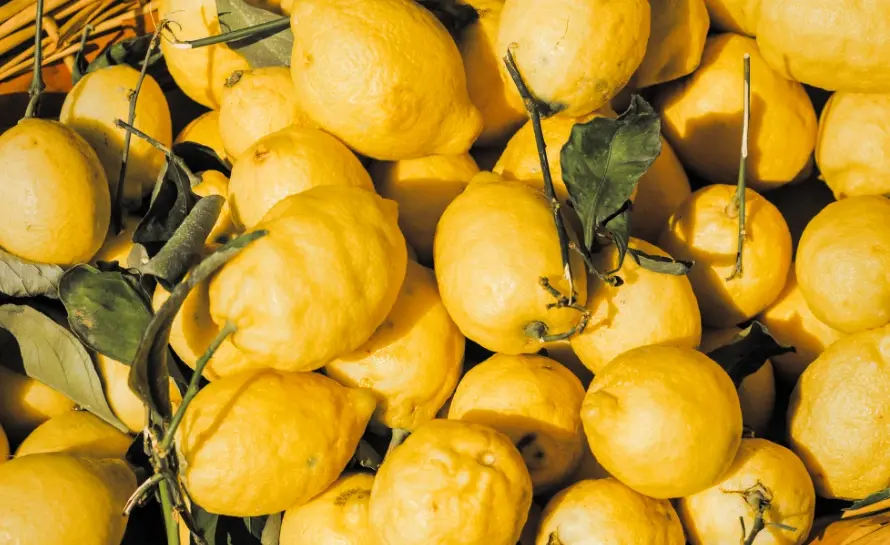
The Menton lemon is in a different category from what you buy at the supermarket. About 5,000 trees produce over 150 tonnes yearly in Menton and neighbouring communes like Roquebrune, Sainte-Agnès, and Castellar. The varieties grown include Santa Theresa, Villafranca, and Eureka.
They’re more elliptical than round, bright yellow (almost fluorescent when fully ripe), and each branch can hold up to 15 fruits. Most lemon trees manage fewer than five. Less acidic than regular lemons but intensely aromatic. Chefs across Europe seek them out, and the PGI protection means only fruit grown in the designated area can carry the name.
You can find them at the craft market during the festival, in local shops, and at workshops where producers explain the growing process. If you’re visiting the lemon festival in Menton, France, leaving without trying one would be a genuine mistake.
Practical Information
Tickets
- Corsos (parades): €14-30 grandstand / €8-16 standing
- Biovès Gardens: Free
- Orchid Festival: Free
- Craft Market: Free
- Buy tickets at fete-du-citron.com
Getting There
By train: Absolutely the easiest option. Extra trains run during the festival, and Menton station is 200 metres from the Biovès Gardens and less than 400 metres from the parade route. TER/ZOU trains connect from Nice, Monaco, and along the coast.
By car: Take the A8 motorway, exit 59 (Menton). On parade days, park at the temporary P1 car park at the motorway exit and take the shuttle bus. Trying to drive into Menton during the festival is asking for trouble.
By bus: Lines 600 and 601 (ZOU!) run frequently from Nice through Monaco to Menton. The Casino stop puts you right in the middle of everything.
Where to Stay
Book early. Properly early. Hotels fill up fast, and prices reflect the demand. Menton itself is ideal, but Monaco (15 minutes by train) or Nice (30 minutes) work too if you don’t mind the commute.
Timing
Arrive before 11am on Sundays for the day parades. Before 6pm on Thursdays for the night parades. Later than that and you’ll spend more time in traffic than watching lemons.
Is It Worth Going?
Look, it’s bonkers. A small French town on the Italian border covering everything in sight with 140 tonnes of citrus fruit, throwing massive parades, and setting off fireworks over the Mediterranean. For two weeks straight.
If that sounds like your idea of a good time, absolutely go. The sculptures are genuinely impressive, some are 10 metres tall and took thousands of hours to create. The night parades are theatrical and lovely. The whole town smells of oranges and lemons (and occasionally roasted chestnuts from the food stalls).
The free exhibitions mean you can experience a lot without spending much. The paid parades are worth it for the full spectacle, especially the night corsos with the fireworks.
It’s also February on the French Riviera, so the weather’s usually mild. Menton gets 300 days of sunshine annually and is protected from Alpine winds by the mountains. After a grey British winter, that alone is worth the trip.
Final Thoughts
The Fête du Citron is exactly what it claims to be: a massive celebration of citrus fruit that involves building 10-metre-tall sculptures, parading them through town, lighting them up at night, and ending with fireworks. It’s been running since 1934, draws 200,000 people annually, and requires 140 tonnes of lemons and oranges.
It’s also slightly absurd in the best possible way. Where else are you going to see a giant phoenix made entirely of fruit? Or watch brass bands march alongside illuminated lemon sculptures? Or buy 3kg of post-festival oranges for €1.50?
Book accommodation early, get tickets for at least one parade (night corsos are brilliant), arrive before the crowds, and bring a decent camera. The light in Menton is gorgeous in February, and you’ll want photos.
Sometimes you just need to go see 140 tonnes of lemons being celebrated with proper French enthusiasm. This is that time.
Disclosure: Just so you know, this post contains sponsored content and/or affiliate links, If you make a purchase through these links, I may receive a small commission. Doesn’t cost you anything extra. I only link to things that are actually worth your time. All opinions are my own!