 January 12, 2026
Disclosure: This post may contain affiliate links which provide us a small commission when used for purchase. Please read my disclosure policy for more information. I am grateful for your support!
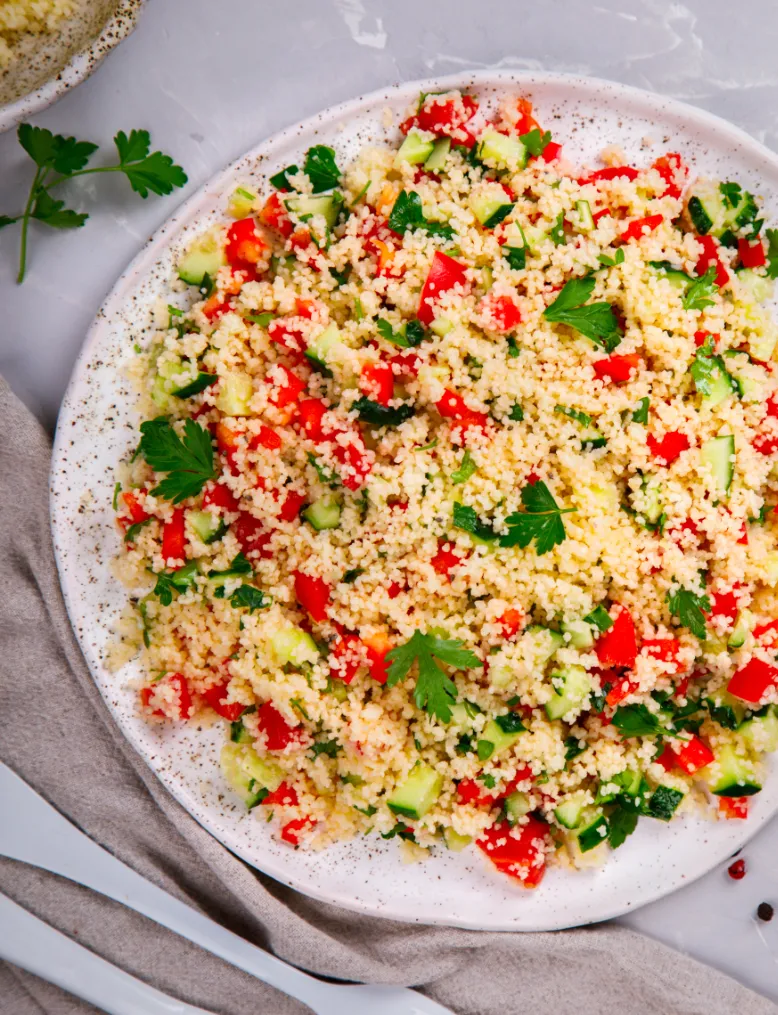
Yes, tabbouleh is Lebanese, but it’s also completely French at this point. You’ll find it in every supermarket in France, right down to the tiniest rural village, and if you grew up in the South like I did, you made it constantly all summer with all those refreshing herbs and veggies.
It’s a dish that crossed over so completely that nobody here thinks twice about it anymore. When the weather turns warm, you simply make tabbouleh!
Table of Contents
Where tabbouleh comes from
Tabbouleh is Lebanese in origin, sometimes also called tabouli. But France has a long connection with North African and Middle Eastern cooking, shaped by immigration and trade, and tabbouleh arrived in French homes through those connections and stayed, because it suits the French summer table perfectly. It’s light, it’s fresh, you can make it ahead, and it actually improves as it sits. It ticks every box for warm-weather cooking.
Today you’ll find tabbouleh in French supermarkets in plastic tubs alongside the salade piémontaise and the macédoine, as standard as anything classically French. (The homemade version is miles better, obviously).
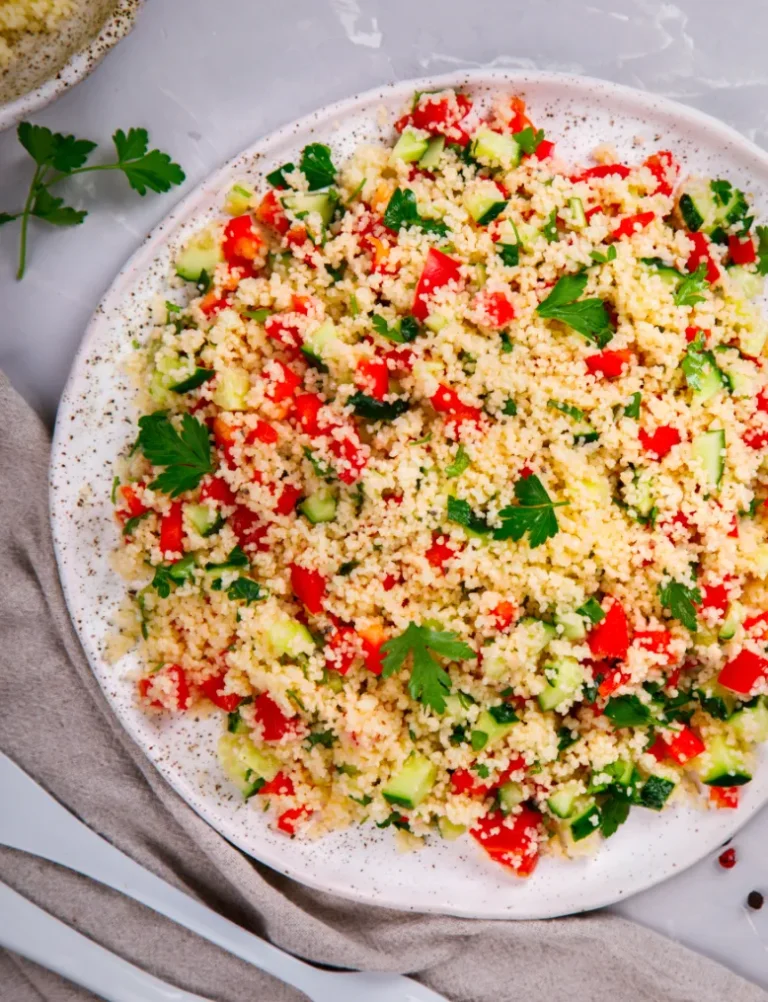
The French version has one significant difference from the Lebanese original, though. Traditional Lebanese tabbouleh uses bulgur wheat, with a very high ratio of herbs to grain, it’s really a herb salad with a little grain in it. The French version, which is what’s become standard here, uses couscous instead. That’s a practical adaptation rather than a mistake: couscous is everywhere in France, it needs nothing but boiling water, and it gives a lighter, less chewy texture that suits a French summer. This recipe uses couscous for exactly those reasons. Pour on boiling water, cover, wait ten minutes, fluff with a fork, and the grain is done.
Ingredients
- Couscous – Medium grain. No cooking needed, just boiling water and ten minutes. It’s the French adaptation of the Lebanese bulgur.
- Flat-leaf parsley – And lots of it. Not a garnish but a main ingredient. Flat-leaf has far more flavour than curly.
- Mint – Fresh, alongside the parsley, for sweetness and lift.
- Tomatoes – Ripe and sweet, diced small.
- Cucumber – Deseeded and diced, for crunch and freshness without wateriness.
- Onion – Finely diced. Red is milder and sweeter; white works too.
- Lemon – Plenty. French tabbouleh should be properly lemony and sharp.
- Olive oil – A good extra virgin one, since it’s tasted raw and carries everything.
How to make tabbouleh
1. Soak the couscous
Put the couscous in a bowl with salt and a spoonful of olive oil, pour over boiling water, cover tightly, and leave for ten minutes. Then fluff it thoroughly with a fork, breaking up any clumps, and let it cool completely. That last bit matters: add tomatoes to warm couscous and they go mushy.
2. Chop everything fine
Dice the tomatoes, cucumber (deseeded) and onion small and roughly the same size, so they distribute evenly. Wash and thoroughly dry the herbs (wet herbs make a watery tabbouleh), pick the leaves, and chop them fine, but not minced to death.
3. Dress, mix and rest
Whisk the olive oil, lemon juice, salt and pepper, and taste it: it should be sharp and punchy, since it’s dressing a lot of mild couscous. Combine everything, mix thoroughly so the herbs run right through rather than sitting on top, then cover and chill for at least 30 minutes, ideally a few hours. Taste again before serving, since the couscous drinks up the dressing as it sits and it usually wants a bit more lemon and oil.
Tools for this recipe
Check out my favorite kitchen essentials and cookware!
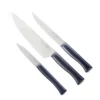
- Use a sharp chef’s knife to chop the herbs into fine flecks rather than bruising them, since this salad is mostly chopping.
- Use a large glass container, bigger than you think, so you can mix everything through properly.
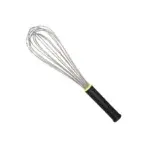
- Use a whisk to emulsify the dressing.
Tips for success
- Use loads of herbs: this is the whole difference between tabbouleh and couscous salad. The parsley is an ingredient, not a garnish, so use far more than feels sensible.
- Dry the herbs properly: wash them, then dry them thoroughly. Wet herbs make a watery, sad tabbouleh, and no amount of lemon fixes it.
- Cool the couscous first: let it cool completely before the tomatoes go in, or they turn mushy and the whole thing goes claggy.
- Make it sharp: it should be properly lemony. The couscous is bland and soaks up a lot, so the dressing needs to be sharper than seems right on its own. Taste and add more lemon at the end.
- Let it rest: at least 30 minutes, ideally a few hours or overnight. This is when the flavours actually come together, and it’s the difference between “mixed” and “tabbouleh.”
How to store it
- This is one of those rare salads that genuinely improves in the fridge, which makes it perfect for making ahead. I make mine in a glass container from the start, then put the lid on and pop it in the fridge!
- It keeps beautifully for 3 to 4 days, covered, in the fridge, and it’s better on day two than day one as the flavours develop. The one thing to know: the couscous keeps absorbing the dressing as it sits, so it dries out slightly and dulls. Just stir through a bit more lemon juice and olive oil before serving and taste again, it’ll come right back to life.
- It doesn’t freeze, the tomatoes and cucumber turn to mush. But given it keeps most of a week and improves as it goes, that’s hardly a problem.
More salads recipes to try
Variations
- Make it real Lebanese: use bulgur instead of couscous (200g medium bulgur, 400ml boiling water, soak 30 minutes) and push the herb ratio much higher, so it’s really a parsley salad with a little grain.
- Add cinnamon: a pinch, for a North African note. Some French families swear by it.
- Swap the herbs: more mint, less parsley, or add coriander. Every family has its own balance, so find yours.
- Add feta or chickpeas: not traditional, but they turn it into a fuller lunch.
- Skip the cucumber: some people love it, some leave it out entirely. Entirely up to you.
- Add pomegranate: seeds scattered through for sweetness and colour, lovely in late summer.
FAQ
What’s the difference between French and Lebanese tabbouleh?
Lebanese tabbouleh uses bulgur wheat with a very high ratio of herbs to grain, so it’s essentially a parsley salad with a little grain. The French version uses couscous, with more grain and slightly fewer herbs, giving a lighter, fluffier texture. Both are common in France.
Can I use bulgur instead of couscous?
Yes, and it’s the traditional choice. Use 200g medium bulgur with 400ml boiling water and soak for 30 minutes. It has more chew and a nuttier flavour than couscous. The rest of the recipe stays exactly the same.
Can I make tabbouleh ahead of time?
Yes, it’s better for it. Make it at least 30 minutes ahead, or a few hours, or even the night before. It keeps 3 to 4 days in the fridge and improves after a day. Add a little more lemon and olive oil before serving, as the couscous absorbs the dressing.
Why is my tabbouleh watery?
Usually wet herbs, or watery tomatoes. Dry the parsley and mint thoroughly after washing, and deseed the cucumber. If your tomatoes are very juicy you can scoop out some seeds, though most French recipes leave them in.
How much parsley should I use?
More than you think. The herbs are a main ingredient here, not a garnish, so a good 100g of flat-leaf parsley for 200g of couscous. If it looks like a green salad with couscous in it rather than the other way round, you’re about right.


 Prep Time 15 minutes
  Total Time 30 minutes
  Servings 6
Description
Ingredients
For the salad
- 200 gr couscous medium grain
- 200 ml water boiling
- 5 tomatoes ripe, about 400gr
- 1 cucumber about 300gr
- 2 onions
- 100 gr flat-leaf parsley
- 100 mint
- salt
For the dressing
- 6 tbsp olive oil extra virgin
- 100 ml lemon juice
- salt and black pepper
Instructions
1. Prepare the couscous
- Put the couscous in a large bowl with a pinch of salt and a tablespoon of olive oil and mix well. Pour over 250ml boiling water, stir once, cover tightly with a plate or cling film, and leave 10 minutes. Fluff thoroughly with a fork, breaking up clumps, then cool completely.
2. Prep the vegetables
- Dice the tomatoes into 1cm cubes. Peel and finely dice the onion. Peel the cucumber, halve lengthways, scoop out the seeds, and dice the flesh the same size as the tomatoes.
3. Chop the herbs
- Wash the parsley and mint and dry them thoroughly (wet herbs make watery tabbouleh). Pick the leaves from the thick stalks. Chop finely, but not to a paste.
4. Make the dressing
- Whisk the olive oil, lemon juice, salt and pepper. Taste: it should be sharp and punchy, since it has to season a lot of mild couscous.
5. Assemble the salad
- Put the cooled couscous in your largest bowl. Add all the vegetables, onion and herbs. Pour over the dressing and mix thoroughly, so the herbs run right through.
6. Rest before serving
- Cover and refrigerate at least 30 minutes (a few hours or overnight is better). Stir and taste before serving, and add more lemon and oil if it needs it.
Notes
- Couscous or bulgur: couscous is lighter and quicker; for bulgur use 200g with 400ml boiling water, soaked 30 minutes.
- Use the ripest tomatoes you can find.
- Make it properly lemony. Start with two lemons and add more to taste.
- Keeps 3 to 4 days in the fridge and improves after a day.
- Add more lemon and oil before serving.
- Great for a crowd: cheap, scales easily, and better made ahead.
Share your feedback and spread the love!
If you try this recipe, I’d love to hear how it turns out! Leave a ★★★★★ rating and your thoughts in the comments, it helps fellow French foodies discover this recipe too. Snap a photo and tag @obviously.french on Instagram. Come talk about it in our Facebook group. And don’t forget to save this recipe to Pinterest so you’ll always have it handy for your next French-inspired meal!