Salad Niçoise
 October 7, 2025
Disclosure: This post may contain affiliate links which provide us a small commission when used for purchase. Please read my disclosure policy for more information. I am grateful for your support!
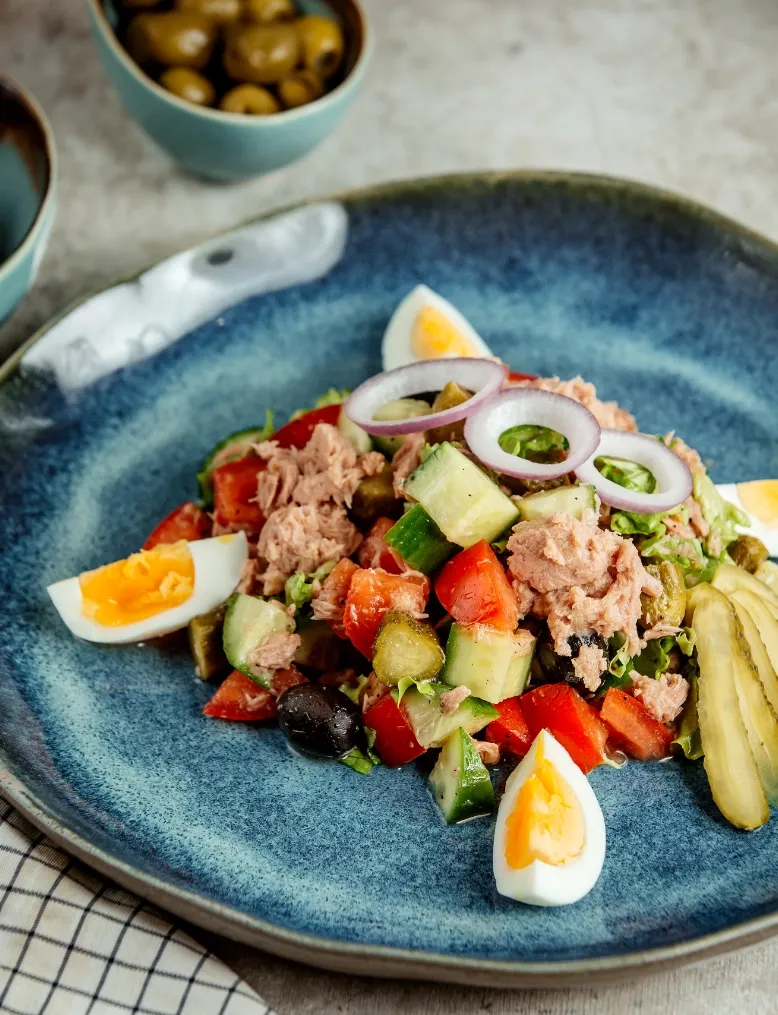
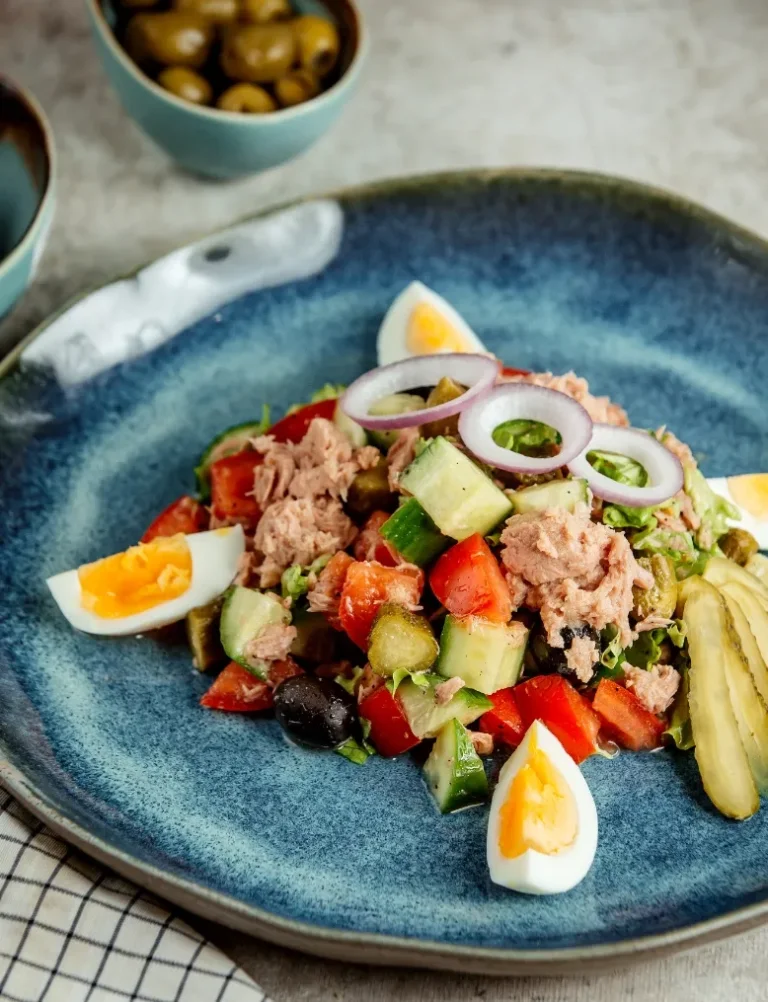
I grew up in Nice, and salade niçoise was just part of everyday life, whether we were eating at home or in a little neighbourhood restaurant. Everyone in Nice has their own idea of what the “real” version is, but nobody argues that it’s a refreshing salad with a completely distinctive taste. This is the version I knew as a child on a bright summer day, and it’s the one I still make today.
Gordon Ramsay called it “the finest summer salad,” and Delia Smith said it was “one of the best combinations of salad ingredients ever invented.” I’m not going to argue with either of them! Made with good tomatoes and decent olive oil, on a warm day with a glass of chilled Provencal rosé alongside, it’s hard to think of a better lunch!
Table of Contents
Where salade niçoise comes from
Salade niçoise means simply “salad from Nice”, and it started appearing on menus in the late 1800s, not long after Nice was annexed from the Kingdom of Sardinia in 1860. The original was about as simple as food gets: tomatoes, salted anchovies, olive oil. Nice was not a wealthy place, and this was practical cooking from whatever was within reach. Over time it gathered eggs, olives, peppers, broad beans, artichokes, and eventually tuna, which in the 19th century was a luxury reserved for feast days. Early printed Niçois versions still had no tuna and no lettuce at all, so even those look unfamiliar next to what most restaurants serve now.
Then it gets territorial. In 1903 chef Auguste Escoffier put potatoes and green beans into his salade niçoise in Le Guide Culinaire, and from there it was copied into the Répertoire de la cuisine in 1914 and out into professional kitchens across the world. Nice has never forgiven him. The argument you’ll hear is that Escoffier was born at Villeneuve-Loubet, on the far side of the River Var, and before Nice was even part of France, which makes him Provençal rather than Niçois. A river as the border between the real and the fake: a very French way to settle a culinary dispute.
Which version is this?
Mine uses tuna, which puts it closer to the bistro version than the strictest traditional one. I grew up eating it that way, and it’s what most people picture when they order a niçoise salad. But no potatoes and no cooked green beans.
Ingredients
- Tomatoes — the foundation, and the one thing worth being fussy about. Ripened on the plant, never a cold, pale winter tomato. Purists in Nice salt them and drain them before building the salad.
- Tuna in olive oil — oil-packed, not brine, and good quality. It’s the richness that carries the salad, and cheap watery tuna shows immediately.
- Anchovies — salt and depth. Along with the olives, they’re the backbone of the flavour, not a garnish.
- Eggs — hard-boiled, creamy rather than chalky. Overcooked yolks with grey rims will drag the whole plate down.
- Black olives — Niçoise if you can get them, Kalamata otherwise. Small, briny, firm.
- Artichoke hearts — in oil or brine, never vinegar, which fights the dressing.
- Raw vegetables (pepper, cucumber, radishes, red onion, fava beans) — the crunch and freshness. Everything raw except the eggs, which is the traditional principle.
- Butterhead lettuce — a soft base. Strict tradition leaves lettuce out entirely, so treat it as optional.
- Basil and garlic — the Provençal signature. Garlic is rubbed on the platter as well as going into the dressing.
- Olive oil — the single most important ingredient after the tomatoes. Use one you’d happily taste on a piece of bread.
How to make salade niçoise
1. Get the eggs and beans out of the way first
They’re the only things that need heat. Boil the eggs, cool them under cold water so the shells slip off cleanly and the yolks stay creamy, and blanch the fava beans briefly before dropping them into ice water. Both can be done a day ahead and kept in the fridge, which is what makes this salad so easy to serve to people.
2. Salt the tomatoes
This is the Niçois trick, sliced tomatoes salted and left to sit for ten minutes lose their excess water and concentrate their flavour, so they don’t dilute the vinaigrette into pink liquid at the bottom of the platter. Prep the rest while they drain.
3. Rub the platter with garlic and build in layers
A cut clove rubbed across the serving dish gives a background of garlic that you can’t get any other way. Lettuce down first, then the raw vegetables, so everything above sits visibly rather than sinking.
4. Arrange the good things on top, in groups
Tuna, artichokes, olives, anchovies and quartered eggs go on last, arranged in sections rather than scattered. This is the composed-salad principle: it looks better, and it means people can build the mouthful they want rather than getting a random forkful.
5. Dress at the very last moment
Vinaigrette goes on immediately before it reaches the table, or the lettuce wilts and the eggs go slippery. Dress it, tuck in the basil, and don’t toss it hard. This salad is meant to be looked at before it’s eaten.
Tools for this recipe
Check out my favorite kitchen essentials and cookware!
Tips for success
- Salt the tomatoes and drain them: ten minutes in a colander with a sprinkle of salt draws out the water that would otherwise pool under everything and thin the dressing. Niçois purists salt them repeatedly.
- Season the components, not just the finished salad: a little salt on the eggs, a little oil on the tuna, makes each ingredient tastes of itself rather than of dressing.
- Serve at room temperature, not cold: take it out of the fridge twenty minutes before eating, because chilled olive oil and cold tomatoes taste of almost nothing.
- Buy good anchovies: salt-packed or good oil-packed fillets are worth the difference.
- Don’t drain the tuna bone dry: a little of its oil in the salad is part of the richness, so drain off the excess but don’t press it.
- Prep ahead, assemble late: eggs, beans and vinaigrette can all be done a day early and kept separately. What can’t wait is the assembled, dressed salad.
How to store it
- Assembled and dressed: the salad nicoise doesn’t really keep. The lettuce wilts, the tomatoes weep and the eggs turn slippery within an hour or two. So instead, dress only what you’re serving!
- In the fridge: Store the components separately and it’s a different story. Boiled eggs keep 3 days in their shells, blanched beans 2 to 3 days, chopped raw vegetables a day, and the vinaigrette about a week in a jar (re-whisk before using). Undressed leftovers of the composed salad will keep a day and are fine, if softer.
- In the freezer: Nothing here freezes. Every component depends on being fresh and crisp, and freezing destroys all of them.
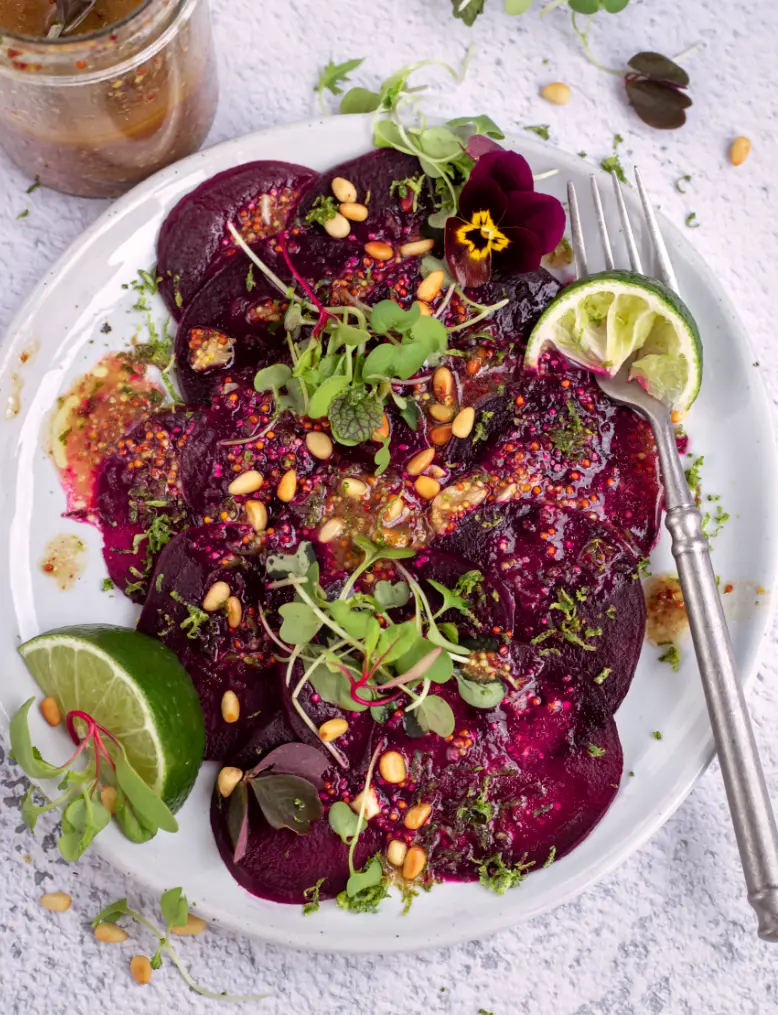
More salads recipes to try
Variations
- Pan bagnat, the sandwich version: this is the obvious next step. Pan bagnat means “bathed bread” in Niçois: a round loaf split, soaked with olive oil, filled with the same ingredients and pressed so the bread drinks the juices.
- The strict traditional version: drop the lettuce entirely, use only raw vegetables plus eggs and tuna, add cébettes (young spring onions), and dress with nothing but good olive oil and lemon, no mustard, no vinegar. This is what the Capelina d’Or would certify, and it’s a genuinely different and more austere dish.
- With seared fresh tuna: a rare-seared tuna steak sliced over the top makes it a restaurant plate. Purists will point out that Nice built this salad on preserved fish, not fresh, which is true, but it’s delicious.
- The Escoffier version: warm boiled new potatoes and blanched green beans, dressed while still warm so they absorb the vinaigrette. Heartier proper meal, and the version most of the world thinks is the real one.
- Vegetarian: leave out the tuna and anchovies and add extra artichokes, plus capers and a few olives more for the salty hit. Some good white beans give the substance the fish would have.
FAQ
What are the traditional salad nicoise ingredients?
The strict Niçois version is tomatoes, hard-boiled eggs, salted anchovies, tuna, cébettes, black Nice olives and basil, dressed with olive oil. Everything is raw apart from the eggs and the preserved fish.
Does salade niçoise have potatoes and green beans?
Not traditionally. Escoffier added them in 1903 and Nice has argued about it ever since. The version with potatoes and cooked beans is the internationally famous one, but it isn’t what you’ll be served in Nice.
What tuna is best for a niçoise salad tuna version?
Good-quality tuna packed in olive oil rather than brine or water. It’s a main flavour rather than a filler, so it’s worth buying well and draining it lightly so a little of the oil stays.
Should salade niçoise be served cold?
Room temperature, not fridge-cold. Chilled olive oil and cold tomatoes lose most of their flavour, so take it out twenty minutes before serving.


 Prep Time 20 minutes
  Cook Time 10 minutes
  Total Time 30 minutes
  Servings 4
Description
Ingredients
- 1 lettuce butterhead (Bibb, Boston)
- 2 egg
- 200 gr fava beans shelled and blanched (or substitute with extra radish if unfindable)
- 3 tomatoes
- ½ bell pepper green
- ½ cucumber
- 6 radishes pink
- ½ red onion
- 80 gr tuna in olive oil (drained and flaked)
- 8 anchovy fillets in olive oil
- 50 gr black olives Niçoise or Kalamata
- 4 artichoke hearts in oil or brine, not vinegar
- 1 handful basil
- 1 clove garlic
Equipment
Instructions
1. Prepare the eggs and beans
- Bring a pan to the boil and gently lower in the eggs. Boil for 10 minutes for hard yolks. Remove, cool under cold water, and peel. Blanch the shelled fava beans for 1–2 minutes, then stop the cooking in a bowl of iced water. Slip off the outer skins if the beans are large, for the best texture.
2. Salt the tomatoes
- Slice the tomatoes, sprinkle lightly with salt, and leave them to drain for 10 minutes while you prepare everything else. This concentrates their flavour and stops them watering down the salad.
3. Chop and arrange the fresh ingredients
- Rub the cut clove of garlic across your platter or plates for a soft hit of garlic. Tear the lettuce and arrange as a base, followed by the drained tomatoes, bell pepper, cucumber, radishes and onion. Scatter the fava beans over the top.
3. Layer on the classics
- Arrange the olives, quartered artichoke hearts, anchovy fillets and flakes of tuna in groups rather than scattering them. Quarter the eggs and place on top. Tuck basil leaves here and there.
4. Mix the vinaigrette
- Whisk together the olive oil, red wine vinegar, Dijon mustard, crushed garlic, salt and pepper until emulsified. Add a squeeze of lemon or a chopped anchovy if you like.
5. Dress and serve
- Drizzle the vinaigrette evenly over the platter right before serving. Toss very gently, or let everyone help themselves.
Notes
- Salade Niçoise is all about presentation: arranging each ingredient separately gives it that composed, market-fresh feel.
- Don’t skimp on the anchovies or olives, they’re the soul of this salad, bringing salt and richness.
- This vinaigrette gives your Niçoise real Riviera punch, simple, zesty, and packed with flavour.
Share your feedback and spread the love!
If you try this recipe, I’d love to hear how it turns out! Leave a ★★★★★ rating and your thoughts in the comments, it helps fellow French foodies discover this recipe too. Snap a photo and tag @obviously.french on Instagram. Come talk about it in our Facebook group. And don’t forget to save this recipe to Pinterest so you’ll always have it handy for your next French-inspired meal!