Baked Camembert
 Prep Time 10 minutes
  Cook Time 20 minutes
  Total Time 30 minutes
  Servings 4
Ingredients
- 1 camembert
- 2 sprigs thyme
- 2 sprigs rosemary
- 1 tbsp honey
- 1 handful walnuts
- black pepper to taste
Equipment
Instructions
1. Prepare the oven and cheese
- Preheat your oven to 190°C (375°F). Remove any plastic film or outer wrapping from the Camembert, but keep the cheese in its wooden box if oven-safe. If not, place it in a small ovenproof dish.
2. Score and flavour the cheese
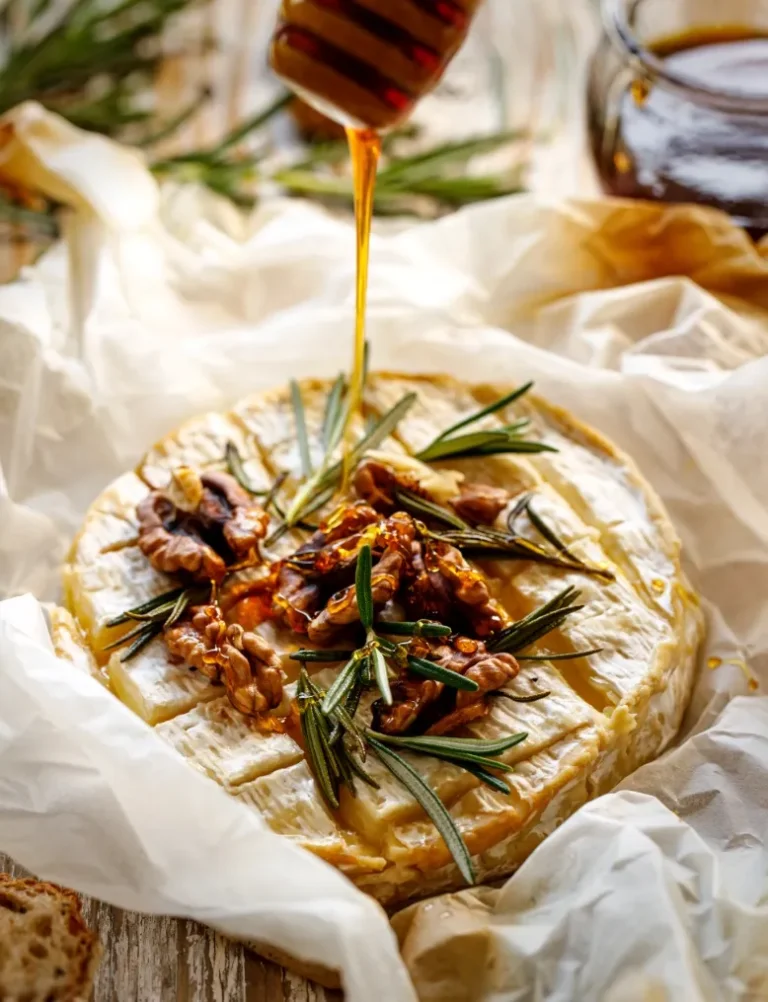
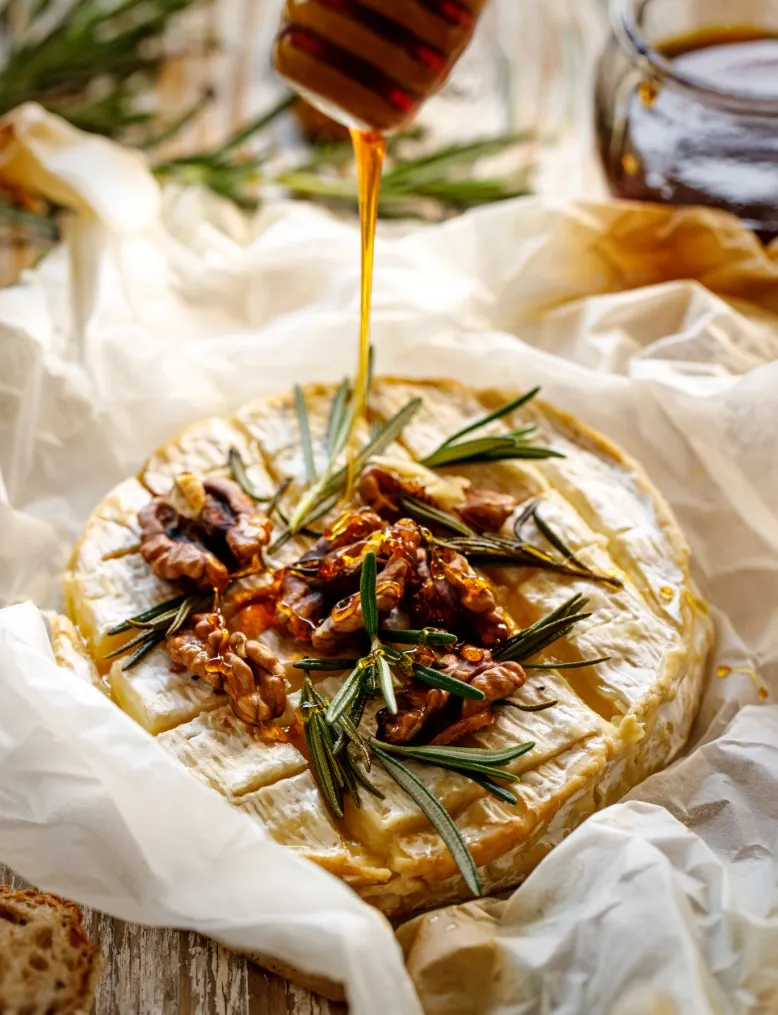
- Using a sharp knife, carefully cut a shallow grid on top of the cheese rind, just enough to penetrate but not remove it entirely. This allows the flavours to seep in during baking. Scatter small sprigs of rosemary and thyme over the top and gently press some into the cuts for maximum infusion.
3. Add nuts, honey and pepper
- Scatter the walnuts over the top of the cheese. Drizzle the clear honey evenly across the surface and season with freshly ground black pepper to taste.
4. Bake the Camembert
- Place the cheese on a baking tray and bake in the centre of the oven for 15-20 minutes until melted and gooey inside but with the rind intact.
5. Serve immediately
- Remove from the oven and let rest for a minute or two. Serve warm with crusty bread, rustic crackers, or slices of apple or pear for dipping!
Notes
- For a nutty twist, try substituting walnuts with almonds or hazelnuts.
- Fresh herbs like thyme and rosemary can be swapped or combined depending on what’s in season or your pantry.
- Leftover baked cheese can be delicious stirred into mashed potatoes or spread on toast the next day.
About this recipe
Baked Camembert is one of the simplest things you can do in a kitchen and one of the most satisfying to bring to the table. A whole wheel of cheese, scored, seasoned, and put in the oven until the inside turns completely molten. It takes about 15 minutes and looks like you made an effort. That combination is hard to argue with.
The story of Camembert
Camembert comes from the tiny village of the same name in Normandy, and its origin story is one of the more specific ones in French cheese history. Legend credits a farmer’s wife named Marie Harel, who in 1791, during the French Revolution, crafted the cheese using a method shared with her by a priest from the Brie region. She adapted the technique to suit the milk from Normandy’s cows, and the result was a soft, bloomy rind cheese that became one of France’s most recognised exports.
Normandy’s wet, green pastures produce milk with a fat content and flavour profile that suited this style of cheese particularly well. The traditional version, Camembert de Normandie, is made with raw unpasteurised milk and follows strict artisanal rules. The curds are ladled by hand into moulds rather than mechanically processed, which gives the cheese its characteristic texture and the uneven, slightly wrinkled rind that distinguishes it from the factory versions.
In 1890, an engineer named M. Ridel designed the thin wooden box that Camembert is still sold in today. It was a practical solution to a transport problem, and it worked so well that it became part of the cheese’s identity. The wooden box is also what makes baked camembert cheese recipe so straightforward: in many versions, you simply bake the cheese in the box it came in.
Why baked camembert works
Camembert has a fat content and moisture level that makes it behave perfectly under heat. The rind holds its shape whilst the interior softens completely, creating a natural vessel that keeps the molten cheese contained. No specialist equipment needed, no complicated preparation. Score the top, add your chosen flavourings, apply heat, and the cheese does the rest.
The roast camembert tradition has been part of French home cooking for decades, particularly in Normandy where the cheese is produced and where nobody needs a reason to put it in the oven. In the rest of France and increasingly worldwide, baked cheese has become a standard part of the apéro table and the casual dinner party spread.
The right dish for roast Camembert
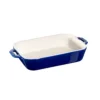
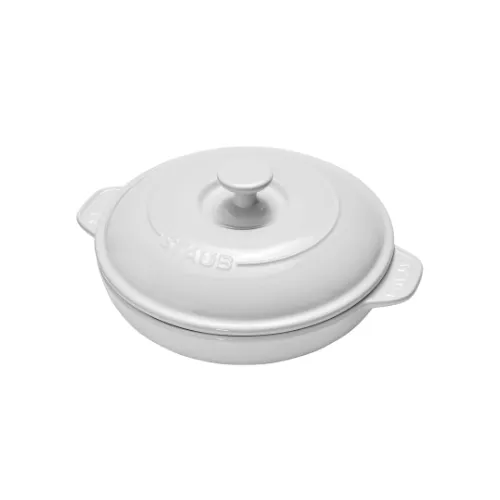
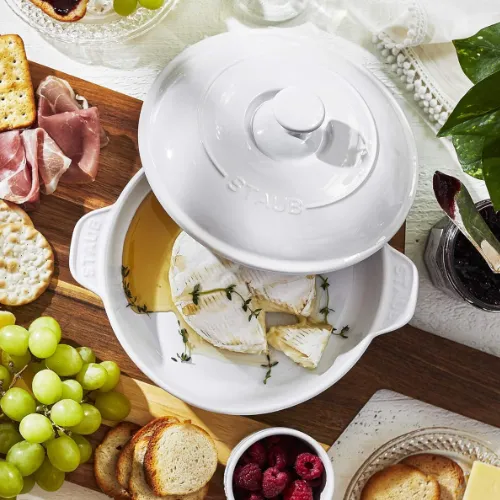
Whilst baking Camembert in its wooden box works, a proper ceramic dish gives you better results and more control. I use the Staub Camembert ceramic oven dish for this baked camembert recipe. It is designed specifically for this purpose, the right diameter to hold a standard wheel snugly so the cheese keeps its shape as it melts. The ceramic retains heat evenly, which means the cheese softens uniformly rather than getting liquid in the centre before the edges have caught up. It also goes straight to the table, which is the only sensible way to serve baked cheese. Nobody wants it moved from dish to dish whilst it’s molten.
What to add before baking
The simplest version is a scored top, a drizzle of olive oil, salt and pepper. From there, the additions are a matter of preference. A clove of garlic pressed into the scored surface. A few sprigs of thyme. A small spoonful of honey for sweetness against the savoury cheese. A splash of white wine or Calvados for depth. None of these are compulsory. All of them work.
What doesn’t work is overcomplicating it. Camembert has its own strong flavour and a distinctive aroma. The additions should complement it, not compete with it.
Serving baked camembert
Serve immediately, straight from the oven, with good bread for dipping. A baguette torn into pieces works perfectly. So does sourdough. The molten cheese sets quickly once it starts to cool, so speed matters more here than with most dishes.
As a starter, one wheel serves two to three people comfortably alongside bread and perhaps some dressed leaves. As part of a larger spread, it serves more. Either way, it disappears fast.
Share your feedback and spread the love!
If you try this recipe, I’d love to hear how it turns out! Leave a ★★★★★ rating and your thoughts in the comments, it helps fellow French foodies discover this recipe too. Snap a photo and tag me @obviously.french on Instagram if you’re sharing your bake or cooking online. Don’t forget to save this recipe to Pinterest so you’ll always have it handy for your next French-inspired meal!
Disclosure: Just so you know, this post contains sponsored content and/or affiliate links, If you make a purchase through these links, I may receive a small commission. Doesn’t cost you anything extra. I only link to things that are actually worth your time. All opinions are my own!