A medieval town built on books
If you understand the romanticism around quills, ink, art and books, then I guarantee you will love Montmorillon. About an hour south of Poitiers, a small town in the Vienne has quietly made itself essential for lovers of literature. The medieval quarter is packed with bookshops and artisan workshops, there are macarons that predate the fancy Parisian ones by centuries, and you’ll find everything from dragon sculptures to vintage typewriters tucked into picturesque old streets. The independent booksellers and craftspeople here have created something you don’t find much anymore, a proper literary atmosphere that feels lived-in, not manufactured for tourists. Worth a visit if you’re in the area. Bring an empty bag, you’ll need it for all the books you’ll buy.
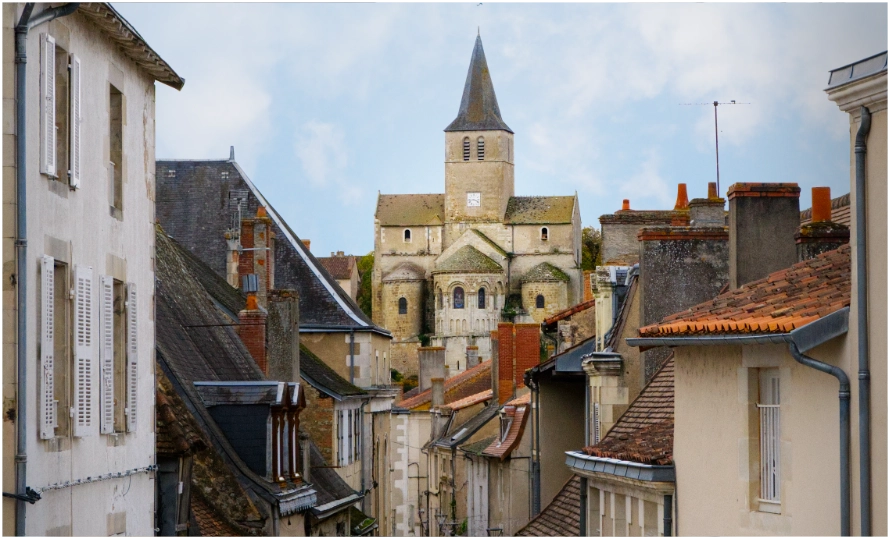
The city of writing and book trades
Montmorillon calls itself “The City of Writing,” which sounds a bit grand for a small town in the Vienne. But spend an afternoon wandering its medieval streets and you’ll see they’ve earned it. The story starts centuries back, when the banks of the Gartempe River were packed with paper mills. During the Enlightenment, Montmorillon churned out paper for books across the region. The town was basically keeping French literary culture supplied with something to write on.
Fast forward to 1990. Régine Deforges (celebrated author, Montmorillon native, and at the time a local councillor) decided the town needed a book fair. Not a small one, either. She wanted a proper meeting place for writers, readers, and publishers. Her idea took off, and Montmorillon started becoming something special.
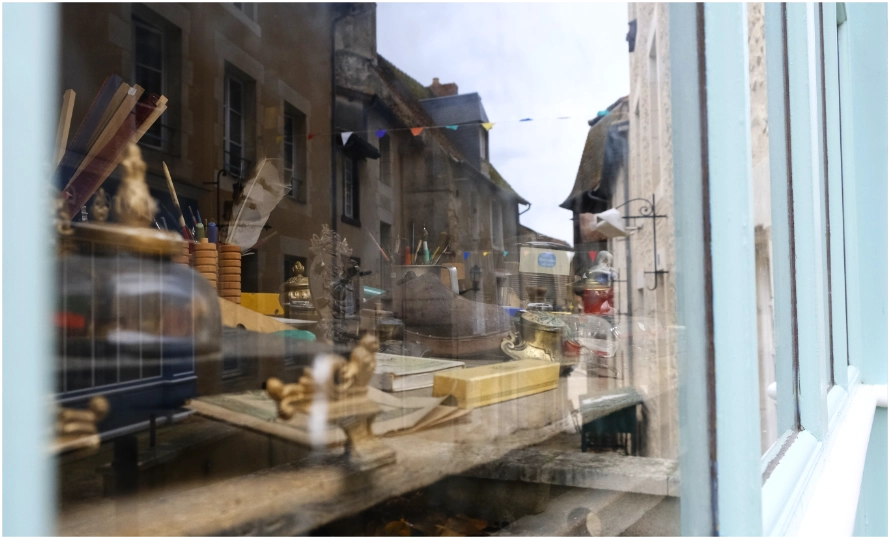
By 2000, the town had secured European funding to transform its medieval quarter, Le Brouard, into a dedicated hub for books and writing trades. Now this gorgeous old district has about 20 bookshops, second-hand dealers, and artisan workshops doing calligraphy, bookbinding, and paper arts. For a town this size, that’s pretty remarkable.
Régine Deforges’ novel “La Bicyclette bleue” was huge in France, this was a book everyone’s mum owned. The town honours her and other literary greats with streets and gardens named after Rabelais, Hugo, and Pagnol. Walking around feels a bit like being inside someone’s very well-read bookshelf.
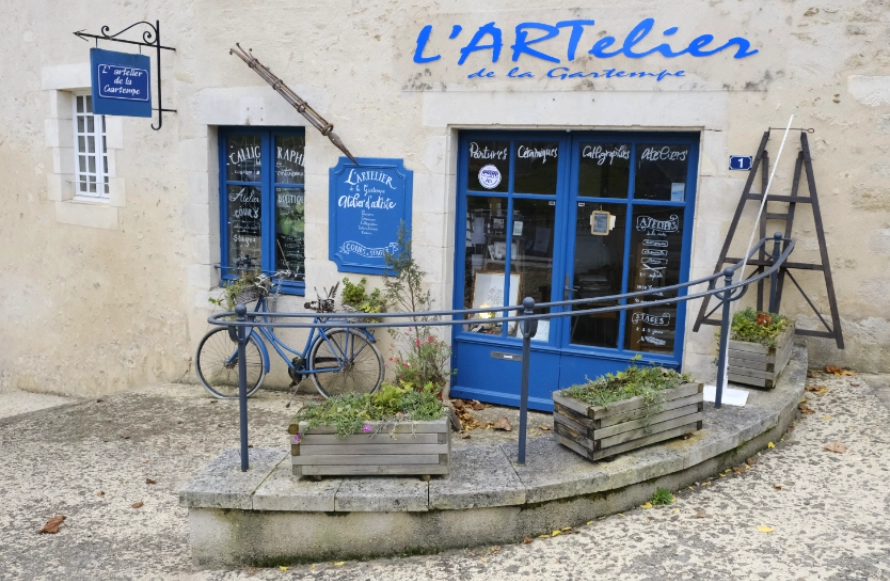
L’ARTelier de la Gartempe
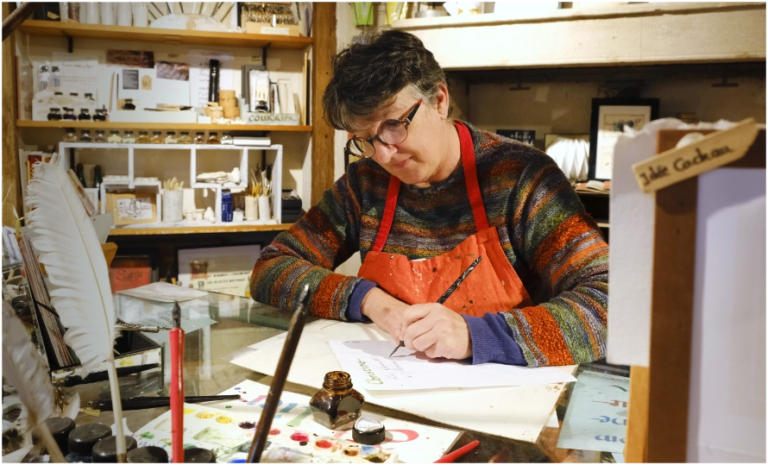
In Montmorillon’s medieval quarter, you’ll find L’ARTelier de la Gartempe, where Sylvie Edeline does pottery, painting, and calligraphy. She’s been at this for decades and she’s brilliant at all three, which seems slightly unfair.
We turned up and within minutes she’d pulled out her calligraphy pens to demonstrate how to write with a proper nib. She asked us the name of the blog, and as English isn’t easy, I translated frogs in French. Thus, she was kind enough to write “Les Grenouilles” for us! The way the nib scratched on the paper and the letters took shape was genuinely impressive. She made it look effortless, but anyone who tried to do calligraphy knows how difficult it is!
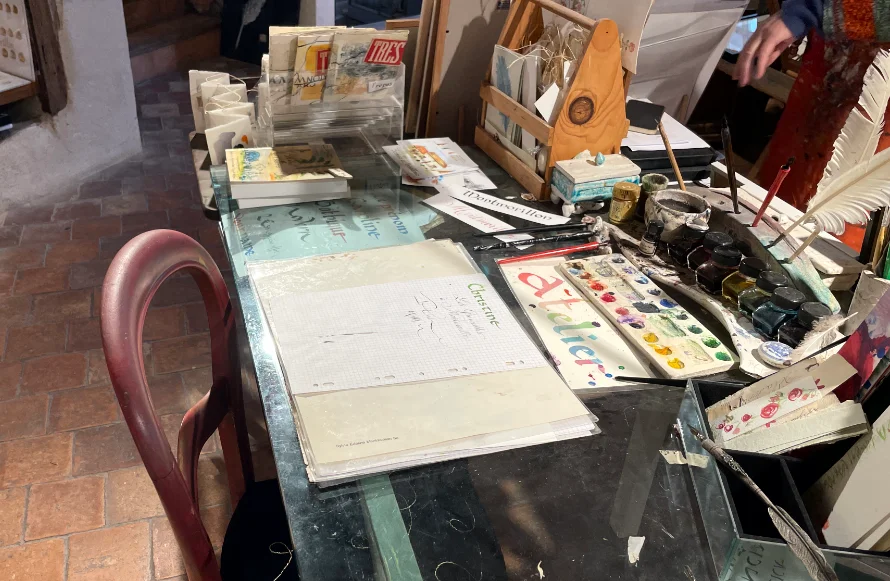
The (work)shop is packed with Sylvie’s ceramics, paintings, and hand-lettered pieces. She’s friendly and passionated, the sort of person who’ll chat about technique and share her enthusiasm without any pretension. If you’re interested in calligraphy or pottery, she runs workshops where you can actually learn these skills!
Museum of typewriters and calculators
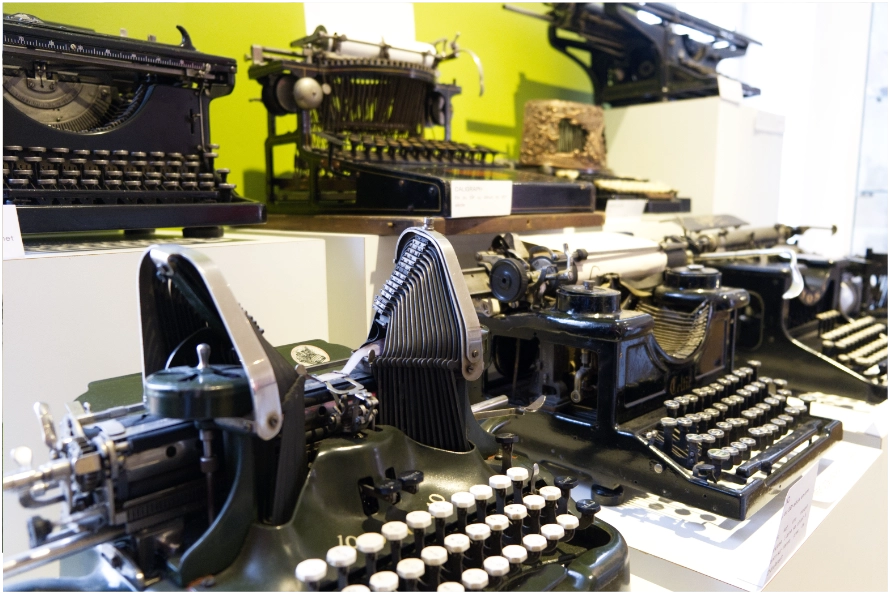
On rue Bernard Harent in Montmorillon sits a teeny tiny “museum” dedicated entirely to typewriters and calculators. The most amazing machines fill the small place, dating from 1833 right through to the 1980s when computers started making them obsolete. There are early manual typewriters that look like they weigh a ton, sleek electric models from the ’60s and ’70s, and everything in between. Each one tells a different story about how people worked, wrote, and communicated before we all started tapping on screens.
The calculator section is equally fascinating. From abacuses and Napier’s rods to the Pascaline (an actual 17th-century mechanical calculator) and various arithmometers, you can see exactly how people tackled maths before pocket calculators became a thing. The ingenuity involved in making a machine that could add and subtract using nothing but gears and levers is quite something.
A town that calls itself the City of Writing needs a place honouring the machines that made writing a profession rather than just an art form. All those journalists, secretaries, novelists, and bureaucrats who spent their days hammering away at these keys, this is their legacy! And it’s free, which never hurts.
Montmorillon’s Macarons
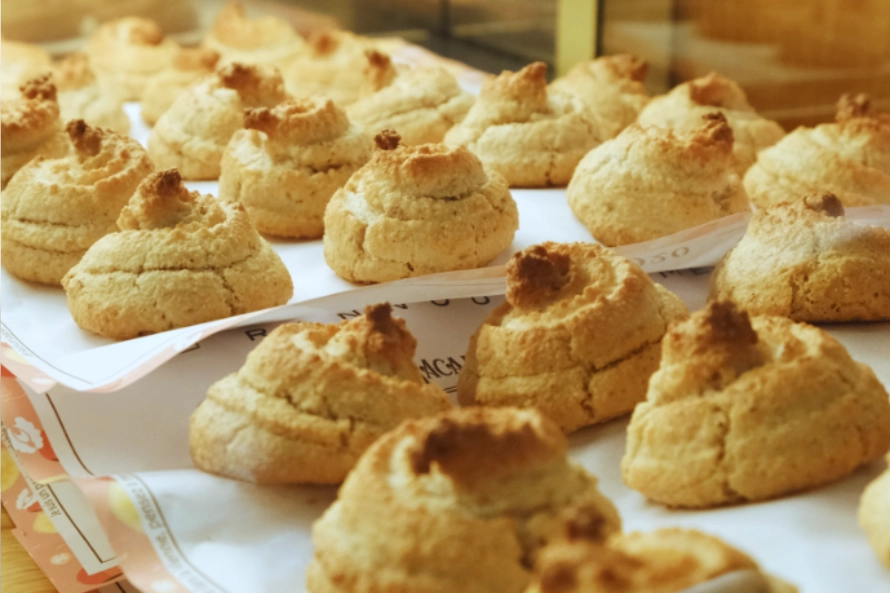
Everone knows those fancy coloured sandwich biscuits you see in Parisian shop windows, but Montmorillon’s macarons are actually the original version. They’re uncolored, little almond cakes with a crisp golden shell and a soft, chewy middle. They’ve been making them here since forever, and they’re brilliant. They are cousins of the Massepain of Saint-Lénoard.
The main place to get them is Maison Rannou-Métivier, which has been going since 1920. Five generations of the same family, using the same secret recipe for over 150 years. They haven’t messed about with it, haven’t tried to modernize it or make it Instagram-friendly. Just kept making the same excellent macarons, year after year.
There’s actually a Macaron Museum above the shop, which sounds slightly excessive until you visit. It’s genuinely interesting, the history of almonds, how macarons evolved, old photographs, interactive bits. They’ve even got a treasure hunt for kids. It makes you leave wanting to eat even more macarons (which is probably the point)!
The history goes back to the 16th century when Catherine de Medici’s Italian pastry chefs brought almond sweets to France. Montmorillon latched onto them in the 1600s and never let go. There’s a legend about two Benedictine nuns fleeing the Revolution who sold macarons to survive, which may or may not be true but makes a good story either way.
When you buy them (as you probably will) they come on their baking sheet, a dozen at a time. Perfect with coffee. They taste like almonds, obviously, and that combination of crunch and chewiness is properly addictive. Buy a box. Or two. They keep well, though that’s never been tested properly in our house!
Where vintage hi-fi meets modern bluetooth
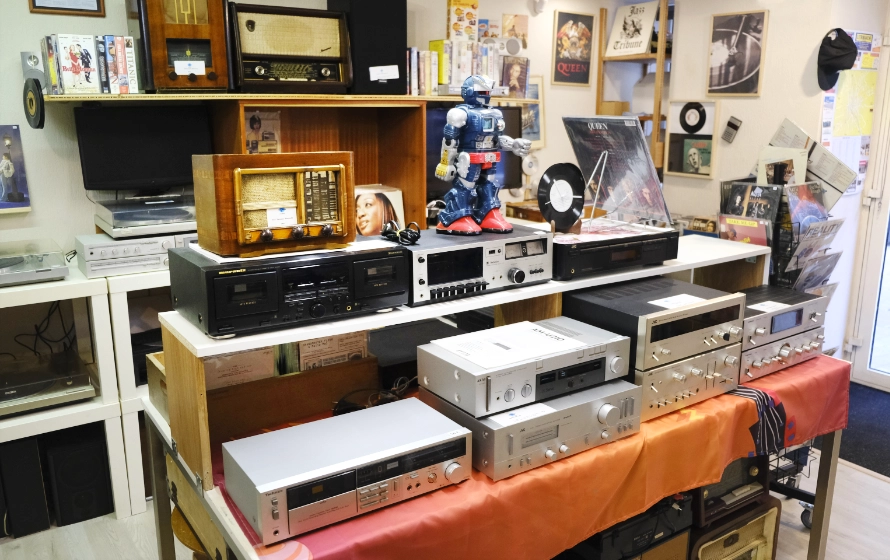
Opposite a brocante shop in Montmorillon’s Grand-Rue, you can find a cool shop called CCable. This music shop is the brainchild of Frédéric Léger, a man with a love for classic hi-fi systems and vintage radio sets (known locally as postes TSF). With a knack for breathing new life into old tech, Frédéric lovingly restores and modernises these timeless sound machines, blending nostalgia with today’s standards. He also has a collection of vinyls and cassettes!
Jeux l’effet: the art studio that looks like a fever dream
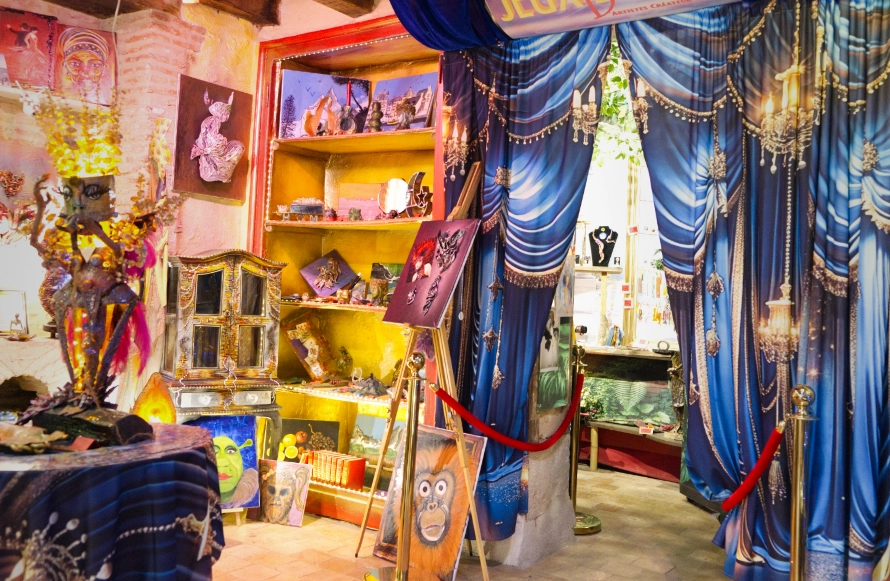
In a somewhat quiet street, you suddenly hit a shopfront that is impossible to ignore. It’s bold and colourful like a casino, and the words “Art Studio” are about the only clue to what’s inside. If you’re as curious like me, obviously, you have to go in.
Step through the door and your brain takes a minute to catch up. There’s jewellery, tiny resin animals, bustiers that belong in a sci-fi film, paintings, furniture shaped like leaves and trees. At the back, a blue curtain that looks like a magician should emerge from it at any moment. Instead, a man appears and smiles. This is the world of Estelle and Mehmed, a couple who design costumes and sets for spectacles, carnivals, and theatre shows. The massive sculptures they create are working pieces used in actual performances. Dragons, robots and other creatures, entire fantastical worlds built from scratch.
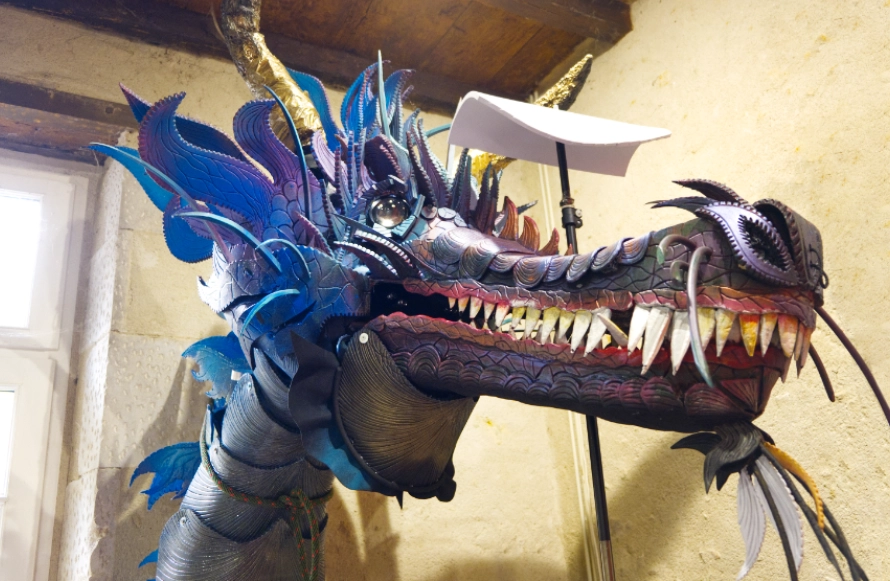
I ended up chatting with them for over an hour, though I could’ve stayed all day. They’re proper artists, the ones who care about connecting with people, not just selling things. No pretension, no ego, just genuine passion for what they make and a philosophy about art that’s refreshing to hear. Behind that blue curtain? A dragon (house named Nestor) head from their “Mélusine” project. Just the head is 1.5 metres tall. Magnificent doesn’t quite cover it.
If you speak any French at all, talk to them. They’re fascinating, generous with their time, and clearly love what they do. Their world and their work isn’t something you stumble across every day, which makes finding them feel like discovering a secret. Worth popping in, even if you just want to see what your brain does when confronted with that much creative chaos in one room.
Eglise Saint Martial
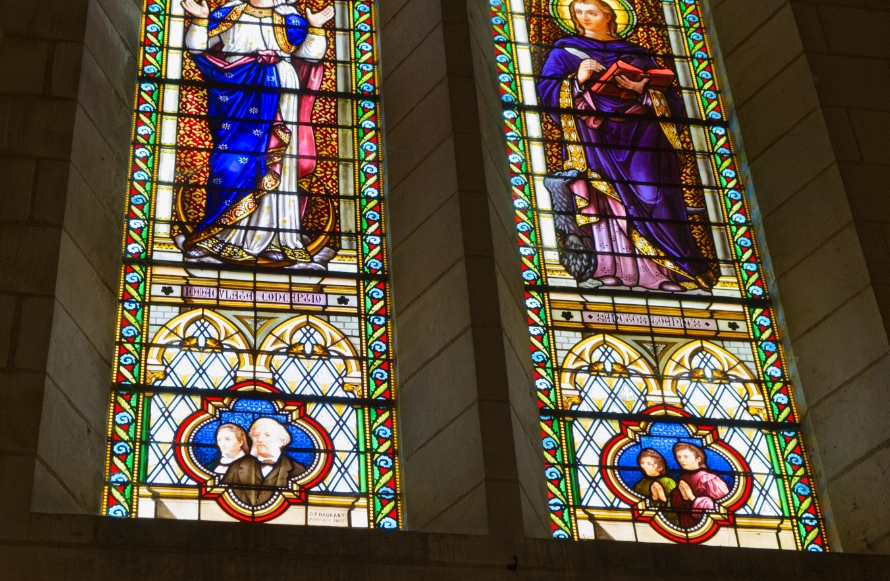
Right in the centre of Montmorillon sits the Église Saint-Martial, a 19th-century neo-Gothic church built over the bones of a 12th-century original. It’s dedicated to Saint Martial, the first bishop of Limoges. By the 1800s, the original medieval church was looking tired, so the town commissioned architect Pierre-Théophile Segrétain to give it a proper rebuild. He spent twenty years on it—1861 to 1881—creating a neo-Gothic structure while keeping bits of the old Romanesque building, like the square tower and south apse. A bit of old, a bit of new.
Inside, there are some decent stained glass windows and a restored 15th-16th century statue of the Virgin and Child. The real highlight, if you’re into that sort of thing, is the grand organ from 1881. It’s got 1,800 tin pipes and a neo-Gothic oak casing that’s now a listed historic monument. Quite impressive, actually. It’s not the most thrilling church you’ll ever visit, but if you’re in Montmorillon anyway and fancy five minutes of quiet, it’s there.
Musée d’Art et d’Histoire de Montmorillon
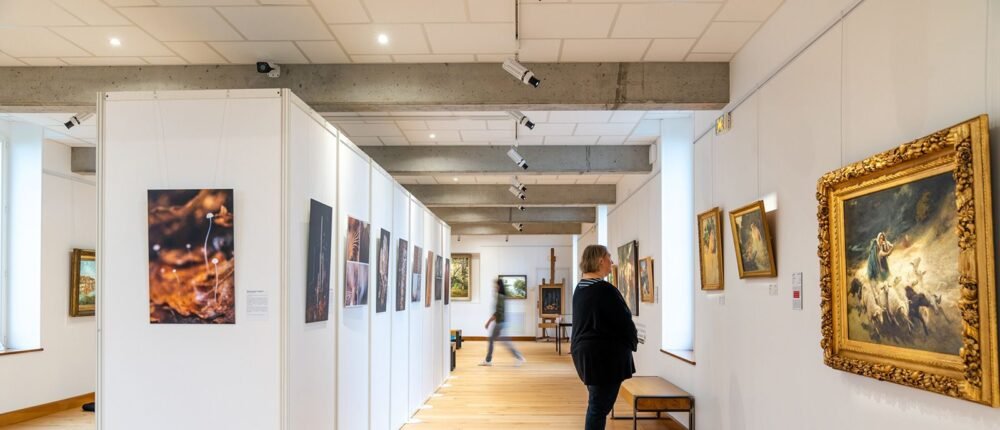
In Montmorillon’s town centre sits the Musée d’Art et d’Histoire (MAHM). The story starts in 1936, when a local painter called Raoul Carré and a few other folk with a bit of vision decided Montmorillon needed a space to celebrate its artistic heritage. Over the decades, the museum has quietly accumulated an impressive collection that tells you everything about what made this region tick.
Walk in and you’ll find yourself in bright, welcoming rooms packed with 19th and 20th century paintings, sculptures, photographs, and drawings. Many are by artists who studied at the beaux-arts school down the road in Poitiers. There’s rural scenes, religious bits, local landscapes, and great portraits. If you’re curious about how people lived round here, this museum reveals it in art-form.
What to see and do in Montmorillon
- The City of Writing district (Cité de l’Écrit)
Wander Le Brouard, the medieval quarter that’s been transformed into a hub for bookshops, artisan workshops, and galleries. About 20 book-related businesses packed into atmospheric old streets. It’s the whole reason to visit, really. - Maison Rannou-Métivier and the Macaron Museum
Try the famous Montmorillon macarons, made to a 150-year-old recipe. The museum above the shop tells you more than you knew you needed to know about macarons. Worth it. - The old town
Medieval streets, timber-framed houses, little squares, and the River Gartempe running through it all. Just pleasant wandering, especially along the riverside. - Église Notre-Dame
Visit the crypt with its 11th and 12th-century frescoes, some of the best Romanesque wall paintings in France. The church itself is fine, but those frescoes are properly impressive. - Église Saint-Martial
A 19th-century neo-Gothic church built over a 12th-century original. Nice enough if you’re passing. The organ is the highlight historically. - The bridges and river walks
The old bridge (Pont Vieux) and the riverside paths are lovely for a stroll. Good views of the town, peaceful, bit of fresh air. - Art Studio (Estelle and Mehmed’s workshop)
A wildly creative costume and set design studio. Dragons, sculptures, fantasy pieces, utterly unlike anything else you’ll see. Chat with the artists if you can. - Saturday market
The weekly market is small but decent for local produce, cheese, and general people-watching. Very French, very normal, which is exactly what you want. - Museum of Typewriters and Calculators
Free museum full of old typewriters and mechanical calculators. Sounds dull, but it isn’t. You can even use some of the typewriters, which is oddly satisfying.
Practical information for visitors
- Getting there
Montmorillon is about an hour south of Poitiers by car. If you’re coming by train, you’ll need to get to Poitiers first (roughly 90 minutes from Paris), then either hire a car or catch a regional bus. Once you’re there, the town centre is compact and perfectly walkable. There’s usually parking near the main attractions if you’re driving. - When to visit
Montmorillon is best in summer when it gets busy with the Salon du Livre (book fair) and various literary events, it’s the best time if you want the full “City of Writing” experience, though you’ll be sharing it with other visitors. - Accommodation
You’ll find a decent mix of places to stay: small hotels in the town centre, B&Bs, guesthouses, and self-catering options. Nothing too fancy, but welcoming and comfortable. If you want more space and countryside views, there are gîtes and chambres d’hôtes dotted around the surrounding villages. Book ahead during the book fair in summer, the town fills up fast.