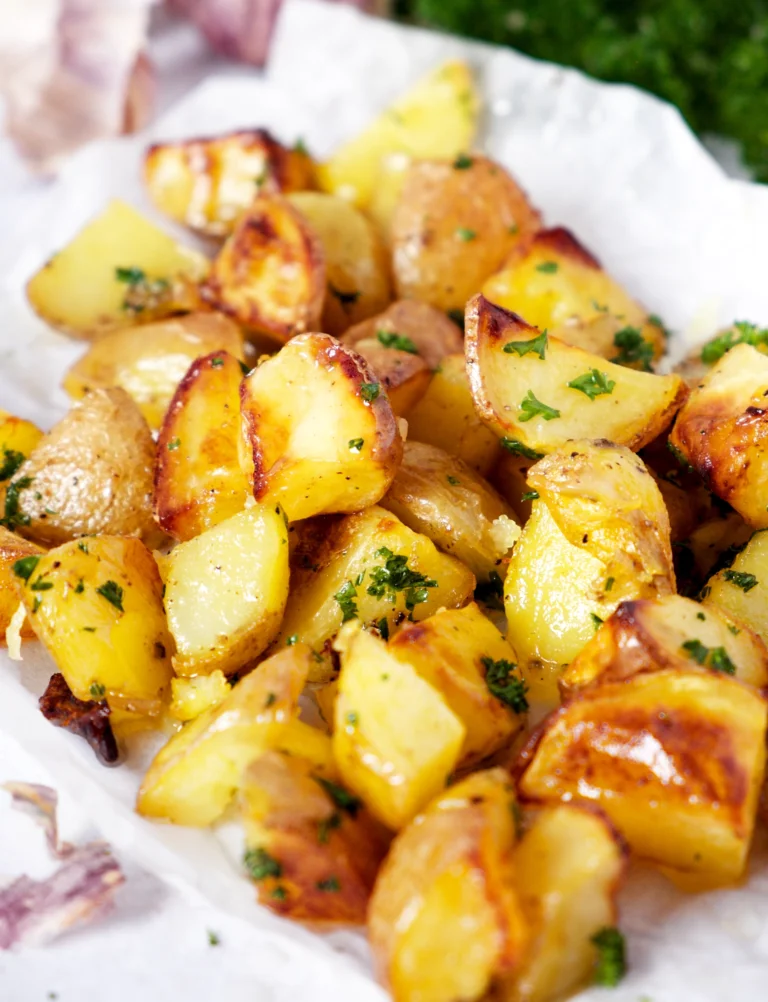
Persillade Potatoes
 March 30, 2026
Disclosure: This post may contain affiliate links which provide us a small commission when used for purchase. Please read my disclosure policy for more information. I am grateful for your support!
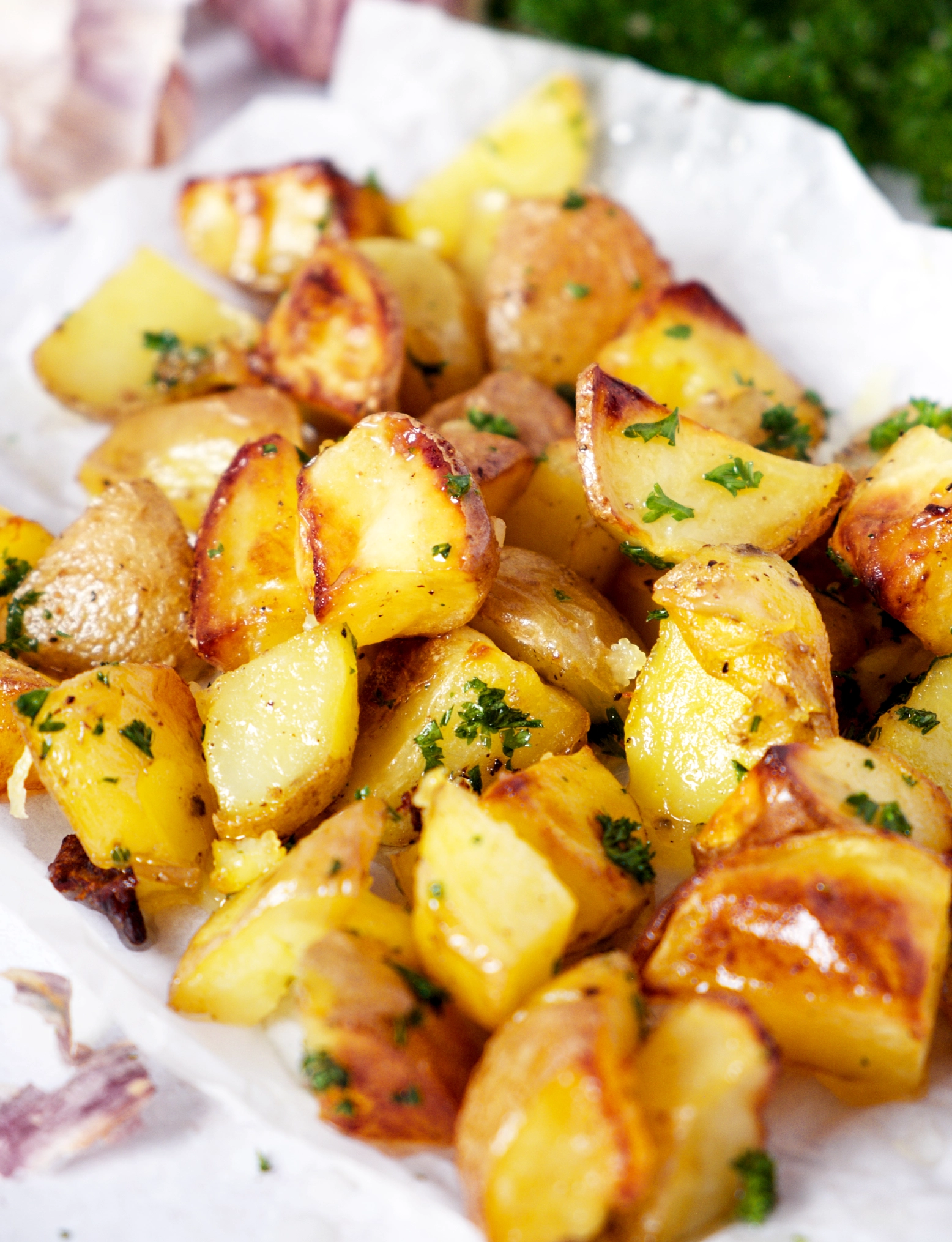
Persillade potatoes are one of my favourite sides to make with a grilled fish, especially a baked trout with Dijon mustard, or with grilled scallops since both recipes use persillade. And obviously with a homemade mayonnaise, because I’m an adult and I can.
These garlic and parsley potatoes are dead easy, and the persillade is what makes them interesting. Growing up in Nice, persillade was just the normal thing to make, drizzled and tossed over all sorts. It’s what turns a plain potato into something that tastes a lot more interesting. A handful of parsley, a couple of cloves of garlic, a glug of olive oil, it is pure happiness juice.
Table of Contents
Where persillade potatoes come from
There’s no grand origin story here, and I won’t invent one. Persillade potatoes are simply what happens when you take a French cook’s instinct to finish almost anything with persillade and apply it to a tray of roast potatoes. It’s home cooking, not haute cuisine.
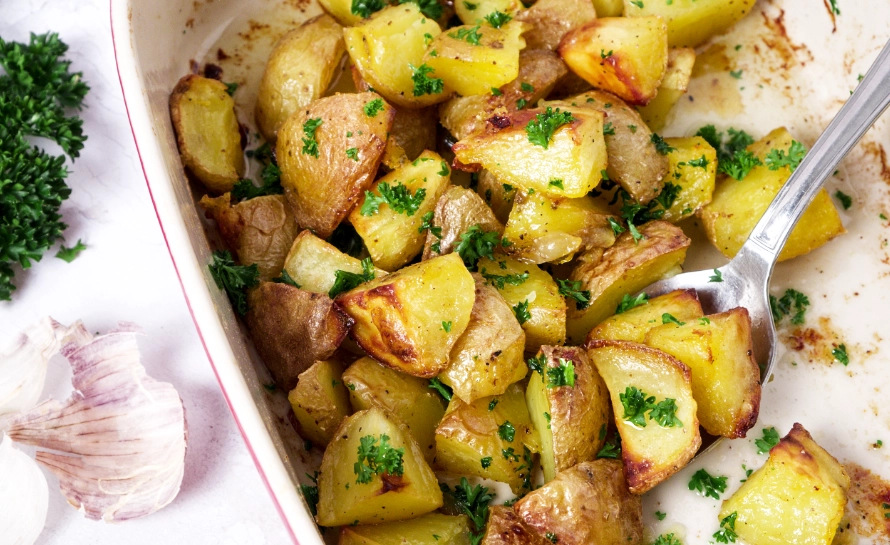
Potatoes dressed this way turn up all over France, especially in the south, where a pomme de terre persillade or sautées à la persillade is a standard bistro and home side dish. The potatoes are roasted or fried crisp, then tossed hot with the persillade so the garlic stays sharp and the parsley fresh. It’s the same logic the French apply to mushrooms and tomatoes. Potatoes just happen to take to it beautifully, all that crisp, craggy surface catching the garlic and parsley.
Ingredients
- Potatoes – Waxy or floury both work, but for the crispest result a floury or all-rounder potato (Maris Piper, King Edward, Yukon Gold) crisps up beautifully outside while going fluffy inside.
- Garlic – Fresh, and chopped rather than crushed, so it goes into the persillade in little fragrant flecks rather than a paste. It stays raw, so use good fresh cloves.
- Flat-leaf parsley – Fresh, and plenty of it. Flat-leaf has more flavour than curly here. Chop it just before using so it stays bright.
- Olive oil – For roasting the potatoes and loosening the persillade. A good one, since it carries the flavour.
- Salt and black pepper – To season. Salt the potatoes well, they need it.
How to make persillade potatoes
1. Parboil the potatoes
Cut the potatoes into even chunks and parboil them in well-salted water until just tender at the edges but still holding together, about 8 to 10 minutes. Then drain them well and give them a good shake in the colander to rough up the edges. Those roughed-up, fluffy edges are what crisp into craggy golden crust in the oven, so don’t skip the shake. Let the steam die down before they go in the oil.
2. Roast until crisp
Toss the dried potatoes in plenty of hot olive oil (or duck fat) and spread them out on a tray in a single layer, not crowded, so they roast rather than steam. Roast in a hot oven, turning once or twice, until deep golden and crisp all over. Don’t rush them out early, you want a proper crunchy crust, which takes a good 35 to 45 minutes.
3. Make the persillade and toss
While the potatoes roast, chop the garlic and parsley together into a rough persillade, and loosen it with a spoonful of olive oil if you like. The moment the potatoes come out of the oven, tip them into a bowl (or straight on the tray), add the persillade, and toss well so every potato is coated while they’re still hot. Taste, add salt, and serve straight away, while they’re crisp and fragrant.

Tools for this recipe
Check out my favorite kitchen essentials and cookware!
- Use a large saucepan to parboil the potatoes in plenty of salted water.
- Use a colander to drain them well and shake up the edges for maximum crisp.
- Use a sturdy baking tray so the potatoes roast in a single layer without steaming.
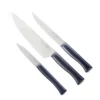
- I use a sharp chef’s knife to chop the garlic and parsley together into a fine persillade.
Tips for success
- Add the persillade raw, at the very end; toss the raw garlic and parsley through the moment the potatoes come out of the oven. Roast it from the start and the garlic burns bitter and the parsley turns to dust.
- Parboil and shake before roasting: parboiling then roughing up the edges in the colander is what gives you that craggy, crunchy crust. You can skip it and you get smoother, softer potatoes.
- Don’t crowd the tray: spread the potatoes out in a single layer with space between them. Crowded potatoes steam instead of crisping, and you lose the crunch.
- Chop the garlic and parsley together: chopping them on the same board lets the flavours mingle. A rough chop, not a paste.
- Serve immediately: persillade potatoes are at their best straight away, hot and crisp. They soften as they sit, so don’t make them wait.
How to store it
- Persillade potatoes are best fresh from the oven, when they’re at their crispest and the persillade is bright and fragrant. But leftovers are far from wasted.
- Keep them in the fridge for up to 3 days in a glass airtight container. They’ll lose their crunch, so reheat them in a hot oven or an air fryer for 10 minutes to bring the crisp back, rather than the microwave, which leaves them soft. A quick scatter of fresh parsley wakes them up again.
- They’re genuinely good cold too, chopped into a potato salad or fried up with an egg for breakfast the next morning. And they freeze reasonably once roasted, reheat from frozen in a hot oven, though fresh is always best.
More Southern recipes to try
Variations
- Add lemon zest: a little grated lemon zest in the persillade brightens the whole thing and cuts the richness. Lovely with fish.
- Add breadcrumbs: toss in a handful of crisp fried breadcrumbs with the persillade for extra crunch, closer to the classic breadcrumb persillade topping.
- A little chilli: a pinch of chilli flakes in the persillade for a bit of heat, not traditional, but good.
- Other herbs: add a little fresh thyme or rosemary to the parsley, or a scrape of anchovy into the persillade for a savoury depth.
FAQ
What is persillade?
Persillade is a classic French mix of finely chopped parsley and garlic, and olive oil, sometimes lemon or vinegar. It’s used as a fresh finishing touch, stirred through vegetables, scattered over vegetables or fish, or, as here, tossed through roasted potatoes. It’s added raw at the end so the garlic stays sharp and the parsley fresh.
What potatoes are best for persillade potatoes?
Floury or all-rounder potatoes like Maris Piper, King Edward or Yukon Gold crisp up best, going golden and crunchy outside while staying fluffy inside. Waxy potatoes work too and hold their shape more, so use whichever you prefer.
Why do you add the garlic and parsley at the end?
So they stay fresh and sharp. If garlic and parsley roast from the start, the garlic burns bitter and the parsley turns to black dust. Tossed through raw at the end, the heat of the potatoes softens the garlic just enough and keeps the parsley green and fragrant.
What do you serve persillade potatoes with?
Almost anything. They’re a classic French side for grilled fish. They’re also lovely alongside eggs for brunch, or as part of a spread with other vegetables.



 Prep Time 10 minutes
  Cook Time 40 minutes
  Total Time 50 minutes
  Servings 4
Description
Ingredients
For the potatoes
- 1 kg potatoes floury or all-rounder
- 4 tbsp olive oil extra virgin
- 4 cloves garlic
- 1 bunch flat-leaf parsley
- flaky salt
- black pepper
Equipment
Instructions
1. Parboil the potatoes
- Heat the oven to 200°C fan (220°C conventional). Peel and cut the potatoes into even chunks. Parboil in well-salted water for 8 to 10 minutes, until just tender at the edges. Drain well and shake in the colander to rough up the edges. Let the steam die down.
2. Roast
- Heat the oil (or fat) on the roasting tray in the oven for a few minutes. Add the potatoes, toss to coat, and spread in a single layer. Roast for 35 to 45 minutes, turning once or twice, until deep golden and crisp all over.
3. Make the persillade
- While the potatoes roast, chop the garlic and parsley together into a rough persillade. Loosen with a spoonful of olive oil if you like.
4. Toss and serve
- The moment the potatoes come out, tip them into a bowl (or on the tray), add the persillade, and toss well while hot so every potato is coated. Season with salt and pepper. Serve immediately.
Notes
- Add the persillade raw, at the end. The heat of the potatoes softens the garlic and keeps the parsley fresh. Roasting it from the start burns the garlic bitter.
- Parboil and shake the potatoes before roasting for the craggiest, crispest crust.
- Don’t crowd the tray, or the potatoes steam instead of crisping.
- Serve straight away for maximum crunch. Reheat leftovers in a hot oven or air fryer, not the microwave.
Share your feedback and spread the love!
If you try this recipe, I’d love to hear how it turns out! Leave a ★★★★★ rating and your thoughts in the comments, it helps fellow French foodies discover this recipe too. Snap a photo and tag @obviously.french on Instagram. Come talk about it in our Facebook group. And don’t forget to save this recipe to Pinterest so you’ll always have it handy for your next French-inspired meal!