Roasted Chestnuts
 Prep Time 10 minutes
  Cook Time 30 minutes
  Total Time 40 minutes
  Servings 4
Ingredients
- 800 gr chestnuts
Equipment
Instructions
1. Prepare the chestnuts
- Preheat the oven to 220°C. Rinse the chestnuts well, removing any dirt, and dry them thoroughly. Using a sharp knife, make a deep slit or X on the curved side of each chestnut, this stops them from bursting and makes peeling much easier.
2. Roast the chestnuts
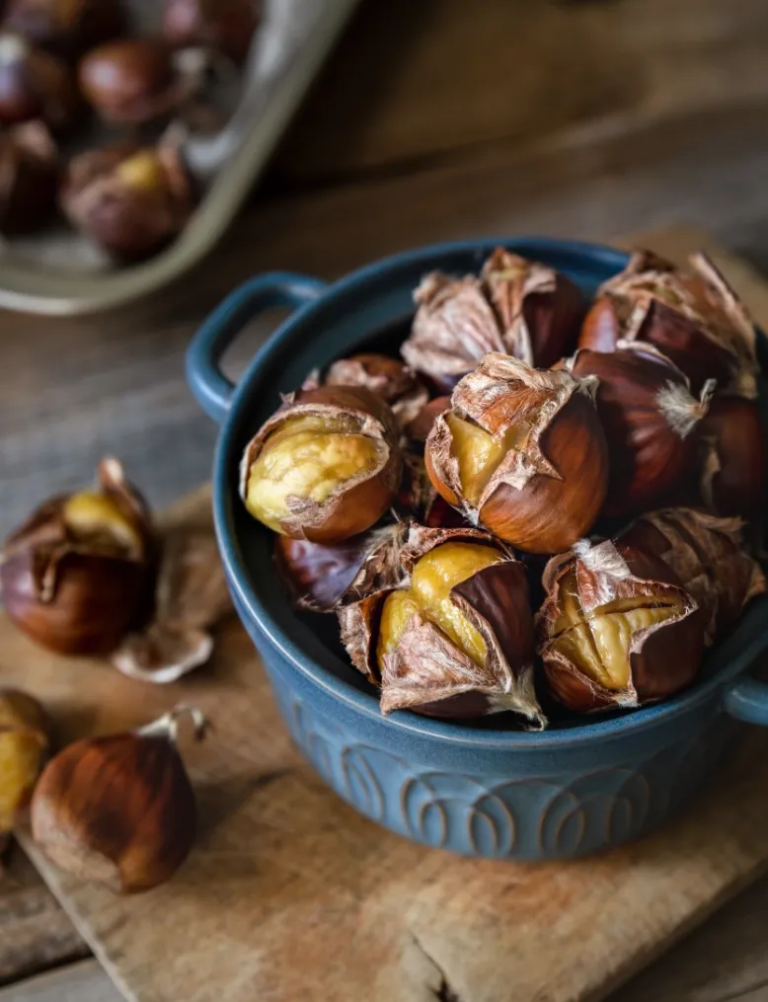
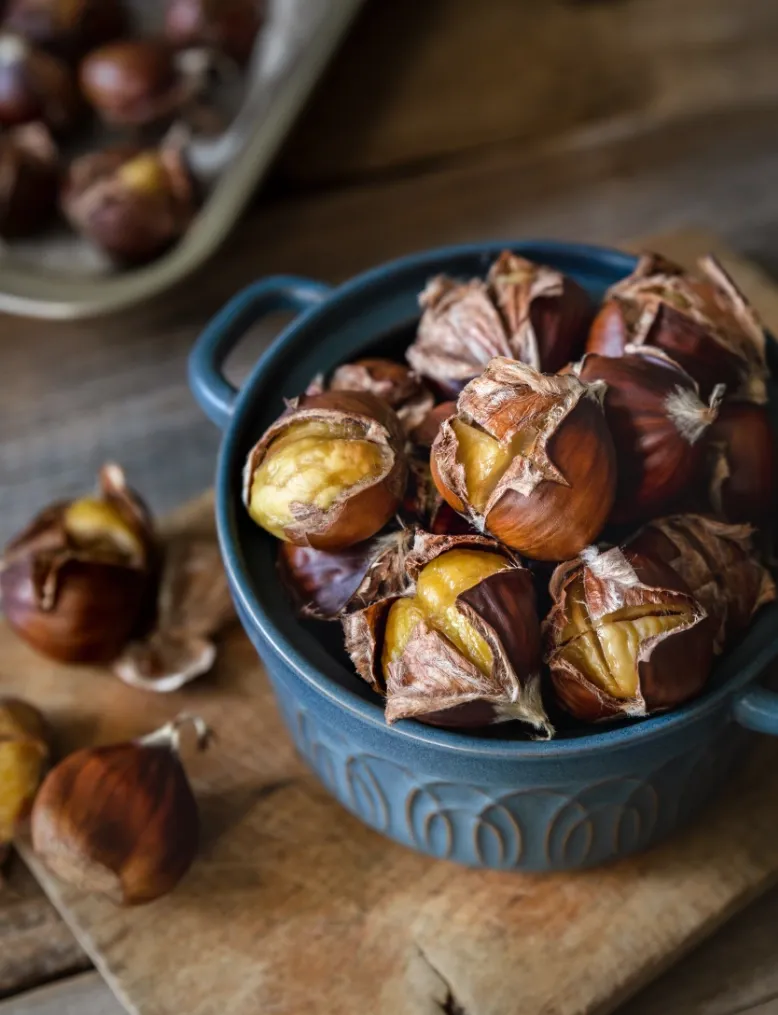
- Place the scored chestnuts on a baking tray, slit side up. Roast in the oven for 25–30 minutes, turning halfway through so they cook evenly. The skin will begin to split and expose the golden flesh inside.
3. Steam and peel
- Wrap the hot chestnuts in a clean tea towel or some paper for 10 minutes. The residual steam loosens the skin, making them easier to peel without burning your fingers.
4. Serve
- Peel and eat while still warm!
Notes
- Don’t skip the slit, otherwise the chestnuts may burst!
Roasted chestnuts, or “marrons grillés” as they’re called in France, carry centuries of tradition. These humble nuts were once called the “bread of the poor” because they were a staple food for mountain communities, providing much-needed energy and nourishment throughout harsh winters. Their popularity spans regions like Ardèche and Limousin, where chestnut groves stretch across the rolling hills, and where roasting chestnuts over open fires or in the special chestnut pans became a family ritual passed down through generations.
About this recipe
Some food memories are tied to a place. This one is tied to a street corner, a newspaper cone, and burning my fingers trying to eat chestnuts too fast. My mum and I would be out running errands, and there would be a vendor on the street with a pan of roasted chestnuts sending that smell into the cold air. I’d give her my best puppy eyes. Sometimes she’d give in. We’d devour them walking, warm hands, smoky fingers, chestnuts roasting in paper cones. That smell still means autumn to me more than anything else.
Roasted chestnuts in French culture
Roasted chestnuts, or marrons grillés in French, carry centuries of history in France. These were once called the bread of the poor, a staple food for mountain communities that provided energy and nourishment through harsh winters when little else was available. The chestnut groves of the Ardèche and Limousin stretched across the hills, and families depended on them for flour, food, and fuel. Cooking roast chestnuts over an open fire was not a festive tradition back then. It was simply dinner.
Over time, as food security improved and chestnuts became less essential for survival, they shifted from staple food to seasonal pleasure. The ritual of making roasted chestnuts in autumn, the scoring, the heat, the peeling, the burning of fingers, became something people looked forward to rather than relied on. That shift from necessity to celebration is one of the more pleasant transformations in French food history.
The Chestnut Festival
France takes chestnuts seriously enough to celebrate them with dedicated festivals. The Fête des Marrons is an autumn tradition in regions rich in chestnut groves, particularly Ardèche, Limousin, and parts of Provence. These are proper festivals with food markets, roasting demonstrations, music, and guided walks through the groves.
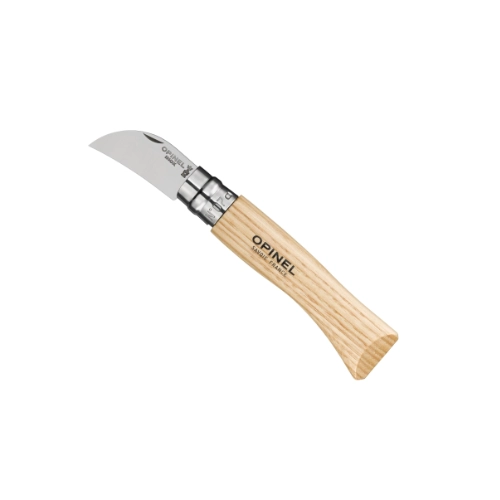
The most famous is the Vogue des Marrons in Lyon’s Croix-Rousse district, a fair dating back over 150 years that combines funfair attractions with a genuine celebration of the chestnut harvest. You can eat baked chestnut from street vendors, taste sweets made with chestnut flour, and buy marron glacé, the candied chestnuts that represent the most refined end of chestnut cooking. Smaller towns and villages hold their own versions, often with cooking contests and artisanal products that vary by region. If you’re in France in October or November, it’s worth finding one. And don’t forget to bring your chestnut knife with you.
Making roasted chestnuts at home
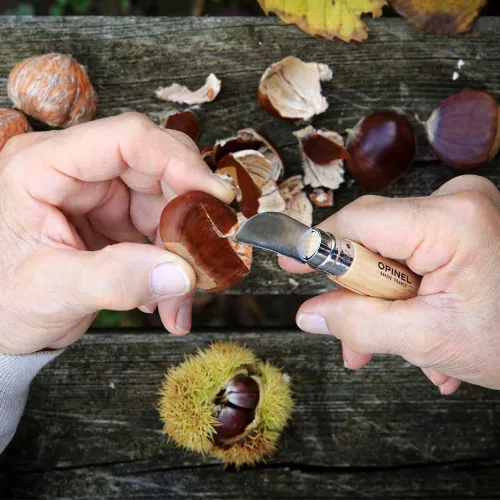
Making roasted chestnuts properly comes down to one step that most people skip: scoring the shell before cooking. Without a cut through the outer shell and inner skin, the chestnut steams inside its casing as it heats up and can burst. More importantly, an unscored chestnut is nearly impossible to peel cleanly once cooked. Score each one with a sharp knife, cutting through the shell in a cross or a single deep line on the flat side, and the peel comes away easily once roasted.
The scoring also tells you something about how the chestnut is cooking. As the heat reaches the flesh, the shell curls back around the cut. When the edges of the score start to pull away and the flesh underneath looks golden rather than white, the chestnut is ready.
Oven versus open fire
Cooking roast chestnuts over an open fire gives you more char and more smoke, which adds to the flavour. For most home cooks, the oven is the practical choice, and it gives consistent results that an open fire can’t always guarantee.
The key to good oven-roasted chestnuts is a flat, heavy tray that conducts heat directly to the base of each nut. I use the De Buyer stainless steel baking tray with the De Buyer baking mat. The heavy steel tray gets properly hot in a preheated oven and starts cooking the chestnuts from below immediately. The baking mat prevents sticking and distributes the heat evenly across the base of each nut. The result is a baked chestnut that cooks through uniformly without the outside burning before the inside is soft.
Eating them
Eat them warm, as soon as you can handle them. The texture changes as they cool and the flesh firms up. Warm roasted chestnuts are soft and slightly floury inside, with a sweetness that intensifies as you chew. Cold ones are fine but not the same experience.
Peel them while warm too. The inner skin comes away with the shell when the chestnut is hot. Leave them to cool completely and the skin clings and tears, making the peeling slower and more frustrating. Warm fingers, fast peeling, eat immediately. That’s how my mum and I did it on those street corners, and there’s no better method.
Share your feedback and spread the love!
If you try this recipe, I’d love to hear how it turns out! Leave a ★★★★★ rating and your thoughts in the comments, it helps fellow French foodies discover this recipe too. Snap a photo and tag me @obviously.french on Instagram if you’re sharing your bake or cooking online. Don’t forget to save this recipe to Pinterest so you’ll always have it handy for your next French-inspired meal!
Disclosure: Just so you know, this post contains sponsored content and/or affiliate links, If you make a purchase through these links, I may receive a small commission. Doesn’t cost you anything extra. I only link to things that are actually worth your time. All opinions are my own!