 October 7, 2025
Disclosure: This post may contain affiliate links which provide us a small commission when used for purchase. Please read my disclosure policy for more information. I am grateful for your support!
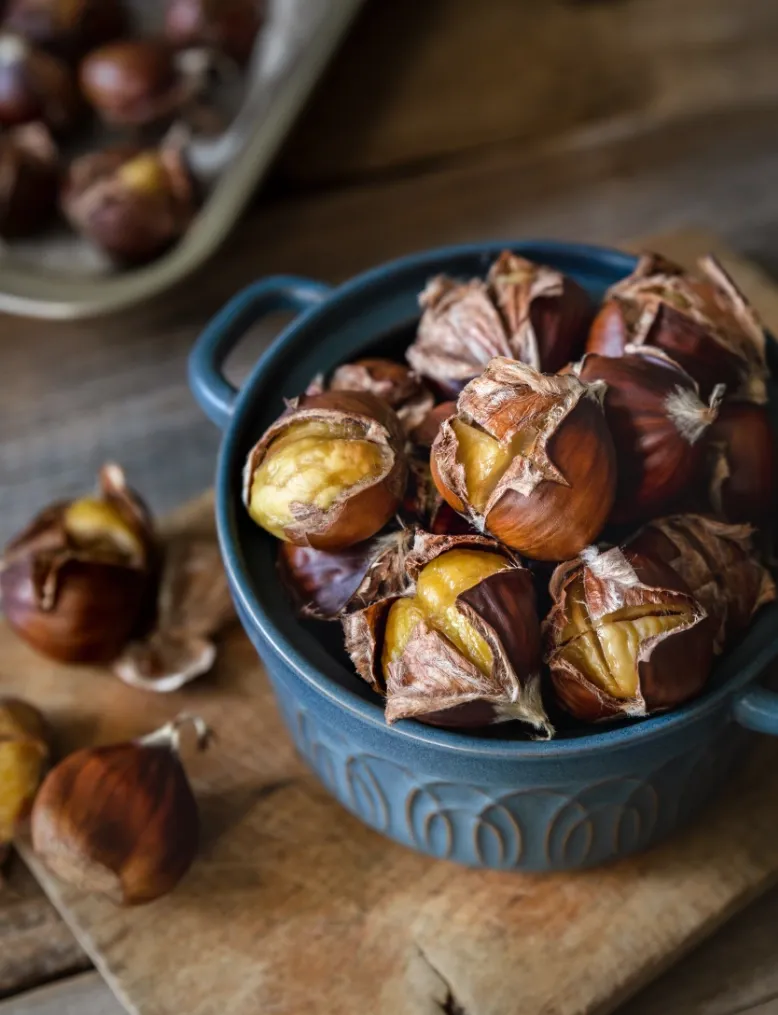
Some food memories are tied to a place. This one is tied to a street corner, a paper cone, and burning my fingers trying to eat roasted chestnuts too fast. My mum and I would be out running errands and there’d be a vendor with a pan of chestnuts sending that smell into the cold air. I’d give her my best puppy eyes and more often than not she’d give in. We’d eat them walking, warm hands, smoky black fingers, and they’d be gone before we reached the next corner! That smell still means winter to me more than anything else.
Table of Contents
Where roasted chestnuts comes from
For centuries the chestnut tree was called l’arbre à pain, the bread tree, because in the mountains of the Ardèche, Limousin and Corrèze it fed people better than cereals could. Chestnuts weren’t a treat, they were simply survival at that point. They were grounded into flour, cooked into soup, dried to last the winter. Around the fire on long evenings came the brasucada, the chestnut roast, which is really what this recipe still is.
Worth knowing before you go to the market: marrons grillés on a vendor’s sign always means edible chestnuts, never the toxic horse chestnut. Technically a marron has one undivided fruit in its casing and a châtaigne has two or three, but everyday French uses the words interchangeably. The old distinction was social more than botanical, marron was simply what you called them when they turned up on a rich family’s table.
The Ardèche is still France’s chestnut heartland, and every autumn the Castagnades run through October and November: markets, roasting demonstrations, walks through the groves. I went to the chestnut festival in Éguzon with my French chestnut knife and had a lovely time eating fresh roasted chestnuts and drinking freshly made apple cider. If you’re in France in autumn, find one!
Ingredients
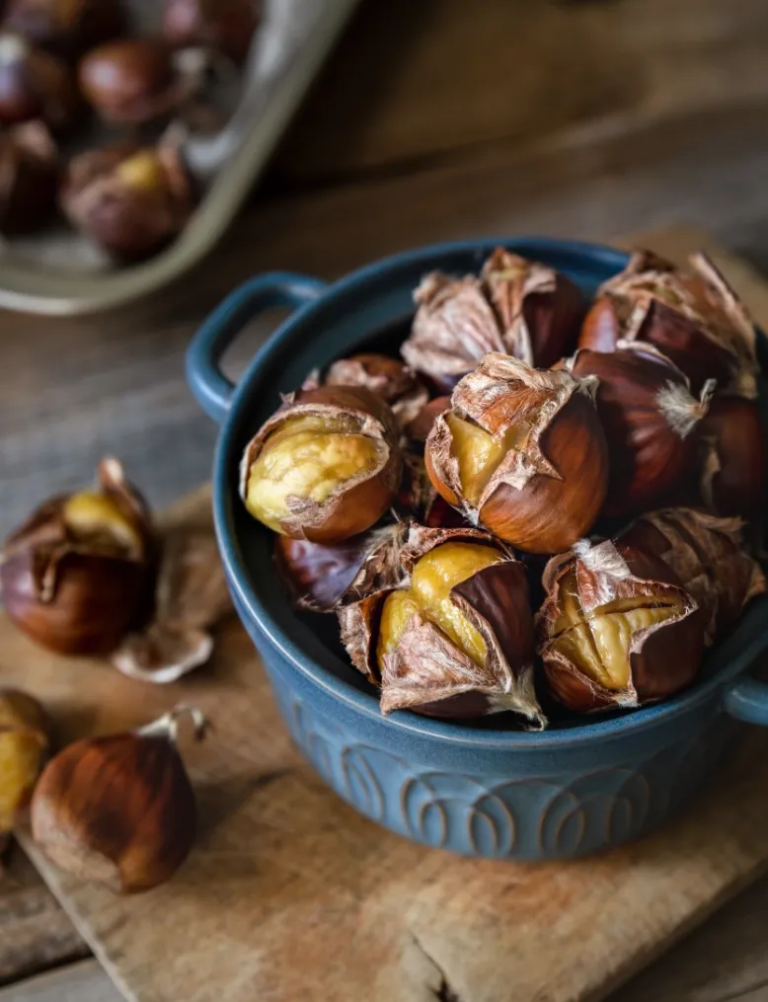
- Chestnuts — choose well and look for shells that are glossy, deep brown and taut, with no holes (a small hole means a worm has been there first!). They should feel heavy and solid for their size. If one feels light or rattles, the flesh has dried and shrunk away from the shell, and it’ll be leathery when roasted. Fresh-season chestnuts, from October through December, are sweeter and creamier than anything stored longer.
How to make roasted chestnuts
1. Score every single one
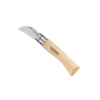
Cut through both the shell and the inner skin, a cross or one deep line across the flat side. Unscored chestnuts build steam inside and can burst in the oven, and an unscored chestnut is nearly impossible to peel cleanly once cooked. A chestnut knife, with its short curved blade, makes this quick and much safer than a paring knife skidding off a hard round shell.
2. Roast hot, flat side up
Hot oven, single layer, cut side facing up so the shells peel back. Turn them halfway. You’ll see the scores open and the golden flesh show through, which is your signal they’re close.
3. Wrap them and wait
Straight from the oven into a tea towel, wrapped up, for ten minutes. The trapped steam lifts the inner skin away from the flesh. This is the difference between chestnuts that slip out of their shells and chestnuts you fight with.
4. Peel and eat warm
Both shell and inner skin come away easily while hot. Let them go cold and the skin clings and tears, and you’ll be picking at it. Warm fingers, fast peeling, eat immediately!
Tools for this recipe
Check out my favorite kitchen essentials and cookware!
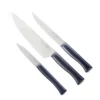
- Use a chestnut knife to score the shells, its short curved blade bites into the hard shell without slipping the way a straight paring knife does.
- Use a heavy baking tray that conducts heat directly into the base of each chestnut for even roasting.
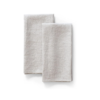
- Use a tea towel to wrap the hot chestnuts and trap the steam that loosens the inner skin.
Tips for success
- Score deeper than feels comfortable: most failures come from cutting only the shell and not the inner skin beneath it. If the skin is still intact, the chestnut will fight you at the peeling stage no matter how well it roasted.
- Don’t crowd the tray: in a single layer with space around them, they roast; piled up, they steam each other and go soggy rather than sweet.
- The wrap: ten minutes in a tea towel does more for peelability than any amount of extra roasting.
- Peel in batches, not all at once. Keep the rest wrapped and warm while you peel one, because they become dramatically harder to peel as soon as they cool.
How to store it
- In the fridge: Raw chestnuts keep for 2 to 3 weeks in a perforated bag in the fridge. They’re a fresh fruit, not a dry nut, so they need cold and air or they go mouldy. Cooked and peeled, they keep 3 to 4 days.
- At room temperature: Raw chestnuts left out will dry and harden within days. Cooked ones are best eaten the same day, ideally within the hour, because the texture firms as they cool.
- In the freezer: Freeze them cooked and peeled, and they’ll keep several months, which is by far the most useful thing to do with them. They go straight from frozen into soups, stuffings, purées or a braise. Raw chestnuts can also be frozen after scoring, then roasted from frozen with a few minutes added.
More vegan recipes to try
Variations
- Over the fire: a perforated chestnut pan directly on embers, shaken often, gives you smoke and char the oven can’t. This is the brasucada the Ardèche mountain families did around the fire, and it’s worth doing once for the smell alone.
- Vanilla and salt. Toss the hot peeled chestnuts with a little melted butter, flaky salt and the seeds of a vanilla pod. Sweet and savoury at once, and it flatters the natural sweetness rather than covering it.
- Rosemary and garlic. Warm the peeled chestnuts in a pan with olive oil, a bruised garlic clove and a rosemary sprig. This takes them firmly savoury and makes them an apéro snack rather than a sweet one.
- Turn them into soup: chestnut soup is the classic use for a batch that’s gone cold or peeled badly. Simmer the peeled chestnuts with onion, stock and a bay leaf, then blend until velvety.
- Chestnuts with sprouts: roughly chopped roasted chestnuts fried with Brussels sprouts with vegetarian lardons is the classic French winter side.
- Into a stuffing or purée. Mashed with butter and a little cream, chestnut purée goes under roast vegetables or alongside game. It’s also the base for sweet crème de marrons if you cook it down with sugar and vanilla.
FAQ
Do you have to score chestnuts before roasting?
Yes, always. Without a cut through the shell and inner skin, steam builds up inside and they can burst, and they become nearly impossible to peel cleanly.
Why won’t my roasted chestnuts peel?
Usually one of three things: the score didn’t go through the inner skin, they weren’t wrapped in a tea towel to steam after roasting, or they’ve gone cold. All three make the skin cling.
How do you pick good chestnuts?
Look for glossy, taut, deep brown shells with no holes, and a good weight for their size. Light ones have dried out inside. Chestnuts are best in season, from October to December.
Are marrons and châtaignes the same thing?
For cooking, yes. A marron technically has one undivided fruit in its casing and a châtaigne two or three, but everyday French uses both for edible chestnuts. Neither refers to the toxic horse chestnut.
How long do chestnuts keep?
Raw, about 2 to 3 weeks in the fridge in a perforated bag. Cooked and peeled, 3 to 4 days in the fridge, or several months in the freezer.


 Prep Time 10 minutes
  Cook Time 30 minutes
  Total Time 40 minutes
  Servings 4
Description
Ingredients
- 800 gr chestnuts
Equipment
Instructions
1. Prepare the chestnuts
- Preheat the oven to 220°C. Rinse the chestnuts well, removing any dirt, and dry them thoroughly. Using a sharp knife, make a deep slit or X on the curved side of each chestnut, this stops them from bursting and makes peeling much easier.
2. Roast the chestnuts
- Place the scored chestnuts on a baking tray, slit side up. Roast in the oven for 25–30 minutes, turning halfway through so they cook evenly. The skin will begin to split and expose the golden flesh inside.
3. Steam and peel
- Wrap the hot chestnuts in a clean tea towel or some paper for 10 minutes. The residual steam loosens the skin, making them easier to peel without burning your fingers.
4. Serve
- Peel and eat while still warm!
Notes
- Don’t skip the slit, otherwise the chestnuts may burst!
Share your feedback and spread the love!
If you try this recipe, I’d love to hear how it turns out! Leave a ★★★★★ rating and your thoughts in the comments, it helps fellow French foodies discover this recipe too. Snap a photo and tag @obviously.french on Instagram. Come talk about it in our Facebook group. And don’t forget to save this recipe to Pinterest so you’ll always have it handy for your next French-inspired meal!