 March 23, 2026
Disclosure: This post may contain affiliate links which provide us a small commission when used for purchase. Please read my disclosure policy for more information. I am grateful for your support!

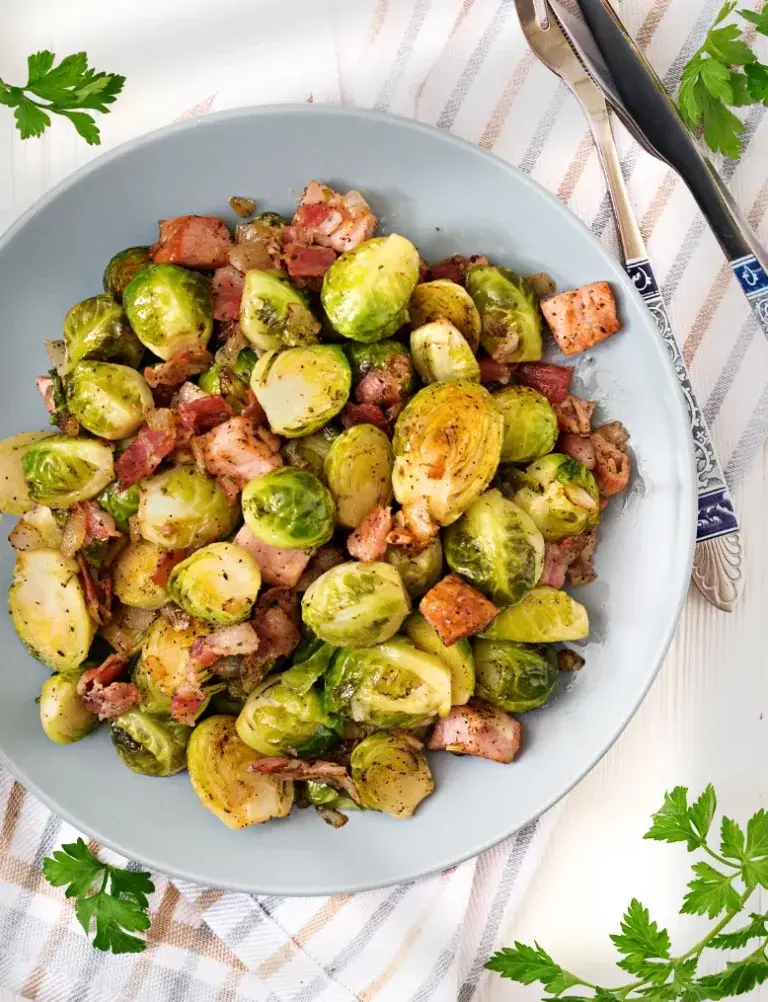
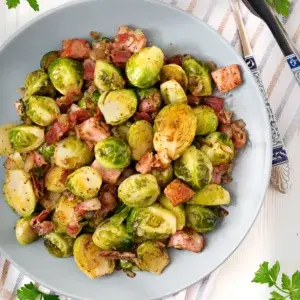
Brussels sprouts have a bad reputation, and I’ve never quite understood why. We can’t get enough of them! If you’re one of the apprehensive ones, I’d wager this recipe will change your mind.
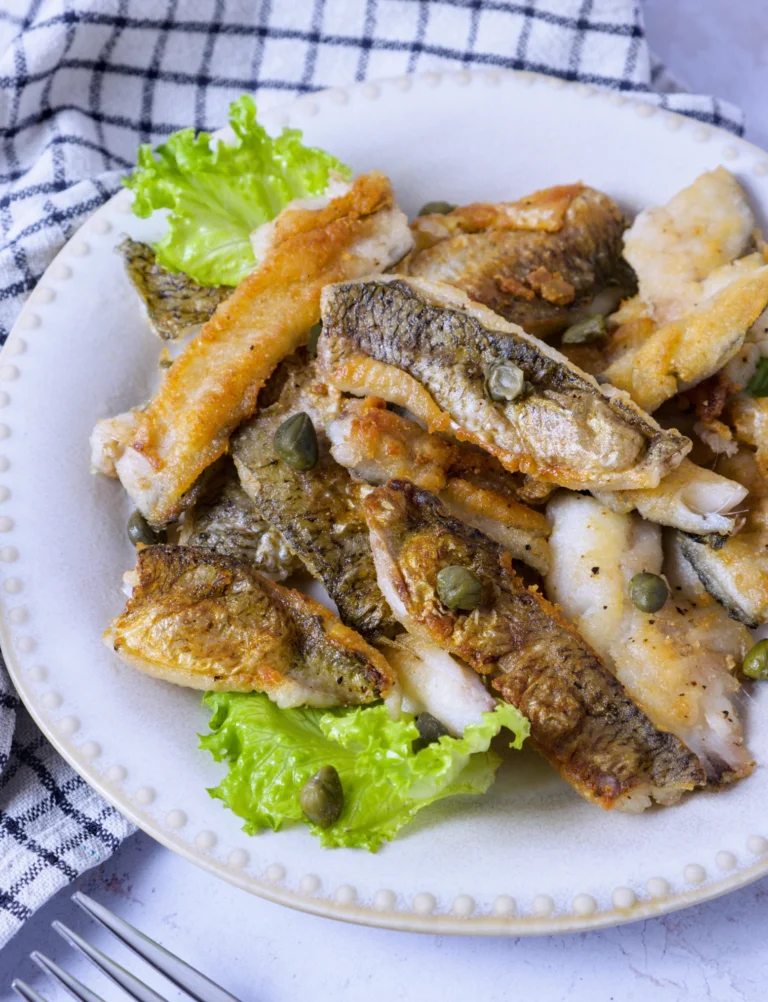
Two of our neighbours grow them in their gardens, and we’re always honoured to be handed the freshest sprouts come September and October. When I make baked trout, this is the side I serve alongside, since both use Dijon mustard. But we also happily eat it as a light lunch on its own, especially when I’ve made too much the evening before!
Table of Contents
Where brussels sprouts with lardons comes from
Despite the name, the exact origins are a little disputed. The widely-told story is that sprouts were cultivated in the region around Brussels from at least the 13th century, which is where the name comes from, though the first clear written record is actually a Brussels market regulation from 1587, with the earlier date resting on vaguer agricultural mentions. Either way, by the 16th and 17th centuries they were well established across the Low Countries and northern France.
What gets less attention is how quickly they settled into French regional cooking. By the 18th century sprouts were a staple winter vegetable across much of northern France, and recipes pairing them with pork fat and butter turn up in French cookbooks from then on.
We’re pescatarian, so we use plant-based lardons, and honestly they’re lovely here. You’re adding the fat through butter instead, so the technique shifts slightly, but the flavour logic is identical.
Ingredients
- Brussels sprouts – Fresh, firm and bright green, trimmed and halved so the cut side can caramelise. They’re best after the first frost, which sweetens them. Buy them on the stalk if you can.
- Smoked lardons – For salt, smoke and texture. We use smoked vegetarian lardons; the smoke is what matters, so choose a smoked one over plain.
- Butter – To caramelise the sprouts and carry the flavour.
- Olive oil – A little alongside the butter, to stop it burning at the high heat the sprouts need.
- Shallot – Softened in the pan for a gentle, sweet background note. Milder than onion.
- Dijon mustard – Just a teaspoon at the end, as a finish, not a sauce. Its sharpness cuts the richness.
- Parsley – Fresh, scattered over at the end for colour and freshness.
How to make brussels sprouts with lardons
1. Blanch the sprouts
Blanch the halved sprouts in well-salted boiling water for a few minutes, until just tender with some bite, then drain and, crucially, dry them thoroughly. You’re not cooking them through, just taking the raw bitterness off and getting a head start so they don’t burn before they’re done in the pan. Any water left on them steams instead of fries, so pat them properly dry, this is the difference between caramelised and soggy.
2. Build it in the pan
Crisp the lardons in a little butter and oil, then set them aside. Soften the shallot gently in the same pan. Then turn the heat up, add the rest of the butter, and lay the sprouts in cut-side down in a single layer. Now leave them alone, undisturbed, for a few minutes, so the flat sides turn deep golden.
Once they’re caramelised, toss, season, return the lardons, and add the Dijon, tossing for 30 seconds until everything’s lightly coated. Scatter with parsley and serve straight away.
Tools for this recipe
Check out my favorite kitchen essentials and cookware!
- Use a large saucepan to blanch the sprouts in plenty of salted water.
- Use a colander to drain them well before they hit the pan.
- Use a wide frying pan so the sprouts sit in a single layer and caramelise rather than steam.
Tips for success
- Don’t skip the blanching: sprouts fried from raw brown outside before they cook through. Blanching cooks them most of the way and takes the bitter edge off.
- Dry the sprouts thoroughly: any water on them steams in the pan and you lose the caramelised cut side. Pat them properly dry on a towel after draining.
- Use oil with butter: a little olive oil alongside the butter stops it burning at the higher heat the sprouts need for good colour.
- Leave the sprouts undisturbed: once they’re cut-side down, don’t touch them for a few minutes. That’s what develops the deep golden, nutty caramelisation. Tossing too soon means pale, steamed sprouts.
- The Dijon is a finish, not a sauce: one teaspoon, tossed through at the end, lifts everything with a gentle sharpness. More than that and it takes over.
How to store it
- Brussels sprouts with lardons is best eaten straight from the pan, while the sprouts are hot and caramelised and the lardons crisp.
- That said, leftovers keep covered in a glass container the fridge for up to 3 days, and they make a very good lunch. Reheat them in a hot dry pan rather than the microwave, to bring back some crispness. They’re also surprisingly nice cold, tossed through a grain salad.
- You can get ahead by blanching and drying the sprouts earlier in the day and keeping them in the fridge, then it’s just a few minutes in the pan to finish. That’s the best make-ahead route, since the blanching is the only slightly slow bit.
More vegetarian recipes to try
Variations
- Add chestnuts: fold in cooked chestnuts with the lardons for a classic, festive, Christmassy version. Lovely at the holidays.
- Add garlic: a clove of sliced garlic softened with the shallot, for a bit more depth.
- A splash of cream: stir a spoonful of crème fraîche in at the end with the Dijon for a richer, more indulgent dish.
- Add a nutty crunch: a scatter of toasted flaked almonds or chopped hazelnuts at the end, for texture.
- Maple or honey: a tiny drizzle of maple syrup or honey with the mustard, for a sweet-savoury glaze, if you like that contrast.
- Make it a meal: toss through cooked chestnuts, butter beans or a grain like farro and a poached egg on top, and it’s a full vegetarian supper!
FAQ
How do you cook Brussels sprouts so they’re not bitter?
Blanch them briefly in salted boiling water first, which draws out the bitterness, then pan-fry them in butter to caramelise the cut sides. The caramelisation brings a sweet nuttiness that balances any remaining bitterness. Buying sprouts after the first frost also makes them naturally sweeter.
Why do you blanch Brussels sprouts before frying?
Blanching cooks them most of the way through and removes the raw bitterness, so that when they hit the hot pan they only need to caramelise, not cook through. Fried from raw, sprouts brown on the outside before the inside is done. Blanching gives you tender inside and golden outside.
What are lardons, and what can I use instead?
Lardons are small strips or cubes of pork, usually smoked, used across French cooking for salt and smokiness. For a vegetarian version, use smoked vegetarian lardons or diced smoked vegetarian bacon, the smoky flavour is what matters. You can also leave them out and lean on butter and Dijon.
When are Brussels sprouts in season?
Late autumn and winter, and they’re best after the first frost, which converts some of their starch to sugar and makes them sweeter and nuttier. If you can buy them still on the stalk, they stay fresher and tend to have better flavour than pre-packed ones.


 Prep Time 10 minutes
  Cook Time 20 minutes
  Total Time 30 minutes
  Servings 4
Description
Ingredients
- 600 gr Brussels sprouts trimmed and halved
- 150 gr vegetarian smoked lardons
- 30 gr unsalted butter
- 1 shallot finely sliced
- 1 tsp Dijon mustard
- 1 handful flat-leaf parsley finely chopped
- salt and black pepper

Instructions
1. Blanch the sprouts
- Bring a large pan of well-salted water to a rolling boil. Blanch the halved sprouts for 4 to 5 minutes, until just tender with some resistance. Drain, run cold water over them, then spread on a tea towel and pat thoroughly dry.
2. Crisp the lardons
- Heat half the butter and the olive oil in a frying pan over medium-high heat. Add the lardons in a single layer and cook undisturbed for 2 to 3 minutes until coloured and crisp, toss, cook another minute, then set aside.
3. Soften the shallot
- Lower the heat to medium. In the same pan (add a little butter if dry), soften the shallot for 2 to 3 minutes until translucent, with no colour.
4. Sauté the Brussels sprouts
- Turn the heat back up and add the remaining butter. Add the sprouts cut-side down in a single layer. Leave undisturbed for 2 to 3 minutes until golden on the cut side, then toss, season well, and cook another minute.
5. Finish and serve
- Return the lardons to the pan. Add the Dijon and toss for about 30 seconds, until lightly coated. Off the heat, scatter over the parsley and serve immediately.
Notes
- Don’t skip blanching. From raw, sprouts brown before they cook through. Blanching gives you control.
- Dry the sprouts thoroughly, or they steam instead of caramelising.
- Olive oil with the butter stops it burning at the high heat the sprouts need.
- The Dijon is a finish, not a sauce. One teaspoon lightly coats; more takes over.
- Best straight from the pan; it doesn’t wait well.
Share your feedback and spread the love!
If you try this recipe, I’d love to hear how it turns out! Leave a ★★★★★ rating and your thoughts in the comments, it helps fellow French foodies discover this recipe too. Snap a photo and tag @obviously.french on Instagram. Come talk about it in our Facebook group. And don’t forget to save this recipe to Pinterest so you’ll always have it handy for your next French-inspired meal!