 October 8, 2025
Disclosure: This post may contain affiliate links which provide us a small commission when used for purchase. Please read my disclosure policy for more information. I am grateful for your support!
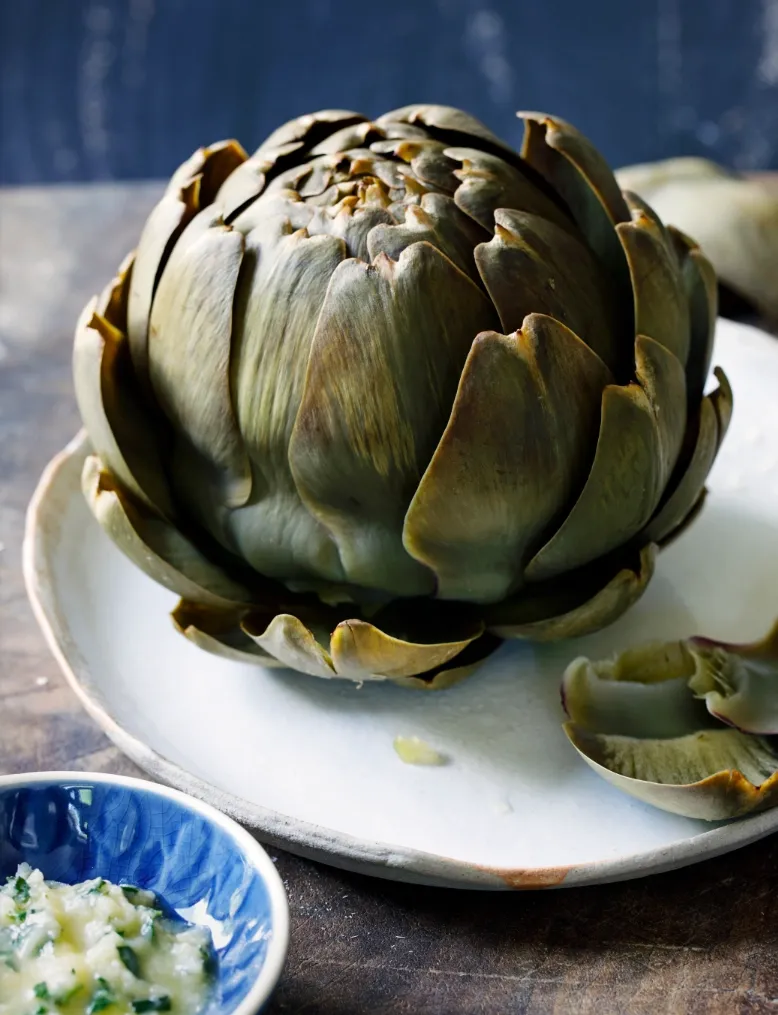
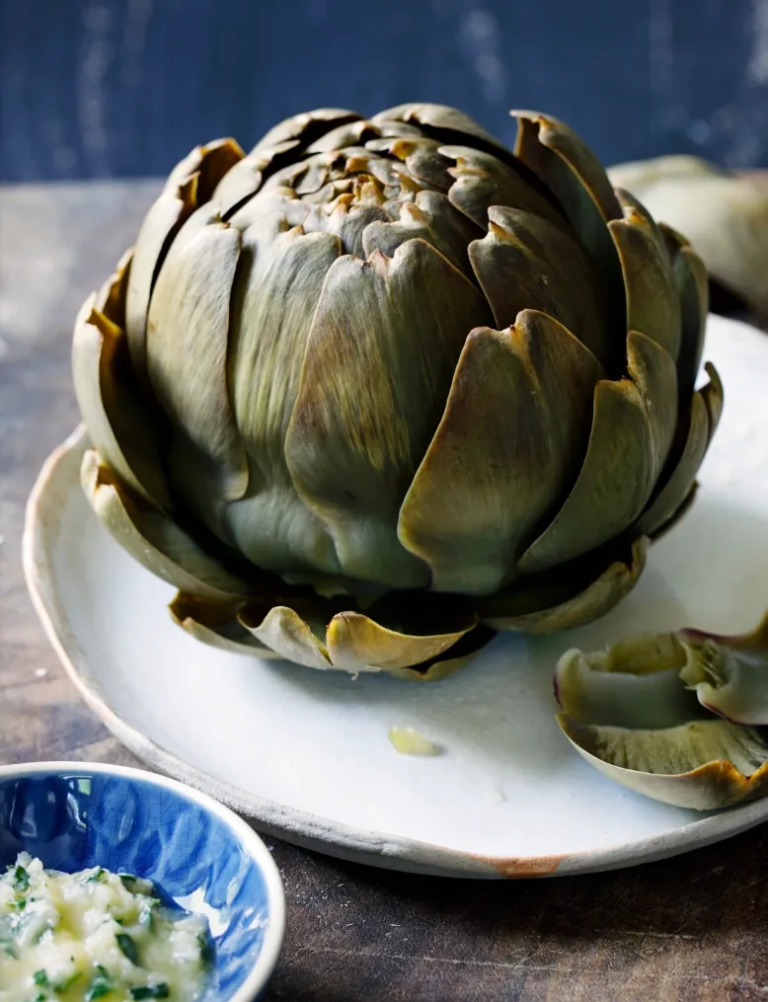
This is one of my favourite things to eat with a good vinaigrette. Artichokes with a simple vinaigrette is such a pleasurable moment! When the season arrives the market stalls are full of them and I always take a bit too long choosing the right ones, testing every variety to experience all the different flavours. It’s a proper ritual, and I wouldn’t change it for the world!
Table of Contents
Where artichokes comes from
The word artichaut comes, via Italian, from the Arabic ardi chawke, “thorn of the earth”. It’s a cultivated thistle, Mediterranean in origin.
Louis XIV genuinely did love them, and his head gardener La Quintinie grew five varieties in the kitchen gardens at Versailles: the Blanc, the Vert, the Violet, the Rouge and the Sucré de Gênes. From those royal beds the artichoke worked its way down into ordinary cooking, to us! Then around 1810 a Paris-region agronomist developed the Camus de Bretagne, and Brittany’s mild Atlantic climate turned out to suit it so well that the region still grows most of the artichokes sold in France.
There’s also a lovely expression in French: avoir un cœur d’artichaut, to have an artichoke heart. It describes someone who falls in love easily and often, handing out pieces of their heart to everyone they meet. In other words, a hopeless romantic. And if you want to know what the French actually call their loved ones, here are 45 French terms of endearment worth knowing.
Ingredients
- Fresh artichokes — Look for tight, closed leaves, a good weight in the hand, and a squeak when you squeeze them. Open, dry or browning leaves mean it’s been sitting around.
- Lemon — cut artichoke browns almost immediately, so lemon on the cut surfaces and in the water keeps them looking good.
- Dijon mustard — the backbone of the vinaigrette. It’s also the emulsifier: it’s what makes the dressing thicken and cling to each leaf instead of sliding off.
- White wine vinegar — the sharpness that cuts the artichoke’s faint bitterness.
- Extra virgin olive oil — the body of the vinaigrette, so use one you’d happily taste on its own.
- Shallot — finely minced, for a gentle allium bite that’s softer and sweeter than onion.
- Parsley — freshness and colour through the dressing.
- Salt and pepper — season the water generously as well as the vinaigrette.
How to make artichokes
1. Trim and rub with lemon
Rinse them well, snap off the toughest outer leaves near the stem, and rub every cut surface with lemon straight away. Artichoke browns fast, and once it does it stays that way.
2. Simmer them submerged
Into well-salted boiling water with a squeeze of lemon, stem-side down, with a plate or lid on top to keep them under. Give them room in the pan: crammed together they cook unevenly and bob above the water, and you end up with tough leaves on one side.
3. Test by feel, not by clock
Anywhere from 35 to 45 minutes depending on size, but the timer isn’t the guide. They’re done when a leaf near the middle pulls away easily and the base feels tender to a knife tip. Underdone artichokes are stringy and thankless, so give them the extra five minutes if you’re unsure.
4. Whisk the vinaigrette
Mustard, vinegar, salt and pepper first, then the oil in a slow stream while whisking so it emulsifies into something creamy rather than splitting. Shallot and parsley in at the end.
5. Drain upside down
Artichokes hold a surprising amount of water between the leaves. Upturned for a few minutes and cooled slightly, or you’ll dilute your vinaigrette with every dip.
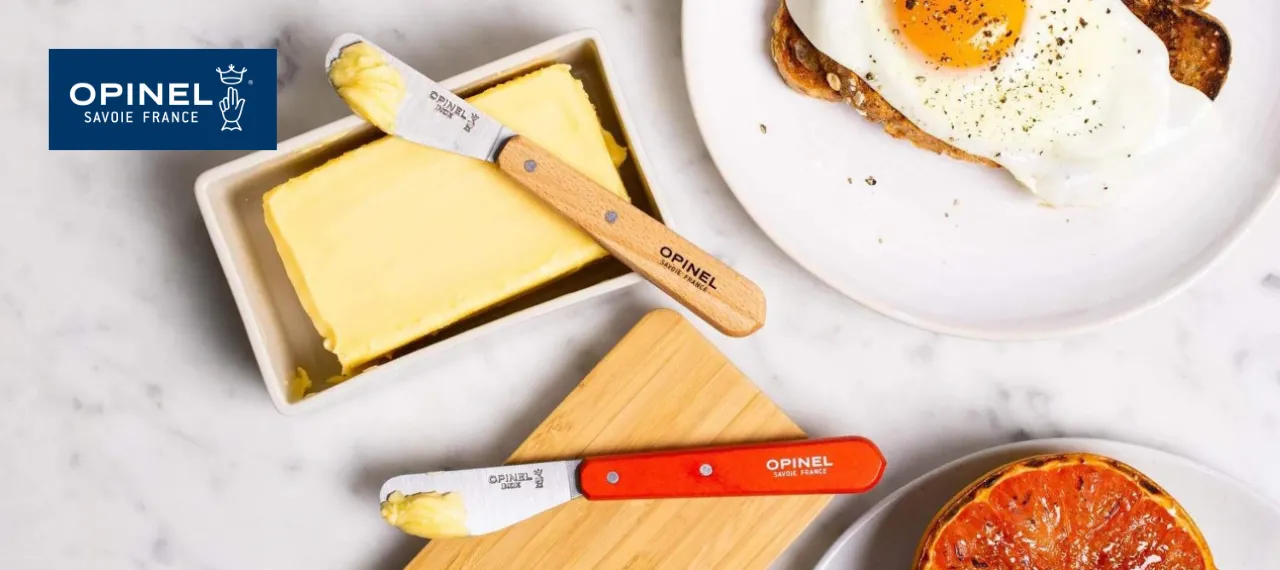
Tools for this recipe
Check out my favorite kitchen essentials and cookware!
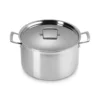
- Use a large saucepan big enough for the artichokes to sit without crowding, so they stay submerged and cook evenly.
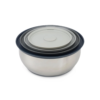
- Use a whisk to emulsify the mustard, vinegar and oil into a vinaigrette thick enough to cling to each leaf.
Tips for success
- Choose artichokes that feel heavy for their size with tight, closed leaves, that’s how you know they’re fresh.
- Salt the cooking water well. Unseasoned water gives you bland leaves.
- Don’t crowd the pan, and weigh them down so they stay under the water.
- Test for doneness by pulling a middle leaf rather than watching the clock.
How to store it
- In the fridge: Cooked artichokes keep for up to 2 days in a covered glass container. They’re very good cold, straight from the fridge with the vinaigrette. Store the vinaigrette separately, it keeps about a week and may need a re-whisk.
- Raw artichokes: Keep them in the fridge and use within a few days. Standing the stems in a little water like flowers helps them stay fresh a bit longer.
- In the freezer: Not worth it for whole cooked artichokes, the texture turns woolly. If you want to freeze anything, cook and freeze the trimmed hearts alone, which hold up reasonably well for later use in a salad or a tart.
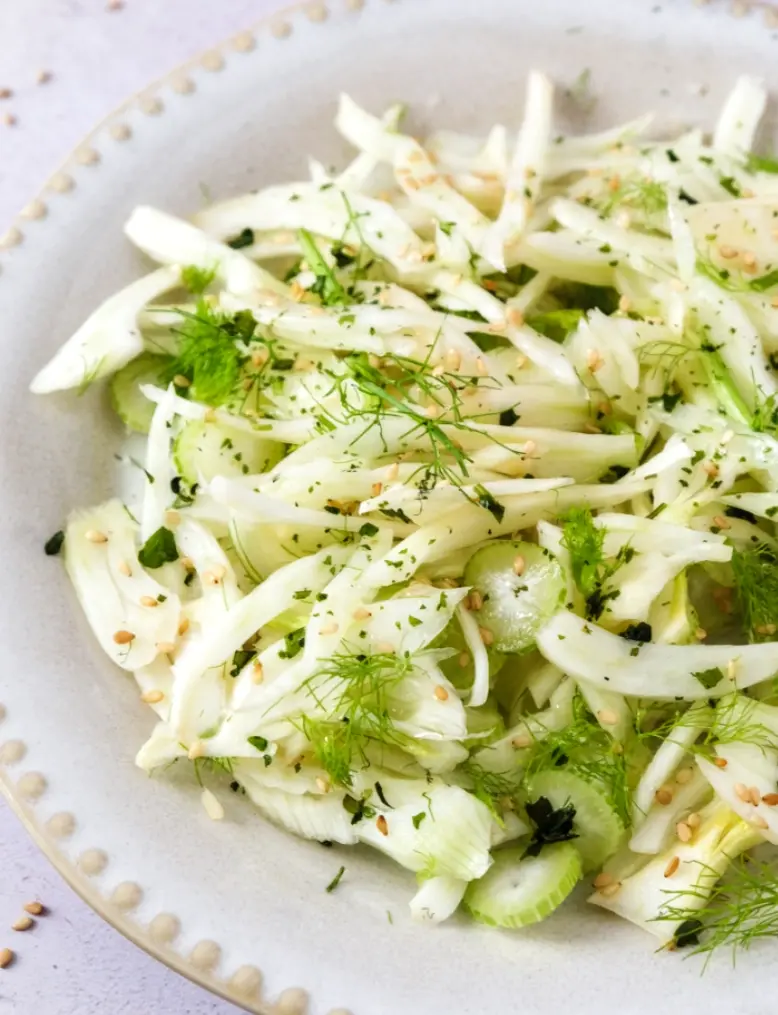
More vegan recipes to try
Variations
- Garlic vinaigrette: add a small crushed garlic clove for something punchier.
- Herbs: swap or supplement the parsley with chervil, tarragon or chives.
- With a soft-boiled egg: serve the heart with a jammy egg and a spoonful of vinaigrette as a light lunch.
- Vegan: already vegan!
- Warm butter instead: melted butter with lemon and a little salt makes an excellent alternative dip if you want something richer than vinaigrette.
FAQ
How do you know when artichokes are cooked?
When a leaf near the middle pulls away with almost no resistance and the base feels tender to a knife tip. Timing is a rough guide (35–45 minutes), but the leaf test is what to trust.
How do you choose a fresh artichoke?
Look for tightly closed leaves, a good weight for its size, and a slight squeak when squeezed. Leaves that are open, dry or browning at the tips mean it’s past its best.
Which part of the artichoke do you actually eat?
The fleshy base of each leaf, scraped off with your teeth, and then the heart at the centre once you’ve removed the fuzzy choke. The rest of the leaf is discarded.
Can you eat artichokes cold?
Yes, and they’re lovely that way. Cooked artichokes keep a couple of days in the fridge and are excellent cold with vinaigrette, which makes this a good dish to prepare in advance.
Why do artichokes turn brown when cut?
They oxidise very quickly once cut. Rubbing cut surfaces with lemon and adding a squeeze to the cooking water keeps them looking fresh.


 Prep Time 10 minutes
  Cook Time 40 minutes
  Total Time 50 minutes
  Servings 4
Description
Ingredients
- 4 artichokes
- 1 lemon
Equipment

Instructions
1. Prepare the artichokes
- Rinse the artichokes thoroughly under cold water. Snap off the tough outer leaves near the stem. Rub the snapped part with lemon to prevent browning.
2. Cook the artichokes
- Fill a large pot with water and bring it to a boil. Add the artichokes, stem-side down. Weigh the artichokes down with a plate or lid so they stay submerged. Simmer for 35–45 minutes. They’re done when an outer leaf pulls off easily and the base is tender.
3. Make the vinaigrette
- Whisk mustard and vinegar with salt and pepper in a bowl. Gradually whisk in olive oil to create a creamy emulsion. Stir in shallot and parsley.
4. Serve
- Drain artichokes upside-down and cool for a few minutes. Serve each artichoke whole, with a small bowl of vinaigrette for dipping leaf by leaf!
Notes
- Eating artichokes is a hands-on experience! It involves the pulling, dipping of every leaf and savouring the gradual journey to the soft, delicate, creamy heart at the centre.
- Classic French vinaigrette is all about a sharp tang and silky texture, the dipping sauce should cling softly to each leaf.
Share your feedback and spread the love!
If you try this recipe, I’d love to hear how it turns out! Leave a ★★★★★ rating and your thoughts in the comments, it helps fellow French foodies discover this recipe too. Snap a photo and tag @obviously.french on Instagram. Come talk about it in our Facebook group. And don’t forget to save this recipe to Pinterest so you’ll always have it handy for your next French-inspired meal!