Baked Trout with Dijon Mustard
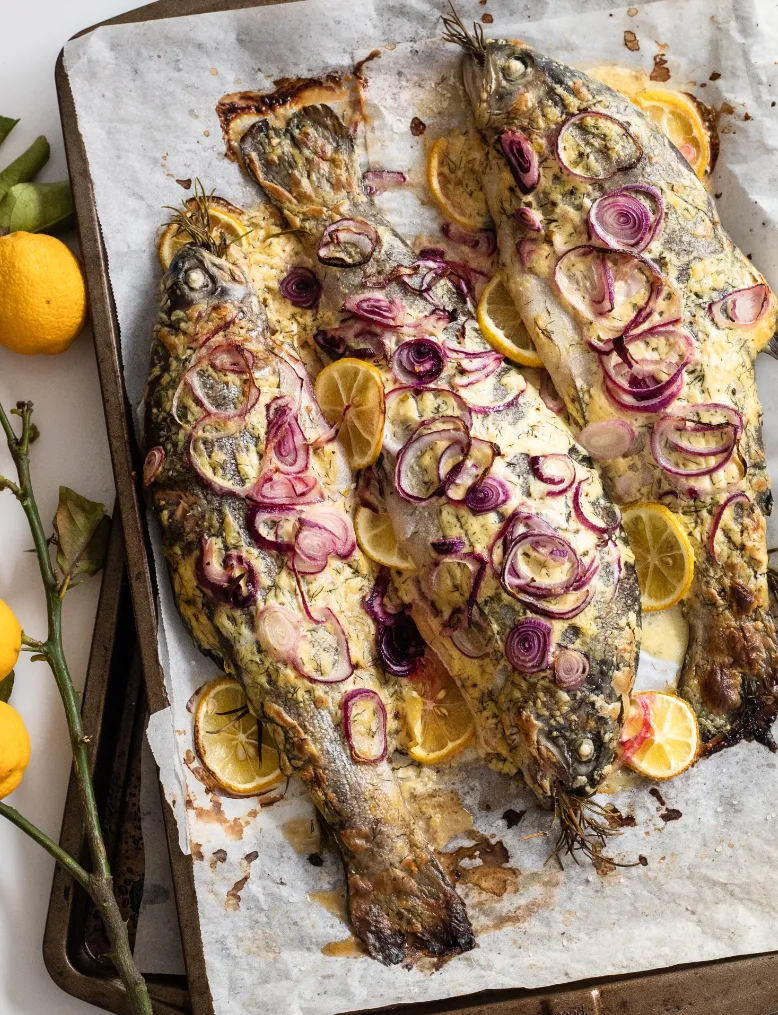
 Prep Time 15 minutes
  Cook Time 25 minutes
  Total Time 40 minutes
  Servings 3
Ingredients
- 3 trouts whole, cleaned and gutted
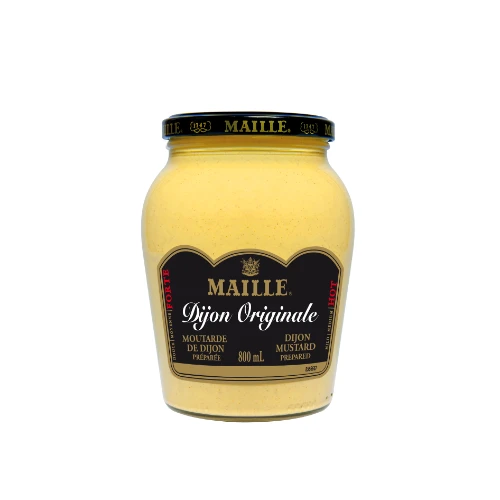
- 4 tbsp Dijon mustard
- 4 tbsp crème fraîche
- 2 lemons thinly sliced into rounds
- 2 red onions very thinly sliced into rings
- 1 bunch dill
- 45 gr unsalted butter softened
- 1½ tbsp olive oil
- salt and black pepper
Instructions
1. Prepare the fish
- Preheat the oven to 200°C / 180°C fan. Line a large baking tray with baking parchment or a baking mat, you'll need enough room for three fish side by side with a little space between them. Pat the trout dry inside and out with kitchen paper. Score each fish three times diagonally on one side with a sharp knife, cutting down to the bone. Season generously inside and out with salt and black pepper.
2. Make the mustard crust
- In a small bowl, mix the moutarde de Dijon and crème fraîche together until well combined. The crème fraîche loosens the mustard slightly and stops it burning during cooking while adding a quiet richness to the crust. Set aside.
3. Stuff the cavities
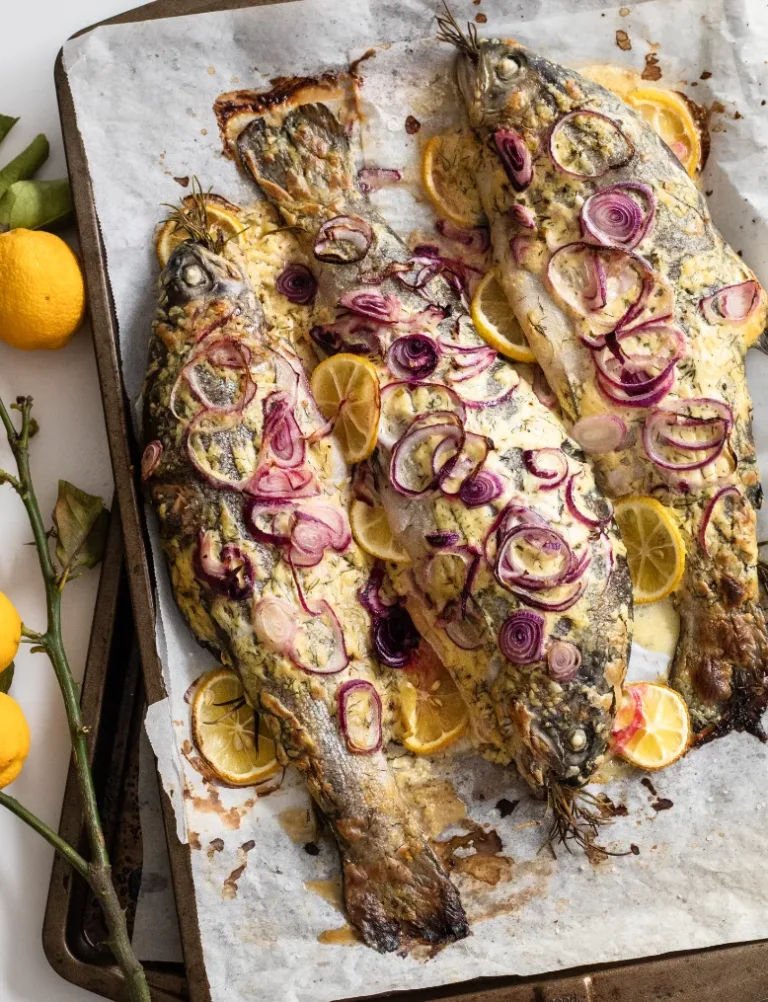
- Divide the butter equally between the three fish, pushing a knob into each cavity. Follow with a few lemon slices, a generous pinch of dill fronds, and a few rings of red onion in each. Don't overstuff, the cavity should close loosely over the filling.
4. Apply the crust and top
- Spread the mustard-crème fraîche mixture generously over the top of each fish, be liberal, this is the whole point of the dish. Arrange the remaining lemon slices and red onion rings over all three fish, pressing them lightly into the mustard coating so they stay in place during cooking. Tuck the remaining dill fronds around and between the fish. Drizzle everything with olive oil.
5. Bake
- Roast in the preheated oven for 20–25 minutes, until the mustard crust is golden and slightly crisped at the edges and the flesh flakes easily when pressed at the thickest point. No need to turn the fish or baste during cooking.
6. Serve
- Bring the tray straight to the table, the parchment makes for easy serving and relaxed presentation. Serve with steamed new potatoes or a simple green salad.
Notes
- The mustard-crème fraîche ratio is flexible. More mustard means a sharper, more pungent crust; more crème fraîche gives something softer and richer. Start with equal quantities and adjust to taste.
- The red onion softens considerably in the oven and loses most of its sharpness, becoming sweet and slightly jammy. If you want more bite, add a few raw rings on top after cooking.
- Moutarde de Dijon is non-negotiable here, it’s what makes this French rather than just baked fish with mustard. English mustard would be too sharp; wholegrain too textured. Dijon gives the right heat and flavour.
- Dill is slightly more Alsatian than broadly French, but it works beautifully with trout. You can swap it for flat-leaf parsley or tarragon if you want something more classically French across the board.
- Three fish on one tray cook at the same rate as two, but make sure they aren’t touching, crowding the tray traps steam and prevents the crust from crisping properly.
About this recipe
Baked trout with Dijon mustard is one of those French recipes that looks impressive, takes about thirty minutes, and asks very little of the cook. It is the kind of dish that appears on French family tables on a weekday evening without ceremony, and on dinner party tables with complete confidence.
Trout and mustard is a combination with deep roots in French cooking, and it makes sense when you think about where both come from. Trout is a freshwater fish farmed extensively across France, particularly in the mountain rivers of the Alps, the Pyrénées, and the Auvergne, where clear, cold water produces fish with delicate, sweet flesh. It has been on French tables since long before salmon became the default option. Truite meunière, with its beurre noisette and lemon, is one of the great classics of the French repertoire. This baked trout with Dijon mustard is its more relaxed, oven-baked cousin.
Why Dijon mustard works on baked trout
Moutarde de Dijon has been produced in Burgundy since at least the 13th century, though the style we know today, smooth, pale, and sharp, was standardised in the 19th century. Jean Naigeon is credited with replacing the traditional verjuice in the recipe with white wine in 1752, which gave Dijon mustard its characteristic clean sharpness. By the 19th century it had become a cornerstone of French cuisine, used in marinades, sauces, dressings, and as a coating for fish and meat before roasting.
Applied to trout before you bake trout in oven, it does two things simultaneously: it seals the fish slightly, keeping the flesh moist, and it caramelises into a golden, lightly crisped crust that tastes far more elaborate than it is. This is the best way to cook a trout if you want maximum flavour for minimum effort.

The crème fraîche
The crème fraîche in the coating is not an extravagance. It moderates the sharpness of the mustard and stops it burning on the surface of the fish, while adding a quiet richness that works with the delicate flesh. It follows the same principle as the classic French sauce à la moutarde served with pork and chicken: mustard tempered by cream, the two balancing each other into something more nuanced than either would produce alone.
The herb question
Dill is perhaps the most debated element in this bake trout recipe. It is less universally a French herb than parsley or tarragon, and in many countries reads as Scandinavian rather than French. But dill has a genuine presence in Alsatian cooking, the region that borders Germany and draws from both culinary traditions. Alsatian fish dishes regularly feature dill alongside the region’s excellent white wines. If you prefer a more unambiguously French approach, tarragon, with its clean anise flavour, is the most elegant substitute.
Red onion is similarly more cosmopolitan than classically French. A French cook would most naturally reach for shallots, which are sweeter and more delicate. But red onion softens beautifully in the oven, turning almost jammy against the mustard crust and giving the dish colour and character. This is French home cooking rather than strict professional technique. The important thing is the Dijon mustard. That part is not optional.
The right equipment for this recipe for cooking whole trout
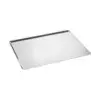
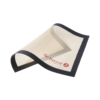
The best way to cook a trout in the oven is on a flat, heavy tray that conducts heat directly to the base of the fish from the moment it goes in. A good tray combined with a non-stick mat gives you even browning across the whole surface without the fish sticking or the mustard crust catching unevenly.
I use my De Buyer stainless steel baking tray with the De Buyer baking mat for this bake trout in oven recipe. The heavy steel tray gets properly hot in a preheated oven and starts cooking the fish from below immediately, which develops the crust on the underside. The baking mat prevents sticking without needing additional fat, and the slight insulation means the base does not overbrown before the top has had time to set. Together they give you a consistent result that this recipe for cooking whole trout deserves.
Share your feedback and spread the love!
If you try this recipe, I’d love to hear how it turns out! Leave a ★★★★★ rating and your thoughts in the comments, it helps fellow French foodies discover this recipe too. Snap a photo and tag me @obviously.french on Instagram if you’re sharing your bake or cooking online. Don’t forget to save this recipe to Pinterest so you’ll always have it handy for your next French-inspired meal!
Disclosure: Just so you know, this post contains sponsored content and/or affiliate links, If you make a purchase through these links, I may receive a small commission. Doesn’t cost you anything extra. I only link to things that are actually worth your time. All opinions are my own!