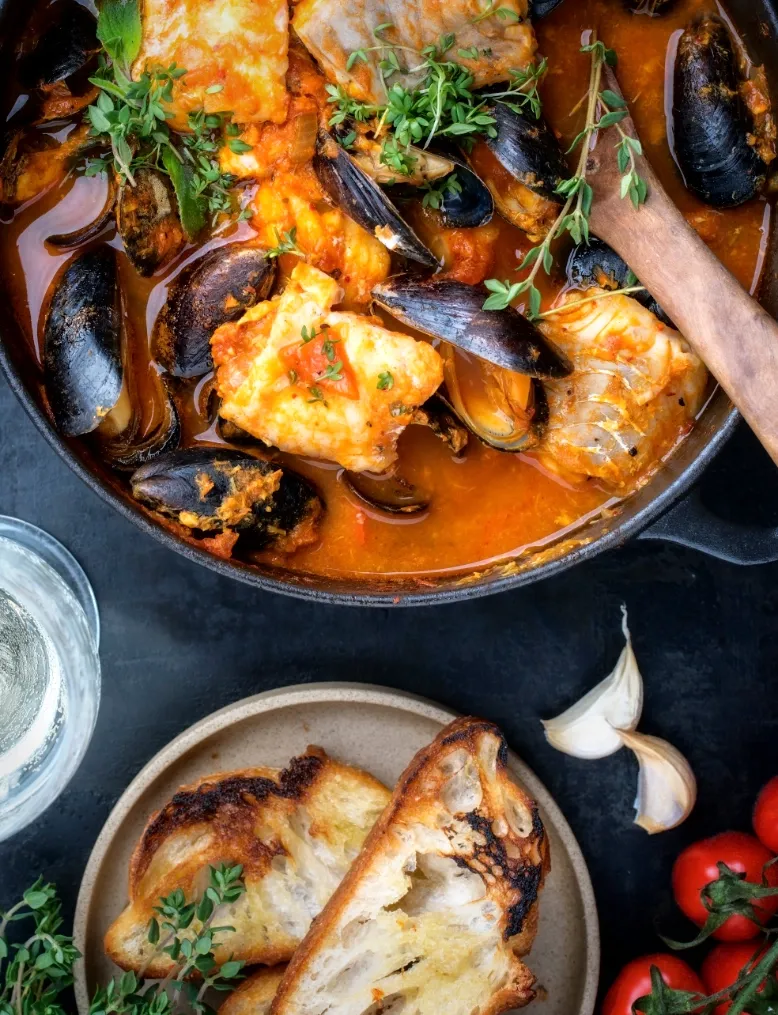
Bouillabaisse
 Prep Time 1 hour 15 minutes
  Cook Time 40 minutes
  Total Time 1 hour 55 minutes
  Servings 4
Ingredients
Fish and seafood
- 200 gr sea bass whole
- 150 gr monkfish
- 100 gr red snapper
- 1 dover sole whole
- 200 gr shrimps preferably with shells on
- 500 gr mussels
Soup base
- 1 onion
- 1 leek
- 1 fennel small
- 5 threads saffron
- 2 cloves garlic
- 5 tomatoes ripe
- 1 tbsp tomato puree
- 450 gr firm-fleshed potatoes
- 1 tbsp fennel seeds
- 3 bay leaf
- 1 l fish stock or prepare your own with whole fishheads
- 120 ml dry white wine
- 2 tbsp Pastis Ricard from Marseille
- salt to taste
Fish stock
- 500 gr fish bones, heads, and shells from the fish and shrimp
- 1 stick celery roughly chopped
- 1 onion quartered
- 2 cloves garlic
- 1 bay leaf
- 1 l water
- 5 peppercorns
Rouille sauce
- 2 egg yolks
- 3 cloves garlic
- 1 tbsp mustard Dijon
- 2 slices white bread crust removed
- 6 threads saffron
- 1 tsp ground paprika
- 1 tsp Piment d’Espelette or cayenne pepper
- 65 ml olive oil
- 65 ml rapeseed oil
- lemon juice
- salt
Equipment
Instructions
1. Prepare the fish and shrimps for stock and soup
- Start by carefully filleting the whole Dover sole and whole sea bass. Use a sharp knife to cut along the backbone and remove the fillets, setting these aside for the soup later. Keep the bones, heads and frames from both fish (all the parts left after filleting) as these are perfect for making a rich, flavourful fish stock. Peel your shrimps and put the shells aside.
2. Make the fish stock
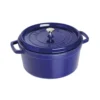
- Rinse the fish bones, heads, frames, and shrimp shells thoroughly under cold water to remove any blood or impurities that can otherwise make the stock cloudy or bitter. Place these cleaned parts in a dutch oven. Add roughly chopped carrot, celery, quartered onion, garlic cloves, bay leaf, peppercorns, parsley stalks, and 1 litre of water.Bring to a gentle simmer over medium heat. Avoid boiling rapidly, which can cloud the stock; a gentle simmer will extract flavours clearly. Let it cook uncovered for 20 to 30 minutes. This process draws out all the savoury juices and creates the flavorful base for your bouillabaisse.
3. Strain and blend vegetables
- Strain the stock through a fine mesh sieve or cheesecloth to remove all bones, shells, and solids. Reserve the cooked vegetables separately from the clear stock.Using a blender or food processor, blend the cooked vegetables with a small amount of the strained stock until smooth. Return this vegetable purée to the clear stock and stir well to create a rich, textured broth that remains clear but carries body and flavour from the vegetables.Keep this combined fish stock and vegetable purée warm and set aside.
4. Prepare the remaining vegetables
- Slice the onion, fennel, and leek. Dice the tomatoes and potatoes into nice chunks.
5. Begin the soup base
- Gently heat olive oil in a large pot over medium heat. Add the sliced onion, fennel, and leek, sautéing until the onion turns translucent and fragrant.
6. Add spices and tomatoes
- Sprinkle in the fennel seeds and saffron threads, followed by the minced garlic, tomatoes and tomato puree. Stir well and cook for a few minutes to allow the flavors to meld beautifully.
7. Deglaze and add stock
- Deglaze the pot with pastis and white wine, allowing the alcohol to reduce slightly. Then pour in the fish stock.
8. Cook potatoes and herbs
- Add the chopped potatoes and bay leaves into the pot, simmering gently over medium heat for about 20 minutes, or until the potatoes soften but hold shape.
9. Add seafood and cook
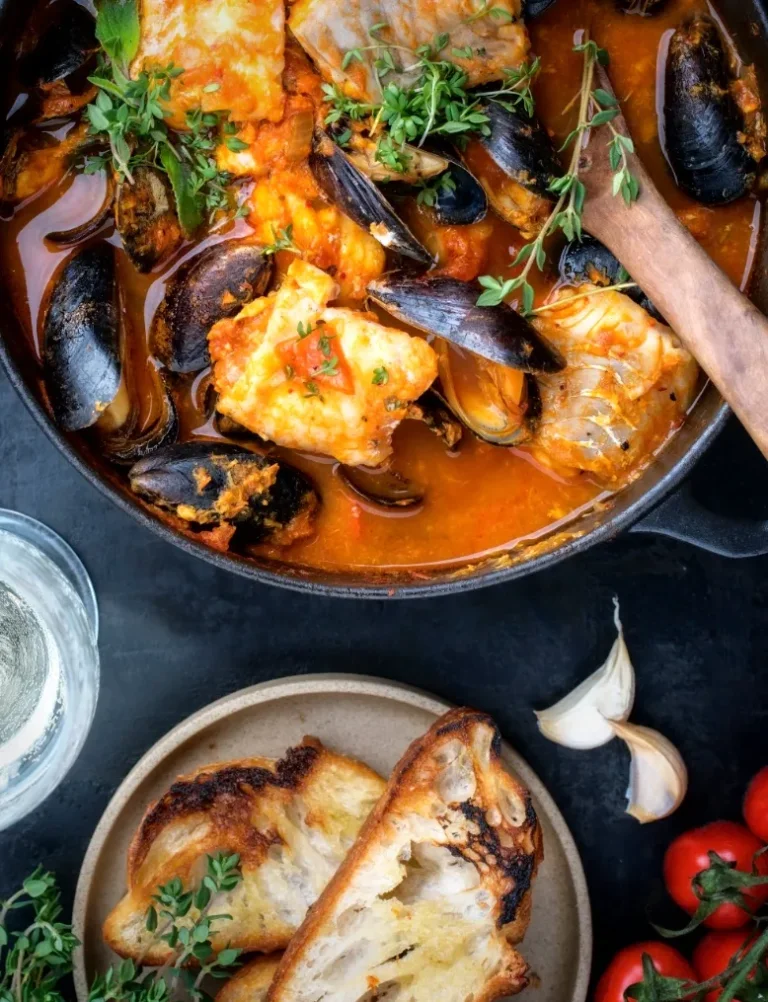
- Cut the reserved sea bass and Dover sole fillets into large chunks. Add these along with cleaned mussels and shrimps to the simmering broth. Cover and cook for 5 to 7 minutes until fish is opaque, shrimp is pink, and mussels have opened. Discard any unopened mussels.
10. Prepare the rouille sauce
- Infuse saffron threads in lemon juice. Blend egg yolks, garlic, Dijon mustard, soaked bread, saffron mix, salt, paprika, and piment d’Espelette using a whisk in a bowl. Slowly drizzle in olive oil and rapeseed oil while blending to form a creamy, emulsified sauce (similar to a mayonnaise). Adjust seasoning and chill briefly.
11. Serve
- Remove the bay leaves. Ladle bouillabaisse into warm bowls and serve with crusty bread spread with rouille. Traditionally, rouille-topped croutons are floated on the soup or dipped into it for an extra flavour boost!
Notes
- Authentically, bouillabaisse is made with Mediterranean fish native to the southern coast of France. Typical varieties include Bar (European sea bass), Saint-Pierre (John Dory), Rouget grondin (red gurnard), Lotte (monkfish), and Rascasse (scorpion fish), along with red mullet. For the fish stock, a mix of rock fish like scorpion fish and other firm white fish bones is traditionally used to create a rich, aromatic base.
About this recipe
Bouillabaisse is Marseille’s most famous dish and one of the great fish soups of the world. It started as fishermen’s food, made from the unsellable catch at the end of the day: bony rockfish, shellfish, whatever was left at the bottom of the boat. Over centuries it became something considerably more celebrated than its origins suggest, without ever entirely leaving them behind.
Where bouillabaisse comes from
The bouillabaisse dish traces its origins back over 2,600 years to the Greek settlers who founded Marseille, then called Massalia. They made a simple fish broth called kakavia from unsold fish and shellfish, the same practical logic that drives every peasant dish in history: use what you have, waste nothing, feed people well.
The name itself comes from the Provençal words bolhir, to boil, and abaissar, to reduce heat. This describes the cooking method precisely. The broth comes to a rolling boil first, then drops to a gentle simmer. That sequence is not incidental. The high initial heat emulsifies the olive oil into the broth, giving the french fish soup its characteristic body and richness. Skipping that boiling stage produces a thinner, less cohesive result.
The saffron
Saffron is what makes bouillabaisse food instantly recognisable. The golden colour, the particular warmth of the aroma, the slight bitterness that balances the richness of the fish and the olive oil. Saffron was introduced to the region by the Romans and cultivated near Marseille from the 16th century onwards. It became so associated with Provençal cooking that a bouillabaisse seafood dish made without it is considered a different recipe entirely.
Use good saffron and use enough of it. Saffron added in insufficient quantities gives you a pale, faintly flavoured broth rather than the deep golden colour and aromatic depth the dish requires. Steep the threads in a small amount of warm water before adding them to the broth. This releases the flavour more effectively than adding them dry.
The fish
The bouillabaisse dish is defined by its fish as much as its broth. Traditionally, Marseille fishermen used bony rockfish varieties specific to the Mediterranean: rascasse, grondin, saint-pierre, vive, and congre among others. These fish have intense flavour but are difficult to eat directly because of the bones, which is why bouillabaisse is traditionally served in two courses: the broth first, then the fish.
Outside the Mediterranean, exact replication is impossible. The spirit of the dish is more achievable: use the firmest, most flavourful fish available locally, prioritise variety over uniformity, and include shellfish for additional depth. A bouillabaisse seafood version made with good local fish and proper technique will taste extraordinary even without the specific Marseille varieties.
The rouille
No bouillabaisse food is complete without rouille, the saffron and garlic mayonnaise that goes on the croutons floating in the broth. Rouille is not optional and it is not a garnish. It is part of the dish. The richness of the aioli-style sauce against the sharp, saffron broth is one of the great flavour combinations in French cooking, and eating the croutons as they soften in the soup is how you consume the final portion of the broth.
Make the rouille before the soup. It needs time to develop and is better made ahead.
The right pot
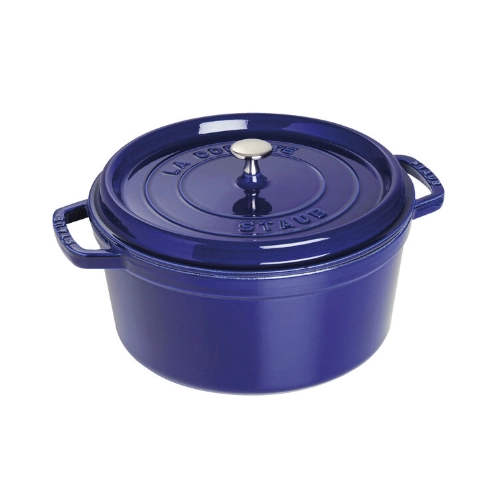
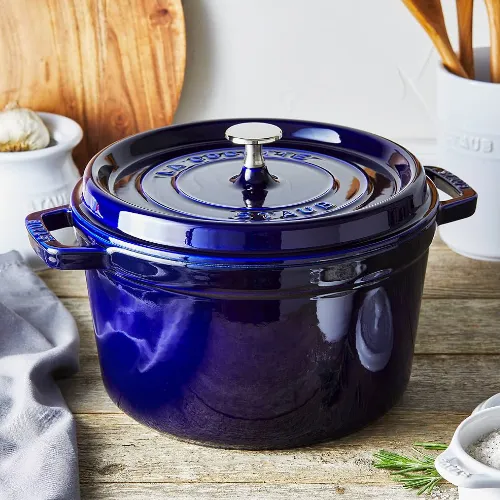
A bouillabaisse needs a pot wide enough to hold all the fish without crowding, deep enough to contain the broth as it comes to the boil, and heavy enough to maintain the even, steady heat the dish requires through the full cooking process. I use my Staub cocotte for this. The cast iron holds an even temperature throughout, which matters particularly during the initial high-heat stage when the oil and broth need to emulsify properly. The wide base gives the fish room to cook without sitting on top of each other, and the Staub goes straight from hob to table for serving, which for a dish this generous and communal is the only right approach.
The charter
Marseille takes bouillabaisse seriously enough to have a culinary charter, established in 1980 by a group of the city’s restaurants, that defines exactly which fish must be included and how the dish must be prepared and served to qualify as an authentic bouillabaisse dish. The charter is not legally binding but it is culturally significant: it represents the city’s insistence that this particular french fish soup belongs to a specific place and a specific tradition, and that shortcuts and substitutions have consequences for the integrity of the name.
Share your feedback and spread the love!
If you try this recipe, I’d love to hear how it turns out! Leave a ★★★★★ rating and your thoughts in the comments, it helps fellow French foodies discover this recipe too. Snap a photo and tag me @obviously.french on Instagram if you’re sharing your bake or cooking online. Don’t forget to save this recipe to Pinterest so you’ll always have it handy for your next French-inspired meal!
Disclosure: Just so you know, this post contains sponsored content and/or affiliate links, If you make a purchase through these links, I may receive a small commission. Doesn’t cost you anything extra. I only link to things that are actually worth your time. All opinions are my own!