Cheese Fondue Savoyarde
 Prep Time 15 minutes
  Cook Time 15 minutes
  Total Time 30 minutes
  Servings 4
Ingredients
- 300 gr Beaufort cheese grated
- 300 gr Comté cheese grated
- 300 gr Emmental cheese
- 1 clove garlic
- 750 ml dry white wine
- 1 ½ tsp cornflour
- 30 ml Kirsch cherry brandy, optional for digestion
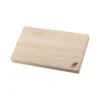
Equipment
Instructions
1. Prepare the pot
- Rub the inside of the fondue pot with the cut sides of a garlic clove. This gently flavours the pot without overpowering the taste of the fondue.
2. Heat the wine
- Pour half the bottle of dry white Savoie wine into the pot and heat over medium heat. Bring it almost to a boil but do not let it boil over.
3. Mix cornflour and Kirsch
- In a small bowl, combine 1 ½ teaspoons of cornflour with about 30ml of Kirsch until smooth. This will help stabilize the cheese mixture.
4. Melt the cheeses
- Gradually add the grated cheeses (Beaufort, Comté, and Emmental) to the hot wine, stirring constantly in a figure-eight motion. Add a handful at a time and stir until fully melted before adding more.
5. Thicken the fondue
- Once all the cheese is melted and smooth, stir in the cornflour and Kirsch mixture gently until the fondue thickens and develops a glossy texture.
6. Season
- Add a pinch of freshly ground black pepper and optionally a light dusting of nutmeg. Avoid adding salt as the cheese and Kirsch provide enough seasoning.
7. Serve and enjoy
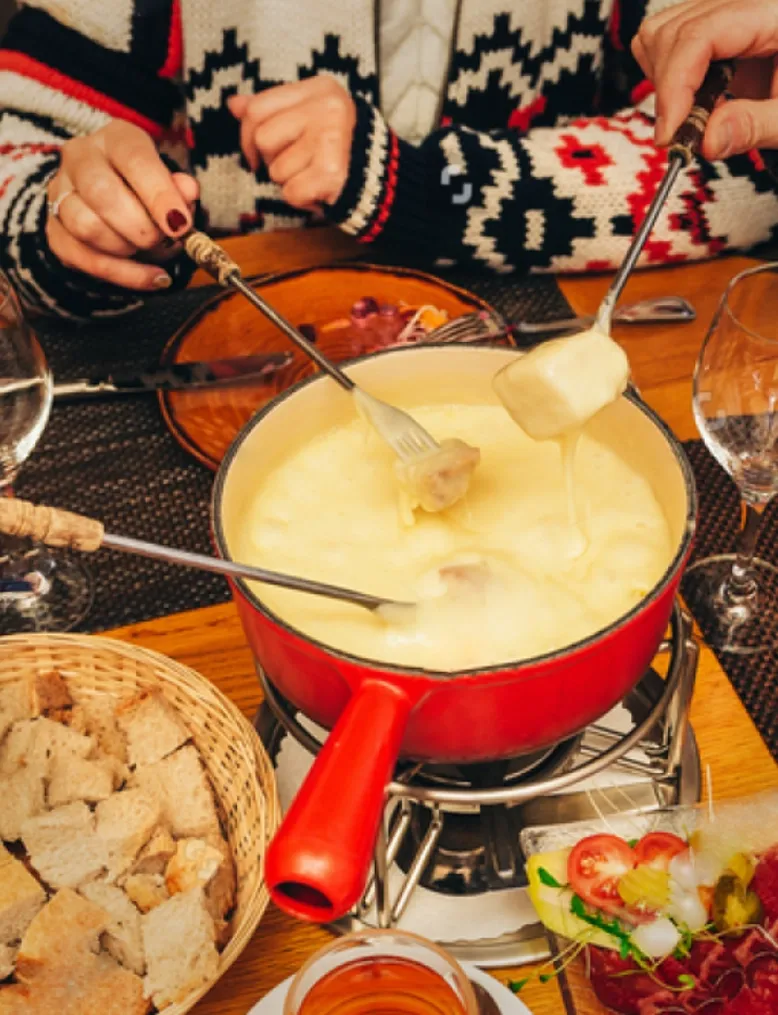
- Place the fondue pot over the fondue burner to keep warm. Serve straight away with bite-sized chunks of crusty baguette, inviting everyone to dip and swirl their bread through the luscious, melted cheese!
Notes
- The triple cheese blend of Beaufort, Comté, and Emmental is key for authentic Savoyarde fondue, balancing nuttiness, creaminess, and melting texture.
- Using the same dry white Savoie wine for cooking and drinking with the meal enhances harmony. Apremont is a classic choice.
- Stirring in figure eights is said to improve creaminess, though feel free to stir in whatever way feels right, just keep it gentle to avoid curdling.
- Kirsch is traditional but optional; it adds a touch of aromatic depth and helps with digestion.
About this recipe
Cheese fondue Savoyarde is the straightforward, hearty classic from the French Alps that has been keeping people warm for generations. Its story starts in Switzerland in the late 1600s, where melted cheese and bread first came together as a practical winter meal. But the cheese fondue dish we know today really took shape in Savoie and Haute-Savoie after the Second World War. It is the food of mountain survival: simple, practical, and making the most of local cheeses and day-old bread through long, harsh winters.
The best cheese for fondue
The best cheese for fondue Savoyarde is not a single cheese but a combination of three. Beaufort is the backbone: robust, creamy, and deeply savoury with the characteristic flavour of Alpine milk. Comté adds a fruity edge and a slight sharpness that lifts the blend. Emmental smooths everything out with a gentle, sweet nuttiness and contributes to the characteristic stretchiness of the finished fondue.
Each cheese melts differently and contributes something different to the texture. Beaufort melts richly but can be dense alone. Comté adds flavour but can grain if overheated. Emmental keeps everything smooth and cohesive. Together they produce a fondue that is silky, flavourful, and holds its consistency over the time it takes to eat it, which is the practical test a cheese fondue dish needs to pass.
The cheese melts into dry white wine, ideally from Alsace or Savoie, with a splash of Kirsch for a clean, slightly sharp finish. The wine is not optional. The acidity keeps the proteins in the cheese from clumping and maintains the smooth emulsion throughout the meal.
The fondue ritual
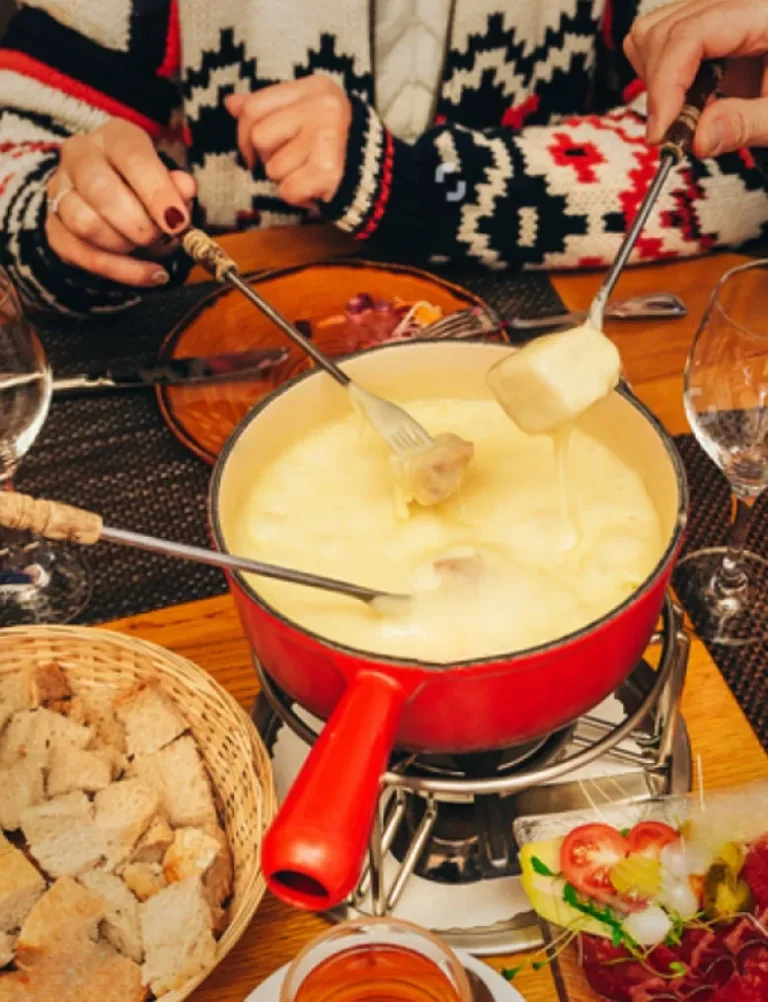
The real star of a fondue dinner is the “caquelon”, the fondue melting pot that sits at the table over a small burner throughout the meal. This is where the gathering happens. Forks loaded with chunks of crusty baguette, dipped into the bubbling cheese, conversations that go on longer than planned. The pot at the centre of the table draws everyone together in a way that plated individual dishes simply cannot.
The traditional rule: lose your bread in the pot and you owe a drink. Whether you enforce this depends on the company.
On the side, tart cornichons and pickled onions provide the acidity that cuts through the richness of the cheese fondue. A fresh green salad alongside does the same. The same dry white wine that goes into the fondue is the right thing to drink with it.
The right fondue pot
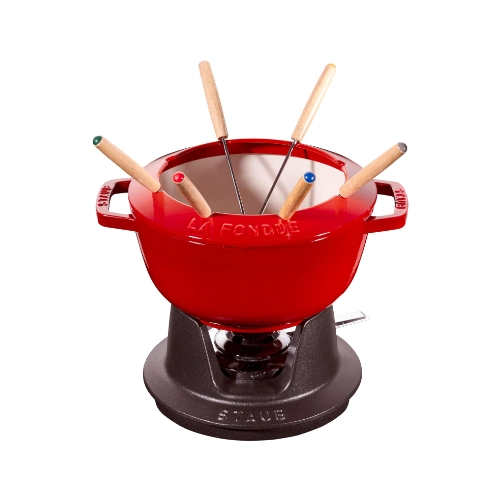
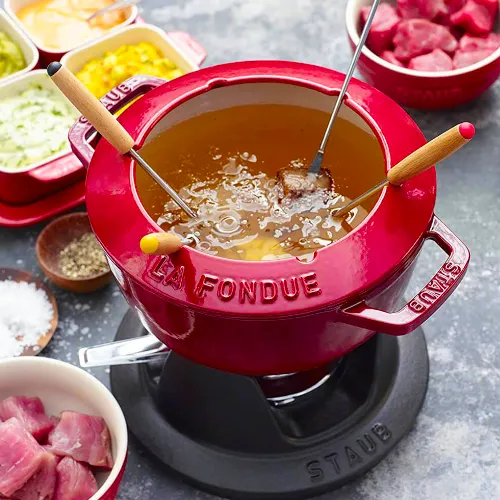
The fondue melting pot matters more than most people realise. A pot that conducts heat unevenly will cause the cheese to scorch on one side whilst staying cool on the other, and once the cheese catches on the bottom it affects the flavour of everything above it. You need something that holds a steady, even temperature throughout the meal, not just at the start.
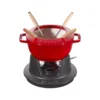
I recommend the Staub fondue pot for this. The cast iron distributes heat evenly across the entire base, which means the cheese fondue dish stays at a consistent temperature without hot spots. The enamel interior means no metallic taste in the fondue, which matters when the wine and cheese are delicate enough to pick it up. The Staub is heavy enough to stay stable on the burner as people dip and stir, and it looks exactly right at the centre of a table laid for a winter dinner.
Why fondue is worth making at home
A cheese fondue dinner at home requires almost no cooking skill. You grate the cheese, warm the wine, melt everything together with the Kirsch, and then maintain a gentle heat. The preparation takes twenty minutes. The eating takes as long as you want it to.
What makes fondue worth doing at home is exactly what makes it worth doing anywhere: it is genuinely communal in a way that most meals are not. Everyone is doing the same thing at the same pace, gathered around the same pot, contributing to the same meal. That is the Alpine tradition that has made cheese fondue one of the great winter dishes for centuries, and it works just as well around your own table.
Share your feedback and spread the love!
If you try this recipe, I’d love to hear how it turns out! Leave a ★★★★★ rating and your thoughts in the comments, it helps fellow French foodies discover this recipe too. Snap a photo and tag me @obviously.french on Instagram if you’re sharing your bake or cooking online. Don’t forget to save this recipe to Pinterest so you’ll always have it handy for your next French-inspired meal!
Disclosure: Just so you know, this post contains sponsored content and/or affiliate links, If you make a purchase through these links, I may receive a small commission. Doesn’t cost you anything extra. I only link to things that are actually worth your time. All opinions are my own!