If you’ve ever sat down to a restaurant meal where different dishes arrived one at a time, each one perfectly plated and timed, you have Auguste Escoffier to thank for that. If you’ve ever spread a little pâté onto a slim, crisp piece of Melba toast, that’s him too. And if you’ve ever ordered a Peach Melba, you already know Escoffier, whether you realise it or not.
You can’t really talk about French food without mentioning this man. Yet most people outside of cooking circles couldn’t tell you much more than his name. That feels like a shame to me, and I do apologise if this article is a tad long, but the story of Auguste Escoffier is just incredible. He was just a poor boy from a village near Nice who ended up being called the “emperor of chefs” by an actual emperor, who cooked for kings and opera singers and the Prince of Wales, and who single-handedly dragged French restaurant kitchens out of the chaos and into the modern age.
Here’s everything you need to know about chef Auguste Escoffier, where he came from, what he built, the legendary dishes he created, and why, more than 120 years after he wrote his masterwork, professional chefs are still learning from him.
A small boy from a village near Nice
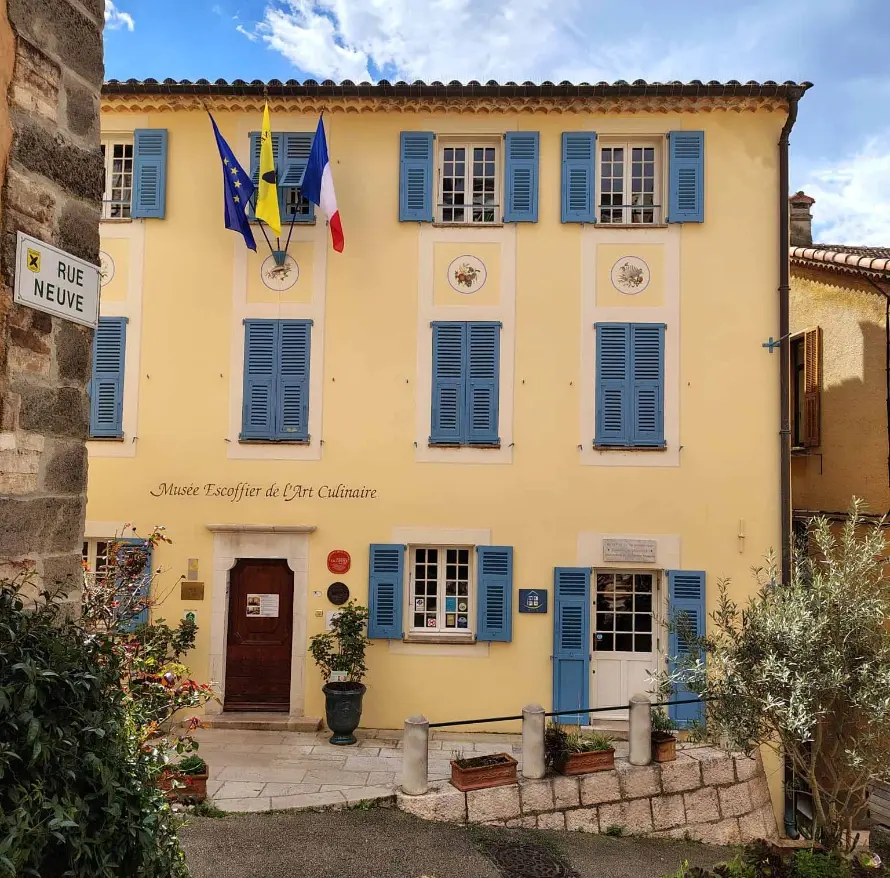
Georges Auguste Escoffier was born on 28 October 1846 in the village of Villeneuve-Loubet, in what is now the Alpes-Maritimes, not far from the place I’ve lived as a kid in Nice. If you’ve ever driven along the Côte d’Azur between Antibes and Nice, you’ve probably passed close by without knowing it. It’s a beautiful part of the world, and it’s very much still Escoffier country, his birthplace is now a culinary museum, which we’ll come back to.
His grandmother, an enthusiastic cook, was the one responsible for making little Escoffier enthousiast for the delights of cooking. Auguste himself had his heart set on art, he wanted to be a sculptor. You can imagine him as a child, hands in clay, dreaming of something quite different from the path he actually walked. Despite the early promise he showed as an artist, his father took him out of school at the age of twelve to start an apprenticeship in the kitchen of his uncle’s restaurant, Le Restaurant Français, in Nice.
It wasn’t exactly a warm welcome into the profession. As an apprentice, Auguste was bullied and swatted by his uncle, and his small stature made him even more of a target, he was even too short to safely open oven doors. Escoffier was said to have taken to wearing platform shoes in order to better work the restaurant’s stoves. This tiny, quietly determined young man, standing on his platform shoes, is to me a young man of character and his determination inspires me.
Paris, war, and the making of a chef
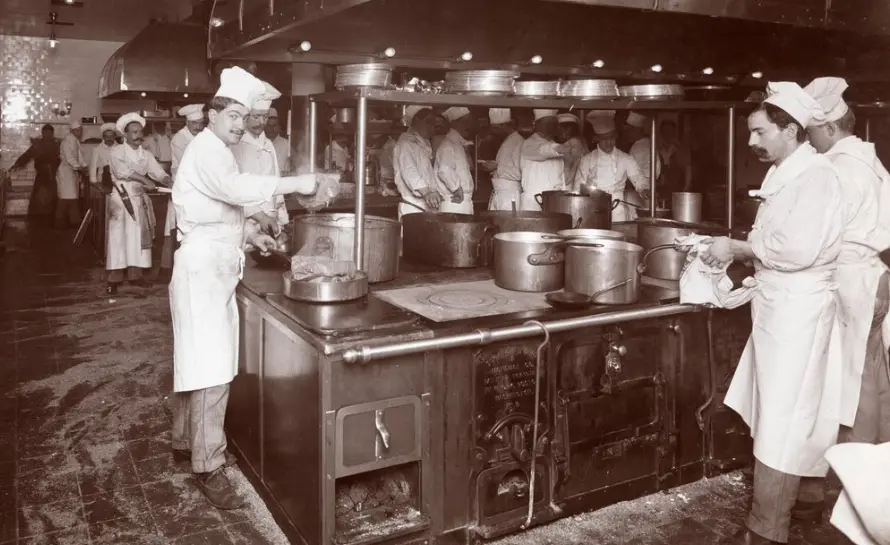
By the time he was nineteen, word of his talent had reached a Monsieur Bardoux, a restaurant owner visiting Nice, who invited Escoffier to come and work for him in Paris. The restaurant was on Avenue d’Antin, and it would later become famous under the name Le Petit Moulin Rouge, one of the finest restaurants in Paris. Escoffier accepted and headed north, and by 1870 he had risen to become the restaurant’s chief saucier.
But then in 1870, everything was interrupted by the Franco-Prussian war in 1870. Escoffier was called up and appointed chef de cuisine for the Army of the Rhine, headquartered in Metz. When Metz fell to the Germans in October 1870, Escoffier was among the 140,000 French soldiers taken captive. He spent six months as a prisoner of war in Wiesbaden, during which time he cooked for the captured Marshal Mac-Mahon and his staff. He returned to civilian life in 1872.
As you can imagine, the war left a permanent mark on his cooking. With fresh ingredients scarce and supply chains unreliable, Escoffier realised the importance of canning and preserving food. He developed techniques for canning meats, vegetables and sauces, and conceived a method for preserving tomato sauce in champagne bottles! Only a Frenchman would think to use champagne bottles for tomato sauce, and I say that as a sincere compliment.
The army gave Escoffier an interest in preservation, but even more importantly, it showed him how groups could be organised and coordinated towards achieving a common goal. He filed that observation away in his mind in that moment, but this idea would define the rest of his career.


Back to Paris, and a move towards greatness
When the war was finally over, Auguste Escoffier returned to Le Petit Moulin Rouge and served now as its head chef from 1873 to 1878. He cooked regularly for the extraordinary clientele with the likes of Sarah Bernhardt, the sculptor Gustave Doré, and members of the French aristocracy. These were the years in which his reputation was really built.
In 1876, he bought a fine food shop in Cannes called “Le Faisan Doré”, and expanded it into a restaurant open for the winter season. Cannes had become a fashionable resort popular with wealthy English visitors, and Escoffier was exactly the right person for that audience. He divided his time between Paris and Cannes for two years before -in the end- leaving Le Petit Moulin Rouge for good in 1878.
That same year, on 28 August 1878, he married Delphine Daffis, the daughter of a Parisian publisher. The story of how he won her hand is very peculiar. He apparently won it in a game of billiards against her father! One of the greatest chefs of all time, winning his wife at billiards. I don’t know what to say about this, do you? However it started, they went on to have three children, Paul, Daniel and Germaine, and they were together for nearly 57 years.
The partnership that changed fine dining: Escoffier and César Ritz
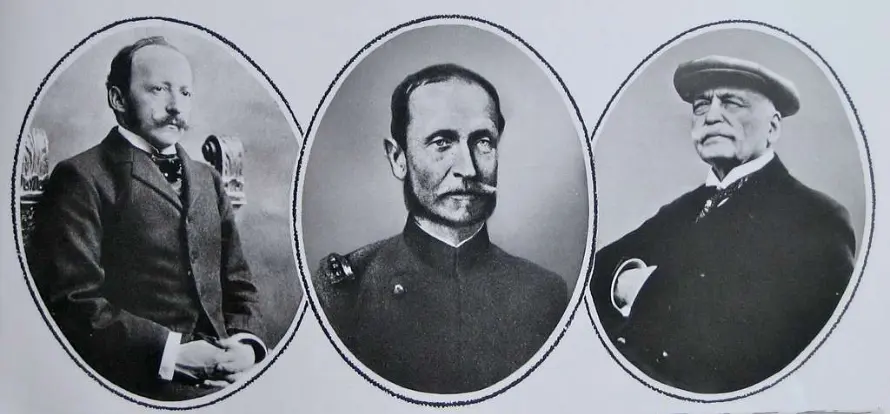
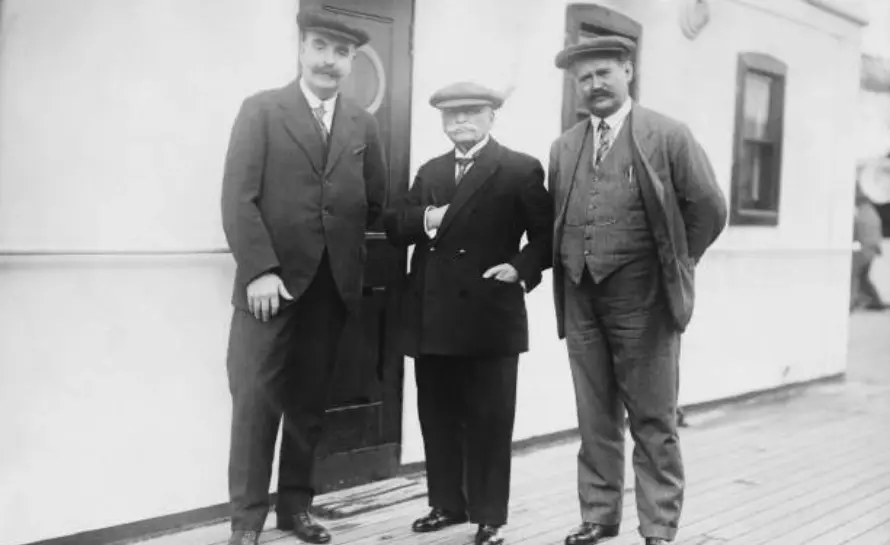
The real turning point in Escoffier’s story came in 1884, when he was hired by César Ritz to run the kitchens at the newly opened Grand Hotel in Monte Carlo. Yes, that Ritz. César was the genius of hospitality, charming, visionary, obsessed with luxury and the theatre of a great hotel and chef Auguste Escoffier was the genius of the kitchen. Obviously together, they were unstoppable.
They spent winters at the Grand Hotel in Monte Carlo and summers at the Grand National Hotel in Lucerne, and wherever they went, the best people followed. Then, in 1890, came the invitation that changed everything. Richard D’Oyly Carte, the opera producer who had built the Savoy Hotel in London, asked Ritz and Escoffier to come and make something of it. They said yes.
The Savoy was unlike anything London had seen. Ritz understood that restaurants needed to be social destinations, not just places to eat, and he set about making the Savoy the most fashionable address in the city. He pushed to have liquor licensing regulations changed so that drinks could be served late into the evening after the theatre. He also enlisted celebrities to be seen there. And Escoffier’s cooking was the engine that made it all work.
At the Savoy, they mingled with greatness like opera divas Nellie Melba, and composers like Sir Arthur Sullivan. Sunday night dinners after the theatre, with London society dressed to the nines, became the event of the week. What Escoffier and Ritz created at the Savoy helped establish the very idea of going out to dinner as an occasion worth dressing up for. Before them, that culture simply didn’t exist in the way we know it now. And it matters, because it helped make restaurants places where women could dine publicly for the first time in England, which is something Escoffier was proud of.
The brigade system: order out of chaos
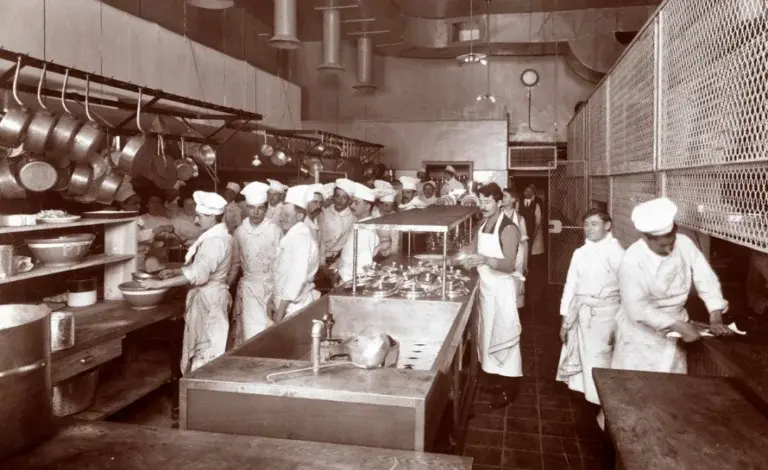
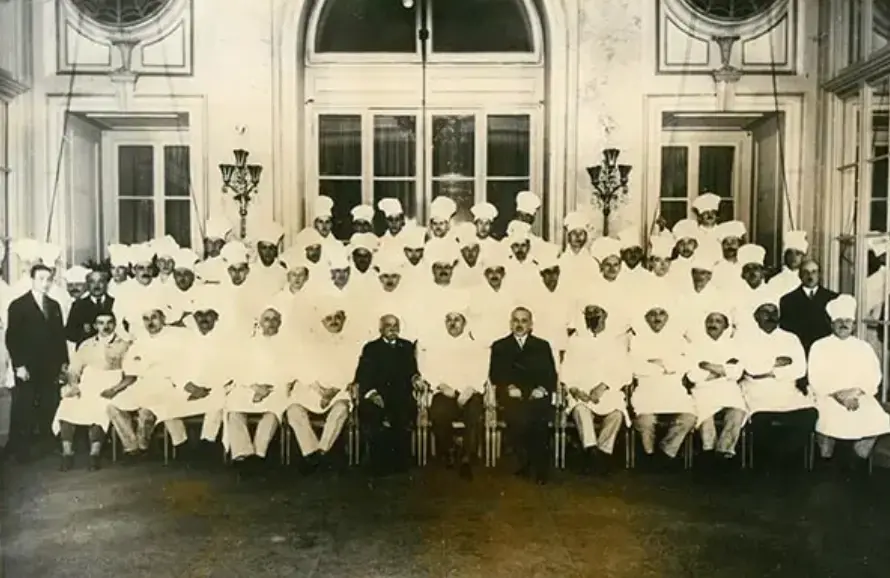
Before Escoffier, professional kitchens were, to put it bluntly, a mess. Drinking on the job was commonplace, shouting was constant, and there was no clear structure for who was responsible for what. Sounds like a nightmare to me. But thankfully, our Escoffier chef changed all of that.
He banned drinking and smoking in his kitchens entirely. Can you imagine that? This was a time when everybody did both everywhere and there was no ban anywhere. He also insisted on clean uniforms and rigorous hygiene. He even worked with a French doctor to develop a healthy barley drink for kitchen staff to cope with the relentless heat, because he wanted to give them a real alternative to the alcohol. It was probably something like a “tisane d’orge”, a barley water, which was a common medicinal and restorative drink at the time, served cool to rehydrate.
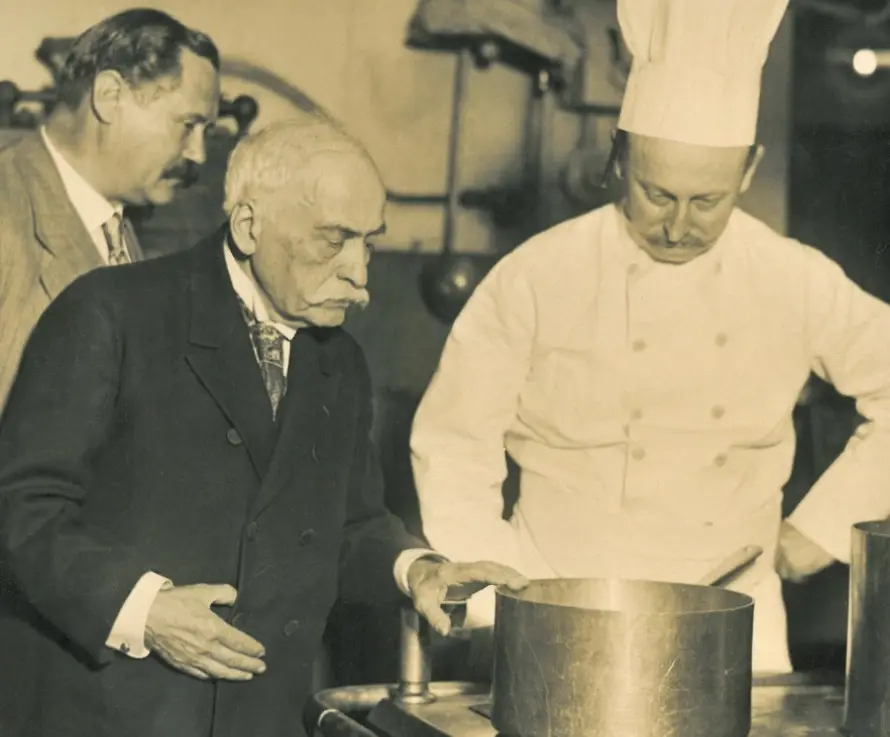
But his most lasting structural contribution was what we now call the “brigade de cuisine”. Drawing directly on what he had observed during his military service, Escoffier organised his kitchen into a clear hierarchy. A chef de cuisine at the top, then sous-chefs, then chefs de partie each responsible for a specific station, sauces, fish, meat, pastry, vegetables. Everyone knew their role. Everyone knew who they answered to. The kitchen became calm, efficient and precise.
Every professional kitchen in the world still runs on this system today. When you watch any cooking show and someone shouts “oui, chef!”, that is Escoffier’s structure you’re hearing.
Le Guide Culinaire: The Escoffier cookbook
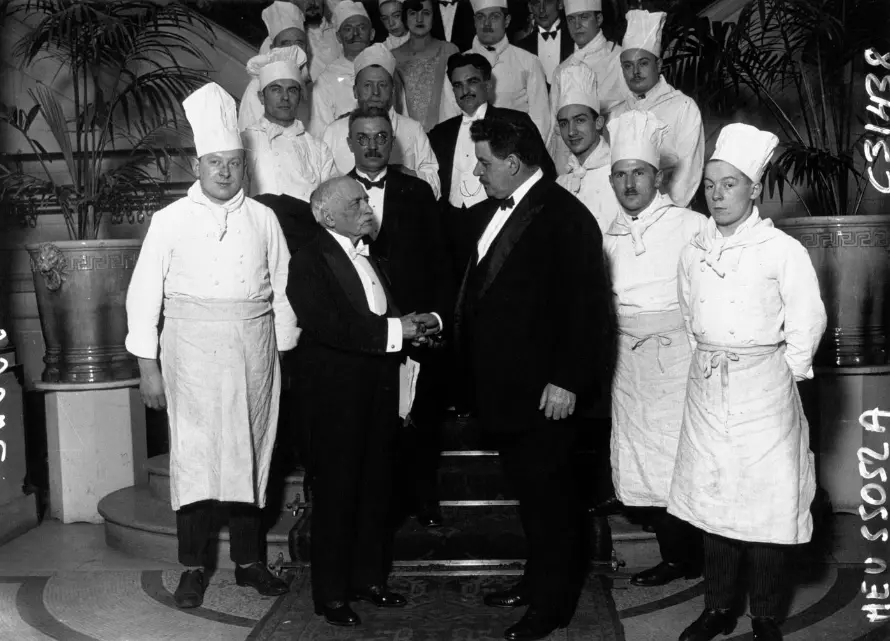
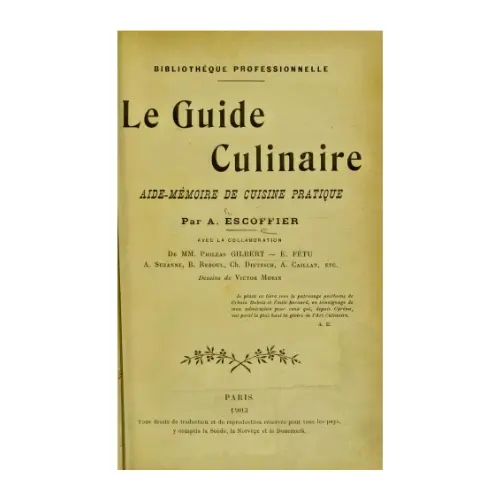
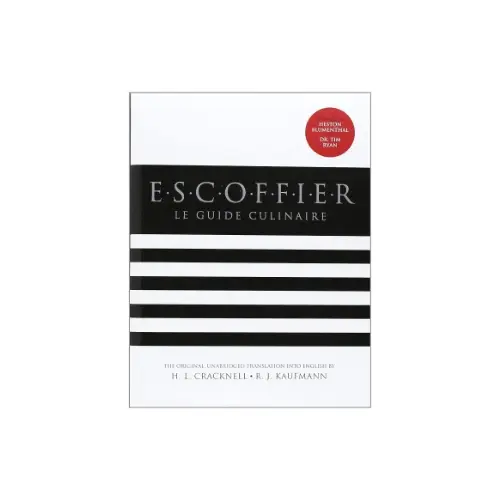
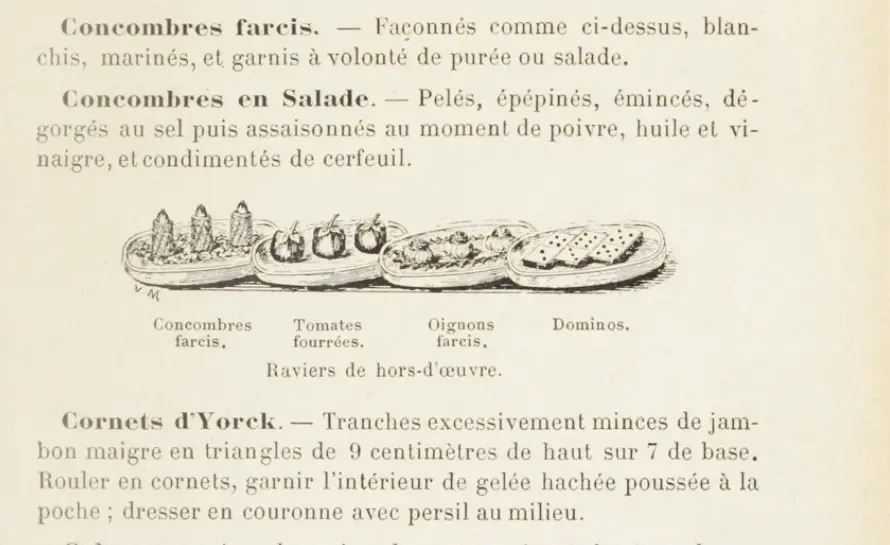
In 1903, Escoffier published a book that would cement his legacy forever. Le Guide Culinaire, co-written with Philéas Gilbert and Émile Fetu, contained more than 5,000 recipes. It is still used as both a cookbook and a textbook in culinary schools around the world. You can find the complete English translation here, and if you love French food and its history, it really is worth having.
What makes it extraordinary is that it also codified something that had never been written down so clearly before: the five French mother sauces. Béchamel, velouté, espagnole, sauce tomate, and hollandaise. These are the foundations of classical French cooking, and every other sauce in the French repertoire is essentially a variation on one of these five. Before Escoffier, the sauces existed in practice, but he is the one who put them on the page, organised them, and made them the foundation of culinary education for generations to come.
The five French mother sauces
If you’d like to try making all five at home, I’ve written up all the recipes for you. Subscribe to my newsletter and I’ll send them straight to your inbox!
The famous dishes: opera, stardom, and a lot of peaches
One of the things that made Auguste Escoffier such a brilliant marketer on top of being a world known chef, was his habit of naming dishes after the famous people who came to his restaurants. It was flattering to the guest, irresistible to other diners who wanted a taste of that glamour, and it ensured that the names of his creations would be remembered forever. Which reminds me I need to create an “Ilana’s Delight” recipe to satisfy my own ego.
Pêche Melba
In 1893, at the Savoy, Escoffier created what would become his most famous dish in honour of the Australian opera singer Nellie Melba. She had given him tickets to Wagner’s Lohengrin, which features a boat shaped like a swan, and the following evening he created a dessert for her: peaches over vanilla ice cream, topped with spun sugar, set inside an ice sculpture in the shape of a swan. Six years later, for the gala opening of the Carlton Hotel in 1899, he returned to the idea, removed the ice sculpture and added a purée of raspberries. Pêche Melba as we know it was born. Fancy giving it a go and honoring the opera singer? I’ve written the Peach Melba recipe for you right here, it’s absolutely delicious!
Melba toast
I’m guessing he really liked miss Melba, because when she fell ill during a stay at the Savoy in 1897, he named a new dish after her. Hewanted to make her something light to eat, so he lightly toasted a slice of bread, split it horizontally while still warm into two thin slices, then toasted the untoasted sides. The result is that impossibly thin, shatteringly crisp toast still appearing on restaurant tables today. Both dishes named after her are still going strong more than 125 years later.
Tournedos Rossini
The Tournedos Rossini is found on so many menu’s all around France today. It is named after the Italian opera composer Gioachino Rossini who was a legendary gourmand. The dish is a filet mignon topped with foie gras and truffle and finished with a rich Madeira-based sauce. Whether Escoffier actually invented it or simply made it famous is still debated, but in Le Guide Culinaire he included so many recipes named after Rossini that you could build an entire menu around them. The man clearly liked his music.
Other creations
Escoffier was very imaginative. Among his other famous dishes were the “Bombe Néro”, after the Roman Emperor Nero, which was a flaming ice cream, “Fraises à la Sarah Bernhardt“, strawberries with pineapple and Curaçao sorbet, “Baisers de Vierge”, meringue with vanilla cream and crystallised white rose and violet petals; and “Suprêmes de volaille Jeannette”, a cold jellied chicken breast with foie gras. The Jeanette not being a person but a ship who was trapped in the Arctic ice. The Jeannette expedition of 1879 to 1881 was a massive international news story, widely covered in France at the time, so Escoffier’s contemporaries would have understood the reference immediately.
And then there is the wonderful story of “Cuisses de Nymphs à l’Aurore”, which translates literately to “Thighs of the Nymphs at Dawn”. This was his poetic name for…frog’s legs. Created for a supper held at the Savoy in 1908 for the Prince of Wales (the future King George V.), Escoffier gave the dish a name that gave absolutely nothing away, because he knew perfectly well that the English were not fond of frog’s legs. Thankfully, the 600 guests ate it and loved it. As for the Prince of Wales, he adored frog’s legs and had been in on the secret all along. Such a funny story.
The scandal at the Savoy, and the Carlton years
But Escoffier’s time at the Savoy did not end well. In 1897, the hotel’s board of directors noticed that revenues were falling despite increasing business, and hired investigators. It emerged that Ritz, Escoffier and their colleague Echenard had all been accepting gifts and cash from food suppliers, a form of kickback that was far from uncommon in the trade at the time, but which the board used as grounds to dismiss all three of them.
It was a genuine blot on Escoffier’s record, and he never spoke about it publicly. But thankfully, determined as he was, this didn’t end his career. Ritz and Escoffier opened the Hôtel Ritz in Paris in 1898, and the Carlton Hotel in London in 1899. The original Carlton Hotel no longer exists. It was badly bombed during World War II in 1940, never reopened. Yet, it is there that Escoffier introduced something we now take entirely for granted: the “à la carte menu”. The idea of choosing your own dishes from a list, rather than eating whatever the kitchen decided to serve, was Escoffier’s doing. Before him, that simply wasn’t how things worked.
César Ritz suffered a breakdown in 1901 and never fully recovered, dying in 1918. Escoffier continued to run the Carlton’s kitchens alone throughout the First World War, until he finally retired in 1920 at the age of seventy-three. Over the course of his career, he trained more than 2,000 chefs who went on to carry French cuisine and its methods around the world.
Where to find Escoffier today
If you want to get close to Escoffier’s world, there are a few places worth knowing about.
The Musée de l’Art Culinaire, Villeneuve-Loubet.
The house where he was born is now the Musée de l’Art Culinaire, run by the Foundation Auguste Escoffier. It sits in the beautiful medieval hilltop village of Villeneuve-Loubet, which is worth a visit in its own right. If you’re spending any time on the Côte d’Azur, it’s an easy half-day trip and a wonderful thing to do if you love French food and its history.
The Savoy Hotel, London.
Still standing, still magnificent, the Savoy is where so much of the Escoffier legend was made. The Savoy Grill carries something of that heritage even today.
Le Guide Culinaire
If you’re serious about French cooking, it’s worth having Le Guide Culinaire book on the shelf, not necessarily to cook from directly, but to understand the architecture that everything in French cuisine is built on.
Final thoughs
I think about Escoffier sometimes when I’m in the kitchen here in France. Not because I’m attempting anything close to his level, obviously. But because so much of what feels natural about the way we cook and eat goes back to him.
The idea that a meal should have a rhythm, that dishes should arrive in a considered order and each one deserves its moment. The idea that a professional kitchen should be organised, calm and clean, and that the people working in it deserve dignity and fair treatment. The idea that French cooking, as elaborate as it can be, should ultimately be guided by that phrase he kept coming back to: keep it simple. Let things taste of what they are. This is also my preference in cooking, I rather let the ingredients shine.
His greatest and most lasting achievement was probably changing the image of cooking from a grubby, manual trade into a respected profession. Every chef who has ever been celebrated, who has ever had their name above the door, who has ever been treated as an artist rather than a servant, owes something to Auguste Escoffier.
A small boy from a village near Nice, who wanted to be a sculptor, who ended up reshaping the entire culinary world. Not bad at all.
Have you visited the Escoffier museum in Villeneuve-Loubet? Or do you have a copy of Le Guide Culinaire on your shelf? I’d love to hear about it in the comments below.
Disclosure: This post may contain affiliate links which provide us a small commission when used for purchase. Please read my disclosure policy for more information. I am grateful for your support!