Epiphany in France: the galette des rois tradition
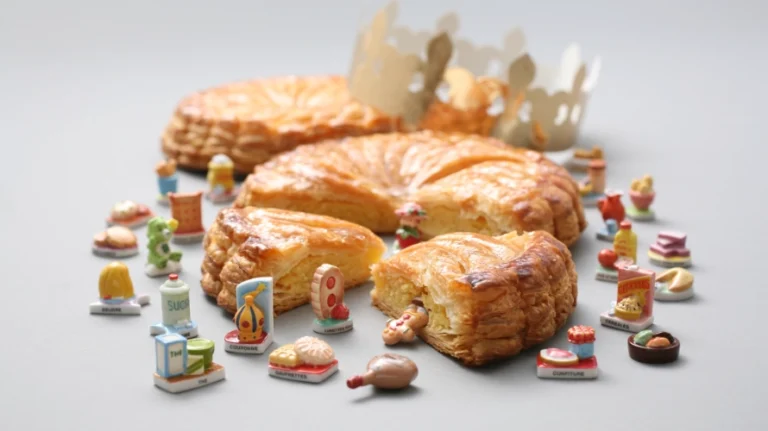
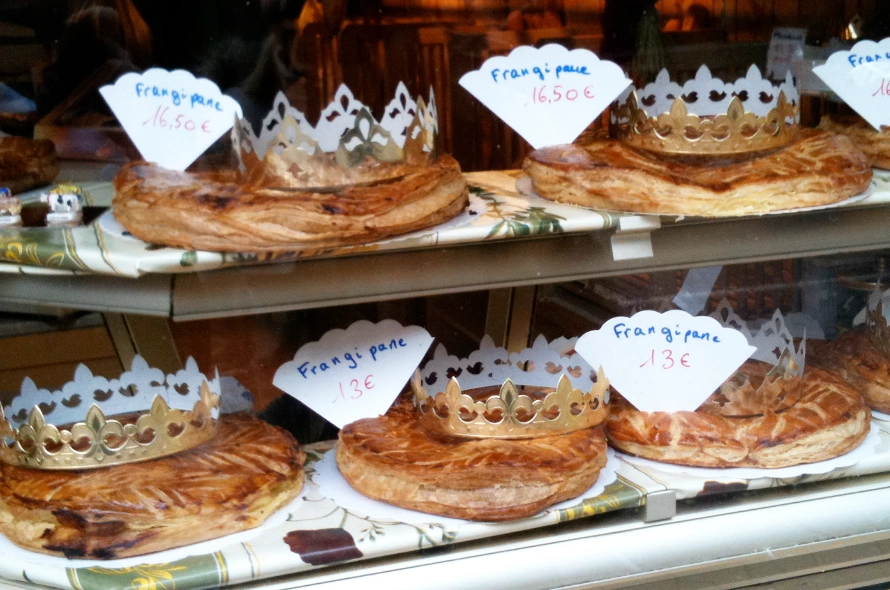
From the end of December until the end of January, France goes galette-mad! Every bakery window is stacked with golden galettes and paper crowns, and suddenly everyone is talking about one thing: who’s going to get the fève this year?
The Epiphany cake in France is the galette des rois. In most of the country it’s two layers of puff pastry filled with frangipane, with a small trinket, the fève, hidden inside. Whoever finds it in their slice is crowned king or queen for the day. It’s eaten around 6 January, the feast of the Epiphany, and then again and again all month.
I spent most of my first ten years in Nice, so for me the Epiphany cake was a brioche crown, not a puff pastry galette. Different cake but same excitement though! In this guide I’ll tell you where the tradition comes from, the regional versions, the people who collect fèves (yes, really) and the rules for serving it properly.
Want to bake one? Here’s my galette des rois recipe.
Table of Contents
The history of the galette des rois
Epiphany, on 6 January, celebrates the visit of the three kings (the Magi) to the baby Jesus. That’s where the “rois” comes from. But the cake itself is older than the Christian feast.
A Roman bean
During the Saturnalia, the Roman winter festival around the solstice, a bean was hidden in a cake. Whoever found it became king for the day, a fun reversal in a festival where the usual social order was turned upside down. The bean was also a symbol of fertility and of spring to come. The Church later kept the custom and tied it to Epiphany.
Kings, revolutionaries and presidents
A cake with “kings” in its name didn’t go down well during the French Revolution. The tradition of drawing the king disappeared for a while, and the cake was renamed: you could eat a galette de la liberté or a galette de l’égalité instead. Very French, don’t you think? Liberté and égalité are still in the motto of the French Republic today.
That republican spirit is still alive at the Élysée Palace. Every January, the bakers’ confederation brings the president a giant galette, but since 1975 and Valéry Giscard d’Estaing it has no fève and no crown. A French president can’t be crowned king, even for a day.
From bean to porcelain
For centuries the fève was a real dried broad bean (fève means broad bean in French). Porcelain fèves arrived in the late 19th century, and the name stayed. Plastic ones followed in the 1950s and 60s, and today most are small ceramic figurines. I keep a little stash in a drawer, always ready for January. My English husband even found one shaped like a Royal Guard at a brocante, and he can’t wait to use it!
And today? Faith has very little to do with it for most people. It’s an excuse to get together with family, friends and colleagues in the darkest weeks of the year, share something sweet and laugh at whoever ends up wearing the crown.
Galette des rois or gâteau des rois? The regional versions
Ask a French person which Epiphany cake is the real one and you’ll get a passionate answer. In 2019, the French bakers’ confederation found that 80% of French people choose the frangipane galette, 16% the brioche version and 4% something else, like apple or chocolate.
| Version | Where | What it is |
|---|---|---|
| Galette des rois (classic) | Paris, the north and the centre | Puff pastry with frangipane |
| Gâteau des rois | The south | Brioche crown with orange blossom, candied fruit and pearl sugar |
| Galette dunkerquoise | Dunkirk, Nord | Brioche filled with rum buttercream |
| Galette comtoise | Franche-Comté | Choux pastry with orange blossom or rum |
| Nourolles de l’Épiphanie | Manche, Normandy | Brioche shaped as twelve little balls |
| Galette guyanaise | French Guiana | Sweet shortcrust with coconut, pastry cream or tropical jam |
The classic galette des rois
This is the one you’ll find in Paris and most of northern and central France: crisp, golden puff pastry with frangipane, a mix of almond cream and pastry cream (or sometimes just almond cream). The top is scored with a pattern and glazed until it shines. Originally it was simply flaky pastry, sometimes served with jam, before the almond filling took over. Personally, this one reigns supreme in my book. Fancy making your own? Here’s my classic galette des rois recipe.
The southern gâteau des rois
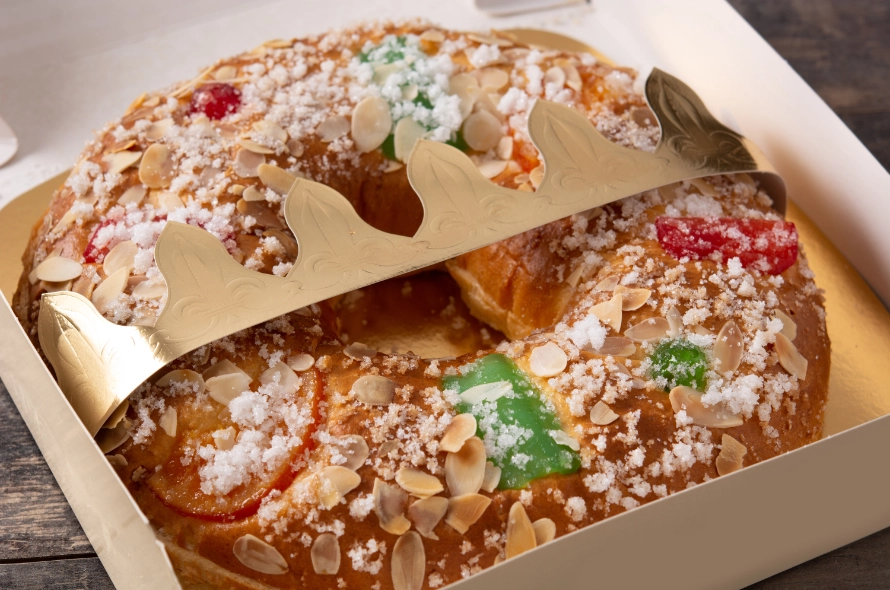
The second most popular version, and the one I grew up with in Nice. It’s a crown-shaped brioche flavoured with orange blossom, topped with candied fruit and crunchy pearl sugar. Depending on where you are, it has other names too: royaume in Montpellier, couronne bordelaise in Bordeaux, coque des rois in Moissac. Same spirit: colourful, festive and made for sharing!
The Dunkirk galette
Up in the North, around Dunkirk, the galette is a soft brioche generously filled with rum-flavoured buttercream. If you know the “tropézienne”, you’ll recognise the style.
The Franche-Comté galette
In the Doubs and the rest of Franche-Comté, the galette comtoise (or galette bisontine, from Besançon) is made with choux pastry, the same base as éclairs and profiteroles, flavoured with orange blossom or rum. It’s a cousin of the local “gâteau de ménage”, a rich, buttery brioche.
The Normandy nourolles
In the Manche, you might come across nourolles de l’Épiphanie: a brioche shaped as twelve small balls, one for each apostle. Everyone tears off their own ball, no knife needed. And of course one of them hides the fève.
The French Guiana galette
In French Guiana, the galette season runs from Epiphany right through Carnival to Mardi Gras. The galette is made with sweet shortcrust pastry, closer to a “gâteau basque”, and filled with coconut cream, pastry cream or tropical jams like guava, pineapple or banana with honey.

A little bit of France in your inbox
Once a month, I’ll write to you with recipes, French cheeses, a few tips and little stories from the neighbourhood. And you’ll get my Mother Sauces e-book free, straight away!
The fève: the real star of the galette des rois
Whatever the region, every Epiphany cake has one thing in common: the fève. Find it in your slice and you’re king or queen for the day, and you get to wear the golden paper crown that comes with every galette. In some families, the winner also has to buy the next galette, and that’s how you end up eating six of them in January!
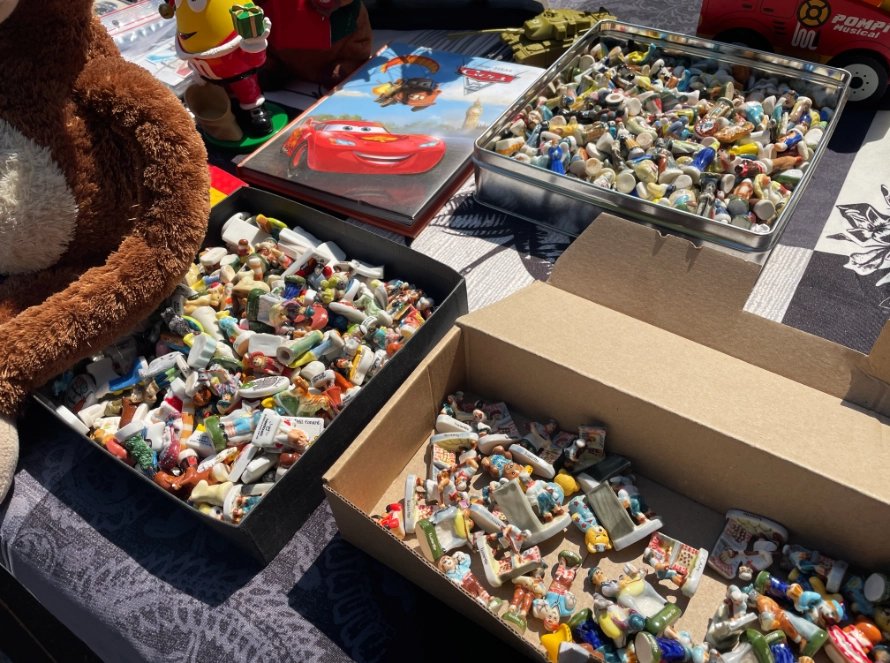
Today’s fèves are tiny ceramic figurines, and every year bakeries and brands bring out new collections: animals, cartoon characters, miniature crowns, local landmarks, hand-painted pieces. Supermarkets and bakeries compete to have the most original ones. So every January you’ll see children (and plenty of adults) inspecting their slice very carefully. There’s always a bit of drama, especially when someone tries to peek under the pastry. That would’ve been me as a kid.
Meet the fabophiles
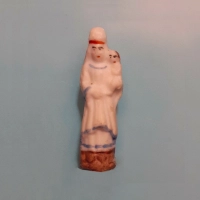
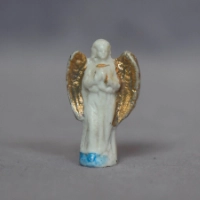
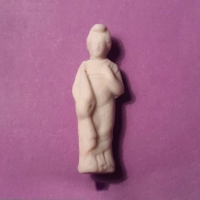
There’s even a name for people who collect fèves: fabophiles, from faba, Latin for bean. The hobby is called fabophilie, and some collectors own thousands of them. They hunt for rare fèves at brocantes and flea markets, trade them at dedicated fairs and catalogue them carefully. You’ll often see whole trays of fèves for sale at local brocantes. The most prized are old hand-painted porcelain pieces and limited editions.
The ultimate fabophile outing? The Musée de la Fève et des Traditions Populaires in Blain, near Nantes. It holds tens of thousands of fèves, with nearly 10,000 on display. Yup, you’ve read that right.
€ 1 600,00
€ 2 800,00
€ 1 500,00
How to serve a galette des rois the French way
There’s a ritual to serving the galette, and the French take it surprisingly seriously. It’s called tirer les rois, “drawing the kings”, and it goes like this:
- Cut the galette: into one slice per person.
- The youngest goes under the table: The youngest person in the room hides under the table (or covers their eyes) and calls out who gets each slice. That way nobody can be accused of cheating.
- Bite carefully: Nobody wants to crack a tooth on a ceramic fève.
- Crown the winner: Whoever finds the fève wears the paper crown and is king or queen for the day. Traditionally, they also pick their king or queen.
It’s a simple pleasure, but it works every time. I’ve seen the galette des rois turn a dull January afternoon into a party, and I’ve watched even the most reserved people break into a smile when they find the fève.
Tips if you’re celebrating outside France
- Find your galette near you: French bakeries in the US and the UK often sell galettes in January, and some supermarkets do too.
- Or bake your own: My galette des rois recipe is easier than it looks, especially with good all-butter puff pastry.
- Get a fève and a crown: If you don’t have a ceramic fève, a dried bean or a whole almond works perfectly. And make the crown yourself.
- Warn your guests: Tell everyone there’s a fève inside before the first bite.
FAQ
What is the Epiphany cake in France?
It’s the galette des rois, eaten around 6 January for the Epiphany. In most of France it’s puff pastry filled with frangipane, while the south prefers the gâteau des rois, a brioche crown with candied fruit. Both hide a fève, and whoever finds it is crowned king or queen for the day.
What is the history of the galette des rois?
It goes back to the Roman Saturnalia, when a bean was hidden in a cake and whoever found it became king for the day. The Church later linked the custom to Epiphany and the three kings. During the French Revolution the cake was briefly renamed the galette de l’égalité.
What is the fève in a galette des rois?
Fève means broad bean, because a real dried bean was hidden inside for centuries. Porcelain fèves appeared in the late 19th century, and today they’re small ceramic figurines. Collectors are called fabophiles.
Who hides under the table at Epiphany?
The youngest person in the room. They hide under the table and call out who gets each slice, so nobody can cheat. It’s part of the ritual called tirer les rois.
Is the French king cake the same as the New Orleans king cake?
No. They share the Epiphany tradition and the hidden trinket, but the New Orleans king cake is a ring of sweet dough with icing in purple, green and gold, eaten through Carnival. The French king cake is usually puff pastry with frangipane, or a brioche crown in the south.
When do you eat galette des rois?
Traditionally on 6 January, or on the Sunday between 2 and 8 January, when French churches now celebrate Epiphany. In practice, French bakeries sell galettes all through January, and most people eat several.
Over to you
One galette, one fève, one paper crown, and a whole month of excuses to eat more. Not a bad way to get through January!
Which team are you: frangipane galette or brioche crown? Tell me in the comments.
This post may contain affiliate links. If you buy through them I earn a small commission at no extra cost to you, and it helps keep this blog running. Please read my disclosure policy for more information. I am grateful for your support.