Mulled Wine
 Prep Time 5 minutes
  Cook Time 20 minutes
  Total Time 25 minutes
  Servings 6
Ingredients
- 750 ml red wine a decent Côtes du Rhône works
- 2 orange 1 sliced, 1 juiced
- 100 gr caster sugar adjust to taste
- 2 cinnamon sticks
- 4 cloves
- 2 star anise
- 3 cardamom pods
- 1 vanilla pod
- 50 ml cognac or brandy, for extra warmth
Equipment
Instructions
1. Prep your spices
- Lightly crush the cardamom pods with the flat of a knife. Split the vanilla pod lengthways and scrape out the seeds (chuck both pod and seeds in). Slice one orange into rounds.
2. Combine everything
- Pour the wine into a large saucepan. Add the sugar, orange slices, orange juice, and all the spices. Give it a good stir to dissolve the sugar.
3. Heat gently, don't boil
- This is crucial. Put the pan over a low heat and warm it through for 15-20 minutes. You want it steaming and fragrant, but if it boils, you'll cook off all the alcohol and end up with expensive fruit juice. Keep it just below simmering point.
4. Taste and adjust
- After 15 minutes, taste it. Too sweet? Add a squeeze more orange juice. Not sweet enough? Bit more sugar. Want it stronger? Splash in some brandy or cognac now.
5. Strain and serve
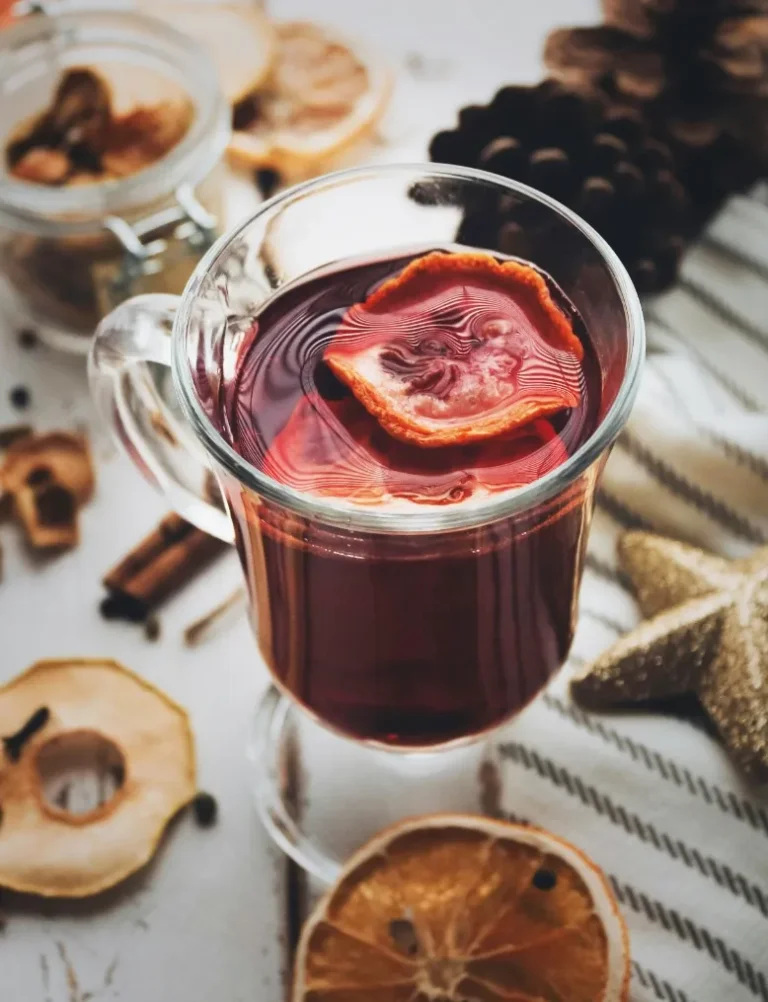
- Use a fine sieve to strain out the spices and orange slices. Ladle into heatproof glasses or mugs whilst still hot. Stick an orange slice or cinnamon stick in each glass if you're feeling decorative.
Notes
- For the wine, don’t use anything expensive, but don’t use absolute paint stripper either. A basic French red, Côtes du Rhône, Merlot, or even Beaujolais works perfectly. The spices do the heavy lifting.
- French mulled wine tends to be less sweet than German glühwein. Start with 100g and adjust. Some people like it barely sweetened, others want it properly syrupy.
- The cinnamon, cloves, and orange are non-negotiable. Everything else is fair game. Some recipes add fresh ginger, nutmeg, or a bay leaf. Experiment!
- If you would like an alcohol-free versio, use red grape juice instead of wine and add a bit of lemon juice for acidity. Works surprisingly well for kids or if you’re driving.
- You can prep this a few hours in advance and just reheat gently before serving. In fact, it tastes better if the spices have had time to infuse properly.
About this recipe
French mulled wine, vin chaud, has been warming cold hands since the Middle Ages. Back then it was called hypocras, loaded with spices partly for flavour and partly to mask wine that had gone slightly wrong. The aristocracy drank it as a digestif. Everyone else drank it because it was cheaper than buying fresh wine. The recipe has evolved considerably since then, but the principle has not changed: hot wine, warm spices, cold weather, good company.
The history of French mulled wine
The mulled wine recipe in France has medieval roots but its modern form belongs to the Christmas market tradition that spread across France from Alsace, the northeastern region that sits on the border with Germany and has absorbed influences from both cultures for centuries. Alsace brought the Christmas market format to France, and vin chaud came with it. From Strasbourg’s famous market to the seasonal stalls that appear in town squares across the country every December, the hot wine drink became inseparable from French winter.
The recipe hasn’t changed much in decades. Wine, sugar, orange, cinnamon, cloves, and perhaps some star anise if the vendor is feeling ambitious. That is it. The spices are not there to complicate things. They are there to turn a glass of red wine into something that smells of winter and tastes of warmth, which is exactly what you want when you are standing outside in the cold.
French mulled wine versus everyone else’s
France is not alone in the hot wine drink tradition. Germany has glühwein, which tends to be sweeter and sometimes uses white wine in certain regions. Scandinavia makes glögg with added almonds and raisins and enough alcohol to make the temperature irrelevant. Italy does vin brulé, the name a direct cousin of vin chaud. Austria, Switzerland, and most of Central Europe have their own versions, all built on the same logic: wine, heat, spices, winter.
The French version sits on the drier, less sweet end of the spectrum compared to glühwein. It uses red wine rather than white, keeps the sugar restrained, and relies on orange zest and whole spices rather than the fruit juices and syrups that heavier versions employ. The result is a mulled wine recipe that tastes of wine with spice, rather than spiced fruit cordial with wine added.
The right wine for mulled wine
The wine for mulled wine does not need to be expensive. It does need to be drinkable. The old advice about using the worst bottle in the rack does not hold up: bad wine that you would not drink cold does not become good wine when you heat it with spices. The off-flavours intensify rather than disappear. A decent, inexpensive red with some body and fruit, a Côtes du Rhône or a simple Merlot, is the right starting point.
Avoid anything too tannic or too light. Heavy tannins become bitter when heated. Very light reds lack the body to carry the spices. Something in the middle, fruit-forward, with moderate tannins and enough structure to hold up to the heat, is what you are looking for. In France, the vin chaud at Christmas markets is typically made with a straightforward southern French red for exactly these reasons.
The spice balance
Cinnamon and cloves are the foundation of any mulled wine recipe. Star anise adds a subtle anise depth that works well in the French version. Orange zest rather than orange juice keeps the wine from becoming too sweet. A vanilla pod split into the pot adds warmth without announcing itself.
The key is not overdoing any single spice. Cloves in particular can take over a mulled wine completely if too many go in. Two or three whole cloves per bottle is enough. More than that and the clove flavour dominates everything else.
The right glass
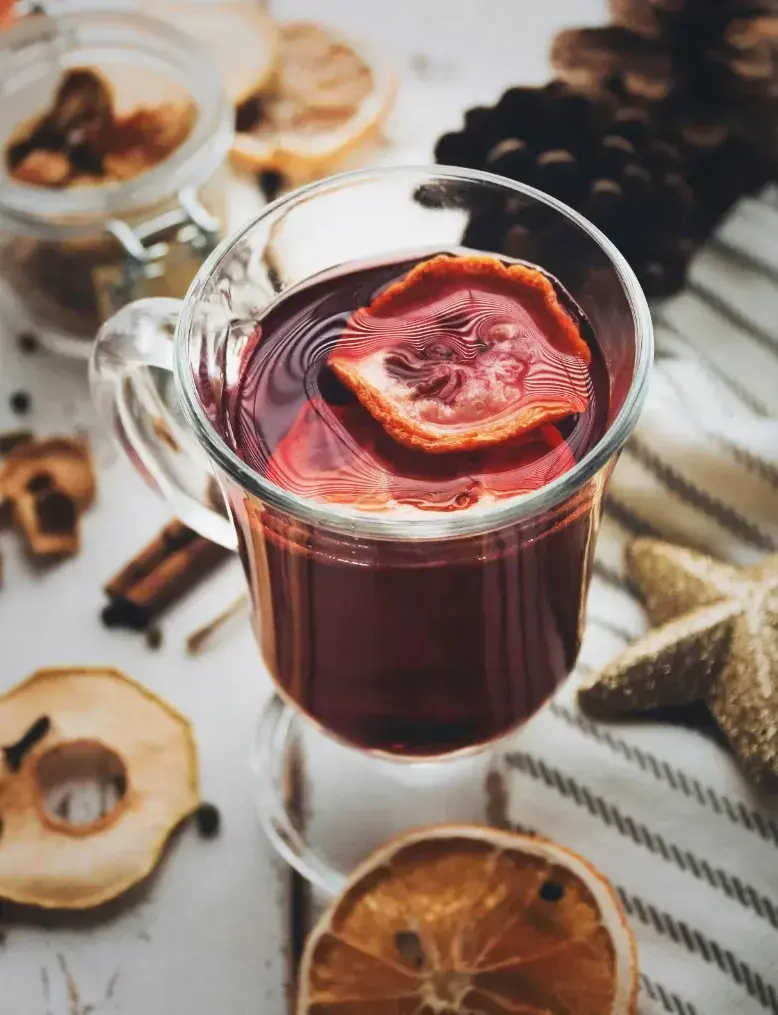
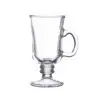
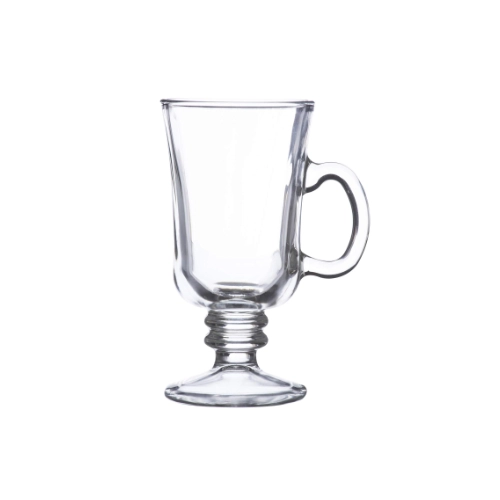
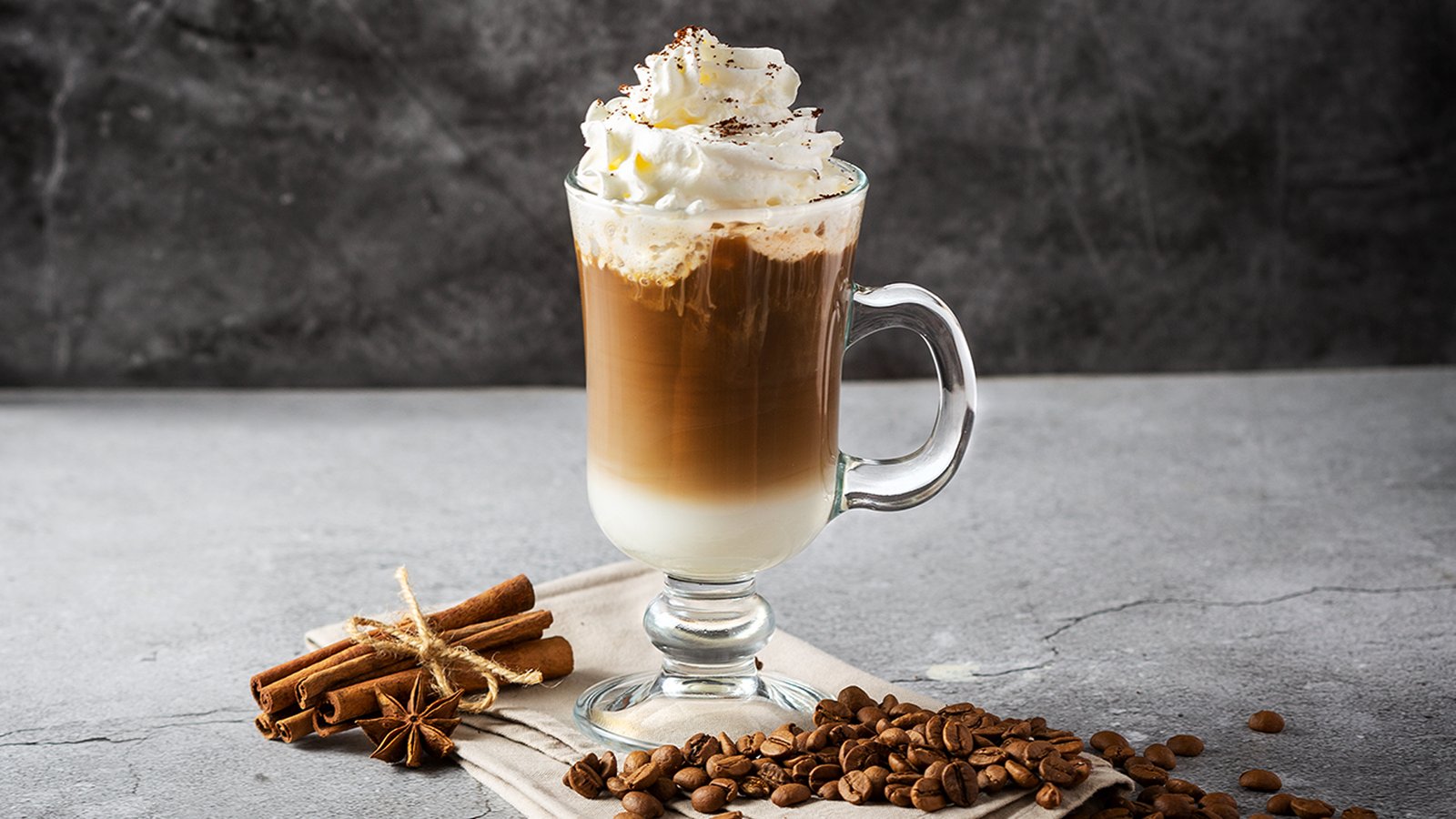
French mulled wine is served in handled glasses that let you wrap your hands around the warmth without burning your fingers. I use the Irish coffee glasses for this hot wine drink. The thick glass retains heat well, keeping the vin chaud warm at the table considerably longer than a thin-walled glass would. The handle means you can hold it comfortably without the glass becoming too hot to touch. And the classic shape looks right for a warm, spiced drink that is as much about the experience of holding it as it is about the taste.
The Christmas market effect
If you have ever been to a French Christmas market, you will know that vin chaud is basically the entry fee. You buy a cup, wrap your hands around it, and suddenly wandering around in the cold looking at wooden toys and artisan honey feels entirely reasonable. The best French mulled wine recipe is the one that recreates that feeling at home, which is simpler than it sounds: the right wine for mulled wine, the right spices in the right quantities, and enough heat to make the kitchen smell extraordinary while it cooks.
Share your feedback and spread the love!
If you try this recipe, I’d love to hear how it turns out! Leave a ★★★★★ rating and your thoughts in the comments, it helps fellow French foodies discover this recipe too. Snap a photo and tag me @obviously.french on Instagram if you’re sharing your bake or cooking online. Don’t forget to save this recipe to Pinterest so you’ll always have it handy for your next French-inspired meal!
Disclosure: Just so you know, this post contains sponsored content and/or affiliate links, If you make a purchase through these links, I may receive a small commission. Doesn’t cost you anything extra. I only link to things that are actually worth your time. All opinions are my own!