Introduction
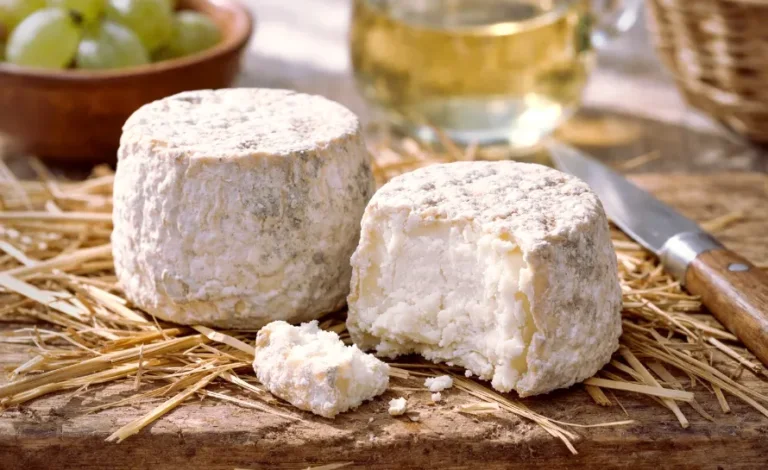
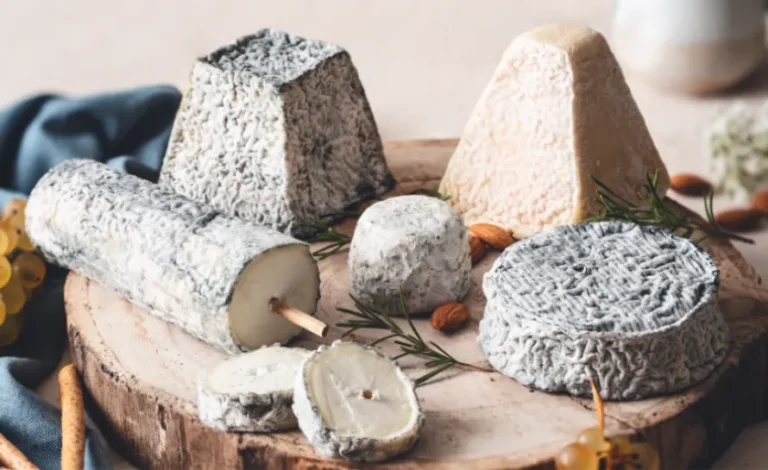
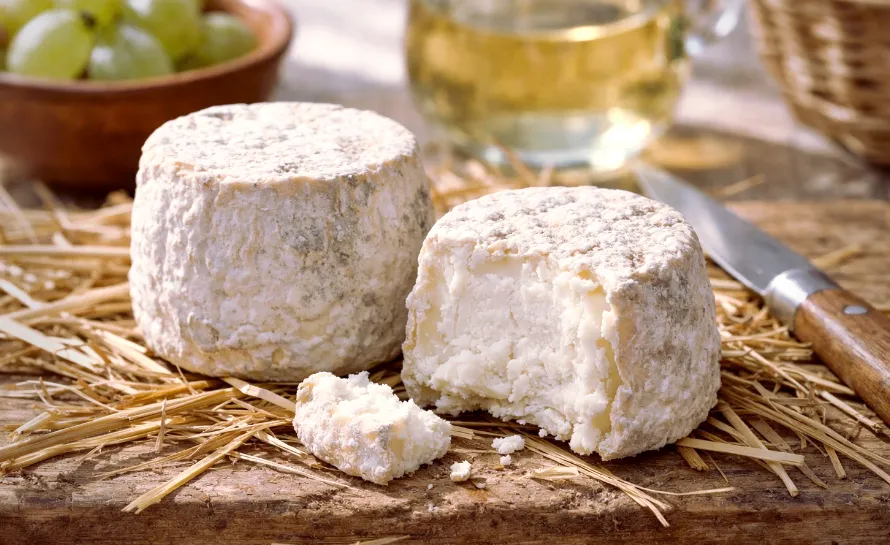
Walk into any French cheeseshop and you’ll spot them immediately: those elegant little logs, pyramids, and buttons of pure white cheese, often dusted with ash or covered in delicate wrinkled rinds. This is a goat cheese. France’s goat cheeses represent some of the most ancient and refined cheese traditions in the world.
Unlike the tangy supermarket “goat cheese” many people know, traditional French goat cheeses are subtle, complex, and beautifully balanced. The Loire Valley alone produces five protected AOP varieties, each with its own distinctive shape and character. But you’ll also find exceptional goat cheeses scattered across Burgundy, Poitou-Charentes, the Rhône-Alpes, and countless small farmsteads throughout the countryside.
What makes French goat cheese special? It’s all about technique. The slow lactic coagulation creates delicate, high-moisture curds unlike any other cheese. The wrinkled Geotrichum candidum rinds develop hazelnut and mushroom flavours as they age. And that striking ash coating you see on many varieties? It’s not just decoration; it’s essential chemistry that helps the cheese ripen properly.
Whether you’re spreading fresh goat cheese on bread, grilling crottin for a salad, or serving an aged pyramid with Sancerre, French goat cheese offers something genuinely different from the rest of the cheese world. Let’s explore what makes these cheeses so distinctive and how to choose, store, and enjoy them.
What Are Goat Cheeses?
In French, they’re called “fromages de chèvre“, which simply means cheeses made exclusively from goat’s milk. But while goat cheese exists all over the world, traditional French goat cheeses follow centuries-old techniques that create distinctive flavours, textures, and appearances you won’t find anywhere else.
The Loire Valley produces the heart of France’s goat cheese tradition, where 650 farms craft five protected AOP varieties. But goat cheese making extends far beyond the Loire. You’ll find outstanding varieties in Burgundy (where the cheeses tend to be denser), Poitou-Charentes (home to Chabichou), the Rhône-Alpes (where Chevrotin is made), and scattered across countless small farms. Together, French goat cheeses represent 16 of France’s 47 AOP designations, more than any other milk type except cow’s milk.
Three techniques define French goat cheese: the lactic coagulation method that creates delicate, high-moisture curds; the wrinkled Geotrichum candidum rinds that develop complex flavours; and the ash coating tradition that turns fresh white cheese into striking grey-coated beauties.
Explore Our Goat Cheeses Collection
This guide provides the foundation, but individual varieties deserve deeper exploration. We’ve created detailed articles covering specific types, each featuring five carefully selected varieties showcasing the category’s diversity. Discover more about French goat cheese:
The Defining Characteristics
What makes goat cheese distinct?
- Lactic coagulation method
Slow acidification over 16-24 hours creates the curd, not quick rennet action. Mesophilic cultures convert lactose to lactic acid until the milk coagulates naturally. - Soft, delicate curds
The lactic coagulation creates fragile, high-moisture curds that drain naturally without pressing. Bright, lemony acidity throughout. - Small formats only
Logs, pyramids, buttons, and small rounds. The weak curd structure cannot support large wheel sizes. - Geotrichum candidum rinds
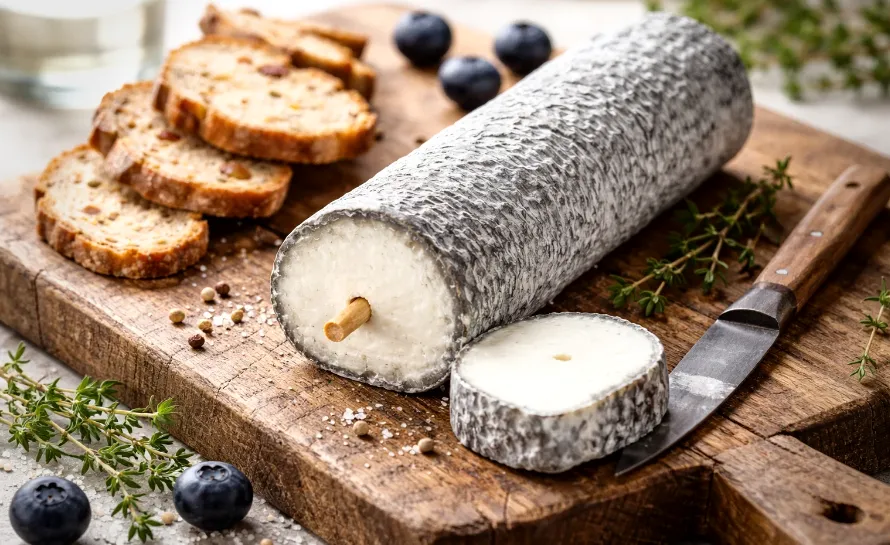
Wrinkled, brain-like appearance from this yeast-like fungus colonising the surface. Develops hazelnut, mushroom, and earthy flavours. - Ash coating tradition
Vegetable charcoal mixed with salt neutralises surface acidity and creates ideal conditions for beneficial moulds. Striking grey-black appearance. - Pure white colour
Goats convert all carotene to vitamin A, so their milk contains no beta-carotene. Cheese stays brilliantly white. - Versatility across ages
Fresh (1 week) is soft and lemony. Young ripened (2-3 weeks) develops hazelnut notes. Medium-aged (4-5 weeks) becomes chalky and earthy. Fully aged (6+ weeks) turns hard, crumbly, and pungent.
These are cheeses defined by transformation. What you buy today won’t taste the same in three days or a week. They’re on a journey from youth to ripeness to overripeness, and knowing where they are on that path is crucial.
How French Goat Cheeses Are Made
Traditional French goat cheese relies on lactic coagulation, a slow, gentle process that sets it apart from most other cheeses you’ll encounter.
1. Milk Preparation
Goat’s milk is used exclusively, typically pasteurised for commercial production though traditional farmhouse varieties may use raw milk. The milk is gently warmed to around 18-22°C, much cooler than for rennet-coagulated cheeses. This lower temperature is crucial for lactic coagulation to work properly.
2. Culturing and Slow Coagulation
Mesophilic lactic acid bacteria are added, cultures that work at moderate temperatures to acidify the milk slowly. This is the heart of goat cheese making. Over 16-24 hours, the cultures convert lactose into lactic acid. As the pH drops from 6.7 to about 4.8-5.0, the milk proteins naturally clump together and form soft, fragile curds. Some makers add 2-3 drops of rennet per gallon (barely any) to speed the process slightly and create a firmer curd, but the acid does the real work.
3. Ladling and Draining
Once the curd forms, it’s gently ladled (never cut) into moulds. The ladling is done carefully to preserve the delicate structure. The curds drain naturally for 24-48 hours with no pressing whatsoever. They’re flipped regularly during draining to ensure even moisture removal. The whey simply drips away slowly whilst the cheese develops its shape. The goal is removing enough whey for the cheese to hold its form whilst retaining sufficient moisture for that characteristic creamy texture.
4. Salting and Ash Application
After draining, the cheeses are salted. Most are dry-salted, with salt rubbed directly on the exterior. The salt controls moisture, provides flavour, and moderates mould growth during aging. For ash-coated varieties, this is when vegetable charcoal mixed with salt gets dusted or rolled onto the surface. The alkaline ash neutralises surface acidity, creating ideal conditions for beneficial moulds to establish.
5. Aging and Rind Development
Fresh goat cheese can be eaten immediately, but most age for 10 days to 6 weeks. The cheeses move to aging rooms maintained at cool temperatures (10-14°C) with high humidity (85-95%). Here’s where Geotrichum candidum colonises the surface. Within days, this yeast-like fungus begins growing, forming those characteristic wrinkled, brain-like rinds. The cheeses are flipped regularly to ensure even mould coverage. As Geotrichum breaks down proteins and fats, it reduces acidity and develops complex flavours of mushroom, nuts, and earth. Some varieties also develop Penicillium candidum (white bloomy mould) over the Geotrichum. After 2-3 weeks, young ripened cheeses are ready. Aged varieties continue for 4-6 weeks or longer, becoming progressively firmer, drier, and more intense in flavour.
The Spectrum of French Goat Cheese
Despite sharing similarities, goat cheeses offer surprising variety.
By Shape
Logs
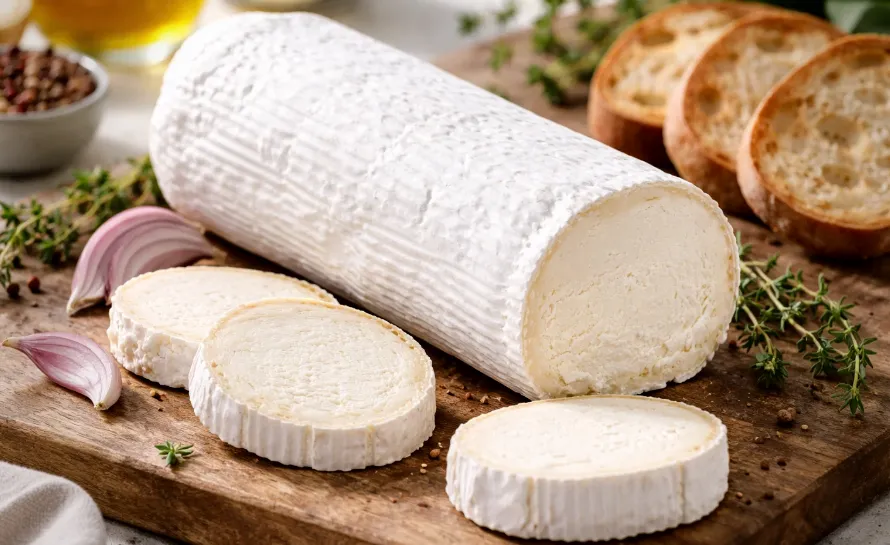
Logs are long cylinders like Sainte-Maure, typically 15-25cm in length. The extended shape allows even drainage and creates consistent texture throughout. Many have a straw through the centre for structural support.
Small rounds
Small rounds (crottins) appear as flattened cylinders about 4-5cm across. The compact size means faster aging and more concentrated flavours. Crottin de Chavignol sets the standard for this style.
Pyramids
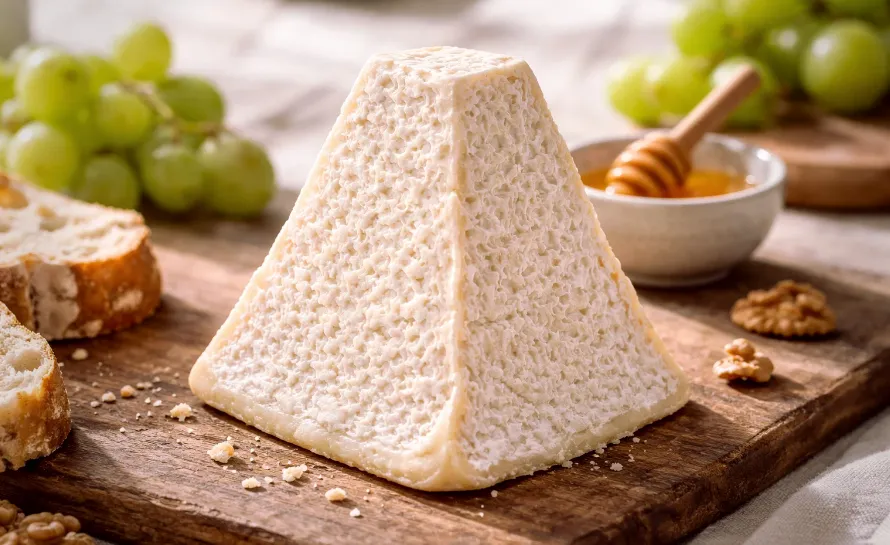
They can be truncated or full-height like Valençay and Pouligny-Saint-Pierre. Legend ties their shapes to church steeples, Napoleon’s sword, or simply practical drainage geometry. Whatever the origin, the pyramid shape is now iconic.
Discs
Discs like Selles-sur-Cher spread flat and round, typically 8-10cm across. The broad, flat surface maximises ash coating coverage and rind development.
Domes and buttons
They form small hemispheres and button shapes. These age quickly and stay relatively mild throughout their life.
By Texture and Age
Fresh
(0-10 days) appears pure white, soft, and spreadable. The texture resembles cream cheese with bright lemony tang. Mild “goaty” flavour. Moisture content sits around 60-70%.
Young ripened
(10-21 days) shows Geotrichum rind developing, creating that wrinkled appearance. Texture stays soft but becomes more cohesive. Flavours include fresh milk, lemon, and subtle hazelnut. This is the “classic” stage for most French goat cheeses.
Medium-aged
(3-5 weeks) displays fully developed rind, often turning grey-blue. Texture becomes chalky near the centre while staying creamy just under the rind. Flavours intensify into hazelnuts, mushrooms, and wet earth. More assertive “goaty” character emerges.
Fully aged
(6+ weeks) turns hard, dry, and crumbly throughout. The rind becomes dark grey to blue-grey. Intense, pungent flavours develop: walnuts, barnyard, even truffle notes. These can be grated over dishes like Parmesan. Aged crottins lose about half their original weight through moisture loss.
By Rind Treatment
Natural
Natural rinds receive just salt, allowing native yeasts and moulds to colonise naturally. This creates the most varied, terroir-driven flavours but produces less predictable appearance.
Geotrichum
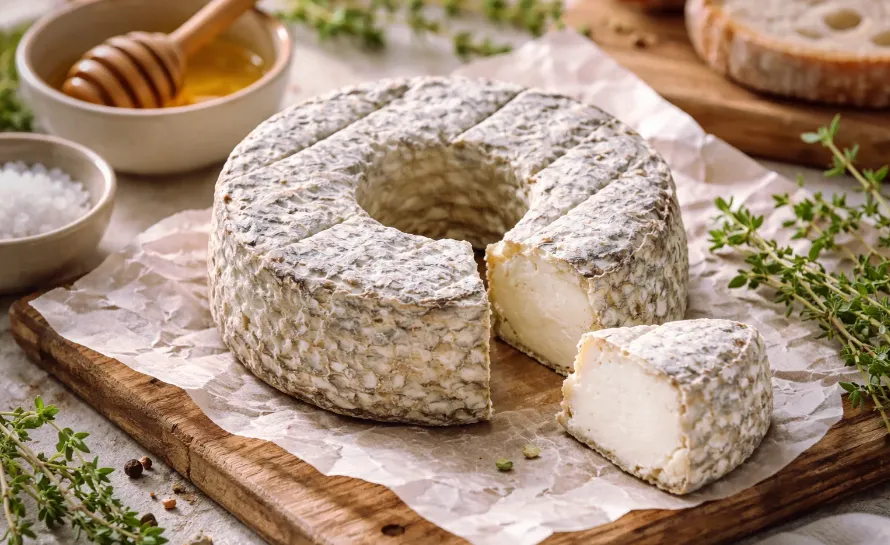
These rinds are inoculated with Geotrichum candidum cultures to ensure consistent wrinkled rind development. This creates that characteristic “brain-like” texture. Most Loire varieties use this method.
Ash-coated
Some varieties get dusted with vegetable charcoal and salt after draining (detailed in the next section). This creates distinctive grey to black rinds and is traditional throughout the Loire and Burgundy.
Bloomy
Bloomy rinds develop when white Penicillium candidum mould grows over or alongside Geotrichum, creating velvety white surfaces. Less common but beautiful when it occurs naturally.
Herb-coated
Some goat cheeses are rolled in herbs, flower petals, or spices immediately after salting. Lavender, thyme, and cracked black pepper are popular choices for this treatment.
How to Buy French Goat Cheeses
Buying goat cheese requires understanding ripeness stages and knowing what you want.
Reading the Labels
AOC/AOP designations guarantee traditional production. The five Loire Valley varieties (Crottin de Chavignol, Sainte-Maure de Touraine, Valençay, Pouligny-Saint-Pierre, Selles-sur-Cher) all carry protected status. Each has specific production requirements regarding milk source, production methods, and minimum aging.
Check whether it’s pasteurised or raw milk (lait cru). Raw milk varieties offer more complexity but aren’t suitable for pregnant women, young children, or immunocompromised individuals. Most goat cheeses sold outside France use pasteurised milk for safety.
“Fermier” (farmhouse) indicates small-scale traditional production, often using raw milk from the farm’s own goats. “Laitier” (dairy) means larger production using milk collected from multiple farms. For goat cheeses, farmhouse production often delivers superior character but may be less consistent.
Production dates matter. For traditional Loire varieties, optimal ripeness typically occurs 2-4 weeks after production for young ripened character, or 4-6+ weeks for medium to fully aged character. If buying for immediate consumption, choose cheese approaching the age you prefer.
What to Look For
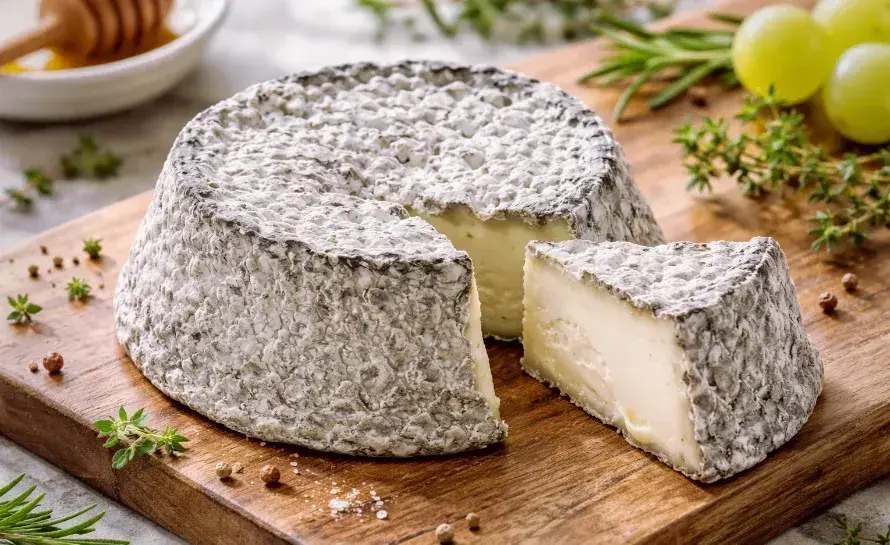
The rind should look healthy. For Geotrichum-ripened varieties, expect wrinkled, brain-like texture, white to cream-coloured when young, developing tan, grey, or blue-grey patches as it ages. For ash-coated varieties, the coating should be relatively even, black when very fresh, turning progressively grey as moulds grow through it.
Gently press the cheese (if shopping allows). Fresh cheese feels soft and spreadable. Young ripened cheese has developing firmness with slight give. Medium-aged cheese feels chalky in the centre with softer exterior. Fully aged cheese feels hard and dry throughout.
Smell matters enormously. Fresh goat cheese smells clean, milky, slightly tangy. Young ripened cheese has mild mushroom and hazelnut aromas. Medium-aged cheese smells earthier, more “goaty,” with barnyard notes. Fully aged cheese has intense, pungent aroma. Avoid cheese with strong ammonia smell (indicates over-ripening) or any off, sour odours.
For ash-coated varieties, check that the ash coating looks even and hasn’t developed excessive moisture (which appears as wetness or stickiness on the surface).
Ask to see the interior if possible. The paste should look clean and even. For young varieties, expect pure white. For aged varieties, some colour variation is normal, but avoid cheese with any grey or brown discolouration inside (as opposed to on the rind).
How to Store French Goat Cheeses
Storage requires different care depending on age and texture.
Temperature and Location
Refrigeration at 4-7°C is ideal for all goat cheeses. The vegetable drawer works well, providing good temperature stability and slightly higher humidity than other refrigerator sections.
Goat cheese tolerates refrigeration better than some varieties, but remember that young to medium-aged cheeses continue ripening slowly even when cold. Very fresh cheese stays relatively stable; developing cheeses continue evolving.
Packaging and Containers
Fresh goat cheese (soft and spreadable) should be wrapped tightly once opened. Use cheese paper or waxed paper, never cling film, which traps moisture and promotes spoilage. Place wrapped cheese in a loose plastic bag or container.
Young to medium-aged varieties with rinds need to breathe slightly. Wrap loosely in cheese paper, allowing some air exchange whilst preventing excessive drying. Change wrapping if it becomes damp.
Fully aged, dry goat cheeses are less fussy. Wrap in cheese paper or place in breathable containers. They’re stable enough to tolerate less-than-perfect wrapping.
For ash-coated varieties, the ash coating can transfer to wrapping. This is normal. Just use fresh wrapping if it becomes messy.
Shelf Life and Signs of Spoilage
Fresh goat cheese (soft and spreadable) keeps 2-3 weeks unopened, 7-10 days after opening. Once opened, consume relatively quickly as the delicate texture deteriorates with exposure to air.
Young ripened varieties keep 2-3 weeks unopened, 7-10 days after cutting. The rind protects the interior but continues ripening in your fridge, so buy only what you’ll use relatively quickly.
Medium to fully aged goat cheeses last longer: 3-4 weeks refrigerated, even after cutting. The drier texture and lower moisture content make them more stable.
Goat cheese naturally has a “barnyardy” aroma that intensifies with age. That’s completely normal and expected. But if you smell ammonia (sharp and nose-tingling), the cheese has over-ripened. If the smell is putrid or rotting, discard it immediately.
If unwanted mould (fuzzy blue, green, or black spots) appears on fresh goat cheese, discard the entire package. The invisible mould threads penetrate throughout soft cheese. On aged varieties with natural rinds, you can cut away affected areas with a 2cm margin around the spot, though excessive unwanted mould suggests storage problems.
Surface drying on cut faces is normal for aged varieties. If it becomes excessive, trim the dried portion and use the interior.
Can You Freeze Bloomy Rind Cheese?
Freezing isn’t recommended for any goat cheese. The delicate protein structure breaks down during freezing, creating grainy, watery texture when thawed. The Geotrichum rind dies completely, turning slimy when thawed.
If you absolutely must freeze fresh chèvre to prevent waste, use it within 2 months and only in cooked applications where texture doesn’t matter (stirred into pasta, mixed into quiche filling, etc.). Expect significantly degraded quality. Never freeze ripened goat cheese with developed rinds; the results are genuinely unpleasant.
Serving French Goat Cheese
Serving goat cheese properly showcases their character.
Temperature Matters
This is absolutely critical. Remove goat cheese from refrigeration at least 45-60 minutes before serving. Fresh varieties need less time (45 minutes); aged, dense cheeses need more (60-90 minutes). Cold goat cheese tastes flat and textureless. Proper warming brings out all those subtle hazelnut and lemon notes, allows the creamy texture to develop, and reveals the complexity aging created.
At proper room temperature (18-20°C), fresh goat cheese becomes spreadable and its tanginess mellows slightly. Young ripened varieties develop their creamy texture under the rind. Aged varieties soften just enough to slice cleanly rather than crumbling excessively.
Presentation
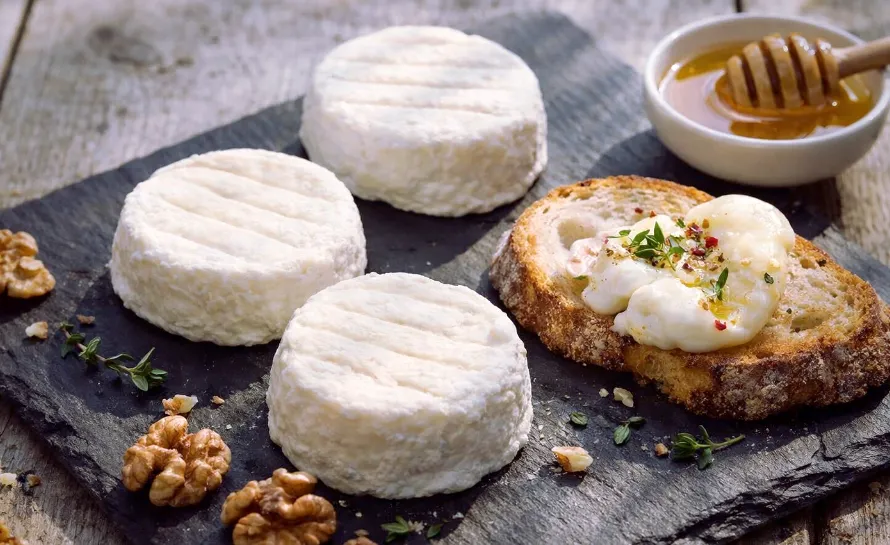
Goat cheeses present beautifully. Serve whole logs, pyramids, or rounds on wooden boards with appropriate knives. Their distinctive shapes create visual interest. For logs, provide a sharp knife for clean slicing. For pyramids and rounds, provide a knife suitable for cutting from centre outward. For very crumbly aged varieties, consider breaking into rustic chunks rather than attempting neat slices.
Include bread, crackers, fruit, nuts, and perhaps honey on the board. The accompaniments should complement without overwhelming the cheese’s delicate character.
The Rind Question
The rind (whether Geotrichum, bloomy, or ash-coated) is completely edible and meant to be eaten. It adds earthy, mushroomy flavours and interesting textural contrast. The wrinkled Geotrichum rind provides much of the hazelnut character goat cheese is known for. The ash coating, while slightly gritty, adds mineral notes and visual drama.
Some people love the rind; others dislike the stronger taste or slightly fuzzy texture (for Geotrichum) or gritty texture (for ash). Try it before deciding. Many people who initially avoid the rind discover they enjoy it. If you genuinely don’t like it, trim it off, though you’re missing part of what makes these cheeses special.
For very aged varieties with thick, dry rinds, more people choose to remove them as they can be quite intense and chewy.

Cooking with French Goat Cheese
Goat cheese excels in cooking, its creamy texture and tangy flavour create versatile results.
Salads
The classic preparation is chèvre chaud (warm goat cheese salad). Slice a log into rounds about 2cm thick, place on toasted baguette slices, drizzle with olive oil, and grill until golden and bubbling (about 3-5 minutes under a hot grill). Serve immediately over mixed greens (frisée is traditional) with walnuts and vinaigrette. The warm, tangy cheese contrasts beautifully with crisp lettuce, creating textural and temperature contrasts.
Variations include topping the goat cheese with honey before grilling, coating it in crushed nuts or breadcrumbs, or serving it on caramelised onion toasts.
Quiches and Tarts
Fresh chèvre adds creaminess and tang to any egg-based dish. Pair with caramelised onions (classic), roasted vegetables (courgettes, aubergines, peppers), fresh herbs (thyme, basil), or sautéed mushrooms. Use 100-150g per standard tart. Crumble or slice thinly and distribute evenly throughout the filling, or dot larger pieces on top before baking.
The cheese melts beautifully, creating pockets of creamy, tangy richness throughout. It doesn’t become stringy like mozzarella; instead, it softens into the surrounding custard.
Pasta
Toss fresh goat cheese (100-150g) with hot pasta and reserved pasta water (50-100ml). It melts into a naturally creamy sauce without needing butter or cream. The pasta water’s starch helps emulsify the cheese into smooth coating. Add peas, asparagus, sun-dried tomatoes, or fresh herbs for complete dishes.
Alternatively, crumble aged goat cheese over finished pasta the way you’d use Parmesan. The concentrated flavour means you need less than you might expect.
Baked Preparations
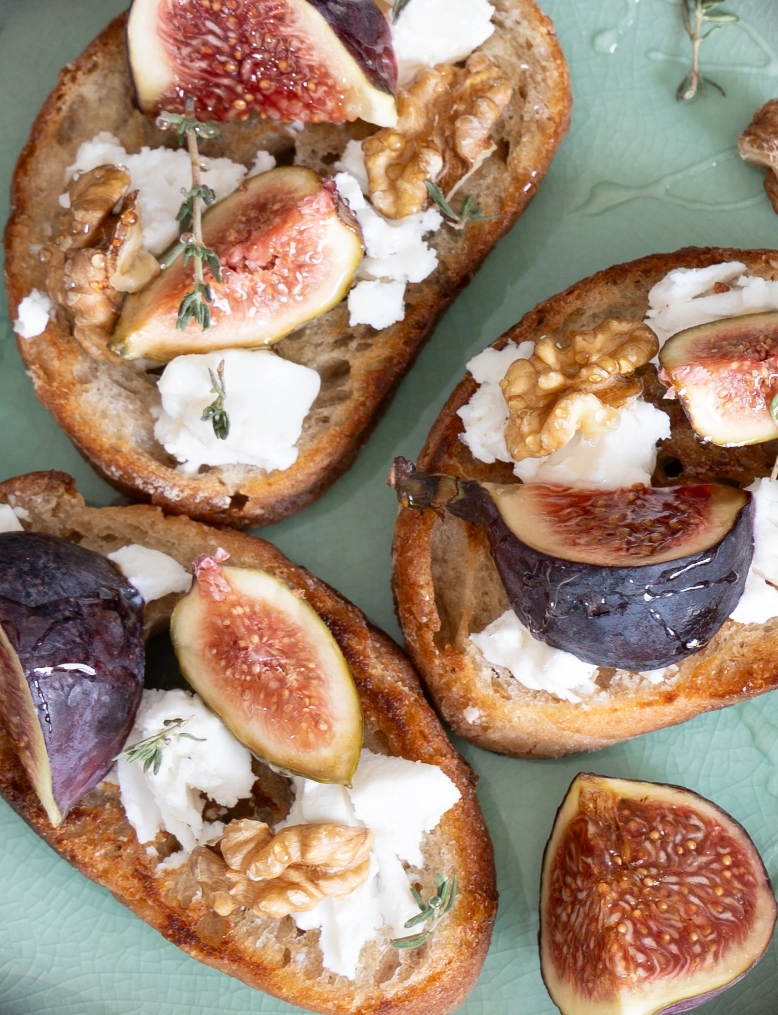
Stuff chicken breasts with fresh chèvre mixed with herbs (tarragon, thyme, parsley). The cheese stays creamy inside the chicken, creating luxurious filling. Wrap figs or dates with goat cheese and prosciutto for elegant appetisers, bake until the cheese softens and the prosciutto crisps. Make crostini topped with honey and crumbled aged crottin; the sweet-savoury combination is addictive.

Cooking Tips
Fresh chèvre melts beautifully, becoming creamy and slightly liquid. Aged varieties stay more intact, softening but maintaining structure. This makes fresh ideal for sauces and aged better for garnishing.
Add goat cheese at the end of cooking to preserve its delicate flavour. If added too early or cooked too long, it can become grainy or develop unpleasant sour notes.
A little goes a long way. Goat cheese has strong character; use less than you might with mozzarella or other mild cheeses.
Balance its tang with sweet elements (honey, caramelised onions, figs, dried fruit) or rich elements (nuts, olive oil, butter) for best results.
Health Benefits of French Soft Bloomy Rind Cheeses
Goat cheese offers impressive nutritional benefits, particularly for people with digestive sensitivities.
Nutritional Profile
Goat cheese provides good protein, typically 18-21g per 100g in fresh varieties, reaching 25-30g in aged cheeses. This complete protein provides all essential amino acids in easily absorbed forms. It’s not quite as concentrated as very hard cheeses but still represents excellent protein density.
Calcium content measures 250-400mg per 100g, providing 25-40% of daily recommended intake. This supports bone and teeth health. The calcium in goat cheese is highly bioavailable thanks to the cheese’s fat content and the presence of phosphorus and vitamin K2.
Fat content sits at 16-21g per 100g in fresh varieties, primarily composed of medium-chain fatty acids that metabolise more efficiently than the long-chain fats dominant in cow’s milk. This includes capric and caprylic acids, which have natural antimicrobial properties and are more easily digested.
The cheese provides abundant vitamins. Vitamin A content is high (important for vision and immune function), as are B vitamins, especially B2 (riboflavin, which supports energy metabolism) and B12 (essential for nerve function and red blood cell production). Selenium content is notable, an essential trace mineral with antioxidant properties.
Calories are moderate, around 270-320 per 100g depending on fat content and age. This is actually lower than many cow’s milk cheeses. At approximately 75 calories per ounce (28g), goat cheese contains fewer calories than mozzarella (85 calories), brie (95), or cheddar (115).
Digestibility
The smaller fat globules (about one-fifth the size of cow’s milk fat globules) make goat cheese easier to digest for many people. Smaller globules provide more surface area for digestive enzymes to act on, speeding digestion and reducing the feeling of heaviness some people experience with cow’s milk cheese.
The A2-only casein protein (cow’s milk contains both A1 and A2 casein) makes goat cheese gentler on the digestive system for many people. A1 casein has been associated with digestive discomfort and inflammation in some individuals; A2 casein typically causes fewer issues.
Fresh goat cheese contains 2-3% lactose, less than cow’s milk cheese (4-5%). Aged goat cheese has virtually no lactose remaining after the aging process consumes it. Many people with lactose intolerance tolerate goat cheese well, especially aged varieties.
The lactic coagulation process creates softer curds in the stomach compared to rennet-coagulated cheeses, potentially aiding digestion further.

Final Thoughts
French goat cheeses represent cheesemaking at its most ancient and refined. These aren’t cheeses that demand years of aging or develop the intense complexity of long-aged varieties. Instead, they offer something different: delicate beauty, subtle complexity, and fascinating transformation through relatively short aging.
They’re also remarkably approachable. Unlike blue cheese‘s aggressive intensity or washed-rind varieties‘ powerful aromas, goat cheeses offer gentle entry into serious French cheese. Yes, there’s that “goaty” tang. Yes, properly aged goat cheese has funk. But the progression from mild to bold happens gradually enough that you can find your comfort zone.
Start with young ripened goat cheese if you’re exploring the category. A Sainte-Maure or young Crottin with developing rind and just a hint of hazelnut offers goat cheese character without intensity that might challenge. Try it fresh on bread, then warm some for a salad to experience its versatility.
As your appreciation develops, explore riper expressions. That aged crottin approaching crumbly texture, smelling distinctly earthy, that’s goat cheese showing its full character. Not everyone wants to go there, and that’s fine. But experiencing the full range helps you understand what these cheeses can do.
Start with one good goat cheese. Let it warm properly. Taste it attentively, noting how the rind and paste offer different flavours. Then try it in cooking to experience its versatility. Welcome to the wonderfully dynamic world of French goat cheese.

A Complete Hosting Guide
This complete guide takes the intimidation out of French cheese and wine hosting, so you can create an impressive, memorable evening that feels effortless.
Just so you know, a few links here earn us a commission. Doesn’t cost you anything extra, and we only link to things that are actually worth your time.