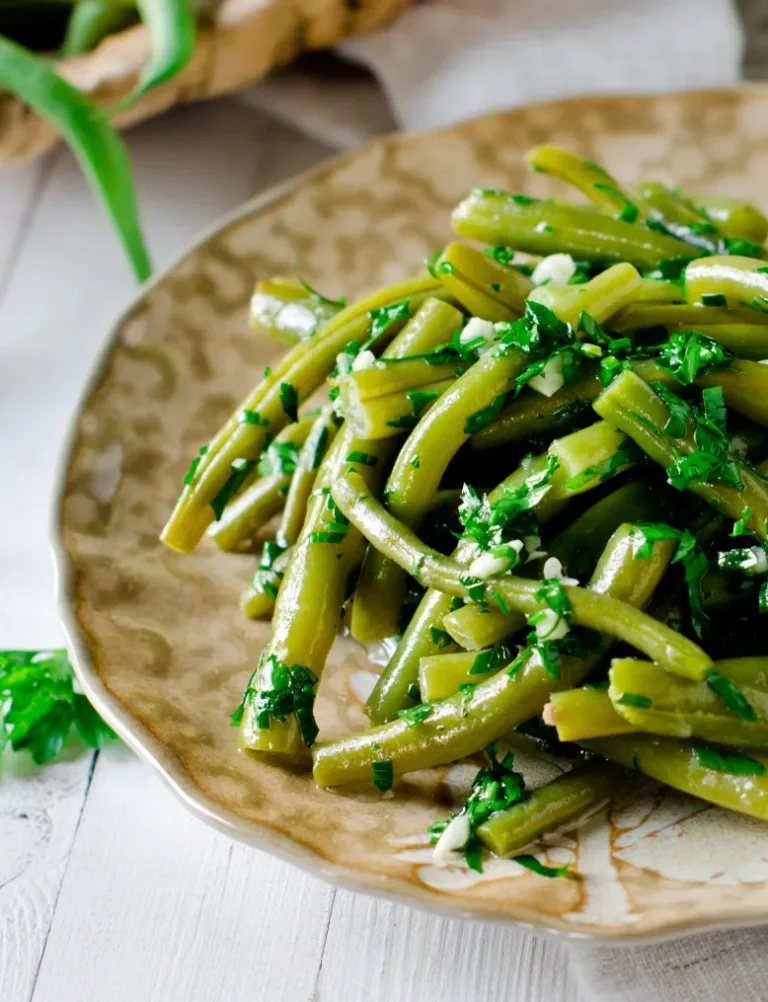
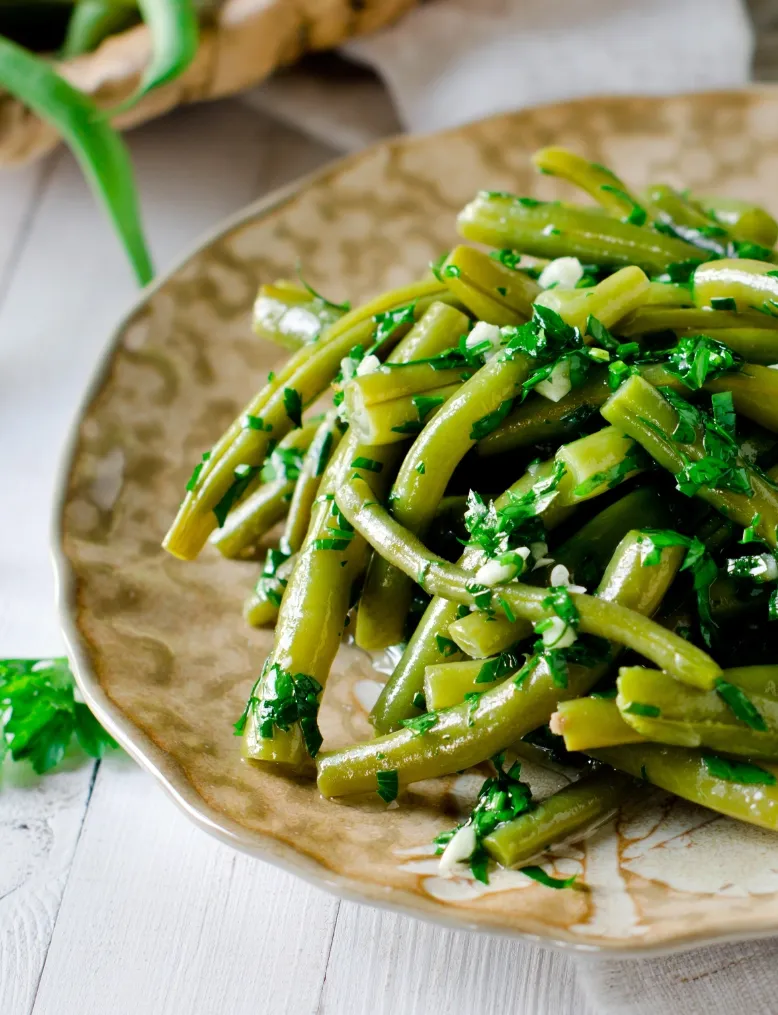
Garlic Green Beans
 Prep Time 5 minutes
  Cook Time 15 minutes
  Total Time 20 minutes
  Servings 4
Ingredients
- 500 gr green beans or haricot vert
- 2 cloves garlic
- 1 handful parsley fresh
- 50 gr unsalted butter
- salt and black pepper
Equipment
Instructions
1. Prep the beans
- Start by preparing your haricots verts. Trim off the ends and give them a quick rinse under cold water. If you’d like shorter beans, feel free to cut them in half or into thirds. For beans that are extra crisp and vibrant, you can blanch them: bring a large pot of salted water to a boil, add the beans, and cook for about 2–3 minutes. Drain them and immediately plunge them into ice water to stop the cooking process, then drain again and set aside. This step is optional but does wonders for their texture and colour.
2. Sauté the garlic
- Place a large frying pan or skillet over medium heat and melt the butter (or heat the olive oil). Add the garlic and let it cook gently for about a minute, just until it becomes fragrant, be careful not to let it brown, as it can turn bitter.
3. Cook the beans
- Add the haricots verts to the pan and toss them so they’re well coated in the garlicky butter or oil. Let them cook for about 5–7 minutes, stirring occasionally, until they’re tender but still have a bit of bite. If you blanched the beans earlier, just heat them through for 2–3 minutes. Season with salt and pepper to taste.
4. Finish with parsley and serve
- Add the finely chopped parsley to the pan and toss everything together so the parsley is evenly distributed. Transfer the beans to a serving dish and enjoy them immediately while they’re hot and full of garlicky, herby aroma.
Notes
- For extra richness, use butter; for a lighter, Provençal touch, opt for olive oil. Feel free to make this dish your own by adding a squeeze of lemon juice or a sprinkle of grated parmesan just before serving.
About this recipe
Garlic green beans is one of those French side dishes that proves simplicity is almost always the right approach. Good olive oil, fresh parsley, and nothing else getting in the way. It takes fifteen minutes and goes with almost everything. That combination of speed, flavour, and versatility is why this dish appears on French tables several times a week without anyone getting tired of it.
Green beans in French cooking
The French haricot vert is a specific thing. Thinner, more tender, and more delicate in flavour than the broader green beans common in other cuisines. French cooks have been growing and eating them since the 16th century, when beans arrived in Europe from the Americas and quickly established themselves in French kitchen gardens. The thin, elegant haricot vert became the standard in France partly because French cooks preferred the texture and partly because the country’s temperate climate suited them well.
Garlic and green beans is one of the oldest and most reliable combinations in French home cooking. The garlic should be gentle here, cooked briefly in olive oil until fragrant but not browned. Browned garlic turns bitter and takes over the dish. The goal is flavour that supports the beans rather than competing with them.
Why this garlic green beans recipe works
The technique is straightforward. Blanch the beans in well-salted boiling water until just tender but still with some bite, then finish them in a pan with olive oil, garlic, and parsley. The blanching sets the colour and starts the cooking. The pan finish adds flavour and the slight char that makes garlic string bean dishes genuinely satisfying rather than just healthy.
The salt in the blanching water matters more than most recipes acknowledge. Well-salted water seasons the beans from the inside during cooking, which no amount of seasoning afterwards can replicate. The water should taste like the sea. That sounds like too much but it isn’t.
String beans and garlic: getting the balance right
The ratio of garlic to beans is the main decision in this recipe. Too little garlic and the dish tastes of nothing except blanched vegetables. Too much and it overwhelms the clean flavour of the beans. Two cloves of garlic for four portions is the right starting point, finely sliced rather than crushed. Sliced garlic spreads through the dish more evenly and cooks more gently than crushed, which can catch and burn before the beans have had time to warm through.
The parsley goes in at the very end, off the heat. Parsley cooked for more than thirty seconds loses its brightness and its flavour. It should hit the hot pan, coat the beans in the residual heat, and go straight to the table.
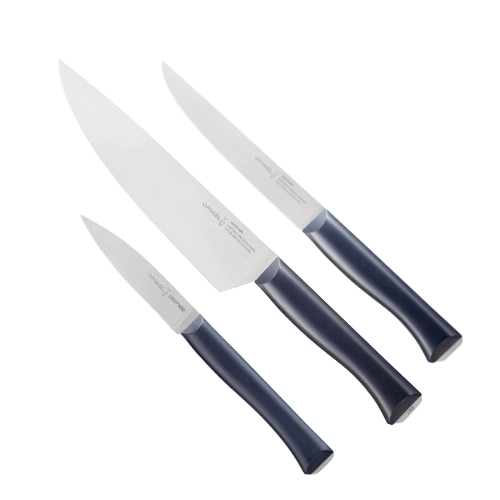
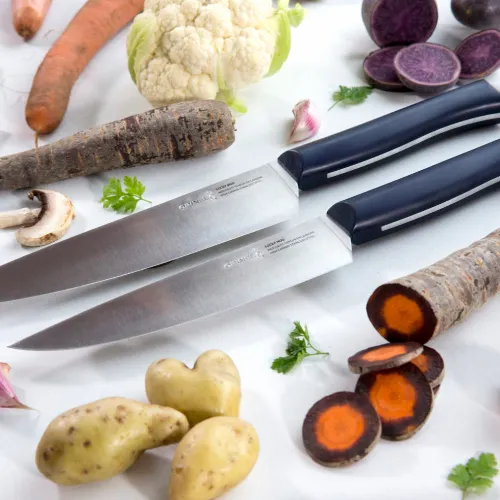
The right knife for this recipe
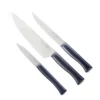
Garlic and green beans require two specific knife tasks: slicing garlic finely and topping and tailing the beans cleanly. Both need a sharp knife that gives you control over thin, precise cuts.
I use the Opinel Intempora knife set for this kind of prep work. Opinel knives are made in the Savoie region of France and have been part of French kitchen culture for generations. The Intempora set includes the right blade for both tasks, sharp enough to slice garlic without crushing it and precise enough to trim beans quickly and cleanly. For a dish this simple, good prep makes the difference between something that looks considered and something that looks rushed.
How the French serve garlic green beans
In France, garlic and green beans is a side dish that appears alongside almost anything. A simple omelette, a slice of quiche Lorraine. It works because it doesn’t impose itself. The flavour is present without being dominant, and the texture provides a contrast to whatever it’s served alongside.
Serve immediately after finishing in the pan. Green beans lose their brightness and their texture as they sit, and the garlic flavour intensifies in a less pleasant way once the dish cools. This garlic green beans recipe is at its best the moment it leaves the pan, which is exactly when it should reach the table.
Share your feedback and spread the love!
If you try this recipe, I’d love to hear how it turns out! Leave a ★★★★★ rating and your thoughts in the comments, it helps fellow French foodies discover this recipe too. Snap a photo and tag me @obviously.french on Instagram if you’re sharing your bake or cooking online. Don’t forget to save this recipe to Pinterest so you’ll always have it handy for your next French-inspired meal!
Disclosure: Just so you know, this post contains sponsored content and/or affiliate links, If you make a purchase through these links, I may receive a small commission. Doesn’t cost you anything extra. I only link to things that are actually worth your time. All opinions are my own!