Massepain de Saint Léonard
 Prep Time 2 hours 20 minutes
  Cook Time 15 minutes
  Total Time 2 hours 35 minutes
  Servings 20 biscuits
Ingredients
- 200 gr almonds freshly ground or almond powder
- 170 gr caster sugar
- 3 egg only the whites
- icing sugar
Equipment
Instructions
1. Prepare the almonds
- If using whole almonds, lightly grind them in a food processor until they are finely crushed but not oily or pasty. Grinding almonds fresh gives a more authentic flavour and texture, but pre-ground almond flour can also be used for convenience.
2. Mix dry ingredients
- In a large bowl, combine the ground almonds and sugar thoroughly so to create a flaky paste
3. Make a meringue
- Ensure egg whites are at room temperature by taking them out of the fridge 15 minutes before use. Separate the whites carefully, making sure no yolk contaminates them. Whisk the egg whites using an electric mixer until they form firm peaks. Gradually add the sugar in small amounts while continuing to whisk, creating a glossy, stable meringue.
4. Combine ingredients
- Gradually pour the beaten egg whites into the almond and sugar mixture. Fold gently until a smooth, thick dough forms, able to hold its shape.
5. Chill the dough
- Cover or wrap the dough and chill in the fridge for at least 2 hours or overnight to firm up and improve flavour.
6. Preheat the oven
- After the dough has chilled, preheat your oven to 180°C (350°F) static heat.
7. Shape the biscuits
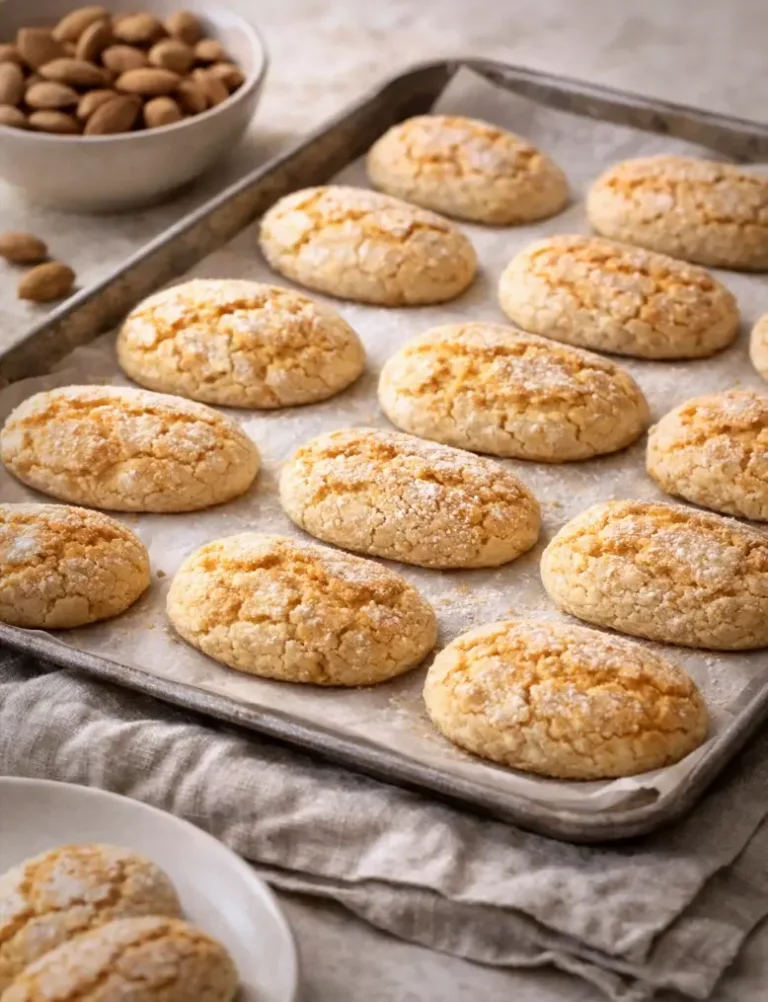
- Transfer the dough to a piping bag fitted with a smooth or fluted nozzle and pipe batons around 5-6cm long onto a baking tray lined with parchment, spacing about 2cm apart and dust with icing sugar for a classic finish.
8. Bake the biscuits
- Bake for about 15 minutes until the biscuits develop a delicate golden crust without over-browning. Since these little treats are mostly sugar and almonds, they can go from perfect to burnt in a flash, so keep a close eye, as just a minute can make all the difference.
9. Cool the biscuits and serve
- Let the biscuits cool completely on the cooling rack to set their texture, crisp outside, tender inside, and finally enjoy them with your cup of coffee or tea!
Notes
- Grinding your own whole blanched almonds produces a fresher, nuttier flavour and a better crumbly texture compared to pre-ground almond powder, but requires a good food processor and careful pulsing to avoid turning almonds into butter.
- The texture of the dough should be smooth and pliable but not runny. If it feels too dry or crumbly to shape, add the egg whites gradually, a little at a time, folding gently until the right consistency is reached.
- Chilling the dough helps it firm up and makes piping or shaping much easier. Don’t skip this step, it also improves the flavour melding.
- When piping, try to keep batons consistent in size around 5-7cm for even baking and authentic appearance.
- Baking times can vary by oven, so watch closely after 12 minutes. The difference between perfectly baked and burnt is a minute or two, as these biscuits brown quickly due to their sugar content.
- Let biscuits cool fully on the tray before moving them to avoid breaking. Cooling sets their crisp shell and tender inside beautifully.
- Store massepains in an airtight container at room temperature. They keep well for several days, making them a lovely gift or treat that lasts.
About this recipe
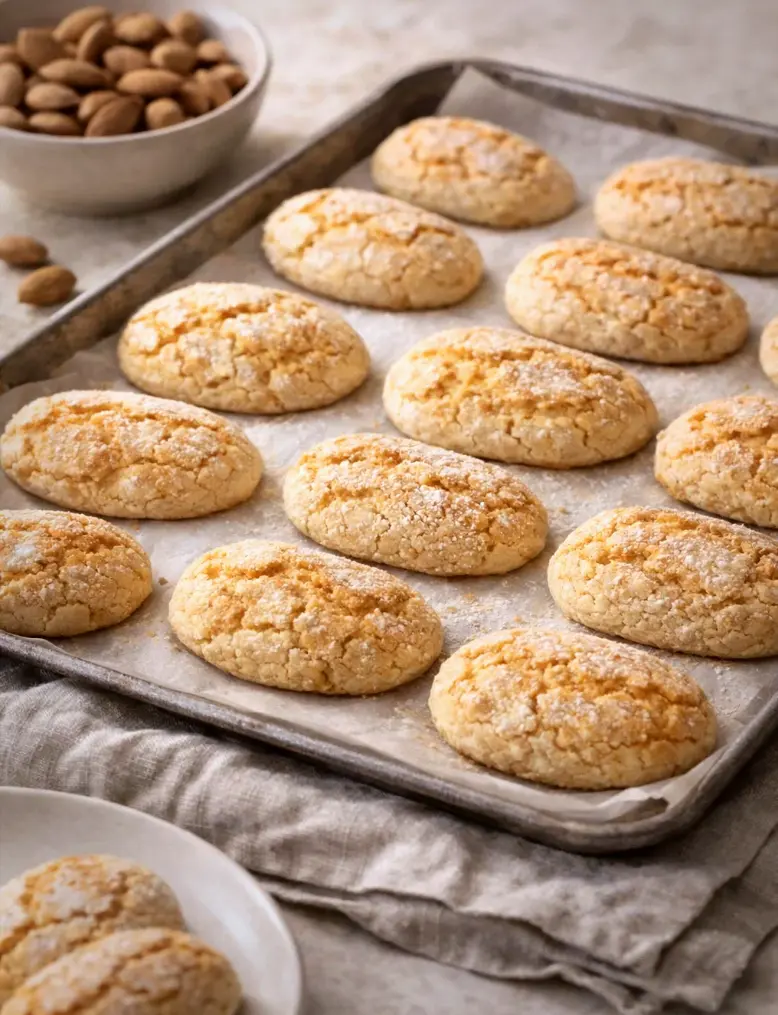
The massepain biscuit from Saint-Léonard-de-Noblat is one of those regional French specialities that most people outside the Limousin have never heard of, and everyone who tries it immediately wants to know where it has been all their life. A small, moist almond biscuit that sits somewhere between a macaron and a marzipan cake, with a texture that is dense and yielding in a way that neither of those comparisons quite captures. It is its own thing, and it has been its own thing for centuries.
Where massepain comes from
The massepain de saint leonard de noblat has roots that stretch back to medieval times, specifically to the pilgrimage routes of the Camino de Santiago. Saint-Léonard-de-Noblat sits on one of the main French pilgrimage routes leading south towards Spain, and the town became an important stopping point for pilgrims walking to Santiago de Compostela. It is believed that returning pilgrims brought back the recipe or inspiration from Spain, where almond-based sweets were a staple of the pilgrimage tradition. Almonds, ground finely with sugar and egg white, are the foundation of confectionery traditions across the entire Mediterranean, from Spanish marzipan to Italian amaretti to the massepain macarons of this small town in the Limousin.
The massepain recipe took root in Saint-Léonard and stayed. The town became so associated with the biscuit that it now defines the local identity in the way that a single product occasionally does in small French towns.
The five pâtissiers
In the town centre of Saint-Léonard-de-Noblat, five pâtissiers each make their own version of this massepain biscuit, each one slightly different, each one a closely guarded secret. Legend has it that only one holds the original recipe, having bought the bakery and the formula from a Monsieur Petit Jean, but which of the five remains a genuine mystery. Together, these five bakeries produce around 20 tonnes of massepain every year, which gives you a sense of how important this single product is to the town’s economy and identity.
A piece of local history worth knowing: bakers used to sell their used baking sheets cheaply to children, who would take them home to lick off the massepain residue stuck to the surface. It sounds improvised, but it tells you something about how embedded this biscuit is in the daily life of the town and how long it has been part of growing up there.
The massepain macarons connection
The massepain de saint leonard de noblat belongs to the same family as the French macaron in terms of its base ingredients. Both use ground almonds, sugar, and egg white. The massepain recipe produces something denser and moister than a Parisian macaron, without the signature sandwich structure or the ganache filling. It is closer in spirit to the original French almond biscuit tradition that predates the modern macaron, and it gives you a clearer picture of what those early almond-based confections tasted like before the macaron evolved into its current refined form.
The Confrérie des Compagnons du Massepain
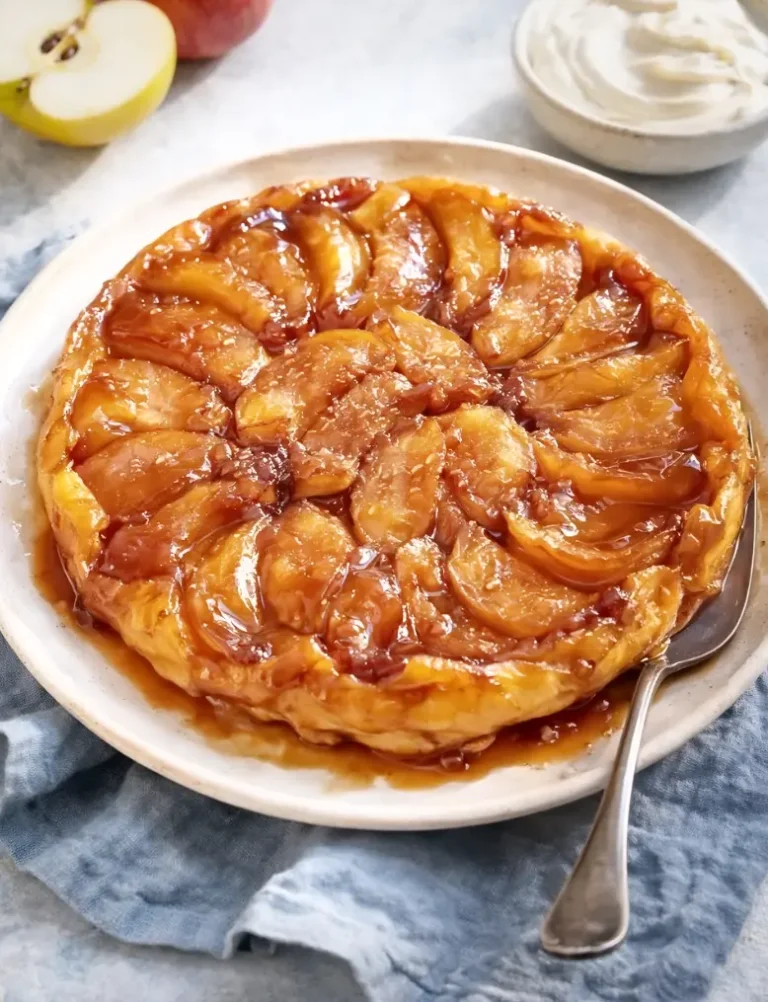
The massepain biscuit is protected and celebrated by the Confrérie des Compagnons du Massepain, a brotherhood dedicated to preserving the recipe and the tradition. France has dozens of these regional confréries attached to specific local foods, from the Confrérie des Lichonneux who defend the tarte tatin to the brotherhood that protects the canelé de Bordeaux. Their existence tells you something important: this is a product that people care enough about to organise around, which is a better endorsement than any award.
The right piping equipment
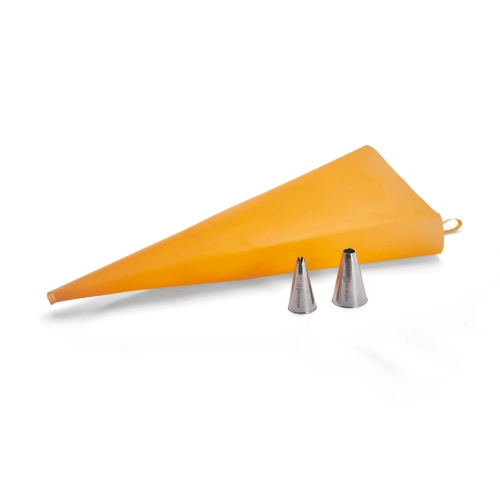
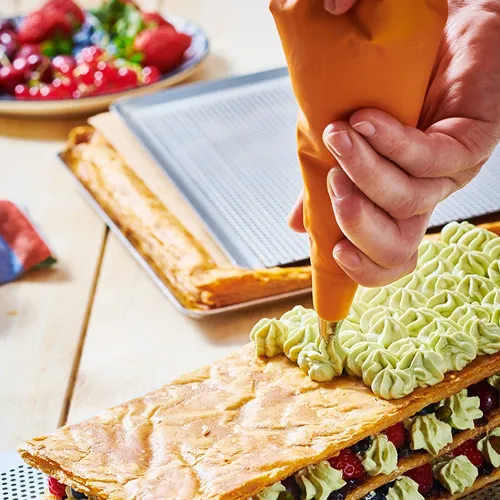
The massepain recipe requires the mixture to be piped into small, consistent rounds before baking. The consistency of size matters: pieces that are too large take longer to set and can crack. Pieces that are too small dry out before the interior reaches that characteristic moist, dense texture.
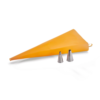
I recommend the De Buyer piping bag for this. The bag is sturdy enough to handle a fairly dense almond mixture without splitting under pressure, and the control it gives over the size and shape of each massepain biscuit means the batch comes out consistent rather than uneven. For a confection this specific, where the texture depends on the pieces baking at the same rate, consistency in piping is the most important practical step in the recipe.
Share your feedback and spread the love!
If you try this recipe, I’d love to hear how it turns out! Leave a ★★★★★ rating and your thoughts in the comments, it helps fellow French foodies discover this recipe too. Snap a photo and tag me @obviously.french on Instagram if you’re sharing your bake or cooking online. Don’t forget to save this recipe to Pinterest so you’ll always have it handy for your next French-inspired meal!
Disclosure: Just so you know, this post contains sponsored content and/or affiliate links, If you make a purchase through these links, I may receive a small commission. Doesn’t cost you anything extra. I only link to things that are actually worth your time. All opinions are my own!