 September 10, 2025
Disclosure: This post may contain affiliate links which provide us a small commission when used for purchase. Please read my disclosure policy for more information. I am grateful for your support!
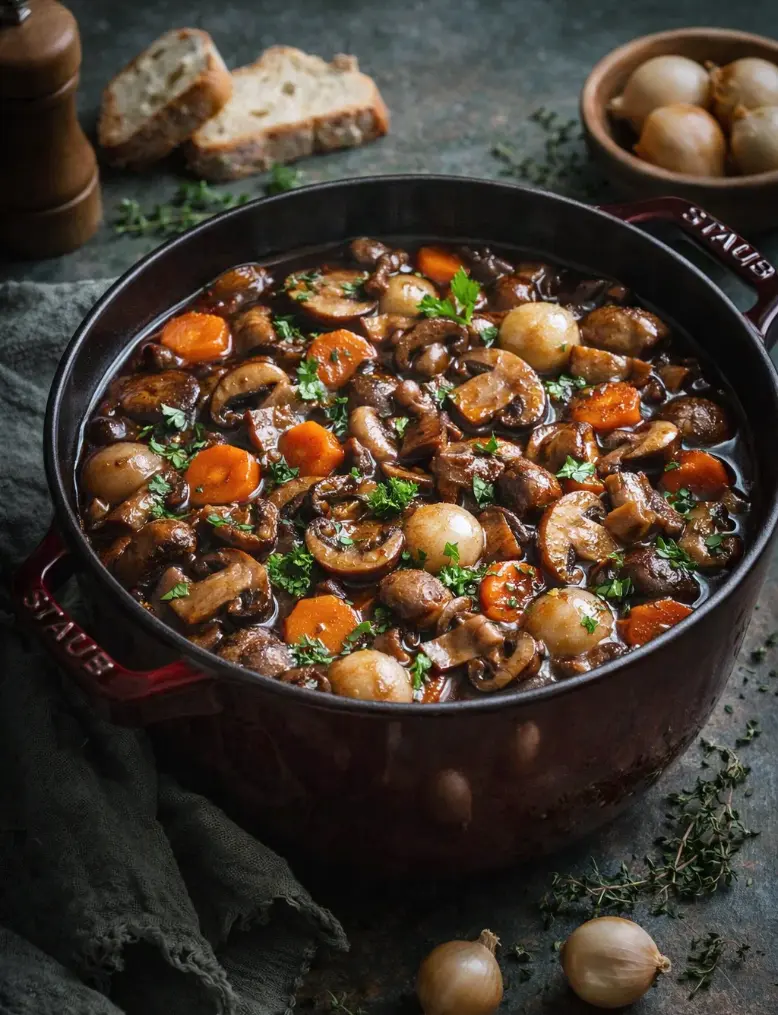
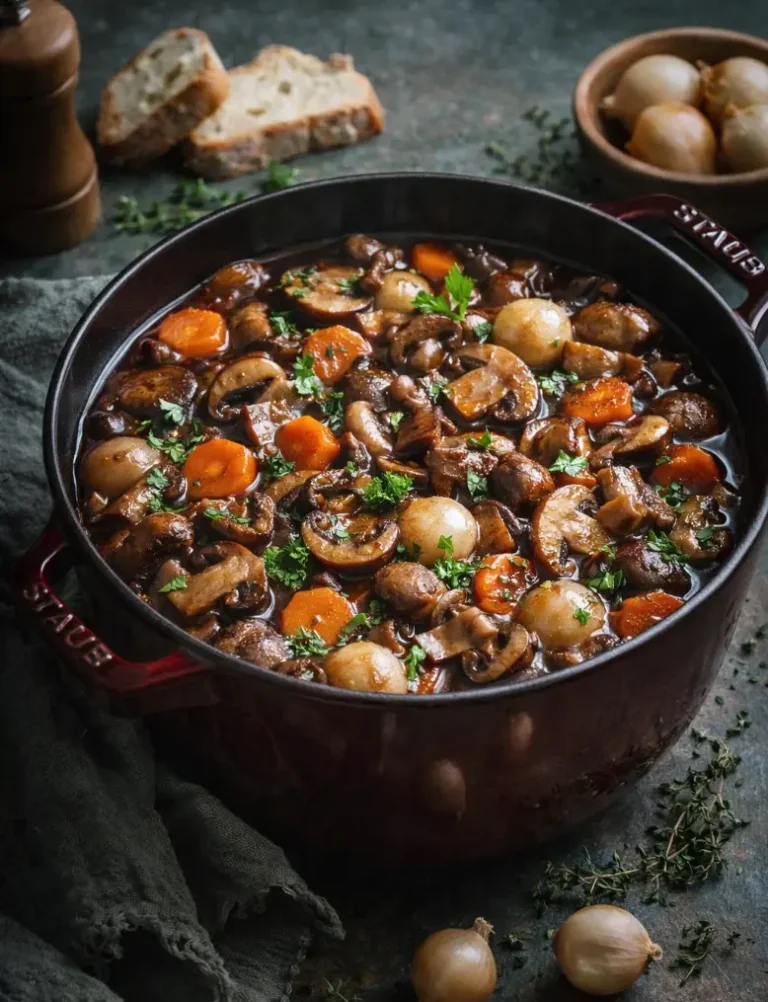
I always find that recipes with wine are completely addictive, and this mushroom bourguignon is no different. I was so happy when I realised there was a vegetarian alternative to the famous boeuf bourguignon, and now it’s what we make for comfort food when it’s cold outside. I’m lucky to have all my herbs growing in the garden, so the bay, thyme and rosemary I pick in summer and dry in the shed are ready to use all winter.
I don’t even know how to describe the taste of this vegetarian beef burgundy. It’s rich and earthy, the mushrooms giving a meaty, almost silky texture and a strong umami depth. Slow cooking makes everything taste rounded and a little sweet underneath. You’ll have to try it and tell me whether I’m describing it well!
Table of Contents
Where bourguignon comes from
Since this is a vegetarian take on boeuf bourguignon, it’s worth knowing where the original came from. It began as sensible farmhouse food in Burgundy: tough, cheap cuts of beef that needed hours braised slowly in local wine with aromatics.
The name first appears in print in Pierre Larousse’s Grand Dictionnaire in 1867, where “bourguignon” simply means anything cooked with wine. Funny thing though, the dish became famous in Paris long before Burgundy claimed it! Chef Escoffier codified it in his Guide Culinaire in 1903, cooking the beef as one large whole piece. It was Julia Child, much later, who cut it into the big cubes everyone uses now.
And there’s a lovely footnote: boeuf bourguignon is thought to be the origin of oeufs en meurette (similar to oeufs à la couille d’âne), the Burgundy poached-egg dish. When all the beef had been eaten and only wine sauce was left in the pot, cooks poached eggs in it rather than waste it. Two dishes from one pot.
Ingredients
- Mixed mushrooms — the heart of the dish. Button for bulk, chestnut for flavour and texture. Never just one kind, since the variety is what gives the sauce complexity.
- Dried porcini (optional) — the single biggest upgrade available. The soaking liquid is concentrated umami and goes into the pot with them.
- Red wine — with no beef in the pot, this carries even more of the flavour. A Burgundy Pinot Noir or a Beaujolais Villages.
- Vegetable stock — the other half of the braising liquid. A good one matters here, store-bought or homemade stock.
- Carrots and shallots — the sweetness underneath everything. Shallots are gentler and sweeter than onion, which suits the wine.
- Tomato purée — a spoonful for depth, colour and a little acidity that lifts the whole sauce.
- Plain flour — cooked out with the tomato purée, it’s what thickens the sauce to that glossy consistency.
- Butter and olive oil — oil for browning at high heat, butter for richness in the aromatics.
- Thyme, bay and rosemary — the classic bourguignon base, and what makes the kitchen smell extraordinary while it cooks.
How to make mushroom bourguignon
1. Prep everything before you start
Slice the carrots and shallots thinly, mince the garlic, and cut the mushrooms into generous bite-sized pieces. Cut them larger than feels right, because they shrink considerably as they cook and small pieces vanish into the sauce. If you’re using dried porcini, cover them with hot water now and leave them to soak.
2. Brown the mushrooms in batches
Heat the olive oil in a cocotte over medium heat and add the mushrooms in batches, never all at once. Crowd the pan and they release their water and stew in it instead of browning, which loses you the caramelisation that gives the dish its depth. Cook until golden and the juices have evaporated, then set them aside.
3. Soften the aromatics
Melt the butter in the same pan and add the shallots, carrots and garlic. Cook gently for five to seven minutes until softened and just starting to caramelise. Don’t rush this over high heat, you want sweetness, not colour, and burnt garlic will run through the whole sauce.
4. Cook out the flour and tomato purée
Stir in the tomato purée and flour and cook for a full minute, stirring constantly. Raw flour tastes chalky and doesn’t disappear during braising, so this minute genuinely matters. It should darken slightly and smell toasty rather than powdery.
5. Deglaze and build the sauce
Pour in the wine slowly, scraping up every browned bit from the base of the pan, because that’s where a lot of the flavour is sitting. Add the stock, the herbs and the mushrooms, plus the porcini and their strained soaking liquid if you’re using them. Leave the grit at the bottom of the soaking bowl behind.
6.Simmer gently, lid on
Bring it to a simmer, cover, and drop the heat right down for about 30 minutes, stirring now and then. You want it bubbling quietly, not boiling, or the sauce reduces too fast and the carrots stay hard. It’s ready when the sauce is glossy and the carrots are tender.
7. Season at the end and finish
Fish out the bay leaves and herb sprigs, then taste and season. Leave the salt until now, since the stock and the reduction both concentrate as it cooks. Scatter over the parsley and take the whole pot to the table with plenty of bread.

Tools for this recipe
Check out my favorite kitchen essentials and cookware!
- Use a heavy cast iron cocotte that holds a steady quiet simmer without catching on the base, with a weighty lid that traps steam and lets it fall back into the pot as it cooks.
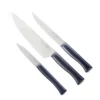
- Use a sharp knife for the volume of slicing this recipe involves.
Tips for success
- Cut the mushrooms bigger than you think: they lose a lot of their volume during browning and braising, and pieces cut small end up as texture rather than as the substance of the dish.
- Don’t wash mushrooms under the tap: they’re sponges, and waterlogged mushrooms won’t brown. Wipe them with a damp cloth or brush the dirt off with a vegetable brush.
- Brown in batches and be patient: this is the longest active part of the recipe and the one that decides how deep the finished dish tastes. Wait for the pan to come back to heat between batches.
- Use the porcini soaking liquid, but leave the grit: strain it through a coffee filter or pour it off carefully, stopping before the sediment at the bottom. That liquid is pure concentrated flavour.
- If the sauce is thin at the end, take the lid off: ten minutes uncovered reduces it to glossy. If it’s too thick, loosen it with a little more stock.
How to store it
- In the fridge: Keeps 4 days covered, and it’s better on day two, so leftovers are a bonus rather than a compromise. Reheat gently on the hob, adding a splash of stock or water if the sauce has tightened.
- In the freezer: Freezes very well for up to 3 months, which makes it worth doubling the batch. Freeze in portions and thaw overnight in the fridge. The mushrooms hold their texture better than most vegetables do.
- Making ahead: Cook it completely a day ahead and simply reheat, which is what I’d do for guests. All the work is done and it tastes better for the wait.
More hearty recipes to try
Variations
- With pearl onions: small whole onions browned in butter and added for the last fifteen minutes is the classic bourguignon garnish, and it makes the dish look and taste closer to the original.
- With lentils: a handful of cooked Puy lentils (these are amazing!) stirred in near the end adds body and protein, turning it into something more substantial without changing the character.
- With wild mushrooms: girolles, trompettes or whatever’s in season, added towards the end so they keep their shape. This lifts it considerably in autumn.
- With pearl barley: stirred in with the stock, it cooks in the sauce and makes the dish a one-pot meal that needs no accompaniment.
- Vegan: swap the butter for olive oil or a plant-based alternative, and check your wine is vegan (many aren’t, since some are fined with animal products). Everything else is already vegan!
FAQ
What mushrooms are best for mushroom bourguignon?
A mix rather than one kind. Button mushrooms for the base, chestnut for flavour and texture, and dried porcini with their soaking liquid if you can get them, which adds real depth.
What wine should I use for a vegetarian beef burgundy?
A Burgundy Pinot Noir or a Beaujolais Villages. The wine reduces and concentrates, so use something you’d happily drink, and pour the same bottle at the table.
How do I make the sauce richer without meat?
Brown the mushrooms properly in batches, use dried porcini and their soaking liquid, and add a splash of soy sauce or a little Marmite for the savoury bottom note that beef would otherwise provide.
What do you serve with vegetarian boeuf bourguignon?
Mashed potato, fresh egg noodles or tagliatelle, or polenta. And bread, because the sauce is the best part of the dish.


 Prep Time 20 minutes
  Cook Time 55 minutes
  Total Time 1 hour 15 minutes
  Servings 4
Description
Ingredients
- 500 gr white button mushrooms
- 500 gr brown chestnut mushrooms
- 20 gr dried porcini optional, but recommended
- 3 carrots
- 3 shallots
- 3 cloves garlic
- 2 tbsp olive oil
- 25 gr unsalted butter
- 2 tbsp tomato puree
- 1½ tbsp plain flour
- 300 ml red wine
- 500 ml vegetable stock
- 2 bay leaf
- 2 sprigs thyme
- 2 sprigs rosemary
- salt and black pepper
- 1 handful parsley fresh chopped to garnish
Equipment

Instructions
1. Prepare the vegetables
- Slice the carrots and shallots thinly, mince the garlic, and cut the mushrooms into generous bite-sized pieces. If using dried porcini, cover them with hot water and leave to soak for 20 minutes.
2. Brown the mushrooms
- Heat the olive oil in the cocotte over medium heat. Add the mushrooms in batches to avoid overcrowding, and sauté until golden and their juices have evaporated. Remove and set aside. This caramelisation is where the depth of flavour comes from.
3. Cook the aromatics
- In the same pan, melt the butter. Add the shallots, carrots and garlic and cook gently for 5–7 minutes, until softened and beginning to caramelise.
4. Add tomato purée and flour
- Stir in the tomato purée and flour and cook for a minute, stirring, to lose the raw flour taste and thicken the sauce.
5. Deglaze and build the sauce
- Slowly pour in the red wine, scraping up the browned bits from the base. Add the vegetable stock, bay leaves, thyme and rosemary, and return the mushrooms to the pan. If using porcini, add them now along with their soaking liquid, strained and leaving the grit behind.
6. Simmer gently
- Bring to a simmer, cover, and reduce the heat to low. Cook for about 30 minutes, stirring occasionally, until the sauce has thickened and the carrots are tender.
7. Season and serve
- Remove the bay leaves and herb sprigs. Season with salt and black pepper to taste. Scatter with chopped parsley and serve.
Notes
- Serve over creamy mashed potato, fresh egg noodles or polenta, with bread for the sauce.
- Dried porcini and their strained soaking liquid add real depth if you can get them.
- Better the next day, once the sauce has settled and deepened.
Share your feedback and spread the love!
If you try this recipe, I’d love to hear how it turns out! Leave a ★★★★★ rating and your thoughts in the comments, it helps fellow French foodies discover this recipe too. Snap a photo and tag @obviously.french on Instagram. Come talk about it in our Facebook group. And don’t forget to save this recipe to Pinterest so you’ll always have it handy for your next French-inspired meal!