A village frozen in time
Oradour-sur-Glane was a quiet, picturesque village in west-central France. Before the Second World War, it was a small rural community with approximately 1,300 residents in the late 18th century, growing to around 2,523 by 2024. The village was known for its peaceful countryside, traditional architecture, and a close-knit community. But today is mostly known for what it remembers and the town serves as a silent witness to the horrors of war and the resilience of memory. Walking its silent streets, we paid our respects with heavy hearts, knowing that sharing this story is vital. By writing about Oradour, we shine a light on humanity’s darkest moments and hope to ensure that such tragedy is never repeated.
The dark day of June 10, 1944
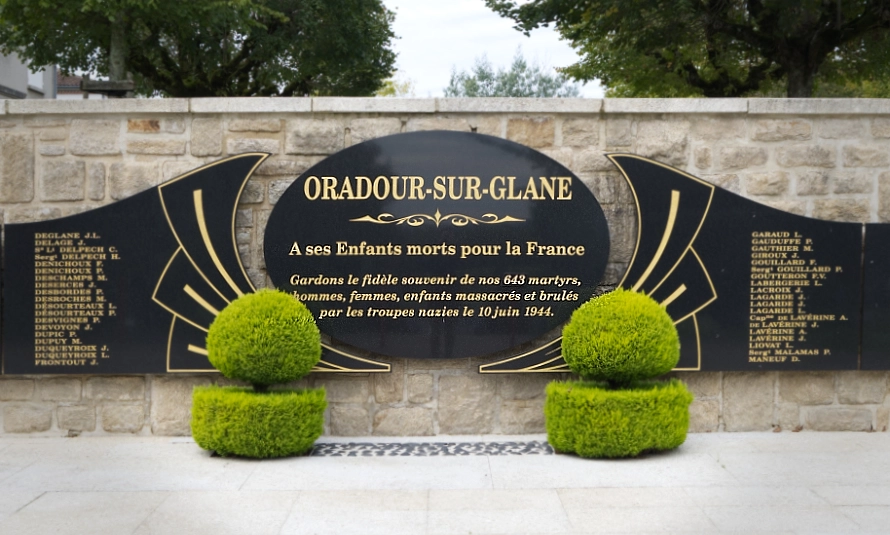
Just four days after D-Day, on June 10, 1944, a tragic atrocity unfolded that would haunt history forever. A unit of the Waffen-SS, specifically the 2nd SS Panzer Division Das Reich, encircled the village. Under orders to punish local resistance supporters and resistants, the SS troops detained the entire population, men, women, and children, in a brutal and systematic manner.
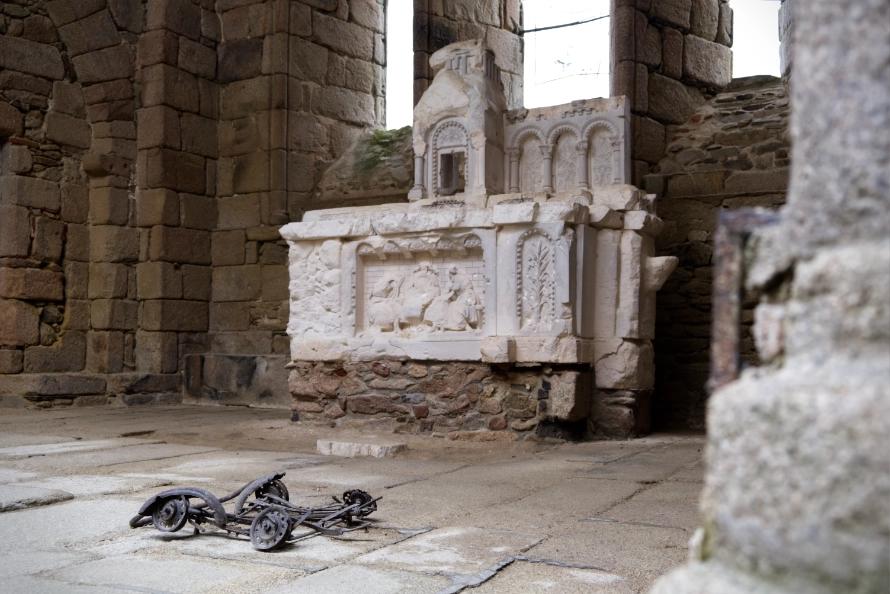
According to historical accounts, the villagers were gathered in the square; women and children were confined in the church, which was later set ablaze, while the men were herded into barns and sheds. The Nazis then opened fire, shooting many on their knees, and the rest were burned alive with incendiary devices and gasoline. It’s estimated that 642 residents, including 247 children, were murdered that day. The massacre was especially ruthless, with survivors describing scenes of horror, families torn apart, and a village decimated in a matter of hours.
The aftermath and preservation
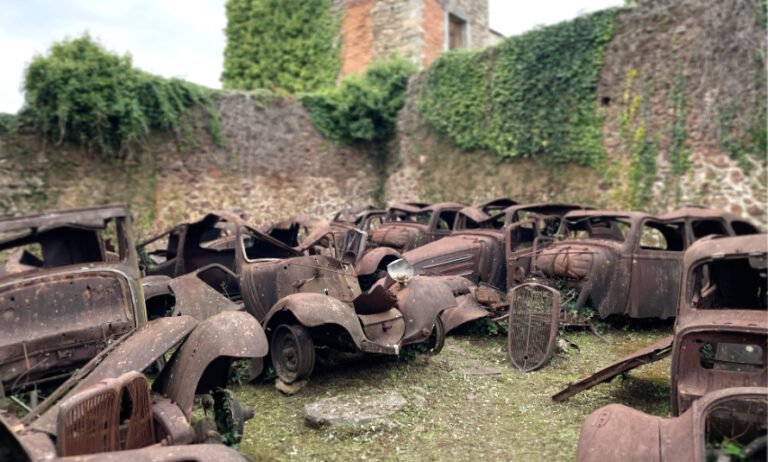
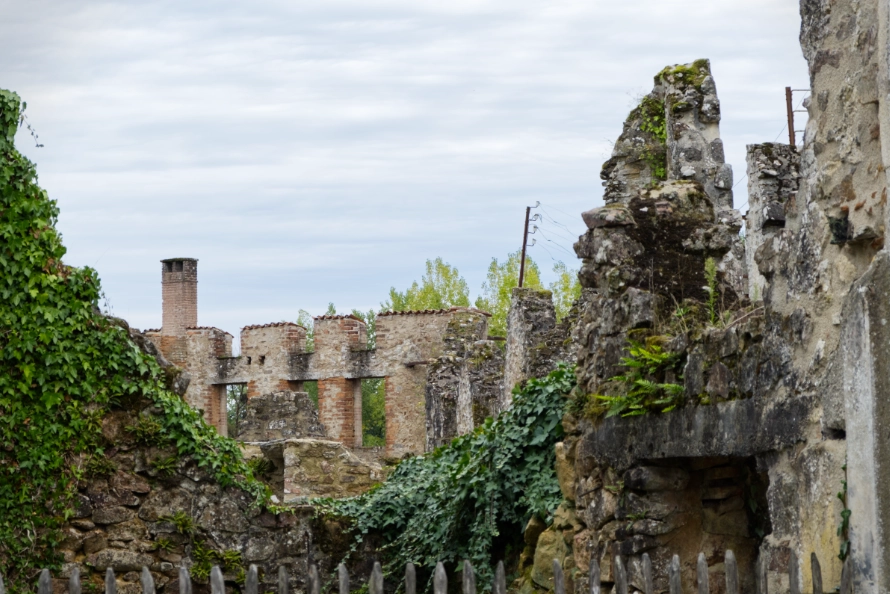
The village was completely razed; the buildings and streets were burned and blown apart, leaving behind only ruins. The Nazi troops set fire to the entire village, leaving it in a state of utter destruction. The village’s destruction was so complete that it became an enduring symbol of Nazi brutality and war’s cruelty.
In the immediate aftermath, the French government recognised the importance of preserving this site as a memorial to the victims of the massacre. By 1945, the ruins were declared a public monument; in 1946, they received official recognition as a historic monument. The decision was to leave the village in its ruined state, an unaltered reminder of the atrocity, and to serve as a silent witness to the horrors of war and the resilience of memory.
The memorial and The Centre de la Mémoire
Since 1999, the site of Oradour-sur-Glane has been accessible through the Centre de la Mémoire. This underground museum offers a profound experience with exhibits, photographs, testimonies, and a short film shot within the ruins, compiled from the stories of survivors. It aims to educate visitors about the sheer brutality of the massacre, the context of the Nazi occupation, and the importance of remembrance.
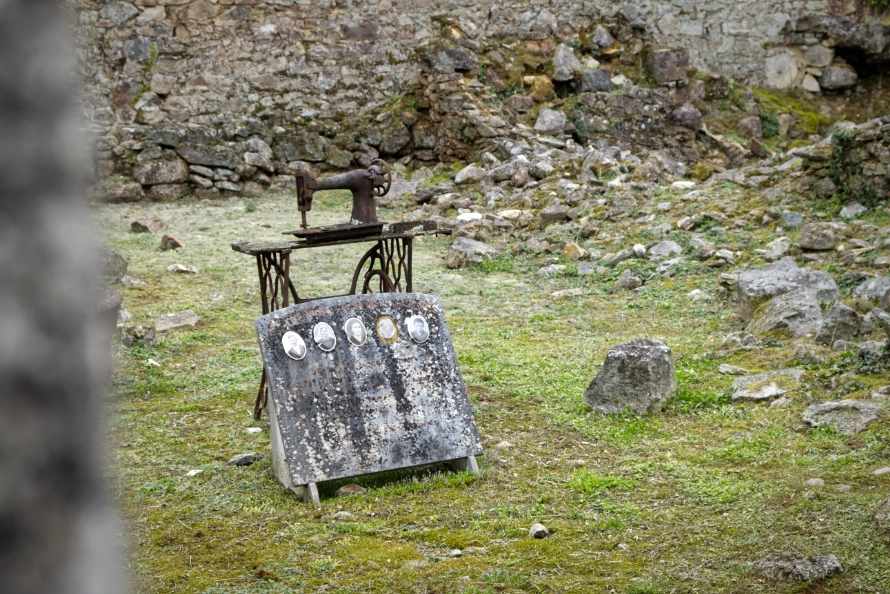
The centre also includes a special tribute: a gallery displaying portraits of the victims printed on porcelain plaques. This tribute particularly highlights the six people who survived the massacre, giving a human face and personal story to those few who lived through the tragedy, alongside remembering all the lives lost.
A place of remembrance and reflection
Today, the ruins of Oradour-sur-Glane stand as a powerful memorial to the 643 victims, a stark reminder of wartime barbarity. Each year, hundreds of thousands of visitors from around the world come to pay their respects and reflect on the horrors of war and the importance of peace.
The site is a place for education, remembrance, and the ongoing fight against forgetting. The French government and various organisations continue to develop educational programs, exhibitions, and commemorations to ensure that the tragedy of Oradour-sur-Glane remains etched in collective memory.
A powerful beacon
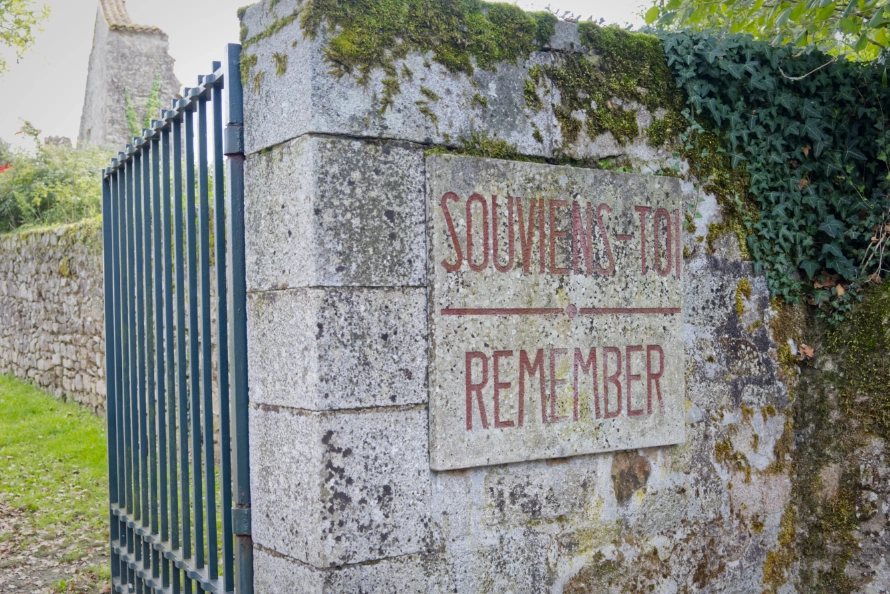
Oradour-sur-Glane is not a place for a light-hearted stroll, nor should it be. It is a village frozen in time, where the silence between the crumbling walls speaks louder than words ever could. Visiting here is a solemn invitation to witness history’s darkest hour and to remember the lives brutally torn away. Yet, amidst the ashes, Oradour-sur-Glane also shines as a powerful beacon, an enduring testament to resilience, memory, and the unyielding hope for a world where such horrors are never repeated.
To step into Oradour-sur-Glane is to walk alongside the past with open eyes and an open heart. It demands reflection, respect, and the commitment to keep these stories alive, not just for France, but for humanity. If ever a place could teach the true cost of war, this is it.
So, when planning your travels through the beautiful Limousin region, carve out time for Oradour-sur-Glane. It will challenge you, move you, and stay with you long after you leave. And that, truly, is the power of visiting a place that never forgets.
Practical information for Oradour-sur-Glane
- Getting there
Oradour-sur-Glane is located about 20–22 kilometres northwest of Limoges. The site is easiest reached by car, with well-marked routes from Limoges via the D9 or D941. While direct public transport options are limited, you can take a train to Limoges then catch a taxi or a rare local bus towards the village. - When to visit
The Centre de la Mémoire is open year-round from 15 January to 15 December, seven days a week, opening at 9 am and closing between 5 and 7 pm depending on the season. The ruined village itself is open and freely accessible during daylight hours. Spring to early autumn offers the most pleasant weather for walking the ruins and exploring the surrounding countryside. - Admission
Entry to the old village ruins is always free and open. The permanent exhibition at the Centre de la Mémoire costs €7.80 for adults, €5.20 for concessions, or €22 for a family group. Temporary exhibitions, events and special activities may have additional charges.