Pommes Anna
 Prep Time 20 minutes
  Cook Time 50 minutes
  Total Time 1 hour 10 minutes
  Servings 4
Ingredients
- 1 kg waxy firm potatoes
- 150 gr unsalted butter
- thyme optional
- salt and black pepper


Instructions
1. Prep the potatoes
- Peel the potatoes and slice them as thinly as possible, about 2-3mm thick. A mandoline makes this dead easy. Drop the slices into a bowl of cold water as you go to stop them browning.Uniform thickness is crucial. If some slices are thicker than others, they won't cook evenly and the whole thing falls apart.
2. Dry and season
- Drain the potato slices and pat them completely dry with kitchen paper. This is important, any water will stop them crisping up. Season generously with salt and pepper.Wet potatoes steam instead of fry. Don't skip the drying.
3. Butter the pan
- Brush your pan generously with melted butter, making sure you get the sides as well as the base. Pour a thin layer of butter into the bottom.The butter creates that crispy, golden crust. Don't be shy with it.
4. Layer the potatoes
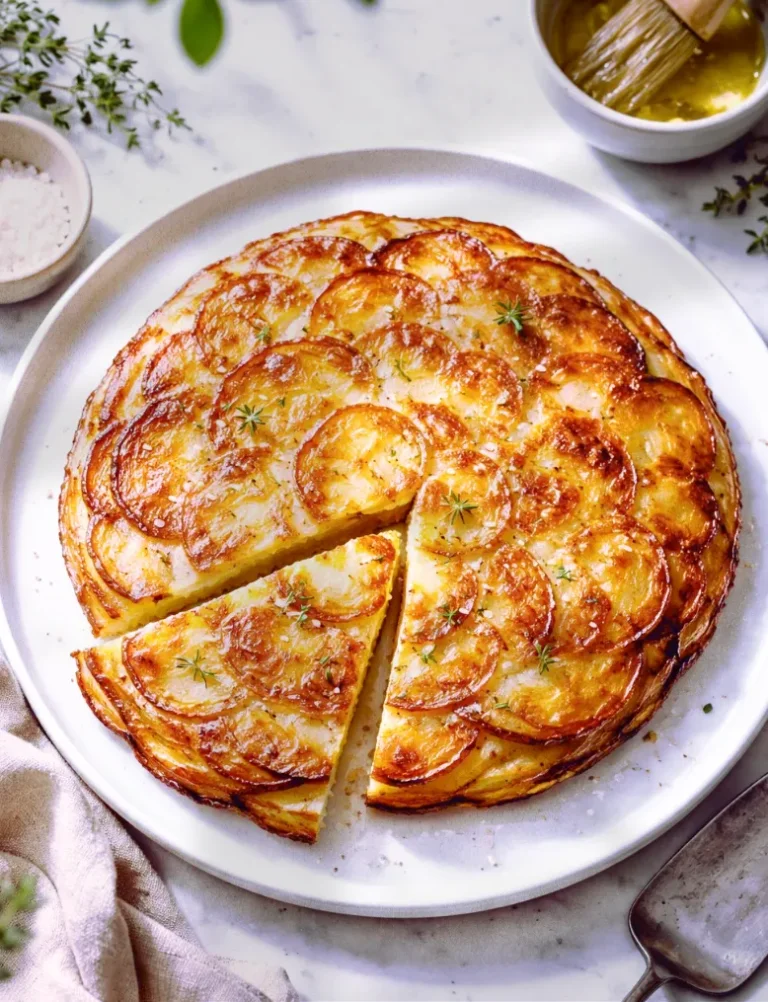
- Arrange the potato slices in overlapping circles, starting from the centre and working outward. Make it look nice, this is the side everyone will see when you flip it. Brush each layer with melted butter and season lightly. Keep layering until all the potatoes are used, pressing down gently as you go.The circular pattern isn't just for show, it helps the whole thing hold together when you flip it. Press down firmly so there are no air pockets.
5. Start on the hob
- Place the cast iron skillet over medium heat and cook for 10-12 minutes. You'll hear it sizzling, that's the bottom layer getting crispy. Don't peek or move it around.This initial hob time gives the base a proper golden crust before it goes in the oven.
6. Finish in the oven
- Transfer the cast iron skillet to a preheated oven at 200°C (180°C fan) and bake for 35-40 minutes. Press down with a spatula a couple of times during cooking to compress the layers.The compression is what turns separate potato slices into one cohesive cake. It also helps the butter redistribute.
7. Flip and serve
- When the potatoes are tender (test with a knife through the centre), remove from the oven. Let it rest for 2-3 minutes, then run a knife around the edge. Place a plate over the pan, flip it confidently, and lift the pan away. The golden, crispy side should now be on top.The flip is the dramatic moment. If you've buttered properly and got a good crust, it'll come out clean. If bits stick, scrape them onto the top, no one will know.
8. Slice and serve
- Cut into wedges like a cake. Serve immediately whilst it's still crisp.Pommes Anna waits for no one. The crispy edges start to soften after about 10 minutes, so get it to the table fast.
Notes
- Potato choice matters: Waxy potatoes hold their shape better than floury ones.
- Mandoline safety: Use the guard. Seriously. French emergency rooms see a lot of mandoline injuries during potato season.
- Pan alternatives: A proper copper pommes Anna pan is traditional, but a well-seasoned cast iron skillet works brilliantly. Non-stick is fine but won’t give you quite the same crust.
- Butter quantity: 150g sounds like a lot, but you need it. This isn’t a light dish, embrace it.
- Make ahead: You can layer the potatoes a few hours ahead and keep them covered in the fridge. Bring back to room temperature before cooking.
- Thyme variation: Some recipes add fresh thyme leaves between the layers. It’s not traditional but it’s bloody good.
About this recipe
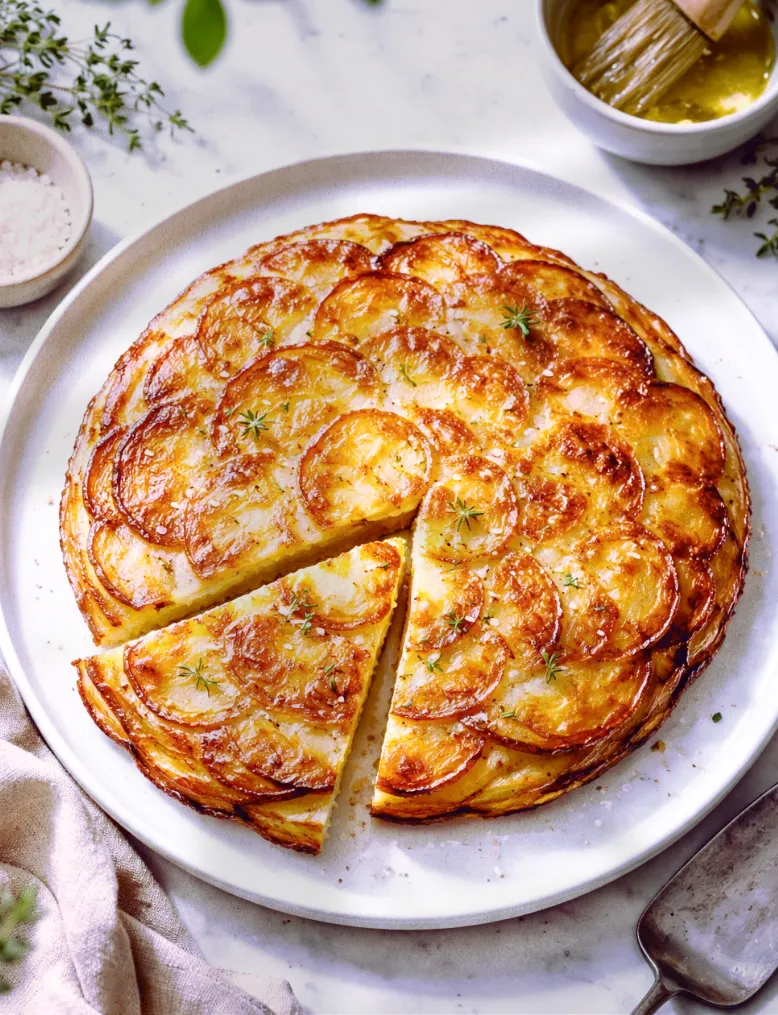
Pommes Anna is one of the great French potato dishes. Two ingredients, one technique, and a result that looks like it came out of a professional kitchen. Potatoes and butter, layered with precision, pressed under heat until they form a golden, unified cake that holds its shape when you flip it. It is the kind of cooking that rewards patience and punishes shortcuts.
The story behind Pommes Anna
Pommes Anna was created in Paris in the 1870s at the legendary Restaurant Magny. It’s named after Anna Deslions, a well-known courtesan of the Second Empire, though exactly why a potato dish got her name is lost to history. Some say she was a regular at the restaurant. Others reckon the chef was simply a fan. Whatever the truth, the dish became a French classic almost immediately, which tells you something about how good it is.
This Pomme Anna recipe is the kind of cooking that looks impressive but relies on technique rather than expensive ingredients. You’re taking two of the most basic things in a French kitchen and turning them into something genuinely elegant. That’s the French approach in a single dish.
The technique that matters
The Pomme Anna potato technique has two non-negotiable requirements: thin slices and plenty of butter. Each layer needs to be paper-thin so the slices meld together during cooking, creating a unified cake rather than a stack of separate slices that falls apart when you cut it. A mandoline makes this much easier and gives you more consistent results than a knife.
The butter does two things at once. It creates the crispy, golden exterior that makes this Anna potato recipe so distinctive. And it keeps the interior layers soft and creamy throughout the bake. Neither job works without enough French butter. This is not a dish for restraint.
The layering itself is straightforward but requires attention. Overlap each slice slightly, season between layers, and press everything down firmly as you go. The weight and pressure during cooking is what compresses the layers into a single cake that holds together for the flip.
The right pan for this Pomme Anna recipe
The traditional method uses a special two-handled copper pan designed specifically for this dish. Copper conducts heat beautifully and creates that perfect golden crust. Most home cooks don’t own one, and they are expensive for something single-purpose.
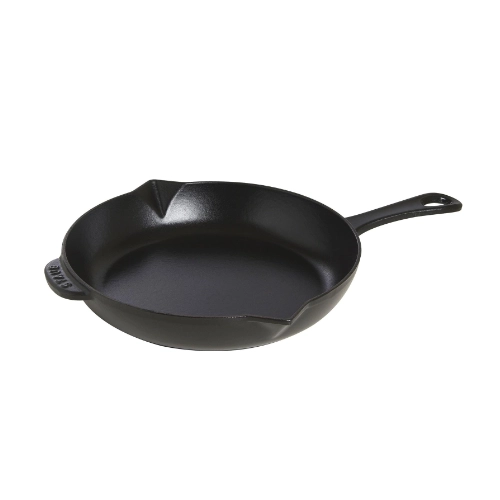
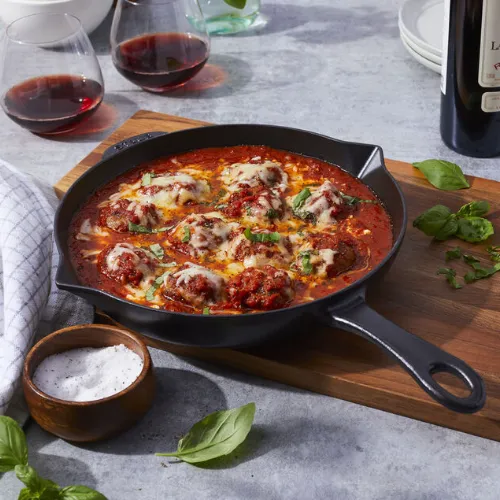
A good cast iron skillet does the job just as well, and in some ways better. I make this Pommes Anna in the Staub cast iron skillet. The heat distribution is even across the entire base, which means the crust colours uniformly rather than developing hot spots. The weight of the pan presses down on the potato layers naturally, which helps the cake hold together. And the Staub’s black enamel interior gives you excellent browning without the risk of sticking. It goes from hob to oven and back without any issues, which this recipe requires.
The flip at the end is pure theatre. When it works, the cake lands golden-side-up, perfectly intact, and you feel like a professional. When it doesn’t, you’ve still got delicious buttery potatoes, just slightly less photogenic ones. Either way, it tastes the same.
How the French serve it
In French restaurants, Pommes Anna is a classic accompaniment to roasted meats, particularly beef and game. It holds its heat well and its structure means it can be sliced cleanly at the table rather than spooned out. It’s the kind of side dish that lifts a meal from good to properly special without requiring much more effort than peeling potatoes.
Modern French cooks sometimes add garlic, thyme, or cheese between the layers. Purists argue that the original version, just potatoes, butter, and seasoning, is already perfect and needs nothing added. Try it the classic way first. Then decide for yourself.
Share your feedback and spread the love!
If you try this recipe, I’d love to hear how it turns out! Leave a ★★★★★ rating and your thoughts in the comments, it helps fellow French foodies discover this recipe too. Snap a photo and tag me @obviously.french on Instagram if you’re sharing your bake or cooking online. Don’t forget to save this recipe to Pinterest so you’ll always have it handy for your next French-inspired meal!
Disclosure: Just so you know, this post contains sponsored content and/or affiliate links, If you make a purchase through these links, I may receive a small commission. Doesn’t cost you anything extra. I only link to things that are actually worth your time. All opinions are my own!