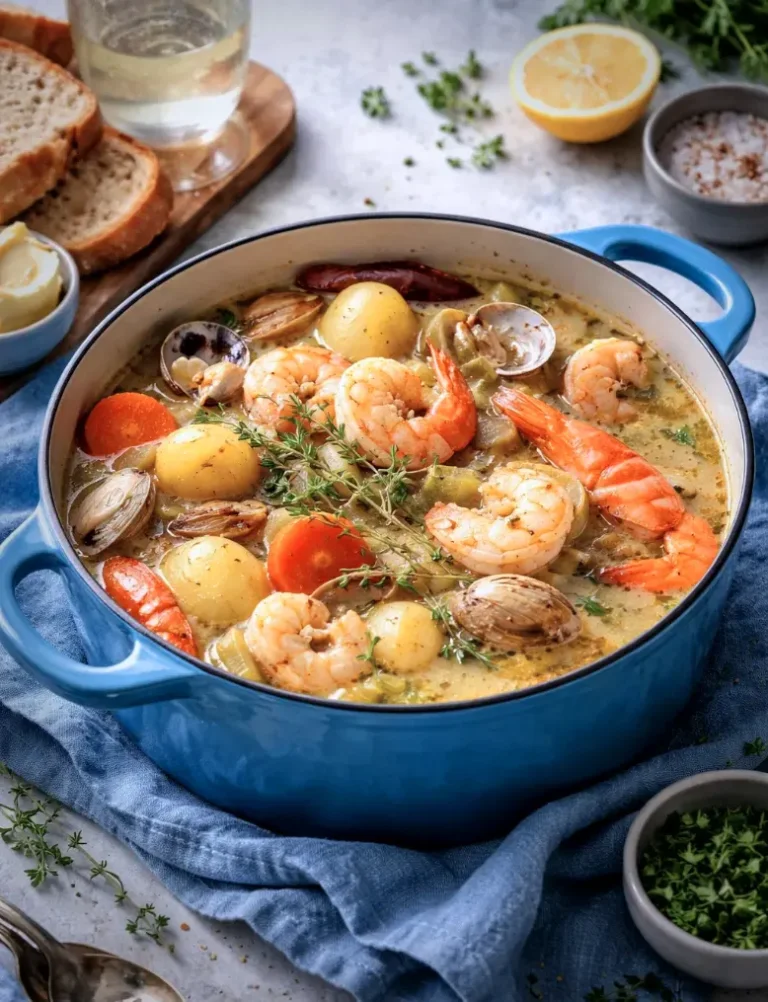
Pot-au-Feu de la Mer
 Prep Time 30 minutes
  Cook Time 40 minutes
  Total Time 1 hour 10 minutes
  Servings 4
Ingredients
Mixed firm-fleshed fish and prawns
- 200 gr salmon
- 200 gr monkfish
- 200 gr haddock
- 200 gr cod
- 300 gr king prawns
Additional ingredients
- 800 gr firm-fleshed potatoes
- 4 carrot
- 2 celery
- 3 leek
- 1 onion
- 1 bouquet garni thyme, bay leaf, parsley stalks, tied together
- 300 ml dry white wine
- 1.5 l fish stock or fumet
- 30 gr unsalted butter
- 3 tbsp crème fraîche
- 20 gr flat-leaf parsley a handful
- 1 pinch saffron threads for extra aroma
- salt and black pepper
Equipment
Instructions
1. Prepare the vegetables
- Peel and wash the carrots, celery, leeks, and potatoes. Chop them into large, rustic pieces. Finely slice the onion. Set aside.
2. Sauté the onion
- Melt the butter in a large pot or cocotte over medium heat. Add the sliced onion and sauté until translucent and fragrant, about 5 minutes.
3. Deglaze with wine and add stock
- Pour in the white wine and bring to a boil. Allow the wine to reduce slightly, then add the fish stock or fumet. Bring to a gentle simmer.
4. Cook the vegetables and bouquet garni
- Add the bouquet garni and all the prepared vegetables (carrots, celery, leeks, potatoes) to the pot. Season with salt and pepper. Let everything simmer, uncovered, at a gentle boil for about 25 minutes, or until the vegetables are tender but not mushy.
5. Add the fish and prawns
- Cut the fish into large, even chunks. Gently add them to the pot and simmer for 8–10 minutes, until the fish is just cooked through and opaque. Stir in the crème fraîche or double cream, then add the cooked prawns and heat through for another 2 minutes.
6. Finish and serve
- Remove the bouquet garni. Taste and adjust seasoning if needed. Sprinkle with chopped parsley just before serving. Serve hot in deep bowls, with crusty bread on the side.
Notes
- For extra flavour: Infuse the broth with a pinch of saffron for a golden hue and delicate aroma.
- Make ahead: This dish reheats beautifully, making it ideal for entertaining or meal prep.
- Vegetable options: You can add fennel or turnip for extra depth.
- Serving suggestion: Accompany with a crisp green salad and a chilled glass of white wine.
About this recipe
The first time I ate Pot au Feu de la Mer, I had no idea what was coming. My neighbour had invited us for dinner, the kind of French village invitation that arrives warmly and inevitably becomes the whole evening. I knew pot-au-feu. I grew up with it, the slow-cooked beef version that appears on French tables when the weather turns cold and nobody wants to be anywhere except around a table with people they love. So when she brought this seafood soup to the table, I stopped. It smelled like the sea and like a French kitchen at the same time, which should not work as well as it does.
I asked her for the recipe before we had finished eating. That is how good it was.
What pot-au-feu actually means
Pot-au-feu translates simply as pot on the fire. It is one of the oldest and most fundamental dishes in French cooking, a large pot of meat and root vegetables simmered slowly in broth until everything is tender and the liquid has become something extraordinary. It is not a recipe so much as a philosophy: use what you have, cook it slowly, and feed everyone at the table properly.
The classic version uses beef and marrowbone. But France is a country of strong regional identities, and every region has adapted the pot-au-feu principle to its own landscape and produce. In Alsace, the bouillon becomes the base for a second course with liver dumplings. In the southwest, the garbure replaces beef with duck confit and white beans. And along the Normandy coast, where the sea has always been the primary larder, cooks swapped the beef for whatever the boats brought in that morning.
This is the pot au feu de la mer, the seafood pot au feu version, and arguably the most elegant of all the regional variations.
The Norman coastline and its seafood
Normandy is not primarily known as a seafood region the way Brittany is, but that undersells it considerably. The Norman coast runs from the Seine estuary to the Mont-Saint-Michel bay, and the ports of Dieppe, Fécamp, and Honfleur have been landing fish for centuries. Normandy gave France its model for cooking fish in cream and white wine, the combination that defines the region’s cuisine as distinctly as its butter and its calvados.
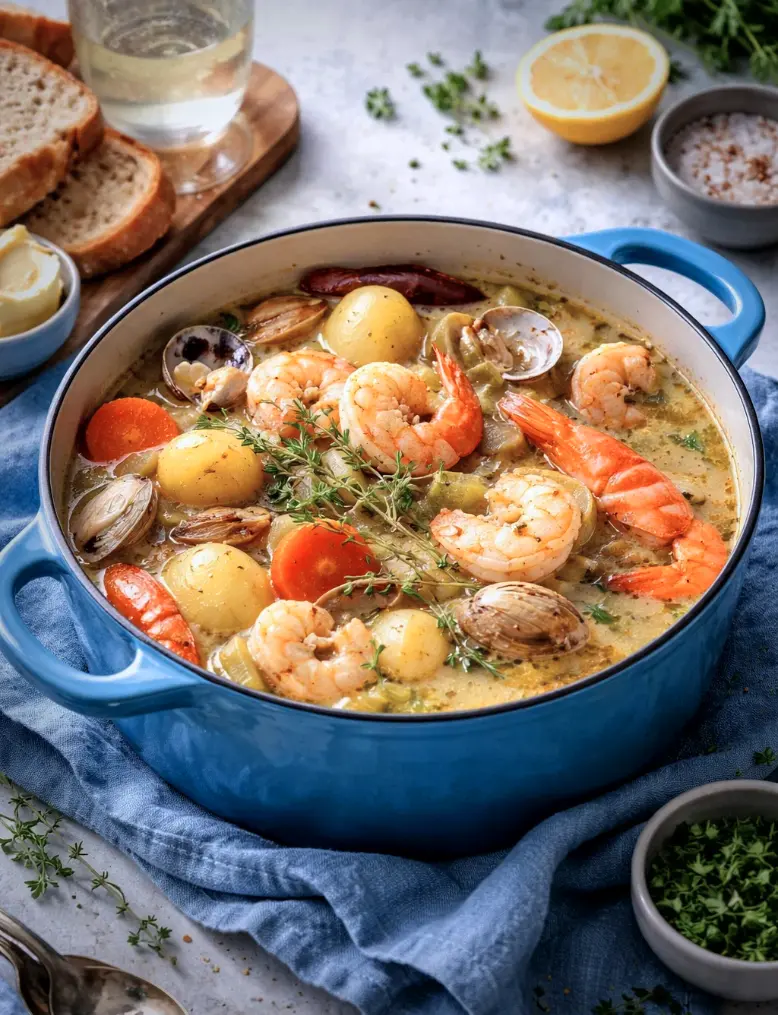
This french seafood soup reflects that tradition precisely. The base is a proper French fish stock, reduced slightly with dry white wine and finished with crème fraîche. The saffron, just a pinch, gives the broth a golden colour and a depth that is impossible to achieve any other way. The vegetables are cut large and rustic, the way pot-au-feu vegetables always are. And the fish, salmon, monkfish, haddock, cod, and king prawns, goes in last, cooked gently so it stays tender rather than falling apart.
The result is a recipe seafood soup that is simultaneously light and deeply satisfying. A proper pot au feu de la mer that feels celebratory without being complicated.
The right pot matters
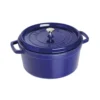
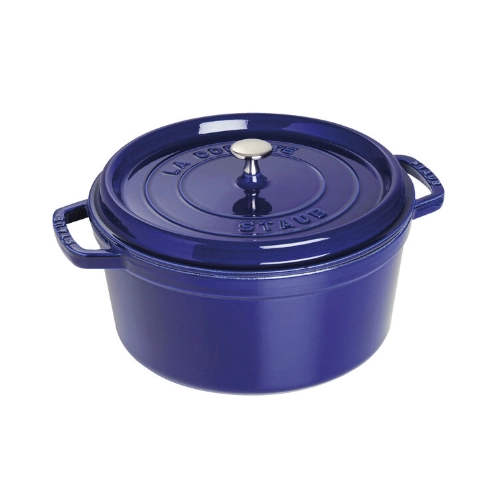
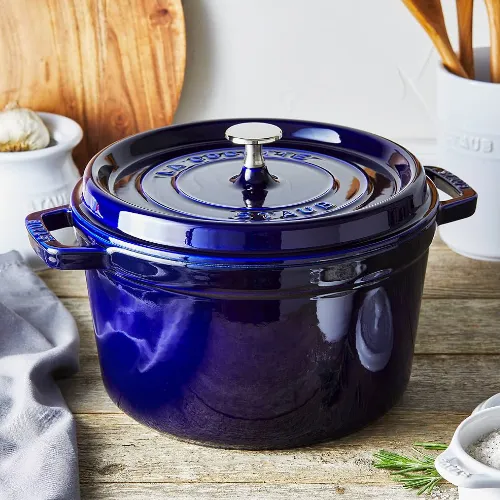
For a dish like this, the pot genuinely makes a difference. You need something that holds heat evenly, allows a proper gentle simmer, and goes from hob to table without looking out of place. I use the Staub cast iron cocotte for this. The enamelled interior means no metallic taste in the broth, the heavy lid keeps everything at a steady temperature, and it is beautiful enough to serve from directly at the table, which is absolutely the right way to serve this dish. Ladle it out at the table, with baguette or crusty bread alongside.
How the French eat this seafood soup
In Normandy this is a proper main course, a generous, complete meal that needs nothing except bread and a salad to follow. It reheats beautifully the next day, the broth having developed even more depth overnight. My neighbour served it with a green salad dressed with a sharp mustard vinaigrette, which cut through the richness of the crème fraîche perfectly.
Make it for a dinner party and bring the cocotte to the table. Let people help themselves. That is the pot-au-feu de la mer spirit, generous, unfussy, and entirely focused on the pleasure of eating together.
Share your feedback and spread the love!
If you try this recipe, I’d love to hear how it turns out! Leave a ★★★★★ rating and your thoughts in the comments, it helps fellow French foodies discover this recipe too. Snap a photo and tag me @obviously.french on Instagram if you’re sharing your bake or cooking online. Don’t forget to save this recipe to Pinterest so you’ll always have it handy for your next French-inspired meal!
Disclosure: Just so you know, this post contains sponsored content and/or affiliate links, If you make a purchase through these links, I may receive a small commission. Doesn’t cost you anything extra. I only link to things that are actually worth your time. All opinions are my own!