 February 18, 2025
Disclosure: This post may contain affiliate links which provide us a small commission when used for purchase. Please read my disclosure policy for more information. I am grateful for your support!
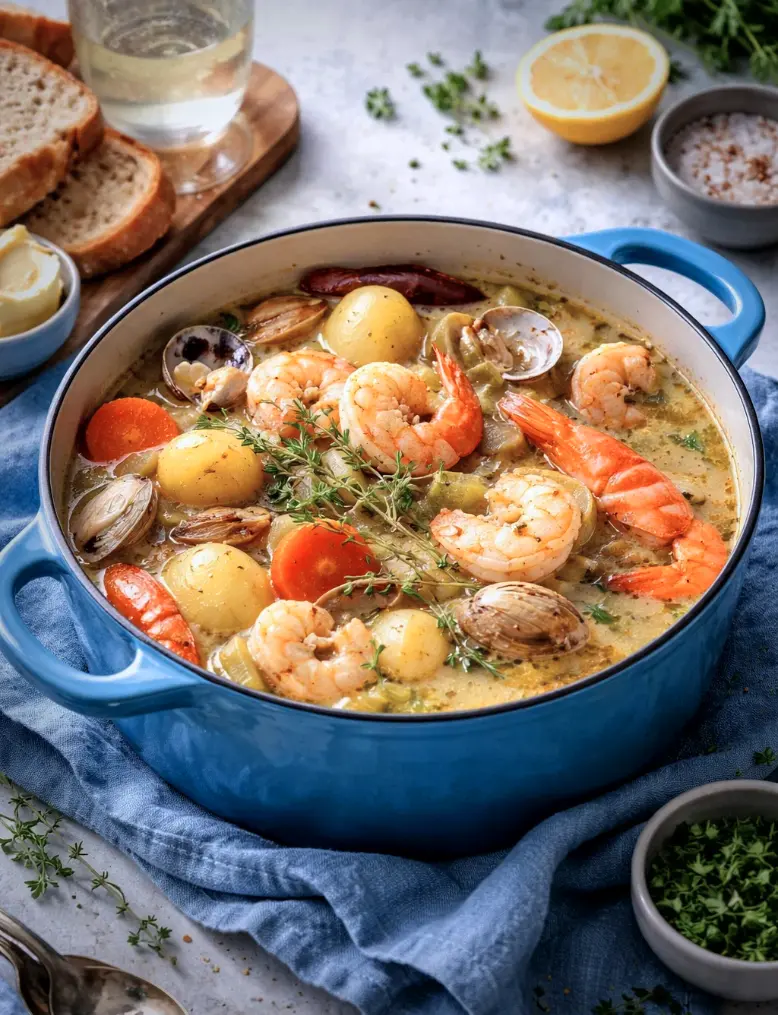
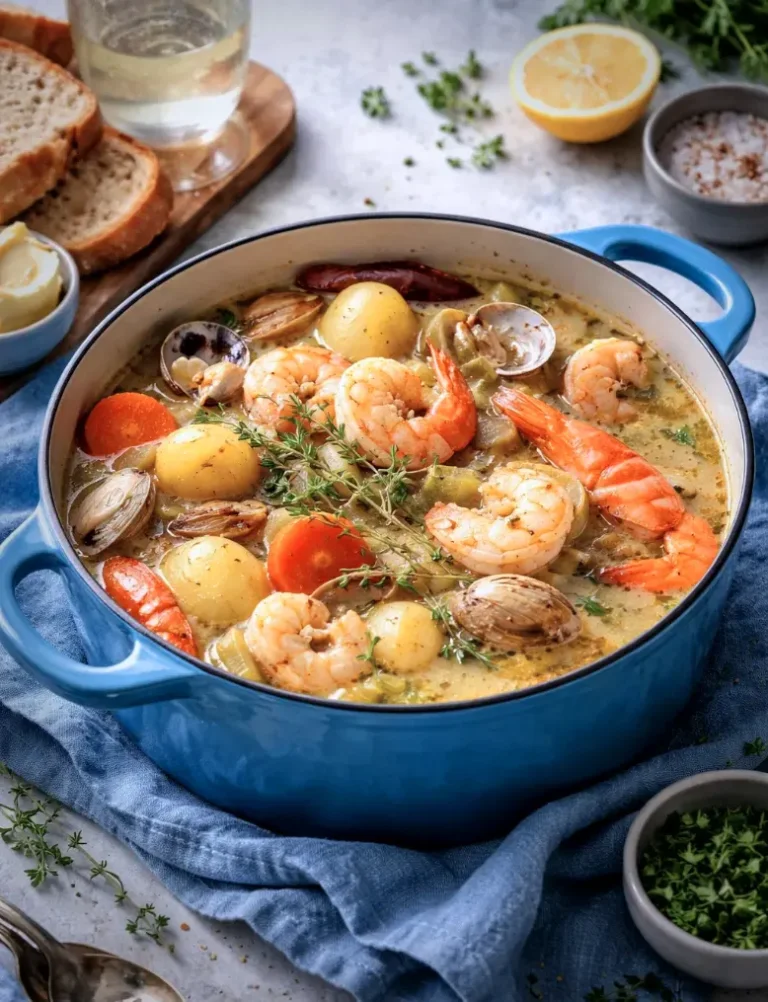
The first time I ate pot au feu de la mer I had no idea what was coming. My neighbour Nathalie had invited us for dinner and, as she’s a great cook, I’m always excited to taste what she’s made. I knew pot-au-feu already, the slow-cooked beef version I grew up with before I became pescatarian, and I make the vegetable version at home regularly in winter.
But when she brought out this seafood soup I just stopped. It smelled like the sea and also like cosiness and warmth, which is a combination I wasn’t expecting. I asked her for the recipe before we’d finished eating and this is it!
Table of Contents
Where pot-au-feu de la mer comes from
Pot-au-feu means pot on the fire, and it’s less a recipe than a way of thinking: use what you have, cook it gently and feed everyone properly. The classic is beef and marrow bones, but every region bent the idea to fit its own landscape, and along the Normandy coast the beef simply became whatever the boats brought in.
Normandy’s own version has a name and a proper history: the marmite dieppoise, from the fishing port of Dieppe, where nineteenth-century fishermen cooked the day’s catch together with vegetables, white wine and herbs. What set it apart from most fishermen’s soups is that it used good fish rather than the unsold leftovers, and that it finished with crème fraîche. This dish sits squarely in that tradition.
Ingredients
- Mixed firm fish — salmon, monkfish, haddock and cod. The variety is the point, and firm flesh is what survives the simmer without collapsing into the broth.
- King prawns — sweetness and a bit of bite against the flakier fish.
- Fish stock or fumet — the backbone of the dish, so use a good one. This is where most of the flavour lives.
- Dry white wine — acidity to cut the cream and lift the fish. Something crisp you’d happily drink alongside.
- Crème fraîche — the Norman signature, stirred in at the end. It softens the broth without making it heavy.
- Saffron — a pinch, bloomed in warm stock first so it gives up its colour and perfume properly rather than sitting there as red threads.
- Potatoes, carrots, leeks, celery — cut big and rustic, the way pot-au-feu vegetables always are. Firm-fleshed potatoes so they hold their shape.
- Bouquet garni — thyme, bay and parsley stalks tied together, simmered in and lifted out.
How to make pot-au-feu de la mer
1. Cut the vegetables big and rustic
Peel and wash the carrots, celery, leeks and potatoes, and cut them into large chunks rather than neat dice. This is a pot-au-feu, so the vegetables should look like themselves on the plate. Slice the onion finely, since that one melts into the base.
2. Soften the onion and bloom the saffron
Melt the butter in a cocotte and cook the onion gently for five minutes until translucent, without letting it colour. Meanwhile put the saffron threads in a little warm stock and leave them to steep. Dropped straight into the pot, saffron gives up perhaps half of what it has.
3. Deglaze with the wine
Pour in the white wine, bring it to the boil and let it reduce slightly, scraping the base of the pan. Then add the fish stock and the bloomed saffron with its soaking liquid, and bring everything to a gentle simmer.
4. Cook the vegetables until just tender
Bouquet garni and all the vegetables in, seasoned with salt and pepper, uncovered, at a gentle simmer for about 25 minutes. You want them tender but still holding their shape, since they’ll sit in hot broth for another ten minutes while the fish cooks.
5. Add the fish gently, and don’t stir
Cut the fish into large even chunks and lower them in. Eight to ten minutes at a bare simmer, until just opaque. Don’t stir or you’ll break the fish into shreds, and don’t let it boil. Overcooked fish in a broth like this turns to cotton wool.
6. Cream, prawns, then straight to the table
Stir in the crème fraîche and add the prawns for a final two minutes to heat through. Lift out the bouquet garni, taste for seasoning, scatter over the parsley, and bring the whole pot au feu de la mer to the table with crusty bread and a cold glass of white.
Tools for this recipe
Check out my favorite kitchen essentials and cookware!
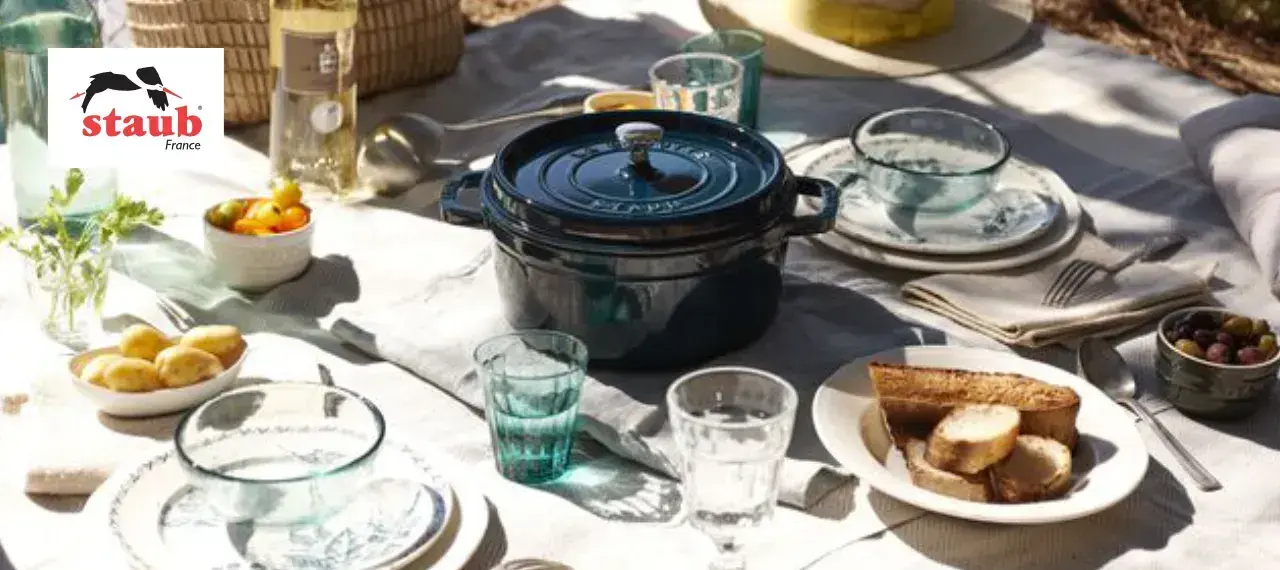
- Use a cast iron cocotte that spreads heat evenly and holds a gentle simmer without hot spots, and looks good enough to go straight from stove to table, which is how this is meant to be served.
- Use a sharp knife for the volume of rustic chopping this involves.
- Use a measuring jug for the stock and wine, and for blooming the saffron.
Tips for success
- Bloom the saffron before it goes in: ten minutes in a little warm stock and you get the colour and the perfume. Threads dropped into a full pot barely register.
- Add the fish by firmness if you can: monkfish is denser than cod or haddock, so give it two minutes’ head start and everything finishes together rather than some falling apart while the rest is still translucent.
- Never let it boil once the fish is in: a bare shiver on the surface is what you want. Boiling breaks the fish up and can split the cream.
- Take the pot off the heat before stirring in the crème fraîche: cream added to a boiling broth is the one way to make it curdle.
- Cut the potatoes bigger than the other vegetables: they take longest, and small ones disintegrate and cloud the broth with starch.
- Save any leftover broth: strained, it’s superb as the base for a risotto or a soup later in the week.
How to store it
- In the fridge: Keeps 2 days covered, and the broth genuinely deepens overnight. Reheat very gently, never boiling, since the fish will toughen and the cream can split. Honestly it’s best the day it’s made.
- Making ahead: Cook the broth and vegetables a day early, then add the fish and cream fresh when you reheat. That gets you most of the work done without overcooking anything.
- In the freezer: Freeze the broth alone, not the finished dish. Cooked fish thaws stringy and the crème fraîche splits, so the base is the only part worth keeping.
More recipes to try
Variations
- With cider instead of wine: thoroughly Norman, and traditional in the marmite dieppoise. Use a dry farmhouse cider and it gives a rounder, slightly apple-scented broth.
- With mussels: steamed open separately, then added at the end with their strained liquor stirred into the broth. This is closer to the Dieppe original and adds real depth.
- With scallops: seared briefly in a separate pan and laid on top at the last moment, so they stay just translucent in the middle.
- Without cream: a lighter, cleaner version that lets the saffron and the fish come through more sharply. Less Norman, but very good in warmer weather.
- With fennel: sliced and added with the other vegetables, which gives an aniseed note that suits fish beautifully. Turnip works too if you want something earthier.
- On a budget: use fewer varieties and lean on whatever’s cheap and firm at the fishmonger. The dish was invented from a day’s catch, so there’s nothing precious about the line-up.
FAQ
What’s the difference between pot-au-feu de la mer and bouillabaisse?
Bouillabaisse is Provençal, built on rockfish, olive oil and rouille. This is the northern equivalent, gentler and finished with crème fraîche, closer in character to Normandy’s marmite dieppoise.
What fish is best for a French seafood soup?
Firm-fleshed varieties that hold together in broth: monkfish, cod, haddock, salmon, and prawns for sweetness. Use several kinds rather than one, and buy them the day you cook.
Can you make seafood soup ahead of time?
Make the broth and vegetables a day ahead, then add the fish and cream when you reheat. The finished dish doesn’t reheat well, since the fish toughens and the cream can split.
Why did my broth curdle?
The crème fraîche went into liquid that was too hot, or the pot boiled after it was added. Take it off the heat before stirring the cream in and keep everything at a bare simmer.
Do I need saffron?
It isn’t strictly traditional, but it gives the broth its golden colour and a depth that’s hard to get otherwise. Bloom the threads in warm stock first to get the most from them.


 Prep Time 30 minutes
  Cook Time 40 minutes
  Total Time 1 hour 10 minutes
  Servings 4
Description
Ingredients
Mixed firm-fleshed fish and prawns
- 200 gr salmon
- 200 gr monkfish
- 200 gr haddock
- 200 gr cod
- 300 gr king prawns
Additional ingredients
- 800 gr firm-fleshed potatoes
- 4 carrot
- 2 celery
- 3 leek
- 1 onion
- 1 bouquet garni thyme, bay leaf, parsley stalks, tied together
- 300 ml dry white wine
- 1.5 l fish stock or fumet
- 30 gr unsalted butter
- 3 tbsp crème fraîche
- 20 gr flat-leaf parsley a handful
- 1 pinch saffron threads for extra aroma
- salt and black pepper
Equipment

Instructions
1. Prepare the vegetables
- Peel and wash the carrots, celery, leeks and potatoes, and cut them into large rustic pieces. Finely slice the onion. Set aside.
2. Bloom the saffron
- Put the saffron threads in a small jug with a little of the warm fish stock and leave to steep while you start the base.
3. Sauté the onion
- Melt the butter in a large cocotte over medium heat. Add the onion and cook for about 5 minutes, until translucent and fragrant, without colouring.
4. Deglaze and add stock
- Pour in the white wine and bring to the boil, letting it reduce slightly. Add the fish stock along with the saffron and its soaking liquid. Bring to a gentle simmer.
5. Cook the vegetables
- Add the bouquet garni and all the prepared vegetables. Season with salt and pepper. Simmer uncovered for about 25 minutes, until tender but not mushy.
6. Add the fish
- Cut the fish into large even chunks and lower them gently into the pot. Simmer for 8–10 minutes, without stirring, until just cooked through and opaque.
7. Finish
- Take the pot off the heat and stir in the crème fraîche, then add the prawns and heat through for 2 minutes. Remove the bouquet garni, taste and adjust the seasoning, and scatter over the chopped parsley.
7. Serve
- Serve hot in deep bowls, with crusty bread on the side.
Notes
- Bloom the saffron in a little warm stock first to get the full colour and aroma.
- Don’t let the pot boil once the fish and cream are in.
- Fennel or turnip make good additions to the vegetables.
- Best eaten the day it’s made, though the broth can be prepared a day ahead.
Share your feedback and spread the love!
If you try this recipe, I’d love to hear how it turns out! Leave a ★★★★★ rating and your thoughts in the comments, it helps fellow French foodies discover this recipe too. Snap a photo and tag @obviously.french on Instagram. Come talk about it in our Facebook group. And don’t forget to save this recipe to Pinterest so you’ll always have it handy for your next French-inspired meal!