Pumpkin Soup
 Prep Time 20 minutes
  Cook Time 40 minutes
  Total Time 1 hour
  Servings 6
Ingredients
- 1,5 kg pumpkin potiron or potimarron work best
- 300 gr potatoes
- 1 onion
- 2 cloves garlic
- 1 l vegetable stock
- 200 ml crème fraîche
- 50 gr unsalted butter
- 1 pinch nutmeg freshly grated
- 2 bay leaf
- 2 sprigs thyme
- salt and black pepper
Equipment

Instructions
1. Prepare the vegetables
- Start with the worst bit, peeling the pumpkin. Unless you've got potimarron, which brilliantly doesn't need peeling. Cut everything into rough 3cm chunks. The potatoes too. Don't overthink it. They're all getting blended anyway.
2. Sweat the aromatics
- Melt your butter in the pot over medium heat. When it's foaming, add your chopped onion. Let it go translucent and soft, about 5 minutes. You're not looking for colour here. Add the garlic for the last minute, any longer and it'll burn.
3. Add the main vegetables
- Tip in all your pumpkin and potato chunks. Give everything a proper stir so it's all coated in that buttery, oniony base. Let it all sweat together for 10 minutes, stirring occasionally. The edges should just start to soften.
4. Add liquid and herbs
- Pour in your stock. It should just cover the vegetables, if you need more liquid, use water, not more stock. Drop in your bay leaves and thyme. Bring to a gentle simmer.
5. Simmer until tender
- Partially cover with a lid and let it bubble away gently for 25-30 minutes. The vegetables should be completely soft, collapsing when prodded with a spoon. Fish out the herbs.
6. Blend until smooth
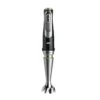
- Blend until absolutely, completely smooth. Use a hand blender directly in the pot if you've got one. Otherwise, carefully transfer to a regular blender in batches. We're after velvet here, not rustic chunks.
7. Finish with cream
- Return to low heat if you've transferred it. Stir in the crème fraîche. Season with salt, white pepper (black shows as specks), and just a dash of nutmeg. Taste and adjust.
8. Serve properly
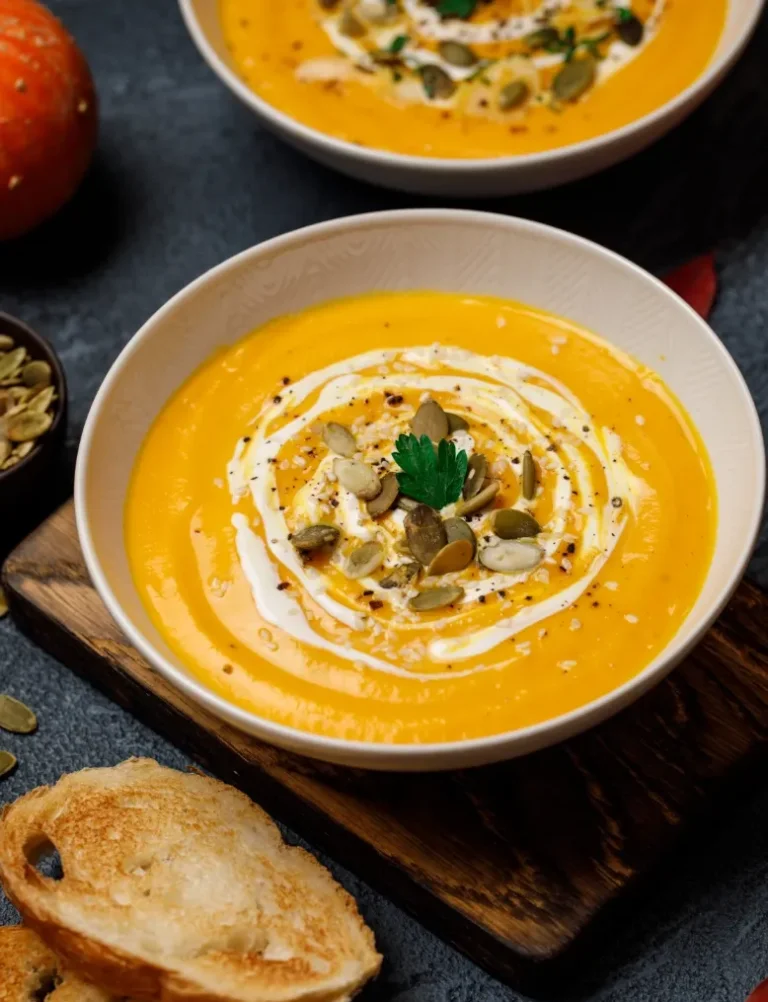
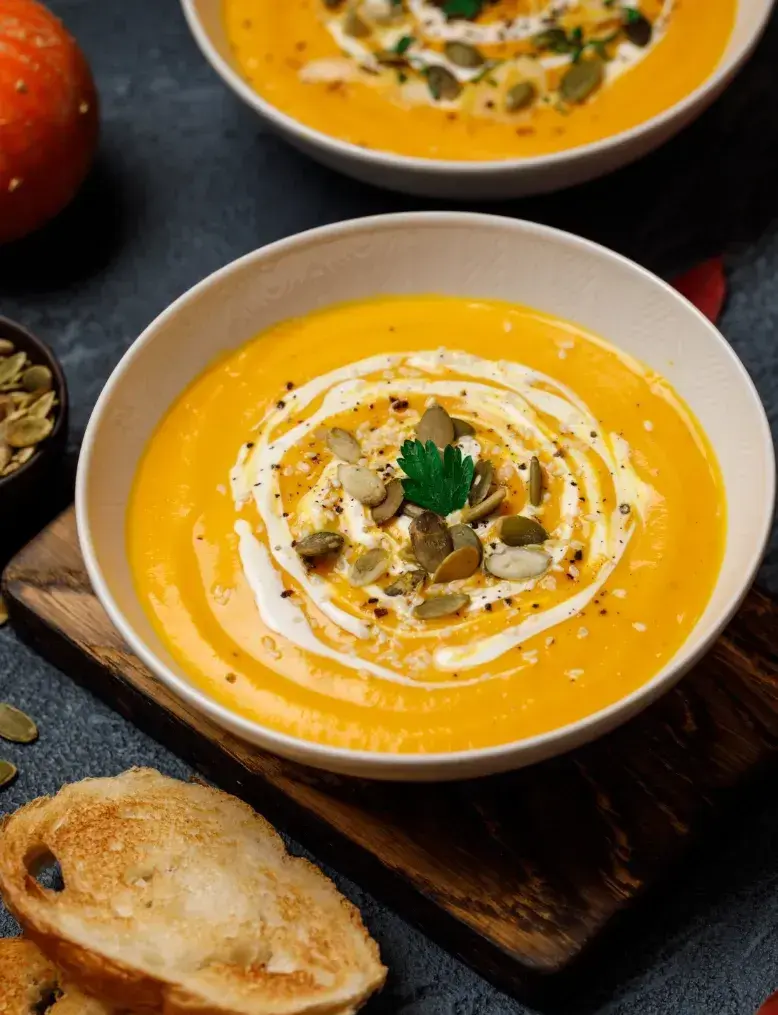
- Ladle into warmed bowls. Add croutons if you've made them. A final swirl of cream looks nice if you're trying to impress someone!
Notes
- The secret’s in the texture, blend it longer than you think necessary. Properly smooth makes all the difference.
- If it’s too thick, thin with stock or water. Too thin? Let it reduce with the lid off for 10 minutes.
- Make it a day ahead if you can, it actually improves overnight.
- Freezes brilliantly for up to 3 months.
- And if you can’t find crème fraîche, double cream works fine, just use a bit less.
About this recipe
Pumpkin soup is autumn in a bowl for most of France. The moment the first pumpkins appear in the markets, the soup pot comes out. Every grandmother has her own version, every region has its own twist, and everyone is convinced theirs is the correct one. They’re all right, because this is one of those dishes that is almost impossible to make badly.
Where French pumpkin soup comes from
This pumpkin soup dish started as peasant food, as so much of the best French cooking did. Pumpkins keep for months in a cold cellar, making them ideal for winter eating when little else was growing. They were cheap, filling, and required nothing more than a pot and some water to become a meal. The addition of cream came later, when cream became more widely available, and transformed a simple vegetable soup into something properly rich and satisfying.
The potatoes came later still. Antoine-Augustin Parmentier spent much of the late 1700s convincing the French that potatoes were fit for human consumption rather than just animal feed, and once he succeeded, French cooks started adding them to everything. In pumpkin soup, a small amount of potato adds body and helps create that thick, creamy texture without needing excessive cream.
The French pumpkin soup that varies by region
The French pumpkin soup you find across France is not one recipe but many. In the Berry region, right in the centre of France, they make a version called Citrouillat that uses milk rather than cream and gets baked with a pastry lid. In Normandy, cooks add apple and sometimes a splash of Calvados. In Provence, orange zest goes in towards the end, which sounds unusual and works extraordinarily well. In the southwest, chestnuts sometimes appear alongside the pumpkin, adding an earthier depth to the finished soup.
The crème fraîche stirred in at the end is non-negotiable for most French cooks. It adds richness, a slight tang, and rounds out the sweetness of the pumpkin. Some will use fromage blanc instead. They would never admit it publicly.
The pumpkin varieties
The potimarron, the red kuri squash you see in every French market from October onwards, only arrived from Japan in the 1950s. Before that, French pumpkin soup was made with the potiron, those enormous, slightly flattened orange pumpkins that look like they’ve been sat on. Some weigh 20 kilos. You’ll see them sold by the slice at markets because nobody needs a whole one.
The potimarron has become the French cook’s favourite for French pumpkin soup because it has a naturally sweet, nutty flavour that needs very little coaxing. It also has thinner skin and a lower water content than the large potiron, which means the soup concentrates faster and the flavour is more intense. Either works in this recipe. If you can find potimarron, use it.
The right pot for a creamy pumpkin soup
A good pumpkin and soup combination needs steady, even heat throughout the cooking process. The pumpkin needs to soften properly before blending, and that happens best with a gentle, consistent simmer rather than aggressive heat that catches on the bottom of the pan.
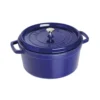
I make this creamy pumpkin soup in the Staub cocotte. The cast iron holds heat evenly across the entire base, which means nothing catches in the corners and the pumpkin cooks uniformly. The heavy lid traps moisture during the initial softening stage, which helps the vegetables break down without needing much added liquid. And it goes straight to the table for serving, which for a soup this colour is worth doing. The deep orange against the dark Staub enamel looks properly beautiful.
French kids and pumpkin soup
French children often hate this soup with remarkable passion, mainly because it appears on the table every autumn whether they want it or not. Then they grow up, move away, and find themselves craving their grandmother’s French pumpkin soup dish on the first cold evening of October. There’s probably a metaphor in there somewhere. Either way, this is the recipe that brings it back.
Share your feedback and spread the love!
If you try this recipe, I’d love to hear how it turns out! Leave a ★★★★★ rating and your thoughts in the comments, it helps fellow French foodies discover this recipe too. Snap a photo and tag me @obviously.french on Instagram if you’re sharing your bake or cooking online. Don’t forget to save this recipe to Pinterest so you’ll always have it handy for your next French-inspired meal!
Disclosure: Just so you know, this post contains sponsored content and/or affiliate links, If you make a purchase through these links, I may receive a small commission. Doesn’t cost you anything extra. I only link to things that are actually worth your time. All opinions are my own!