A river town on the edge of La Brenne
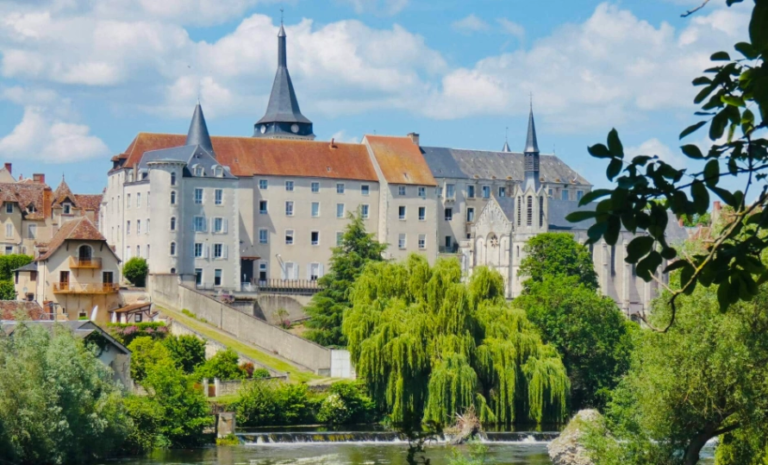
Saint-Gaultier is a small town of 1,800 people that most visitors drive straight past on the A20, which is rather a shame. It sits on a bend of the Creuse, about 15 min from Argenton-sur-Creuse and right on the edge of the Brenne Regional Natural Park. It is a small working town: a big church, old stone tucked between more recent houses, a river that still shapes daily life, and enough history under the surface to reward anyone who stops for more than petrol.
A riverside town with papal protection
The town takes its name from Gaultier, an 11th‑century abbot who founded a priory here around 1060. What began as a religious outpost grew into a fortified settlement that answered directly to Rome, which turned out to be very useful in the messy centuries that followed. While armies moved through the region during the Hundred Years’ War and the Wars of Religion, Saint‑Gaultier’s papal link gave it a degree of protection and, more practically, the right to charge tolls on its bridge over the Creuse.
That bridge was the town’s cash cow. Back in the days where rivers were the main transport routes, controlling a crossing meant controlling trade. The current span is only the latest in a long line: earlier versions were battered by floods and rebuilt more than once, with a 19th‑century suspension bridge eventually giving way to the stone structure you see today. If you walk along the riverbanks and peer into back gardens, you can still spot bits of old ramparts and towers dissolving into the walls.
These days, life is calmer. The weekly market is the big regular event, and in some years the sudden arrival of swarms of tiny colza beetles has been the main local drama. For visitors heading south or looking for a base on the edge of La Brenne, Saint‑Gaultier offers enough activity to feel alive without losing its unhurried rhythm.
A church that feels larger than the town
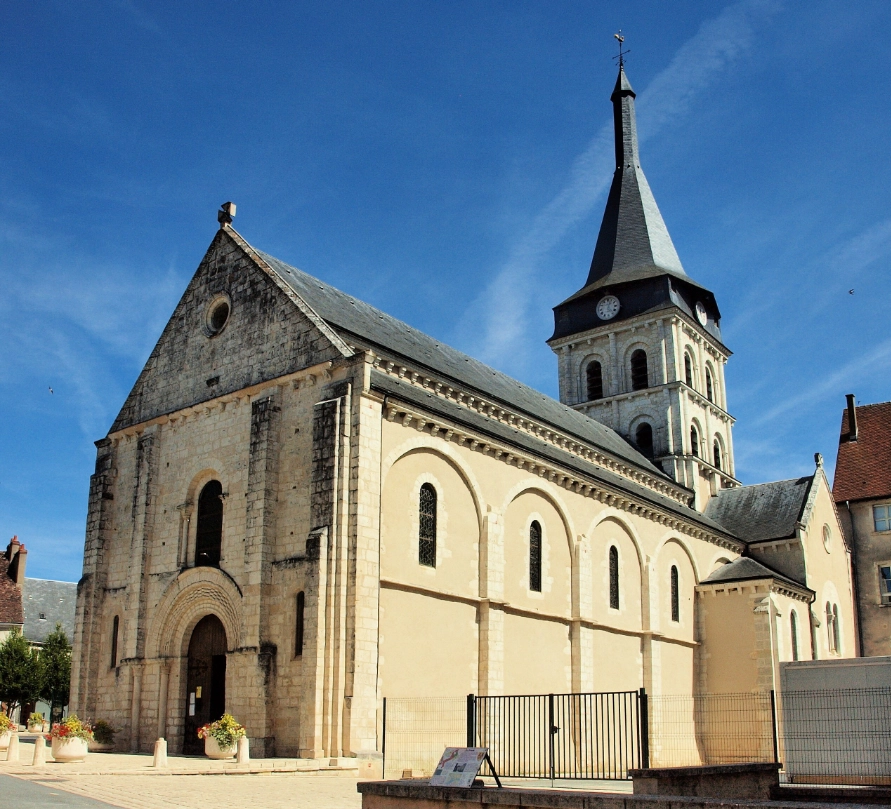
From the riverside, the church of Saint‑Gaultier looks almost too big for the town beneath it. You get the best view from the old railway viaduct, now part of a greenway (more about this later): stone apse, squat tower, and the clustered roofs around it. Up close, it is a solid Romanesque building from the late 11th and early 12th centuries with details that tell you exactly where it sits on the map. There are hints of Limousin in the forms, touches of Poitou in the portal, as if the two neighbouring regions were quietly pulling it in their direction.
Inside, square pillars and barrel vaults carry the weight, and capitals are carved with scenes the medieval stonemasons enjoyed: allegories, animals, and, around the chevet, little vignettes from the Roman de Renart. Once you know to look for it, the donkey playing a lyre is hard to unsee. The priory that once stretched out beside the church has had several lives since, college, seminary, and now hides behind the façade of the local secondary school. If you walk past the southern side, you can still spot older stones tucked into 19th‑century additions.
Greenway, river, and walks
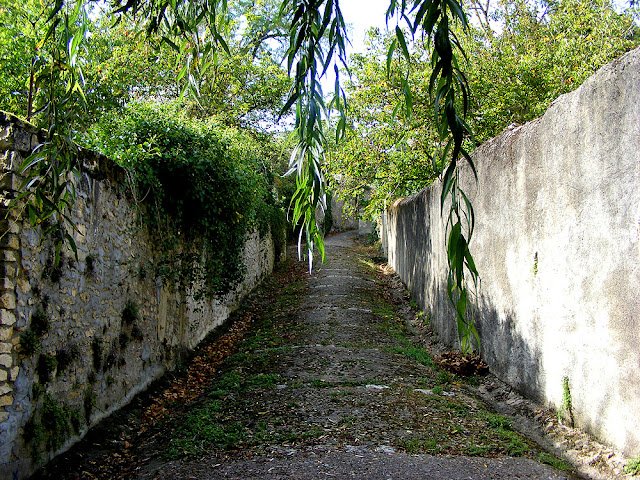
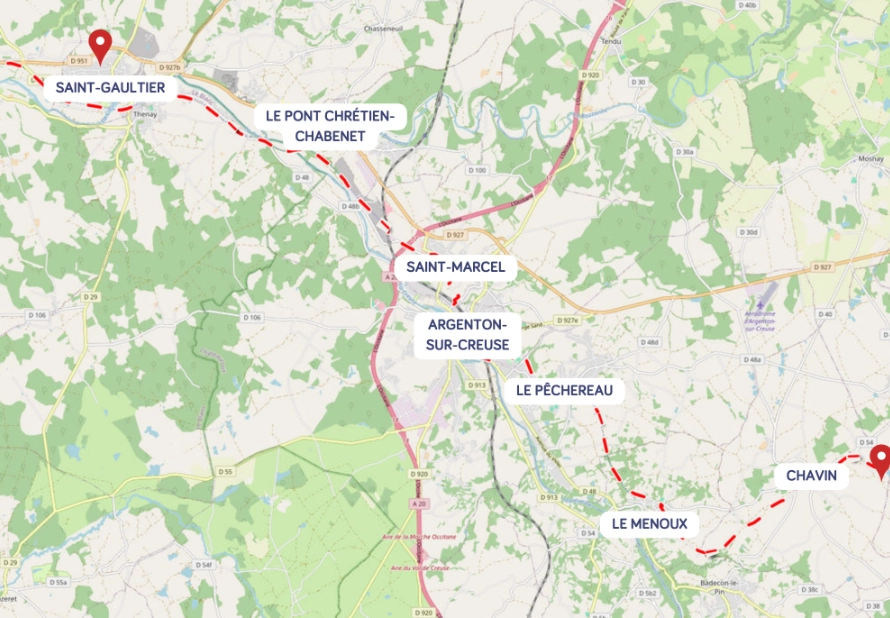
One of the best things to happen to Saint‑Gaultier recently is the conversion of the old railway line between Argenton‑sur‑Creuse and Le Blanc into a “voie verte”, a car‑free greenway for walkers and cyclists. The route slices gently through countryside and crosses the Creuse on the former railway bridge right by town.
From Saint‑Gaultier you can head north along the valley towards Argenton or south towards Le Blanc and deeper into La Brenne. The gradients are gentle, the surface is good, and there are occasional benches and information boards along the way, so it suits families as well as more determined cyclists. In spring and early summer the verges are full of flowers; in autumn you sometimes see lines of birds heading towards the ponds of the Brenne.
If you prefer your feet to do the work, several marked walking routes start from town, including an easy historical loop that threads together the church, old streets, and higher viewpoints over the Creuse. The local tourist office can hand you a map, and sites like Visorando list longer circuits if you feel like turning a simple stopover into a full day out.
Lime kilns and a quiet industrial past
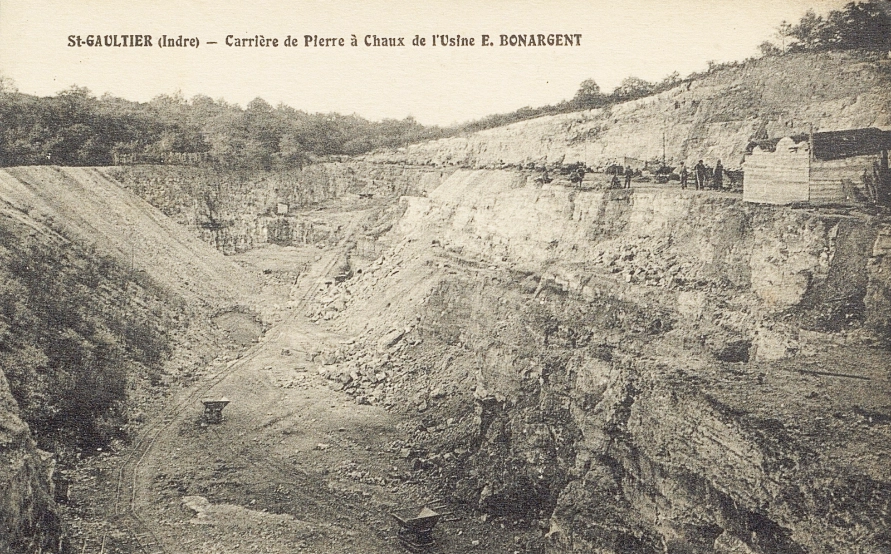
Saint‑Gaultier does not look like an industrial town at first glance, but once you start paying attention you see the evidence everywhere: abandoned kilns half hidden by trees, quarried cliffs, rows of workers’ houses along certain streets. Around the turn of the 20th century, lime was big business here and in nearby Thenay. The local limestone, ready supply of wood, and the Creuse for transport made it a natural centre for lime production, and at one point hundreds of people worked in the quarries and kilns.
Lime is not glamorous, but it was essential: agriculture, building, metalwork, water treatment, all relied on it. A local firm, Bonargent, grew with the industry and eventually became part of what is now the Lhoist Group, a global leader in lime and minerals. Today, Lhoist still runs a quarry on the edge of town, but processing happens elsewhere, so the old chimneys and kilns inside Saint‑Gaultier stand as quiet reminders rather than active workplaces.
There are more polished examples of this history in nearby villages such as Oulches, where restored kilns come with information boards and trails, but I like the way Saint‑Gaultier wears its industrial past without making a big deal out of it. You only hear about these stories if you talk to he locals. You can walk along Avenue de Lignac and realise the odd brick structure in a garden is not a shed but part of an old kiln, and suddenly the landscape makes more sense.
Fishing the Creuse: pike, carp, catfish, roach
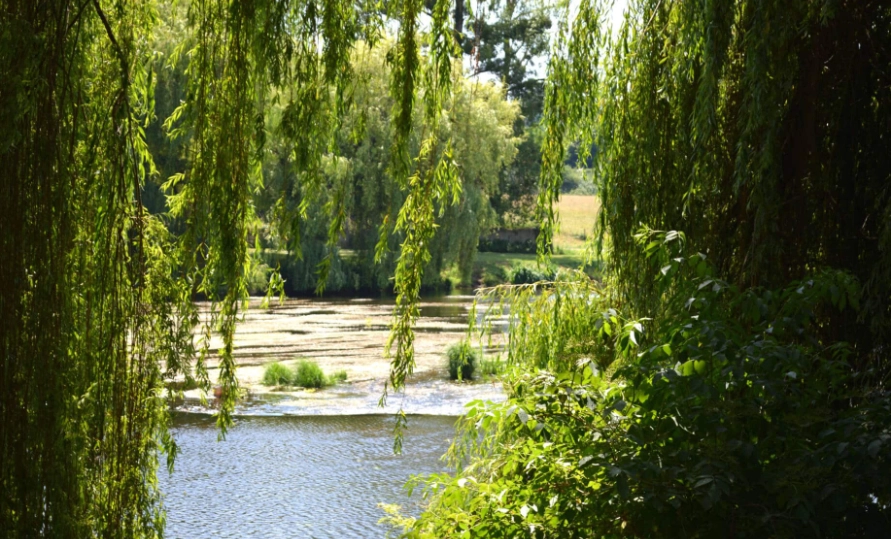
For people who fish, the Creuse is a serious draw. Through Saint‑Gaultier it is classed as second‑category water, which means a mixed fishery rather than mountain trout: carp, pike, perch, zander, roach, bream, and further downstream, catfish that can reach 80 kilos. No, that is not a typo. There really are fish in the river the size of a large human, and opinions locally are divided between “nuisance” and “ultimate challenge.”
A signposted “parcours de pêche” runs along the river here, accessible on foot or by small tracks, and sections are open for night carp fishing. Techniques range from gentle float fishing for small species to serious tackle for predators. If you have never fished before but are curious, the departmental fishing federation sometimes runs introductory sessions; the Saint‑Gaultier tourist office can point you in the right direction for permits and dates.
Even if you never hold a rod, the river is a pleasant place to walk, sit, and watch whatever passes: kayaks, ducks, the odd heron, and in the right light, the shadows of fish moving just below the surface.
A useful, very French stopover
Saint‑Gaultier works well as a stop on a north–south drive if you want something more human than a motorway motel. It is five minutes from the A20, but once you are in the old centre it feels a world away. You can stroll up to the church, cross the viaduct for a view, follow a stretch of the greenway, and have lunch or dinner in a local restaurant such as Les Chimères, then be back on the road without feeling rushed.
It also makes a practical base if you want to explore La Brenne or the Creuse valley without staying in a completely isolated hamlet. You get a supermarket, a bakery, a couple of bars, a weekly market, and the sense of being in a place that exists for itself rather than for you. Parts of town are a little worn around the edges, but that is part of the charm: this is a lived‑in small French town with medieval stones, an unexpected industrial story, good fishing, and easy access to one of the country’s most remarkable wetlands.
It will probably not be the headline of your trip, but if you like real places that reveal themselves gradually, Saint‑Gaultier is worth that turn off the motorway.
What to see and do in Saint-Gaultier
- Église Saint-Gaultier and the Priory
The 11th-century Romanesque church sits above the river with proper medieval carvings, look for the donkey playing a lyre on the capitals round the back. - The lime kilns walk (Avenue de Lignac)
Industrial archaeology without the heritage trail polish. Walk along Avenue de Lignac and you’ll see abandoned kilns, quarry faces, and workers’ houses from when 300 people made lime here. - Fishing on the Creuse (Parcours de pêche)
Designated fishing trail along the river. Night carp fishing allowed in marked sections. Peaceful, methodical, proper French river fishing. - The voie verte (old railway line)
Traffic-free cycling path along the former railway. Flat, easy, runs right through town crossing the Creuse on the old viaduct. Good surface, gentle countryside, no tractors trying to overtake you. - The old town and fortifications
Medieval streets, bits of ramparts poking out of gardens, Rue du Cheval Blanc where Henri IV supposedly stayed in 1589. The church bells were sold during a famine, which tells you something about 18th-century priorities. - Friday market
Small weekly market in the town centre. Local produce, cheese, general people-watching. - L’Ilon (the island)
Small island in the Creuse that hosted fishing festivals until the 1990s. There’s an old mill at the tip that produced electricity from 1902. Now it’s just a nice riverside walk. Quiet, bit of local history, decent spot for a sit-down. - Les Chimères restaurant
Worth mentioning because it’s the best place to eat. French cooking done properly, baby grand piano, sometimes live music. On Place de l’Hôtel de Ville. Book ahead at weekends.
Practical information for visitors
- Getting there
Saint-Gaultier’s just off the A20 motorway between Châteauroux and Limoges. From Châteauroux, about 25 kilometres. Easy. No train station, the railway closed decades ago, which is why you can cycle on it. Nearest station is Argenton-sur-Creuse. - When to visit
Spring (April-June) and autumn (September-October) are best. Not too hot, countryside’s lovely, fewer tourists. - Accommodation
You’ll find a decent mix of places to stay: small hotels in the town centre, B&Bs, guesthouses, and self-catering options. Nothing too fancy, but welcoming and comfortable. If you want more space and countryside views, there are gîtes and chambres d’hôtes dotted around the surrounding villages. Book ahead during the book fair in summer, the town fills up fast.