 February 24, 2026
Disclosure: This post may contain affiliate links which provide us a small commission when used for purchase. Please read my disclosure policy for more information. I am grateful for your support!
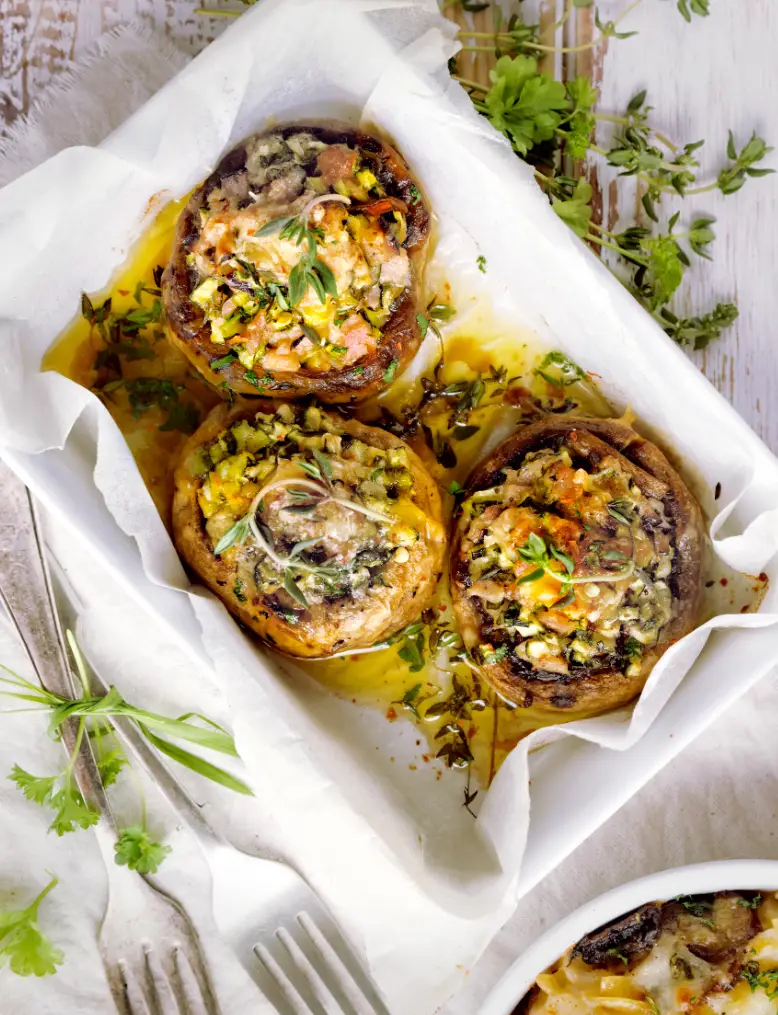
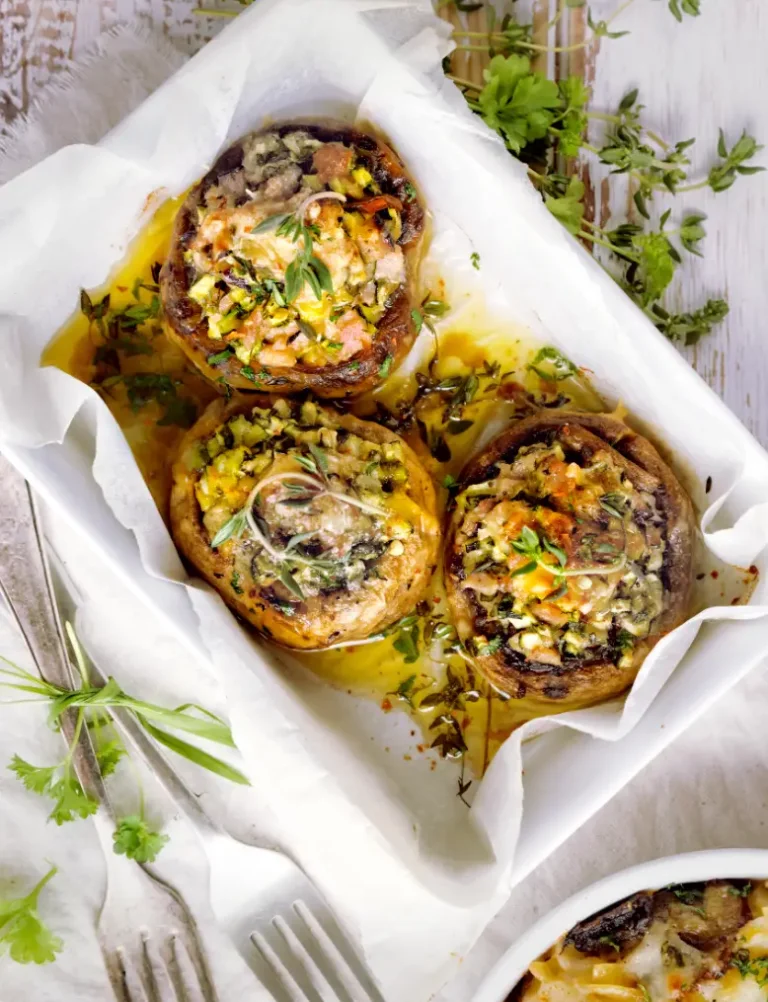
Stuffing vegetables is a habit I picked up from the south (Nice), where I grew up. We stuff aubergines, peppers, tomatoes and, of course, mushrooms. Stuffed mushrooms are probably the most delicate of the lot, since the juices from the mushrooms make them feel more refined than the others. They do ask for a proper duxelles, which takes a little more precision, but the texture at the end is worth it!
Table of Contents
Where stuffed mushrooms comes from
The heart of a good stuffed mushroom is the duxelles, and it’s worth knowing where that comes from, because it’s a proper piece of French culinary history. Duxelles sounds fancy, but it’s a simple idea: you chop mushrooms (here, the stems) very finely and cook them down slowly in butter with shallots until almost all the moisture has gone, leaving a dark, intensely savoury, concentrated mushroom paste.
It’s credited to François Pierre de La Varenne, the great 17th-century chef, who named it after his employer, Louis Chalon du Blé, the Marquis d’Uxelles and Governor of Chalon-sur-Saône. Naming a dish after your aristocratic boss was just how things worked back then. (The precise history is a little hazy, some sources muddle which Marquis, and La Varenne is “credited with” it rather than provably its inventor, but the link to the d’Uxelles name is sound.)
What makes La Varenne matter is his 1651 cookbook Le Cuisinier François, one of the most influential books in French cooking. It helped move French food away from heavy medieval spicing toward the lighter, ingredient-led style we think of as classic French cuisine.
Ingredients
- Large mushrooms – Flat-cap or portobello, 8 to 12cm, as the vessel and the duxelles filling. Firm and fresh.
- Shallots and garlic – Softened in butter as the aromatic base of the duxelles.
- Butter – To cook the duxelles down. It carries the flavour and helps it concentrate rather than stew.
- Olive oil – A little for brushing the caps (so they roast rather than steam) and a splash in the pan with the butter for the duxelles.
- Thyme and parsley – Classic French herbs for the filling, fresh.
- Crème fraîche – Binds the duxelles into a rich, cohesive filling.
- Breadcrumbs – To bind and give a little texture, soaking up any excess moisture.
- Gruyère – Grated, some through the filling and more on top for the golden, bubbling crust. Comté works beautifully too.
How to make stuffed mushrooms
1. Prep the caps
Remove the stems (keep them for the filling) and brush the caps all over with olive oil, then season and set them in a baking dish. Oiling the outside helps them colour and roast rather than steam in their own liquid.
2. Make the duxelles
Soften the shallots in butter, add the garlic, then the finely chopped mushroom stems, and cook it all down over a decent heat until almost all the moisture has gone and the mixture is dark and concentrated. Off the heat, stir in the herbs, crème fraîche, breadcrumbs, half the Gruyère and a little nutmeg. It should hold together when pressed; add a few more breadcrumbs if it seems wet.
3. Stuff and bake
Pack the filling generously into the caps, mounding it up, and scatter the rest of the Gruyère over. Bake in a hot oven until the mushrooms are tender, the filling is hot through, and the cheese is golden and bubbling. Rest them a couple of minutes (the filling comes out volcanic), then serve.
Tools for this recipe
Check out my favorite kitchen essentials and cookware!
- Use a sharp chef’s knife to chop the stems fine and even, which is what gives you a smooth duxelles.
- Use a baking dish that holds the caps snugly and goes to the table.
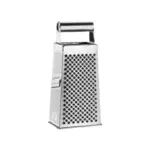
- Use a box grater to grate the Gruyère.
Tips for success
- Cook the duxelles until almost dry: if moisture stays in the filling, the mushrooms go soggy. Cook over a good heat until the pan looks dry and the mixture is dark and concentrated.
- Chop the stems finely and evenly: fine, even pieces cook down into a smooth, silky paste and release their water at the same rate. Rough, uneven bits stay watery and chunky.
- Oil the caps outside: brushing the outside of the caps with oil helps them roast and colour rather than steam in their own juices.
- Choose caps of a good size: flat-cap or portobello, 8 to 12cm across, so they hold a generous amount of filling and bake evenly.
- Pack the filling in firmly: press it in and mound it up. A generous, firmly packed filling holds together and gives you the best cheese-to-mushroom ratio.
How to store it
- Stuffed mushrooms are at their best hot from the oven, when the cheese is bubbling and the caps are just tender. But they keep and reheat better than many baked dishes.
- Keep leftovers covered in a glass container the fridge for up to 3 days. Reheat them in a hot oven for 10 minutes or so, rather than the microwave, which makes the caps rubbery and weepy. They’re also genuinely good at room temperature, which makes them handy for a buffet or picnic.
- The best make-ahead route is to prepare the duxelles filling up to 2 days ahead and keep it in the fridge, then stuff and bake the mushrooms fresh when you want them (add a few minutes to the bake if the filling’s fridge-cold). I wouldn’t freeze the finished mushrooms, the caps weep on thawing, but the duxelles itself freezes well for a month.
Variations
- Add white wine: a splash of Chablis cooked into the duxelles for extra depth.
- Change the cheese: soft goat’s cheese or herbed ricotta folded through the filling instead of Gruyère, a lighter, southern French take. Or Comté on top for something nuttier.
- Add nuts: a scatter of chopped toasted walnuts or pine nuts through the filling, for crunch.
- Make them vegan: use olive oil and a vegan cream cheese to bind, and a vegan hard cheese or extra herby breadcrumbs on top. The duxelles itself is naturally vegan.
- Mixed or wild mushrooms: use chestnut or wild mushrooms (chopped) to boost the duxelles, wild ones like porcini give a much deeper flavour.
- Make them a main: three larger portobellos per person with a green salad and crusty bread makes a proper vegetarian supper.
FAQ
What is duxelles?
Duxelles is a classic French preparation of mushrooms (and often shallots and herbs) chopped very finely and cooked down in butter until almost all the moisture has gone, leaving a dark, intensely savoury paste. It’s the filling in these stuffed mushrooms, and a foundational technique used in vol-au-vents, beef Wellington and stuffed dishes across French cooking.
How do I stop stuffed mushrooms going soggy?
Cook the duxelles filling until almost all the moisture has evaporated and the pan looks dry, and oil the outside of the caps so they roast rather than steam. Mushrooms are mostly water, so cooking that water out of the filling is the key to stuffed mushrooms that hold together.
What mushrooms are best for stuffing?
Large flat-cap or portobello mushrooms, around 8 to 12cm across, which are big enough to hold a generous filling and bake evenly. Save the stems for the duxelles. Smaller button mushrooms are fiddly to fill and disappear in a bite or two.
What cheese is best for stuffed mushrooms?
Gruyère is traditional and melts into a lovely golden crust. Comté is excellent too, arguably nuttier, and Emmental works at a push. For a lighter, southern French version, use soft goat’s cheese or herbed ricotta in the filling instead.


 Prep Time 20 minutes
  Cook Time 25 minutes
  Total Time 45 minutes
  Servings 4 As a starter
Description
Ingredients
For the mushrooms
- 8 mushrooms portobello or flat-cap, about 8–10cm diameter
- 1 tbsp olive oil
- salt and black pepper
For the filling
- mushroom stems
- 2 shallots
- 2 cloves garlic
- 30 gr unsalted butter
- 1 tbsp olive oil
- 2 tbsp flat-leaf parsley
- 1 tsp thyme
- 2 tbsp crème fraîche
- 40 gr breadcrumbs
- 60 gr Gruyère
- 1 pinch nutmeg
- salt and black pepper
Equipment
Instructions
1. Prepare the mushrooms
- Heat the oven to 200°C (180°C fan). Remove and reserve the stems. Brush the caps all over with olive oil, season, and set gill-side up in a baking dish.
2. Make the duxelles
- Finely chop the reserved stems. Melt the butter with the olive oil in a frying pan over medium-high heat. Add the shallots and cook 3 to 4 minutes until softened. Add the garlic for a minute, then the chopped stems. Cook, stirring, for 8 to 10 minutes over a good heat until almost all the moisture has gone and the mixture is dark and dry.
3. Finish the filling
- Off the heat, stir in the parsley, thyme, crème fraîche, breadcrumbs, half the Gruyère, the nutmeg, and salt and pepper. It should hold together when pressed; add a few more breadcrumbs if wet.
4. Stuff and bake
- Pack the filling firmly into the caps, mounding slightly. Scatter the remaining Gruyère over. Bake for 20 to 25 minutes, until the mushrooms are tender, the filling hot, and the cheese golden and bubbling.
5. Serve
- Rest 2 to 3 minutes (the filling is very hot). Serve on dressed salad leaves, or with good bread to mop up the juices.
Notes
- Mushroom size matters. Too small and you’ve got nowhere to put the filling. Portobello or large flat-cap mushrooms around 8-10cm are what you want.
- The duxelles is the key step. Don’t rush it. If you leave moisture in the filling, it’ll make the stuffed mushrooms soggy. Cook until the mixture looks almost dry in the pan.
- Gruyère is traditional, but Comté is excellent here too. Both have that nutty, savoury depth that works brilliantly with mushrooms. Emmental at a push.
- Make ahead: prepare the filling up to 24 hours in advance and refrigerate it. Stuff the mushrooms just before baking, adding an extra 5 minutes to the oven time if they’re going in cold.
- Works as a main too. Three per person alongside a green salad and some crusty bread is a perfectly decent weeknight supper.
Share your feedback and spread the love!
If you try this recipe, I’d love to hear how it turns out! Leave a ★★★★★ rating and your thoughts in the comments, it helps fellow French foodies discover this recipe too. Snap a photo and tag @obviously.french on Instagram. Come talk about it in our Facebook group. And don’t forget to save this recipe to Pinterest so you’ll always have it handy for your next French-inspired meal!