Artichokes
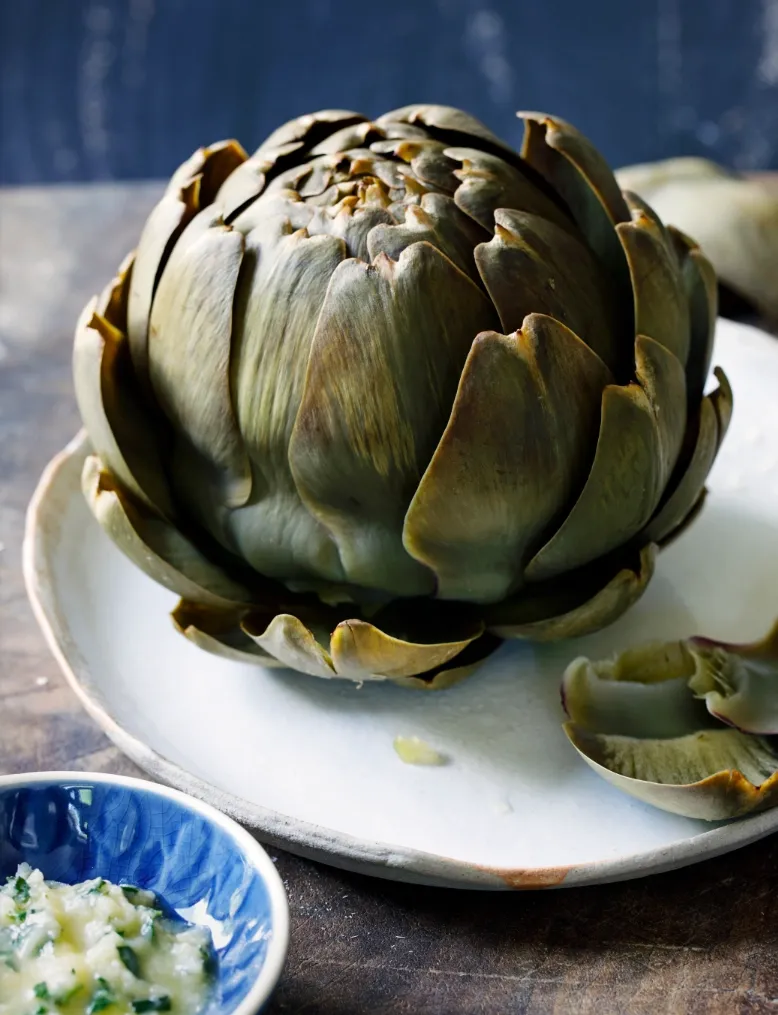
 Prep Time 10 minutes
  Cook Time 40 minutes
  Total Time 50 minutes
  Servings 4
Ingredients
- 4 artichokes
- 1 lemon
Equipment
Instructions
1. Prepare the artichokes
- Rinse the artichokes thoroughly under cold water. Snap off the tough outer leaves near the stem. Rub the snapped part with lemon to prevent browning.
2. Cook the artichokes
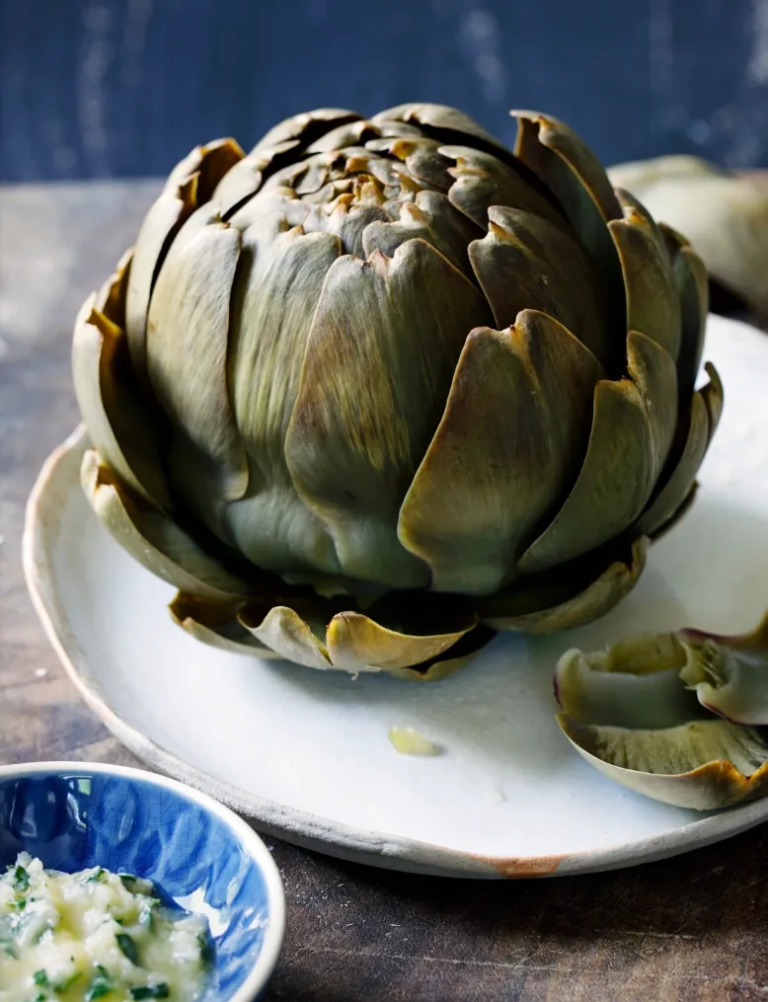
- Fill a large pot with water and bring it to a boil. Add the artichokes, stem-side down. Weigh the artichokes down with a plate or lid so they stay submerged. Simmer for 35–45 minutes. They’re done when an outer leaf pulls off easily and the base is tender.
3. Make the vinaigrette
- Whisk mustard and vinegar with salt and pepper in a bowl. Gradually whisk in olive oil to create a creamy emulsion. Stir in shallot and parsley.
4. Serve
- Drain artichokes upside-down and cool for a few minutes. Serve each artichoke whole, with a small bowl of vinaigrette for dipping leaf by leaf!
Notes
- Eating artichokes is a hands-on experience! It involves the pulling, dipping of every leaf and savouring the gradual journey to the soft, delicate, creamy heart at the centre.
- Classic French vinaigrette is all about a sharp tang and silky texture, the dipping sauce should cling softly to each leaf.
About this recipe
Artichokes with vinaigrette is one of those dishes that tells you exactly where you are. Spring in France, a market stall piled high with fresh artichokes, a Sunday lunch that starts slowly and ends even more slowly. It’s not a complicated dish. It’s not supposed to be. The artichoke does the work, and your job is not to get in the way.
A brief history of the artichoke in France
Artichokes were not always everyday food. They arrived at French aristocratic tables as a luxury ingredient, prized for their delicate flavour and the theatrical ritual of eating them. King Louis XIV loved them enough to commission their cultivation in the royal gardens at Versailles. They appeared at banquets as a sign of wealth and refinement, and their reputation as an aphrodisiac, a belief inherited from Greek and Roman culture, added to their appeal at court.
Over time, artichokes moved from aristocratic tables into market stalls and family kitchens. Brittany in the northwest became the primary growing region and remains so today. The combination of cool Atlantic climate, rich soil, and generations of agricultural knowledge made Brittany the artichoke capital of France, producing the majority of the country’s crop every spring and summer.
French artichoke varieties
France grows dozens of distinct artichoke varieties, each with its own character and best use. Two dominate the market stalls.
The Camus de Bretagne is the large, round, deeply green artichoke most people picture when they think of an artichoke dish. It’s the classic choice for cooking artichokes whole and serving with vinaigrette. The leaves are thick and meaty, the heart is generous, and it holds up well to boiling without falling apart.
The Violet de Provence is smaller, more tender, and often eaten raw or very lightly cooked. Thinly sliced and dressed with olive oil and lemon, it needs almost no preparation. You find it across Provence and Languedoc from spring through early summer, and it has a slightly nuttier flavour than the Breton variety.
The French saying you need to know
“Avoir un coeur d’artichaut” means having an artichoke heart in French. It describes someone who falls in love easily, giving pieces of their heart to everyone they meet, just as the artichoke’s heart breaks into separate leaves. It’s one of those expressions that makes complete sense once you’ve sat at a French table and watched everyone slowly work their way through an artichoke together. And if you want to know what the French actually call their loved ones, here are 45 French terms of endearment worth knowing.
Cooking artichokes properly
A fresh artichoke needs very little done to it. Trim the stem, pull away the toughest outer leaves, cut the top third off with a sharp knife, and drop it into acidulated water immediately to prevent browning. From there it goes into a large pot of well-salted boiling water and simmers until a leaf pulls away cleanly. That’s the test. If the leaf resists, it needs more time. If it comes away easily with a little flesh clinging to the base, it’s done.
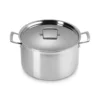
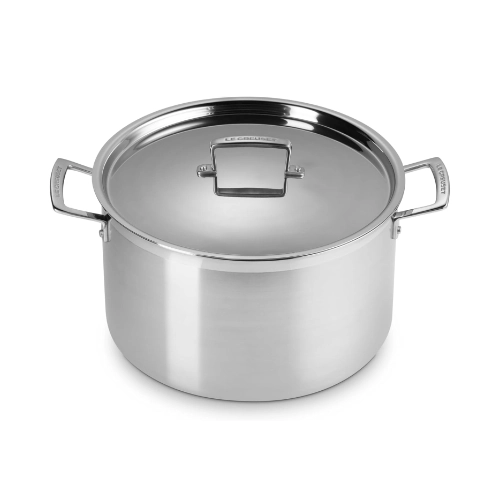
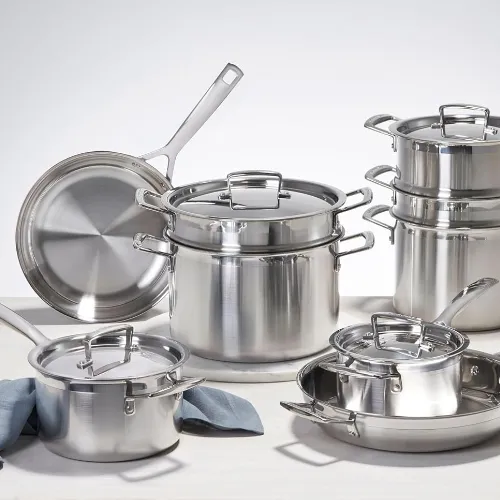
For cooking artichokes at this size, you need a pot large enough to hold them comfortably without crowding. I use the Le Creuset 28cm saucepan for this artichoke dish. It’s wide enough to hold four large artichokes side by side, deep enough to keep them submerged, and the even heat distribution means they cook at a consistent rate throughout. The enamelled interior doesn’t react with the slight acidity of the cooking water, which matters for a fresh artichoke that already needs acid added to prevent discolouration.
The vinaigrette
Classic French vinaigrette for artichokes is sharp and mustardy. Dijon mustard, red wine vinegar, good olive oil, salt and pepper. The mustard emulsifies the dressing and gives it enough body to cling to the artichoke leaves as you drag them through. Some cooks add a little garlic. Some add a pinch of sugar. The basic version needs neither.
The ratio is one part vinegar to three parts oil, with a generous teaspoon of Dijon per serving. Make more than you think you need. You will use it.
How to eat an artichoke
Pull the leaves off one at a time, dip the base in the vinaigrette, and drag it between your teeth to get the flesh. Work your way inward as the leaves get smaller and more tender. Eventually you reach the choke, the fibrous centre, which gets scraped away with a spoon to reveal the heart underneath. The heart is the best part. Eat it slowly with the remaining vinaigrette and good bread.
This is not fast food. That’s the point.
Share your feedback and spread the love!
If you try this recipe, I’d love to hear how it turns out! Leave a ★★★★★ rating and your thoughts in the comments, it helps fellow French foodies discover this recipe too. Snap a photo and tag me @obviously.french on Instagram if you’re sharing your bake or cooking online. Don’t forget to save this recipe to Pinterest so you’ll always have it handy for your next French-inspired meal!
Disclosure: Just so you know, this post contains sponsored content and/or affiliate links, If you make a purchase through these links, I may receive a small commission. Doesn’t cost you anything extra. I only link to things that are actually worth your time. All opinions are my own!