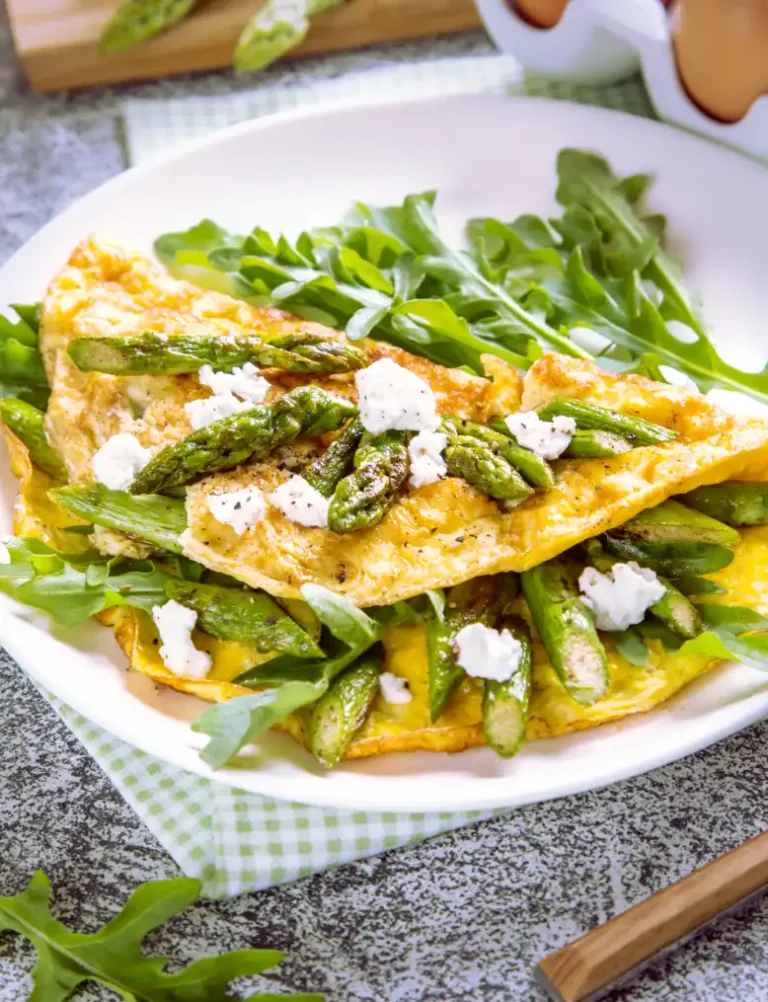
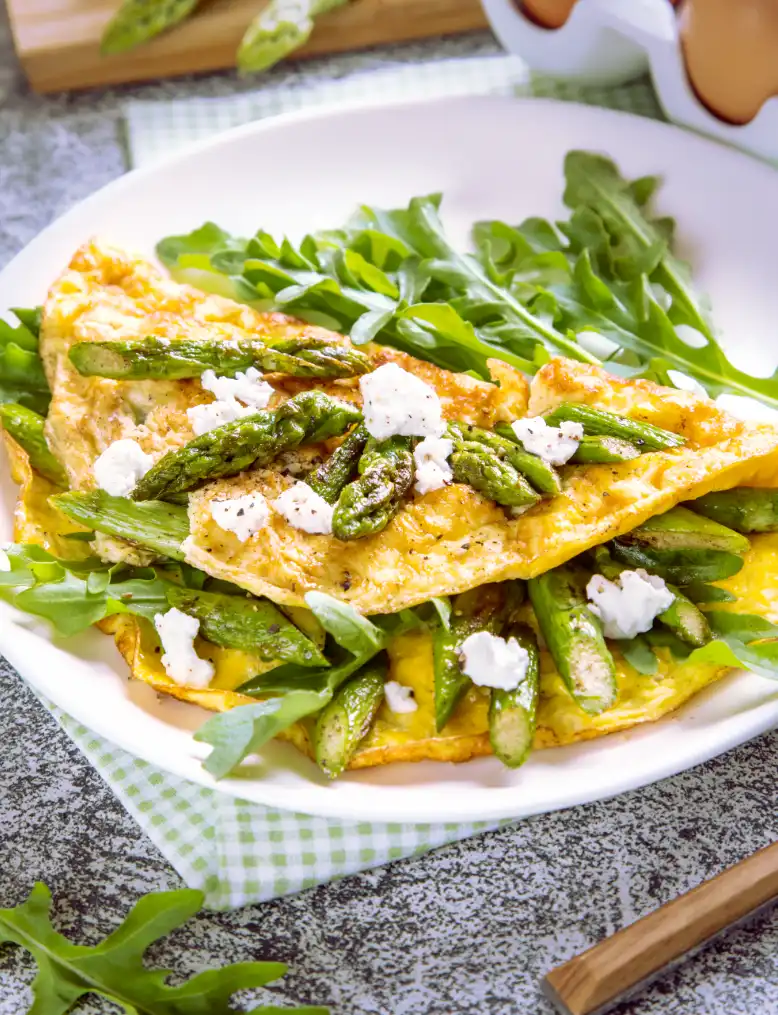
Asparagus Omelette with Goat’s Cheese
 Prep Time 10 minutes
  Cook Time 10 minutes
  Total Time 20 minutes
  Servings 2
Ingredients
For the asparagus filling
- 200 gr green asparagus woody ends snapped off, cut into 3–4cm pieces
- 15 gr unsalted butter
- salt and black pepper
For each omelette (makes 2)
- 3 eggs
- 1 gr unsalted butter
- 1 tbsp cold water
- salt and black pepper
To finish
- 80 gr goat cheese
- 1 handful rocket
- 1 drizzle olive oil
- 1 squeeze lemon juice
Equipment
Instructions
1. Cook the asparagus
- Melt the butter in a small frying pan over a medium-high heat. Add the asparagus pieces and cook for 3-4 minutes, tossing occasionally, until just tender with a little colour on them. Season with salt and pepper. Set aside and keep warm. You'll divide this between two omelettes.
2. Prepare the eggs
- Crack 3 eggs into a bowl. Add a tablespoon of cold water, a good pinch of salt, and some black pepper. Beat firmly with a whisk until the yolks and whites are fully combined and the mixture is slightly frothy. Don't over-beat it, you want it mixed, not aerated. Do this fresh for each omelette rather than beating all six eggs at once.
3. Cook the omelette
- This is the part that requires attention. Heat your non-stick pan over a high heat until properly hot. Add the butter and let it foam. The moment the foam starts to subside, not before, not after, pour in the beaten eggs.Immediately start stirring with a spatula in quick, small circular movements, pulling the set egg from the edges towards the centre whilst shaking the pan gently with your other hand. Keep going for about 30–40 seconds until the eggs are about 80% set but still look slightly wet and glossy on top. This happens fast.
4. Add the filling and fold
- Scatter half the asparagus over one half of the omelette. Add half the crumbled goat cheese. Now stop stirring and let the omelette sit for about 10 seconds, just enough for the base to set without colouring.Tilt the pan away from you at about 45 degrees. Using the spatula, fold the unfilled half of the omelette over the filled half. Slide it onto a warm plate. The omelette should be pale, slightly golden at most, with no brown. If it looks like scrambled eggs wrapped in a pancake, the heat was too high or you cooked it too long. It comes with practice.
5. Repeat for the second omelette
- Wipe the pan quickly with kitchen paper, return to the heat, and repeat with the remaining eggs and filling. Serve both immediately.
6. Dress the rocket and serve
- Toss the rocket leaves with a small drizzle of olive oil, a squeeze of lemon, and a pinch of salt. Serve alongside the omelette. Simple as that.
Notes
- Pan size is not optional. A 20-22cm non-stick pan for a 3-egg omelette is the standard for a reason. Too big and the eggs spread too thin and set too quickly. Too small and you get a thick, under-set slab. If yours is bigger, use 4 eggs.
- Don’t brown the omelette. This is the most important rule in French omelette-making. The moment you see colour on the outside, it’s overcooked by French standards. High heat for speed, not for colour.
- The cold water trick is worth doing. A tablespoon of cold water beaten into the eggs creates a slightly lighter, more tender result. Some French cooks use a splash of crème fraîche instead. Both work.
- Goat cheese is what you want here, the soft, fresh kind that crumbles easily and melts into the eggs. Aged, rind-on chèvre is a different thing entirely and won’t work the same way.
- Asparagus season runs April to June in France. Outside those months, this recipe is still worth making, but it’s best when asparagus is actually in season and tastes like something.
- Serve on warm plates. A French omelette cools and firms up quickly. Cold plates are the enemy.
About this recipe
Asparagus and eggs have a long history together in French cooking. The asparagus omelette appears in French recipe collections from the 18th century onwards, typically as omelettes or soft-scrambled eggs served alongside or topped with asparagus tips. The pairing makes obvious sense: the slight bitterness and grassy flavour of asparagus cuts through the richness of eggs the same way lemon cuts through butter.
Green asparagus became increasingly popular in French cooking through the 20th century, alongside the white asparagus that had dominated French tables for centuries. White asparagus from the Loire Valley and Alsace remains a significant seasonal event, harvested before the spears break the soil and prized for its tenderness and mild sweetness. Green asparagus, grown above ground, has a more assertive grassy character that works particularly well in an asparagus and egg omelet.
The goat’s cheese in this asparagus and cheese omelette is a more modern addition, but a thoroughly French one. Soft, fresh goat’s cheese appears across French cooking from salads and tarts to pasta and omelettes. Its tangy, creamy character is a natural match for asparagus, and the way it softens against warm eggs without fully melting gives this asparagus omelet recipe a richness a harder cheese simply would not deliver.
The French omelette
The French omelette is one of the foundational tests of French cooking. Escoffier considered it an essential measure of a cook’s skill, and the reasoning is simple: there is nowhere to hide. No sauce, no garnish. Just eggs, butter, heat, and technique.
What distinguishes a French omelette from any other is entirely a matter of approach. Eggs beaten well but not excessively. A properly hot pan before the butter goes in. Under two minutes, start to finish. The result is pale, soft, barely set in the centre, folded rather than rolled, with no colour on the outside. In France, a brown omelette is considered overcooked. Not a matter of opinion.
This recipe for asparagus omelette rewards understanding over instruction-following. Learn the technique once and you have a fast, endlessly adaptable weeknight supper.
The best pan for a French omelette
The pan matters more here than in almost any other recipe. A French omelette requires even heat distribution and a surface the eggs genuinely will not stick to, because you are moving them constantly and folding quickly. There is no time to wrestle with a bad pan.
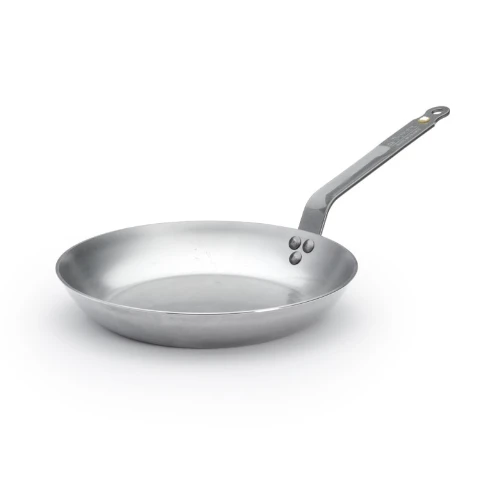
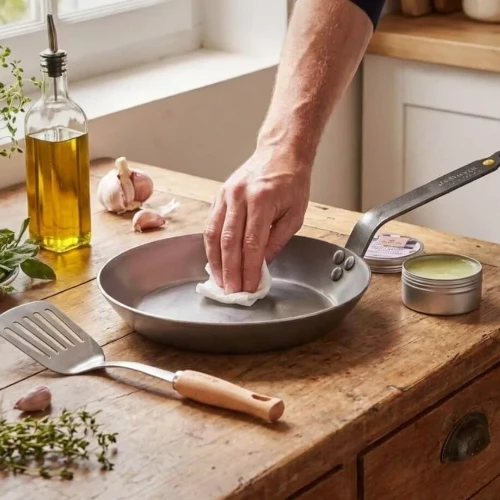
A well-seasoned carbon steel pan for this asparagus and egg omelet. Carbon steel is the traditional French professional kitchen choice, and for good reason. It heats fast, responds immediately to temperature changes, and once properly seasoned develops a natural non-stick surface that only improves with use. The weight is right too: light enough to move and tilt quickly during cooking, substantial enough to hold an even temperature throughout. An omelette pan between 20 and 24cm is ideal for a two or three egg omelette. Big enough to spread the eggs, small enough to fold them cleanly.
The asparagus and cheese omelette version you are about to make is simply one of the best things you can cook in under ten minutes. Once you have the technique, you will make it on repeat.
Share your feedback and spread the love!
If you try this recipe, I’d love to hear how it turns out! Leave a ★★★★★ rating and your thoughts in the comments, it helps fellow French foodies discover this recipe too. Snap a photo and tag me @obviously.french on Instagram if you’re sharing your bake or cooking online. Don’t forget to save this recipe to Pinterest so you’ll always have it handy for your next French-inspired meal!
Disclosure: Just so you know, this post contains sponsored content and/or affiliate links, If you make a purchase through these links, I may receive a small commission. Doesn’t cost you anything extra. I only link to things that are actually worth your time. All opinions are my own!