 January 6, 2026
Disclosure: This post may contain affiliate links which provide us a small commission when used for purchase. Please read my disclosure policy for more information. I am grateful for your support!
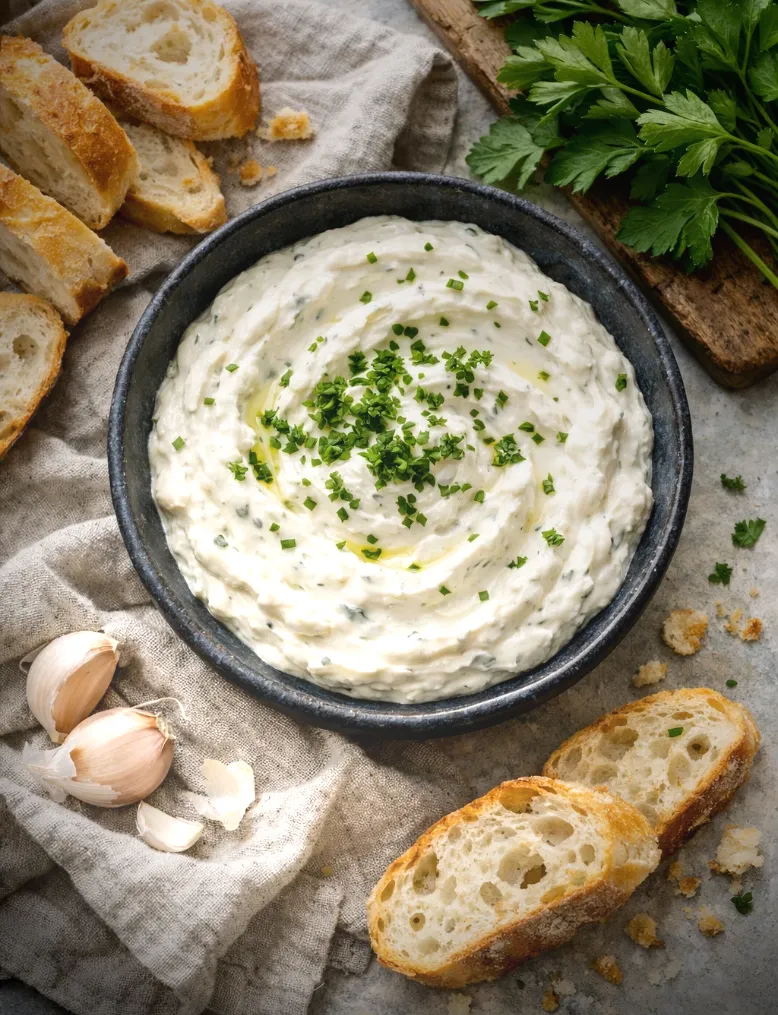
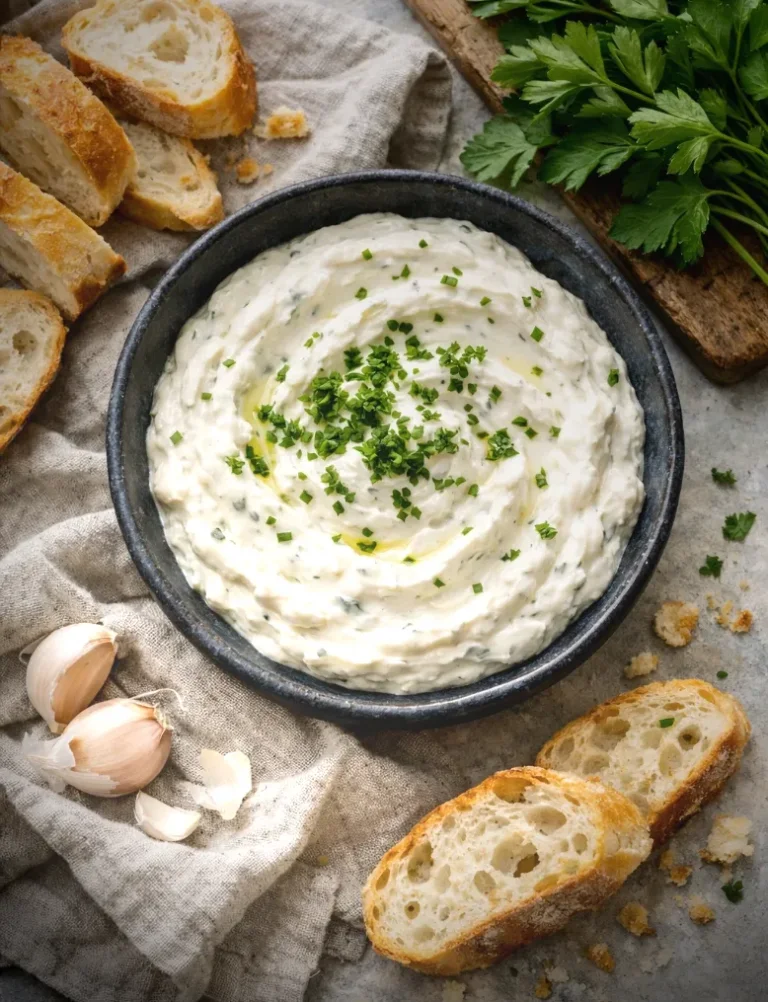
Like the rillettes de thon, this is a spread that belongs on a fresh baguette at apéro time. No fish in this one, though. Cervelle de Canut is a speciality of Lyon, a garlic and herb cheese made by the silk workers of the city, and it’s one of the easiest things to make!
Table of Contents
Where cervelle de canut comes from
The canuts were Lyon’s silk workers, thousands of them packed into workshops on the slopes of the Croix-Rousse in the 19th century. They were at the looms by five in the morning and needed food that was cheap, filling and needed no cooking. So they created beaten fresh cheese with whatever herbs grew nearby to fill their stomachs.
The name has an intricate history. Cervelle de canut means “silk workers’ brains,” and it was actually an insult. Lamb’s brains were a delicacy the bourgeoisie ate and the canuts couldn’t dream of affording, so calling their humble bowl of cheese “brains” was a joke at their expense. For some reason, the silk workers kept the name. When they rose up in the revolts of the 1830s and 40s, fighting brutal conditions, the mockery had turned into something they actually owned. And so, their cheap cheese spread became their badge.
They ate it at the mâchon, which is Lyon’s mid-morning meal (remember they’d been working since five). Today, it’s a weekend thing, and every bouchon in Lyon has its own version: some chunky, some smooth, some fiercely garlicky. We’re nearly two hundred years later, and the insult is on every menu in the city nowadays. Crazy right?
Ingredients
- Faiselle or Fromage blanc – Fromage Blanc is fresh, mild, slightly tangy, thicker than yoghurt and lighter than cream cheese. Faisselle is the traditional base, it’s a French curd cheese, somewhat like a very soft, slightly tangy farmer cheese or a loose cottage cheese, but without the large, firm curds.
- Shallots – Finely chopped, for a gentle sharpness that mellows as it sits.
- Garlic – Raw and fine. Be as bold or as restrained as you like.
- Chives and flat-leaf parsley – The backbone, use more than feels sensible.
- Chervil or tarragon – For that subtle aniseed note, which is very traditional.
- Walnut oil – My choice here, and the one I’d argue for (more on that below).
- Salt and pepper – Fromage blanc is bland on its own and needs more seasoning than you’d think.
How to make cervelle de canut
1. Drain and chop
If your fromage blanc is loose, drain it through a sieve or muslin for half an hour, since you want it thick enough to hold its shape. Most faisselles are perfect as they come. Then chop the shallots, garlic and herbs properly fine. Everything needs to distribute evenly through the cheese, and big chunks of raw shallot or garlic are unpleasant in my opinion.
2. Mix
Beat the cheese smooth with a fork, then fold in the shallots, garlic and all those herbs. Don’t be shy with them, they’re what makes this dish so flavourful. Add the oil gradually until it’s creamy but not swimming, then season generously and taste.
3. Chill (this is the important bit)
Chill for at least 2 hours, ideally overnight. The shallots mellow, the herbs infuse, the oil works its way through, and a spread that tastes sharp and disjointed straight away becomes something rounded.

Tools for this recipe
Check out my favorite kitchen essentials and cookware!
- Use a sieve or muslin to drain the cheese if it’s loose.
- Use a sharp chef’s knife to chop the herbs fine and clean without bruising them, which is most of the work in this recipe.
- Use a mixing bowl big enough to beat the cheese properly.
Tips for success
- For the smooth version, chop everything finely: shallot, garlic, herbs, all of it. Fine enough to distribute evenly.
- For the chunkier version, chop everything chunkier, obviously.
- Season generously: fromage blanc is very mild, so it takes a lot of salt and pepper before it comes alive. Taste, season, taste again.
- Chill it for at least 2 hours: overnight is better. The flavours need time to meld and the shallots need time to mellow. This is the difference between good and excellent.
How to store it
- This is a make-ahead dish by nature, since it needs the fridge time anyway.
- It keeps for 3 to 4 days, covered in a glass container, and the flavour genuinely improves after a day or two as everything melds. After that the herbs start to lose their freshness and the garlic gets a bit assertive, so eat it within the week.
- Don’t freeze it: fromage blanc separates when thawed and the fresh herbs go dull, and since it takes fifteen minutes to make, there’s no reason to!
- Serve it cold, with plenty of crusty bread: or with warm boiled potatoes if you’re being traditional (the hot-cold contrast is lovely), or with radishes and raw vegetables to dip.

Variations
- Olive oil instead of walnut: most modern recipes, and most bouchons today, use olive oil with a splash of wine vinegar, and it’s very good. I use walnut oil because it was the local one: olive oil came from Provence and cost money the silk workers didn’t have, while the Rhône-Alpes has grown walnuts for centuries. Ask an older Lyonnais and they’ll often tell you their grandmother’s had walnut oil, not olive. It gives a nutty depth olive oil can’t mimic. Toasted rapeseed oil is the other local option.
- Add a splash of vinegar: a little white wine vinegar sharpens it up, and it’s standard in most modern versions.
- With or without cream: some recipes add crème fraîche for extra richness. The original didn’t have it (cream was a luxury the silk workers couldn’t stretch to), and plenty of Lyonnais will tell you a proper cervelle de canut has none. But it’s your call to try and test your best version!
- Swap the herbs: chervil and tarragon bring that aniseed note, but parsley and chives alone make a perfectly proper version. Use what’s fresh.
- Goat’s cheese version: swap some of the fromage blanc for fresh goat’s cheese for more character.
FAQ
What is cervelle de canut?
It’s a Lyonnais cheese spread of fresh fromage blanc beaten with shallots, garlic and lots of fresh herbs, and dressed with oil. The name means “silk workers’ brains,” after the canuts of 19th-century Lyon who ate it. It’s served cold with bread, potatoes or raw vegetables, usually at apéro or as a starter.
What can I use instead of fromage blanc?
Quark is the closest and easiest substitute, widely available in UK supermarkets. If you can’t find it, mix about 300g full-fat Greek yoghurt with 100g softened cream cheese. Avoid Greek yoghurt alone (too thin), cream cheese alone (too rich), or cottage cheese (the curds won’t blend).
Does cervelle de canut contain brains?
None at all. It’s entirely vegetarian: fresh cheese, herbs, shallots, garlic and oil. The name is a joke, real brains were a delicacy the poor silk workers couldn’t afford, and the beaten cheese has a wobbly texture that supposedly resembles them.
How long does it keep?
3 to 4 days in the fridge, covered, and it’s better after a day or two as the flavours meld. Don’t freeze it, as the cheese separates and the herbs go dull.
What do you serve with cervelle de canut?
Traditionally warm boiled potatoes (the hot-cold contrast is lovely), or spread thickly on grilled country bread. It’s also good as a dip with radishes and raw vegetables, and it’s a fixture of the apéro table in Lyon’s bouchons.


 Prep Time 15 minutes
  Total Time 2 hours 15 minutes
  Servings 4
Description
Ingredients
- 400 gr fromage blanc faisselle if you can get it
- 2 shallots
- 2 cloves garlic
- 1 handful chives
- 1 handful flat-leaf parsley
- 1 tbsp tarragon or chervil
- 2 tbsp walnut oil
- salt and black pepper
Equipment


Instructions
1. Drain the cheese
- If your fromage blanc is loose, drain it through muslin or a fine sieve for 30 minutes. Most faisselles are fine as they are. You want it between Greek yoghurt and soft cream cheese: thick enough to hold its shape, still creamy.
2. Prep the aromatics
- Chop the shallots, garlic and all the herbs finely, fine enough that no one gets a chunk. Everything needs to distribute evenly.
3. Mix
- Beat the fromage blanc smooth with a fork. Add the shallots, garlic and herbs and mix until evenly distributed. Creamy, but keep a little texture.
4. Add the oil and season
- Pour in the oil gradually, mixing as you go. Start with 2 tbsp and add more if needed, enough to make it creamy, not swimming. Season generously with salt and pepper and taste.
5. Chill
- Cover and refrigerate at least 2 hours, ideally overnight. Serve cold with crusty bread, warm boiled potatoes, or radishes.
Notes
- Fromage blanc is a fresh, mild, unaged cheese, similar to quark. Quark is the best substitute; or mix 300g Greek yoghurt with 100g cream cheese.
- Season generously. Fromage blanc is bland and needs more salt than you’d expect.
- The chill isn’t optional. Two hours minimum, overnight better; the flavours need to meld.
- Herbs are flexible, quantity isn’t. Use plenty, whatever’s fresh.
- Keeps 3 to 4 days and improves after a day.
Share your feedback and spread the love!
If you try this recipe, I’d love to hear how it turns out! Leave a ★★★★★ rating and your thoughts in the comments, it helps fellow French foodies discover this recipe too. Snap a photo and tag @obviously.french on Instagram. Come talk about it in our Facebook group. And don’t forget to save this recipe to Pinterest so you’ll always have it handy for your next French-inspired meal!