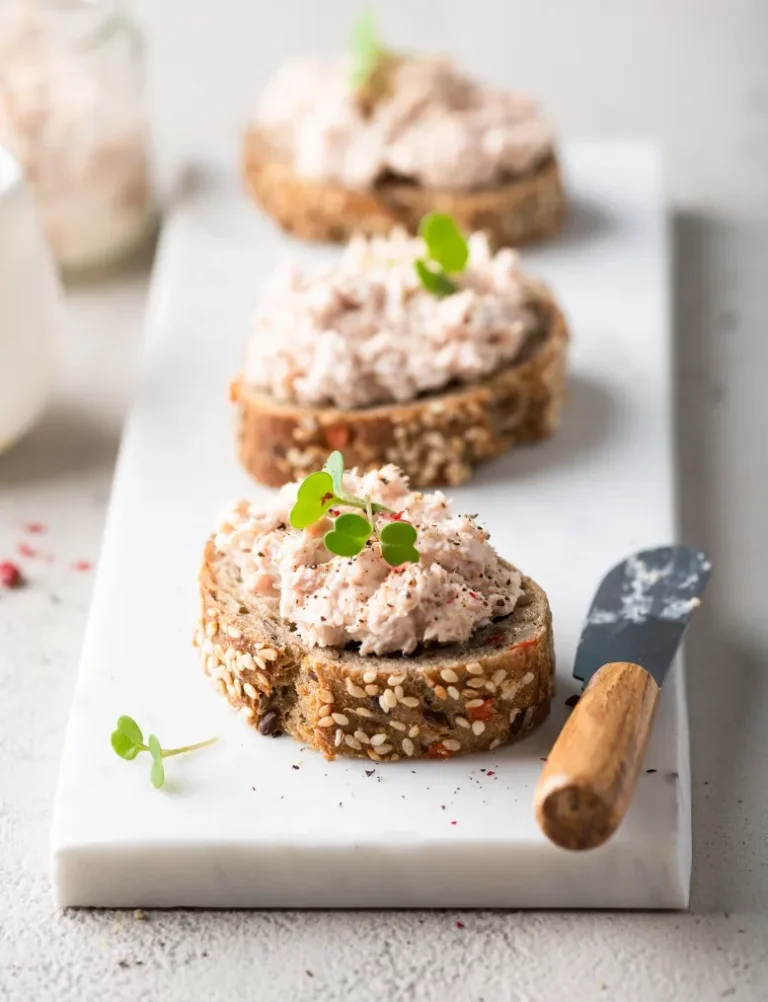
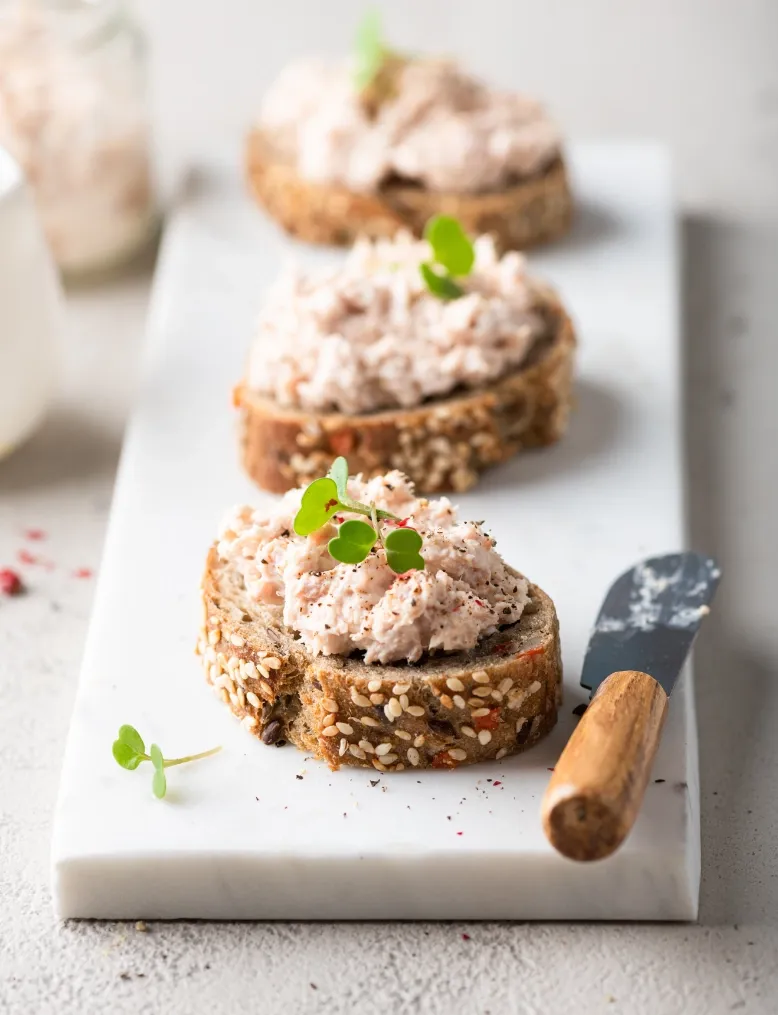
Rillettes de thon (Tuna Spread)
 Prep Time 10 minutes
  Total Time 10 minutes
  Servings 6
Ingredients
- 290 gr tuna in water
- 150 gr cream cheese full-fat works best
- 2 tbsp crème fraîche
- 1 shallots very finely chopped
- 1 tbsp chives
- 1 tsp mustard Dijon
- 15 ml lemon juice
- salt and black pepper

Instructions
1. Drain the tuna properly
- This bit actually matters. Tip the tuna into a sieve and press down firmly with the back of a fork to squeeze out as much liquid as possible. Watery tuna equals watery rillettes, and nobody wants that. Transfer to a mixing bowl and break it up with a fork until it's in fine flakes.
2. Add the creamy base
- Drop in the cream cheese and crème fraîche. Mix everything together until you've got a fairly smooth, spreadable consistency. Some people like to leave a few larger chunks of tuna for texture, your call. The French aren't precious about it.
3. Build the flavour
- Add the finely chopped shallot, snipped chives, Dijon mustard, and lemon juice. The shallot needs to be really fine here, no one wants to bite into a great wedge of raw shallot. Give everything a good stir.
4. Season and taste
- Add a pinch of salt (go easy, the tuna has some already) and a generous grinding of black pepper. Taste it. Adjust the lemon or seasoning if needed. The balance should be creamy but with enough acidity to cut through the richness.
5. Chill and serve
- Cover and pop in the fridge for at least 20 minutes. This lets the flavours meld together and firms up the texture slightly. Serve with slices of crusty baguette, crackers, or crudités. Scatter some fresh parsley over the top if you're feeling fancy.
Notes
- Use good tuna: Tinned tuna in spring water works best. Tuna in oil is fine if you drain it thoroughly, but it’ll be richer. Tuna in brine can be too salty.
- Make it ahead: These rillettes actually improve after a few hours in the fridge. The flavours develop beautifully overnight.
- Add-ins: Some French cooks throw in a tablespoon of capers, a few cornichons (finely chopped), or a tiny pinch of cayenne. All work brilliantly.
- Keep it cold: Serve straight from the fridge, this isn’t meant to come to room temperature like a cheese board.
About this recipe
Rillettes de Thon might just be the most useful thing in the French apéritif arsenal. It takes 10 minutes, uses cupboard staples, and makes you look far more competent than you probably are.
The word rillettes traditionally refers to pork cooked slowly in its own fat and then shredded, a rich, spreadable preparation that has been a French staple since the Middle Ages. The towns of Tours and Le Mans still argue about who invented it. But somewhere in the mid-20th century, clever cooks in coastal regions, Brittany, Vendée, the Atlantic coast, started applying the same principle to fish. Swap the slow-cooked pork for tinned tuna, replace the fat with cream cheese, and suddenly you have something lighter, fresher, and ready in a fraction of the time.
This is the tuna spread recipe that every French household knows but rarely writes down. It exists in the category of things that get passed between neighbours, scrawled on the back of an envelope, or simply described over the phone. There is no definitive version. There is just the principle: tuna, something creamy, something sharp, fresh herbs, and a good hand with seasoning.
Why cream cheese makes the difference
The cream cheese tuna spread approach is distinctly French, and it matters. British and American versions often rely on mayonnaise, which gives a heavier, oilier result. Cream cheese gives you richness without weight. It binds the tuna into that characteristic spreadable texture without dominating the flavour. The tuna still tastes like tuna. The herbs still come through. The cream cheese is just doing its job quietly in the background, which is exactly what good ingredients are supposed to do.
The quality of your cream cheese matters here. A good full-fat cream cheese makes a noticeably better result than a reduced-fat version, which tends to be waterier and slightly sour. I use Paysan Breton Cream Cheese with Sea Salt, it has the right texture and a clean, mild flavour that doesn’t fight with the tuna. If you can’t find it, any good full-fat cream cheese works perfectly.
The best tuna sandwich spread you’ll make
People often think of this purely as an apéritif spread, something to put on crackers or toasted baguette while the wine is being poured. And it is perfect for that. But it is also genuinely the best tuna sandwich spread recipe I know. Packed into a good baguette with some crisp lettuce and a few cornichons, it becomes lunch that requires no apology. Take it on a picnic. Pack it for a long drive through France. Eat it at a kitchen table in the sun with a glass of something cold.
The tuna sandwich spread version benefits from slightly less cream cheese than the apéritif version, you want it to hold together in a sandwich rather than ooze out the sides. A few finely sliced radishes or some cucumber add crunch without complicating anything.
A word on the tuna
Use good tinned tuna. Not the cheapest option, and ideally tuna in olive oil rather than brine, the oil gives a better flavour and the texture is less dry. Drain it well but not aggressively. You want the tuna moist enough to blend smoothly into the cream cheese without making the whole thing wet.
Industrially produced rillettes de thon line supermarket shelves across France, but homemade is always better, fresher, brighter, and you control the texture. This recipe sticks to the traditional approach: tuna, cream cheese, something sharp, and a hit of fresh herbs. No fuss, no technique. Just good ingredients mixed together the French way.
Share your feedback and spread the love!
If you try this recipe, I’d love to hear how it turns out! Leave a ★★★★★ rating and your thoughts in the comments, it helps fellow French foodies discover this recipe too. Snap a photo and tag me @obviously.french on Instagram if you’re sharing your bake or cooking online. Don’t forget to save this recipe to Pinterest so you’ll always have it handy for your next French-inspired meal!
Disclosure: Just so you know, this post contains sponsored content and/or affiliate links, If you make a purchase through these links, I may receive a small commission. Doesn’t cost you anything extra. I only link to things that are actually worth your time. All opinions are my own!