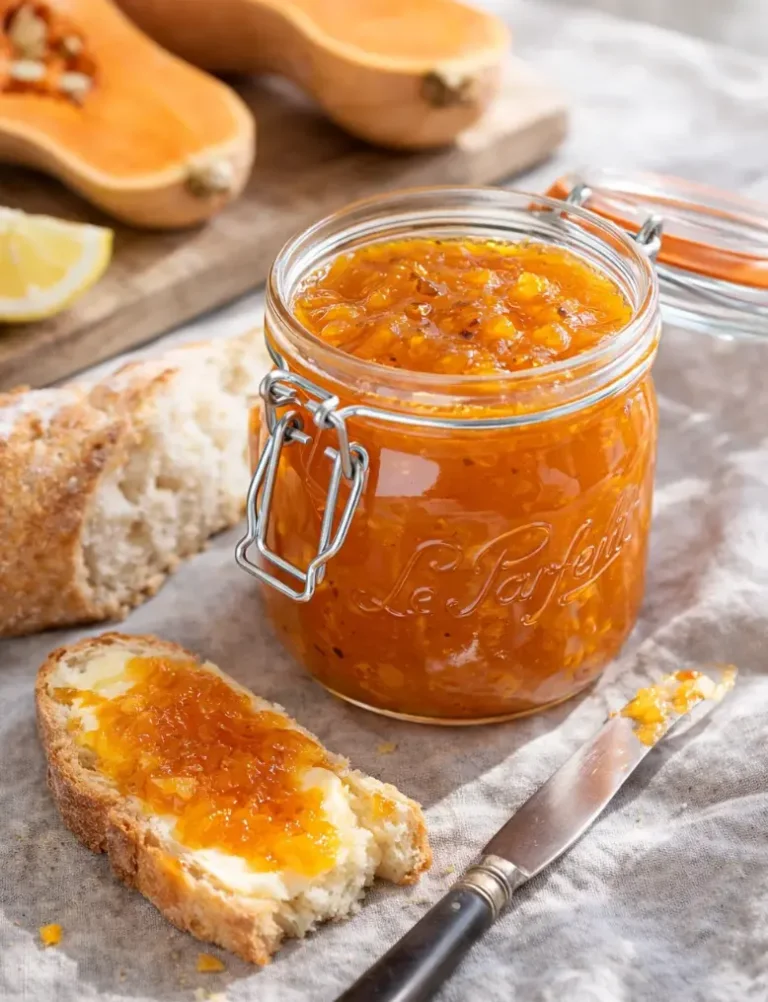
Confiture de Sucrine
 Prep Time 30 minutes
  Cook Time 50 minutes
  Total Time 1 hour 20 minutes
  Servings 4 jars
Ingredients
- 2 kg butternut squash traditionally Sucrine
- 1.4 kg sugar
- 2 mandarins optional, for extra zest and flavour
- 1 lemon juice and zest
- 1 vanilla pod or 1 tsp vanilla extract
- 2 gr agar-agar optional, for a firmer set
Equipment

Instructions
1. Sterilise the jars and lids
- Wash the jars, glass lids, and rubber seals in hot soapy water and rinse well. Set the rubber seals aside, they don't go in the boiling water. Place a heatproof plate or trivet in the bottom of a stock pot (11l). Arrange the jars and glass lids in the pot, making sure they don't touch each other or the sides. Fill with cold water until everything is fully covered by at least 2.5 cm (1 inch). Bring to a boil and keep at a rolling boil for 10 minutes. Turn off the heat and leave the jars and lids in the hot water until ready to fill. Give the rubber seals a brief 2–3 minute simmer in a separate small pan, then leave them in the hot water until needed.
2. Prepare the squash
- Cut the butternut squash (or Sucrine) in half and remove the seeds and fibrous centre. Peel the squash with a sharp knife. Cut the flesh into regular, medium-sized chunks. Rinse the pieces under cold water and drain.
3. Macerate the fruit (optional but recommended)
- Place the butternut squash (or Sucrine) chunks in a large bowl and sprinkle with a little sugar. Let them macerate for a few hours or overnight to draw out the juices and enhance the flavour.
4. Cook the jam
- Place the butternut squash (or Sucrine) in a stock pot or jam pan. Add the sugar, lemon juice, and zest. If using mandarins, peel them, cut into sections, and add to the pot, along with any zest. Split the vanilla pod lengthwise, scrape out the seeds, and add both seeds and pod to the mixture. Stir well.Bring the mixture to a gentle boil over medium heat, stirring occasionally. Cook for about 30-40 minutes, or until the fruit is soft and the mixture has thickened. If you want a smoother jam, you can blend part of the mixture with a stick blender or pass it through a food mill halfway through cooking.If using agar-agar, sprinkle it in halfway through cooking and stir well to dissolve.
5. Test the set
- Place a small spoonful of jam on a cold plate. If it wrinkles when pushed with your finger, it's set. If not, continue cooking for a few more minutes and test again.
6. Fill the jars
- Carefully remove the jars from the hot water using tongs or a jar lifter. Place them upright on a clean cloth. Fit a rubber seal onto each glass lid. Ladle the hot jam into the hot jars, leaving about 1 cm (½ inch) of space at the top. Wipe the rims with a clean, damp cloth to remove any drips.
7. Seal the jar
- Centre the glass lid (with its rubber seal) on the jar. Clip the metal bail arms down on both sides until they sit snugly. They should feel firm but you shouldn't need to force them.
8. Process in the water bath
- Use your jar lifter to lower the jars into the simmering water. They shouldn't touch each other or the sides of the pot. Add more hot water if needed to cover the jars by 2-3 cm. Put the lid on the stock pot. Bring the water to a rolling boil, big bubbles breaking the surface, then start your timer.
9. Remove and cool
- When the timer goes off, turn off the heat. Leave the jars in the water for 10 minutes to reduce the temperature shock. Use your jar lifter to remove them and place on a tea towel on the counter with at least 2-3 cm of space between each jar. Don't put them on a cold surface or they might crack.Leave them completely alone for 12-24 hours. No touching, no moving, no testing.
9. Check the seals + Label and store
- After 12-24 hours, release the wire bail arms and gently try to lift the glass lid with your fingers. If it stays firmly in place, the vacuum seal has formed and you're good. If the lid lifts straight off, the jar hasn't sealed, put it in the fridge and use it within a week.Store sealed jars in a cool, dark place, a cupboard works perfectly. Not above the cooker, not in direct sunlight. Properly sealed, most preserves last 12-18 months. But honestly, they'll probably be gone well before then.
Notes
- Sucrine squash: If you’re outside of France, you’re unlikely to come across Sucrine squash, but if you do spot it, please let us know! The easiest way is to substitute with another sweet, firm-fleshed squash, like Butternut Squash.
- Mandarines: These do add a lovely citrus note, but the jam is delicious without them too.
- Agar-agar: This is optional but helps the jam set without overcooking the fruit.
- Serving: Enjoy on fresh bread, with cheese, or as a filling for pastries.
About this recipe
This recipe of confiture de Sucrine belongs to Nathalie, our neighbour in Berry. Every October, she and her husband would harvest the sucrine squash they grew themselves and spend an afternoon turning it into jars of this amber, gently spiced preserve. She gave us a jar the first autumn we lived there. By the following October, we were making it ourselves.
That is how good recipes travel in French villages. Not through cookbooks, through neighbours.
What sucrine du Berry actually is
The sucrine du Berry is a squash variety native to the Berry region in central France. It is smaller and rounder than a standard butternut, with dense, sweet, deeply orange flesh and a flavour that sits somewhere between butternut squash and sweet potato. It was almost lost entirely, kept alive only by a handful of passionate local gardeners who continued growing it when commercial agriculture moved on to more productive varieties. Those gardeners brought it back, and it is now celebrated across the region as a symbol of local agricultural heritage.
Outside Berry, sucrine du Berry can be difficult to find. Butternut squash is the closest widely available substitute and makes an excellent butternut squash jam with the same texture and a very similar flavour profile. If you can find sucrine, use it. If you can’t, butternut works beautifully.
Butternut jam in French preserving tradition
The French preserving tradition is built around using what the season produces in abundance and storing it for the months when fresh produce is scarce. Autumn squash, with its long shelf life and dense flesh, has always been part of that tradition in central France. The Confiture de Sucrine is the Berry region’s answer to the question of what to do with more squash than you can eat before winter arrives.
Jam squash might sound unusual to anyone who hasn’t tried it. Squash has a natural sweetness that intensifies as it cooks down with sugar, and its dense flesh produces a jam with a thick, almost creamy texture that spreads beautifully on bread. The vanilla and lemon in this recipe lift the flavour and prevent it from being one-dimensional. The result is a butternut jam that tastes genuinely of autumn without tasting simply of sugar.
Making the jam squash recipe at home
This jam squash recipe follows the same basic principles as any fruit preserve. The squash is cut, cooked down with sugar, lemon juice, and vanilla until the mixture thickens and the flavour concentrates. The key difference from fruit jams is the moisture content. Squash releases less liquid than most fruits during cooking, which means the jam thickens relatively quickly. Watch it carefully in the final stages to prevent it catching on the bottom of the pan.
The lemon juice does two jobs: it adds brightness that balances the sweetness of the squash and the sugar, and it provides the acidity that helps the jam set. Don’t reduce it or substitute it. The vanilla should be a whole pod split and scraped rather than extract if possible. The seeds distribute through the jam during cooking and you can see them in the finished preserve, which looks considerably more appealing than a plain amber jam.
The right jars for preserving
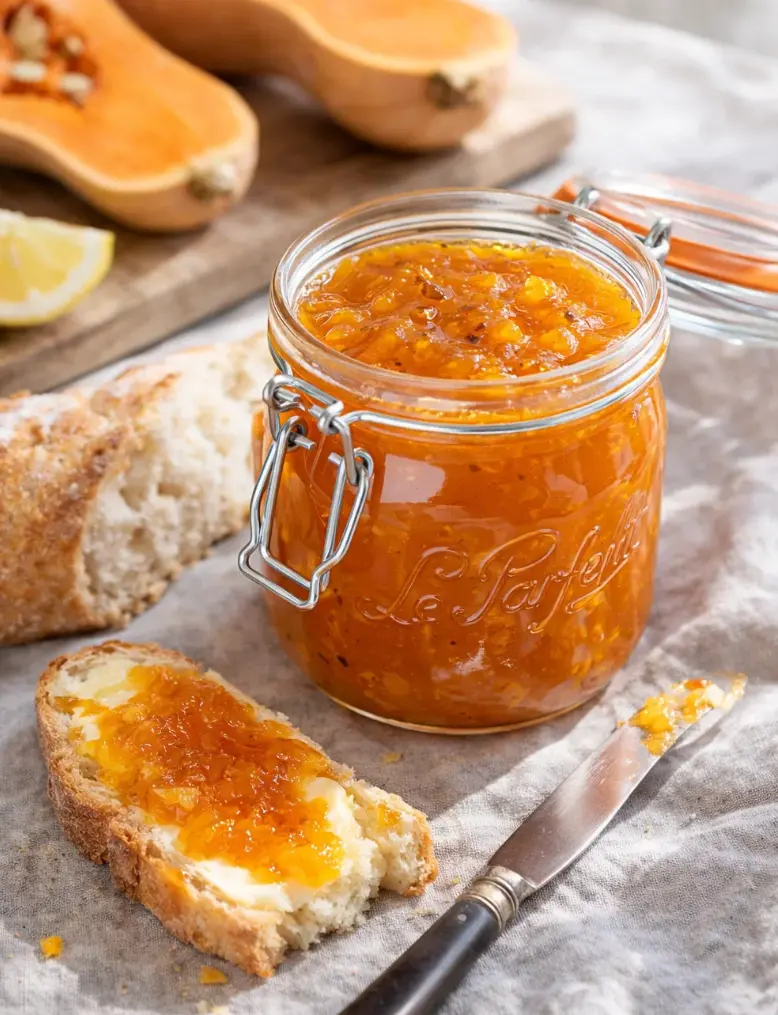
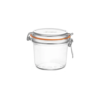
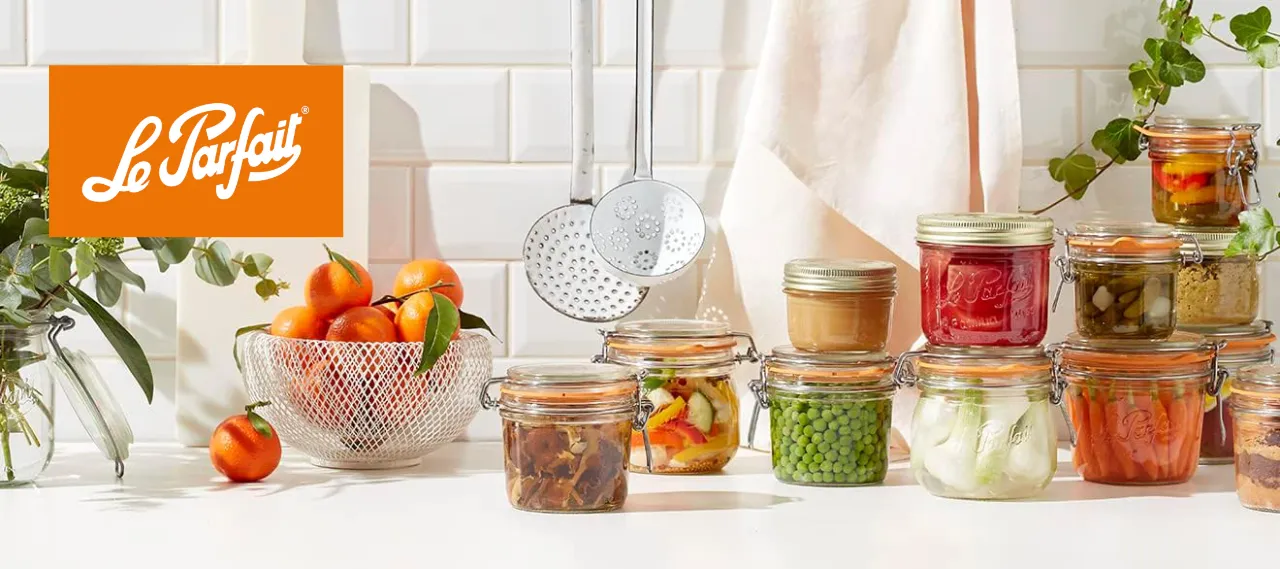
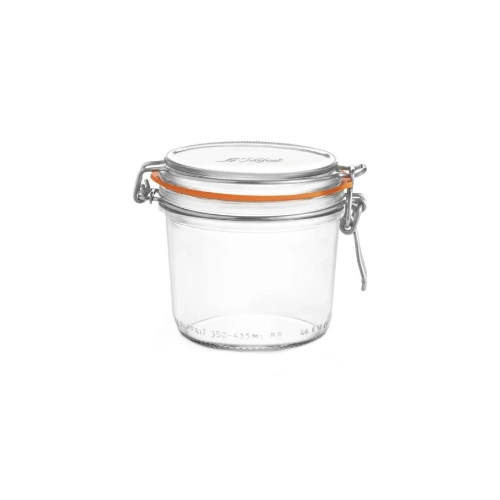
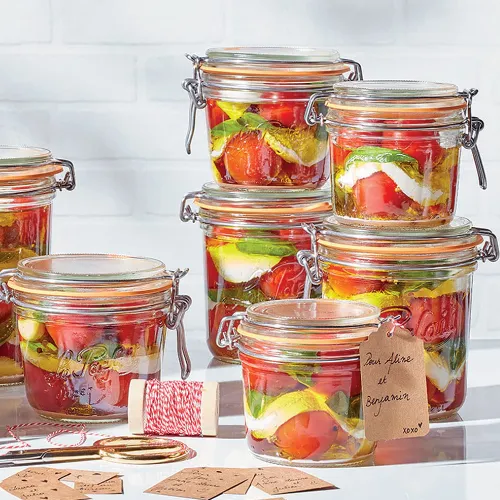
Good jam deserves good jars. The seal matters as much as the recipe when it comes to how long the preserve will keep and how well it will store. I use Le Parfait jars for this butternut squash jam. The rubber seal and clip-top closure create an airtight vacuum that keeps the jam fresh for months. The glass is thick enough to handle the heat of hot jam being poured in without cracking, and the 350ml size is right for this recipe, generous enough to share or give as a gift but not so large that an open jar sits in the fridge for weeks.
Sterilise the jars properly before filling. Wash in hot soapy water, rinse thoroughly, and place in a low oven for ten minutes before the jam is ready. Fill while both the jar and the jam are hot, seal immediately, and turn upside down for a few minutes to ensure the seal is complete.
Serving confiture de sucrine
On toast with good French butter at breakfast. On a slice of brioche at teatime. Alongside a cheese board, where it pairs particularly well with aged goat cheese or a firm tomme. Nathalie used to serve it with pain d’épices, the spiced French gingerbread that appears in Berry markets from October onwards. That combination is worth trying.
It also makes a very good gift. A jar of homemade butternut jam in autumn, properly sealed and labelled, is the kind of thing people remember.
Share your feedback and spread the love!
If you try this recipe, I’d love to hear how it turns out! Leave a ★★★★★ rating and your thoughts in the comments, it helps fellow French foodies discover this recipe too. Snap a photo and tag me @obviously.french on Instagram if you’re sharing your bake or cooking online. Don’t forget to save this recipe to Pinterest so you’ll always have it handy for your next French-inspired meal!
Disclosure: Just so you know, this post contains sponsored content and/or affiliate links, If you make a purchase through these links, I may receive a small commission. Doesn’t cost you anything extra. I only link to things that are actually worth your time. All opinions are my own!