Crêpes Suzette
 Prep Time 15 minutes
  Cook Time 30 minutes
  Total Time 1 hour 45 minutes
  Servings 4
Ingredients
For the crêpes
- 125 gr plain flour
- 1 pinch salt
- 1 tbsp caster sugar
- 2 eggs
- 250 ml whole milk
- 1 tbsp Grand Marnier or Cointreau
- 30 gr unsalted butter plus extra for the pan
- ½ orange zest
For the orange sauce
- 100 gr unsalted butter at room temperature
- 50 gr caster sugar
- 2 orange zest finely grated
- 100 ml orange juice
- 2 tbsp Grand Marnier
- 3 tbsp Grand Marnier for flambéing optional
Equipment

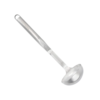
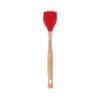
Instructions
1. Make the pancake batter
- In a mixing jug, whisk together the flour, salt, and sugar. Make a well in the centre and crack in the eggs. Start whisking from the middle, gradually incorporating the flour from the sides. Add the milk bit by bit, don't rush it or you'll get lumps. Whisk in the melted butter, Grand Marnier, and orange zest until you've got a smooth batter about the consistency of single cream. Cover and stick it in the fridge for an hour.
2. Cook the pancakes
- Heat your frying or crêpe pan over medium-high heat and brush it lightly with butter. Pour in a small ladle full of batter, tilting the pan immediately to spread it thin and even. Cook for about a minute until the edges start to lift and the bottom's golden. Flip it and cook the other side for 30 seconds. Stack the finished crêpes on a plate. You should get about 12 crêpes. Brush the pan with butter between each one.
3. Make the orange butter sauce
- In a large frying pan, melt the butter with the sugar over medium heat. When it starts to bubble and turn golden (about 3 minutes), add the orange zest and juice. Let it bubble away for 2-3 minutes until it thickens slightly and looks glossy. Stir in the 2 tablespoons of Grand Marnier.
4. Coat the pancakes
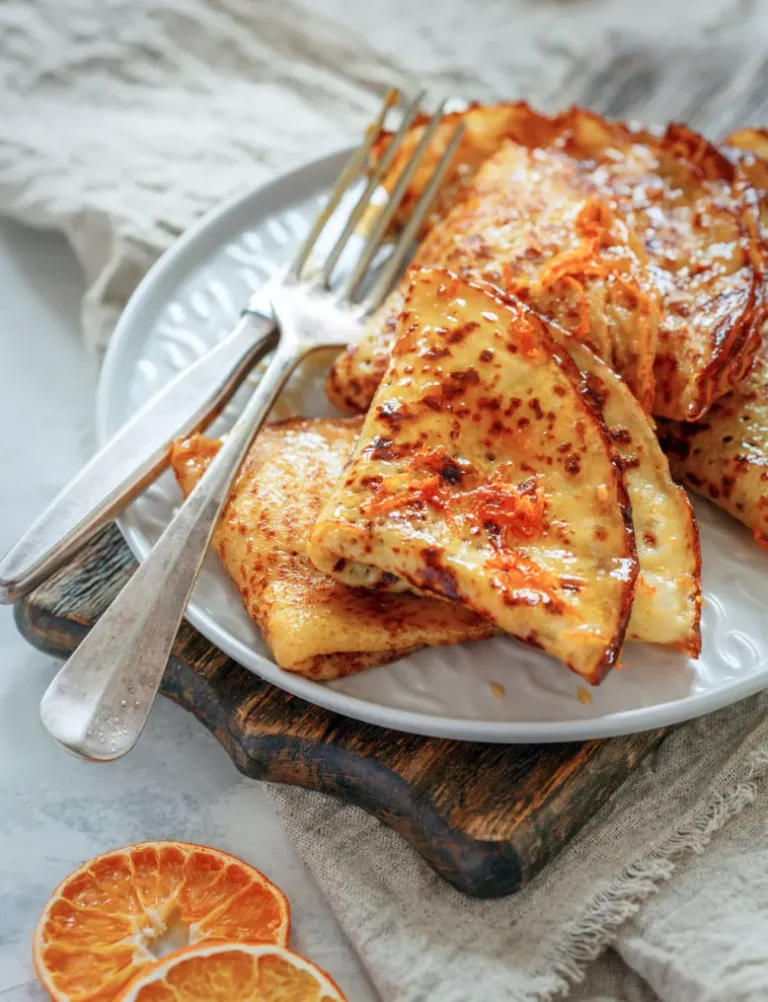
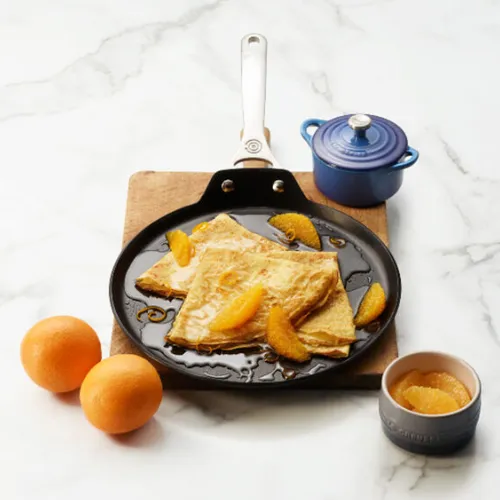
- Take a pancake, fold it in half, then in half again to make a triangle. Dip it in the orange sauce, turning it to coat both sides. Tuck it to the side of the pan. Repeat with the remaining pancakes, arranging them in a single layer (you might need to work in batches).
5. Flambé (optional but brilliant)
- If you want to do the full theatrical number, warm 2-3 tablespoons of Grand Marnier in a small pan or ladle. Remove the pancakes pan from the heat, pour the warmed Grand Marnier over the crêpes, and carefully light it with a long match or lighter. Let the flames die down naturally, takes about 30 seconds.
6. Serve immediately
- Plate up 3 pancakes per person, drizzle with extra sauce from the pan, and serve whilst hot. Some people add vanilla ice cream on the side, though I reckon that's gilding the lily.
Notes
- You can cook the pancakes a few hours in advance. Stack them with greaseproof paper between each one and keep them covered. The orange butter can be made ahead too and gently rewarmed, just don’t let it boil once the butter’s in or it’ll split.
- No Grand Marnier? Cointreau works brilliantly, as does any orange liqueur. The original Escoffier recipe used Curaçao. In a pinch, use extra orange juice and a splash of brandy.
- Flambé safety! Keep your face and hair well back when you light it. Make sure there’s nothing flammable nearby. The alcohol will burn off quickly and it’s mostly for show, the flavour doesn’t change drastically if you skip this step.
- If your pancake batter’s too thick after resting, add a splash more milk. It should pour easily and spread thinly across the pan.
- In case of lumps in the batter, pass the batter through a fine sieve. Or just whisk harder next time and add the liquid more gradually.
About this recipe
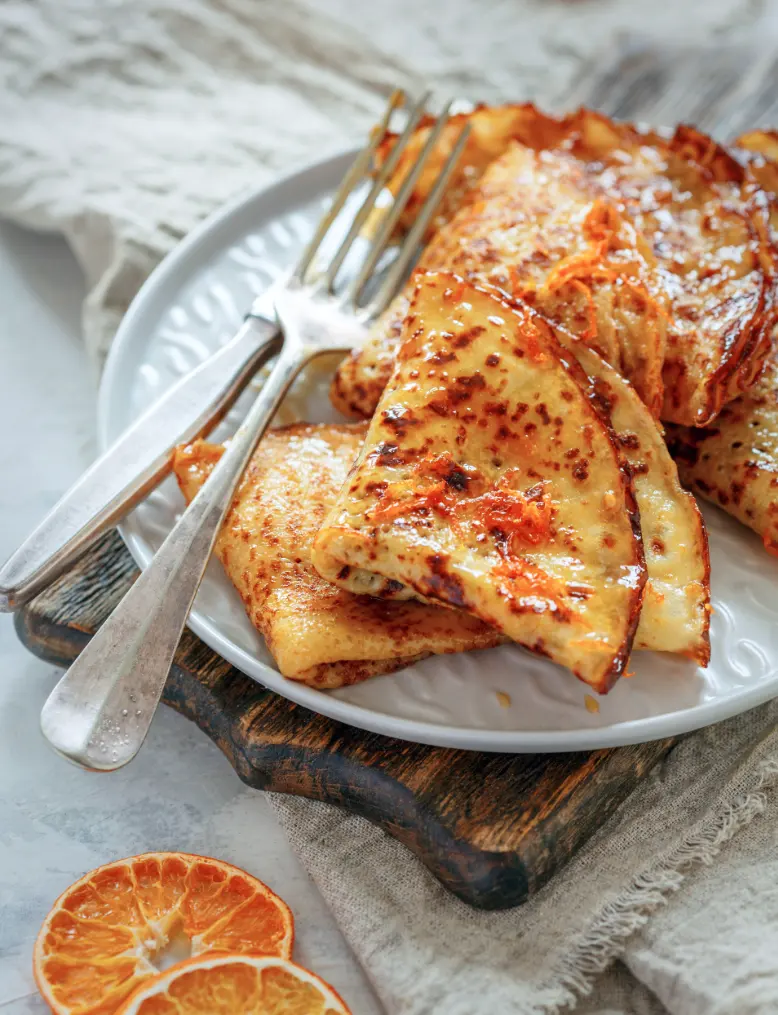
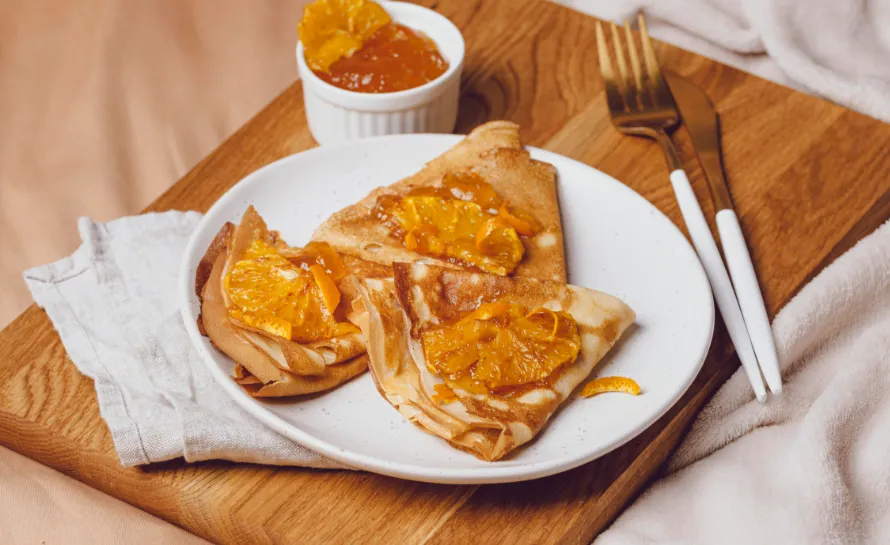
Crêpes Suzette is the most theatrical dessert in the French repertoire. Thin crêpes folded into quarters, bathed in a buttery orange suzette sauce, then set alight with Grand Marnier at the table. The flames die down, the sauce caramelises slightly, and what arrives in front of you is one of the great classics of French cooking. It looks like a performance. It tastes even better than it looks.
The Escoffier version vs the flambéed showstopper
The “proper” traditional Crêpes Suzette created by Auguste Escoffier in 1903 were not flambéed at all. The original recipe used a mandarin butter, butter, sugar, mandarin zest and juice, and Curaçao orange liqueur. No flames. The crêpes were simply folded, coated in this butter, and warmed through. Elegant, quiet, and apparently not dramatic enough for the restaurants that came after.
The crepe suzette flambe came later, almost certainly added by Parisian restaurant chefs who understood that a dish set on fire at the table sells itself. By the mid-20th century, tableside flambéing had become the expected finale at any restaurant worth its Michelin star.
These days, most people expect oranges and Grand Marnier rather than mandarins and Curaçao, mainly because good mandarins are nearly impossible to find outside France, and a crepe Grand Marnier is what everyone recognises. So that’s what this recipe uses.
The legend of Suzette
The origin story is disputed, naturally. The most popular version involves a young waiter called Henri Charpentier who accidentally set fire to a pan of crêpes whilst serving the Prince of Wales (future King Edward VII) at the Café de Paris in Monte Carlo in 1895. The prince loved them and asked what they were called. Charpentier supposedly replied “Crêpes Princesse” but the prince insisted on naming them after a woman called Suzette who was dining with him.
Lovely story. Probably nonsense. Charpentier was only 14 at the time, so unlikely to be serving royalty. The Larousse Gastronomique considers this a false claim Charpentier made years later whilst working as the Rockefeller family’s cook in America.
Another version credits Escoffier himself, working at the Savoy Hotel in London in the 1890s, who created the dish for a customer. A third story involves actress Suzanne Reichenberg (stage name: Suzette) and a restaurant owner flambéing crêpes on stage to keep them warm for the actors.
Nobody really knows. But Escoffier included Crêpes Suzette in his 1903 Guide Culinaire, and that’s when the dish became part of the French culinary canon.
The crepe suzette sauce
The suzette sauce is the heart of this dish. Butter, sugar, orange zest and juice, and Grand Marnier, melted and reduced together until glossy and slightly syrupy. It sounds technical but it’s one of the more forgiving sauces in French cooking. Even if it splits slightly, a moment off the heat and a quick swirl brings it back together.
The Grand Marnier does two things: it adds a warm, cognac-based orange flavour to the crepe suzette sauce, and it provides the alcohol for the flambe. Don’t substitute cheap orange liqueur here. Grand Marnier is widely available and the flavour difference is significant.
When you add the crêpes to the suzette sauce, fold them into quarters first. They absorb the sauce as they warm through, and by the time they reach the table they’re glossy, fragrant, and completely transformed from the plain crêpes you started with.
The right equipment makes a difference
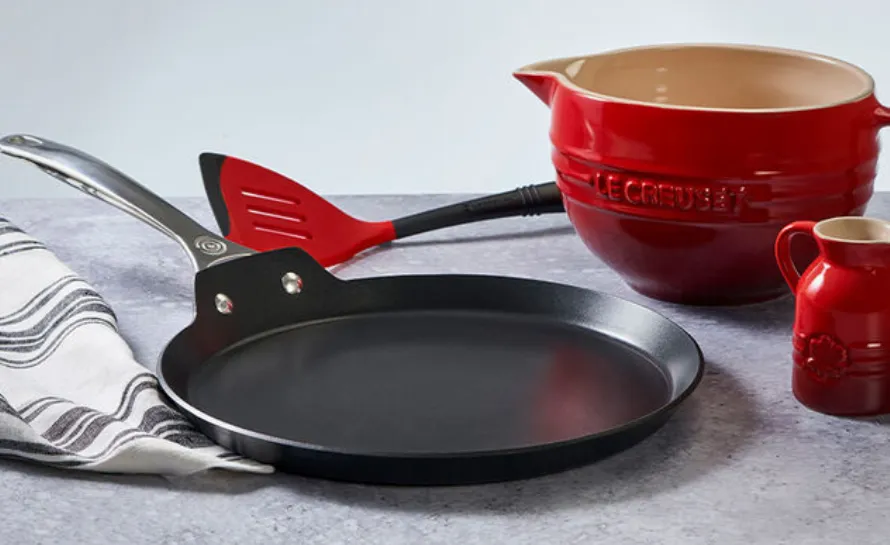
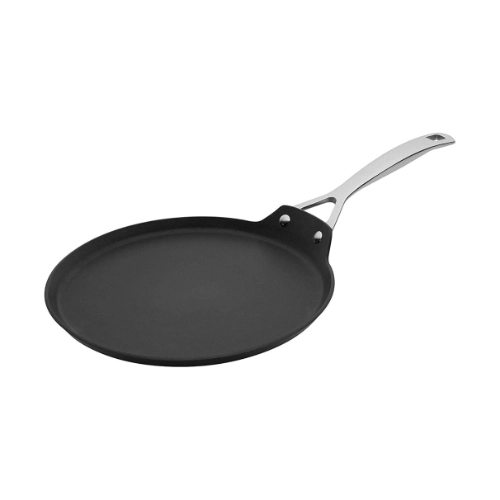
Good crêpes start with a good pan. I use the Le Creuset crêpe pan, which has a perfectly flat, low-sided surface that makes swirling the batter and flipping the crêpes straightforward. The heat distribution is even, which means no hot spots and no patches of uncooked batter.
For the batter, a good mixing jug makes the pouring much easier to control. The Le Creuset mixing jug is wide enough to whisk in comfortably and has a proper pour spout so you can add the exact amount of batter to the pan each time. Getting consistent crêpes is mostly about consistent pouring, and the right jug genuinely helps.
Why Crêpes Suzette are worth making at home
The whole thing looks incredibly impressive but it’s actually quite forgiving. Crêpes are thinner and more delicate than pancakes, no baking powder, so they cook flat and lacy at the edges. Your first one or two will probably be a disaster. By the fourth, you’ll have the rhythm.
The crepe suzette flambe is optional at home. If you’d rather skip the flames, simply warm the crêpes gently in the sauce and serve. The flavour is identical. The drama is optional, the taste is not.
Serve after a fairly light main course. These are rich, sweet, and a genuine showstopper. Perfect for when you want to look like you know exactly what you’re doing in the kitchen without actually breaking a sweat.
Share your feedback and spread the love!
If you try this recipe, I’d love to hear how it turns out! Leave a ★★★★★ rating and your thoughts in the comments, it helps fellow French foodies discover this recipe too. Snap a photo and tag me @obviously.french on Instagram if you’re sharing your bake or cooking online. Don’t forget to save this recipe to Pinterest so you’ll always have it handy for your next French-inspired meal!
Disclosure: Just so you know, this post contains sponsored content and/or affiliate links, If you make a purchase through these links, I may receive a small commission. Doesn’t cost you anything extra. I only link to things that are actually worth your time. All opinions are my own!