Easter Quiche
 Prep Time 30 minutes
  Cook Time 55 minutes
  Total Time 1 hour 55 minutes
  Servings 6
Ingredients
For the pâte brisée
- 200 gr plain flour
- 100 gr unsalted butter cold, cut into small cubes
- 1 egg yolk
- 1 pinch salt
- 2 tbsp cold water
For the filling
- 200 gr vegetarian lardons smoked
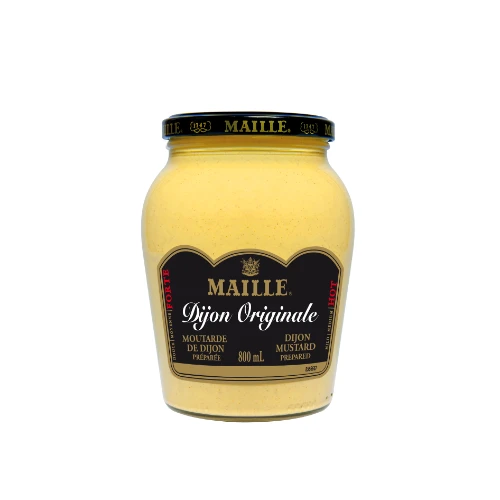
- 300 gr green asparagus
- 4 eggs
- 200 ml crème fraîche
- 100 ml whole milk
- 80 gr Gruyère cheese
- salt and black pepper
For the top
- 3 eggs hard-boiled and halved lengthways
- 1 handful flat-leaf parsley
- 3 sprigs dill
Equipment
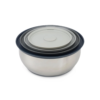
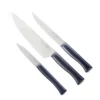
Instructions
1. Make the pâte brisée
- Put the flour and salt into a large bowl. Add the cold butter cubes and rub them into the flour with your fingertips, working quickly so the butter doesn't warm up. You're aiming for a texture like rough, sandy breadcrumbs, visible flecks of butter are fine. Add the egg yolk and one tablespoon of cold water at a time, mixing lightly with a fork until the dough just comes together. Don't overwork it. Form into a flat disc, wrap in cling film, and refrigerate for at least 30 minutes.
2. Blind bake the pastry case
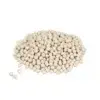
- Preheat the oven to 190°C / 170°C fan. Roll out the chilled pastry on a lightly floured surface to about 3mm thickness and line your tart dish, pressing gently into the fluted edges. Trim the excess. Prick the base all over with a fork, line with baking parchment, and fill with baking beans. Blind bake for 15 minutes, then remove the beans and parchment and return to the oven for a further 5 minutes until the base is lightly golden and dry. Remove and set aside. Reduce the oven to 180°C / 160°C fan.
3. Prepare the asparagus
- Snap off the woody ends of the asparagus, they'll break naturally at the right point, and peel the lower third of each stalk with a vegetable peeler. Bring a large pan of salted water to the boil and blanch the asparagus for 3 minutes. They should be just barely tender, still with a little bite. Drain immediately and plunge into cold water to stop the cooking. Drain well and pat dry.
4. Cook the lardons
- Cook the vegetarian lardons in a dry frying pan over a medium heat for 5 minutes, stirring occasionally, until lightly golden and slightly crisped. Set aside to cool a little.
5. Make the filling
- In a large bowl, whisk together the eggs, crème fraîche, and milk until smooth. Season with a little salt, go carefully as the lardons will add some, and a generous amount of black pepper. Stir in most of the grated Gruyère, keeping a small handful back for the top.
6. Assemble and bake
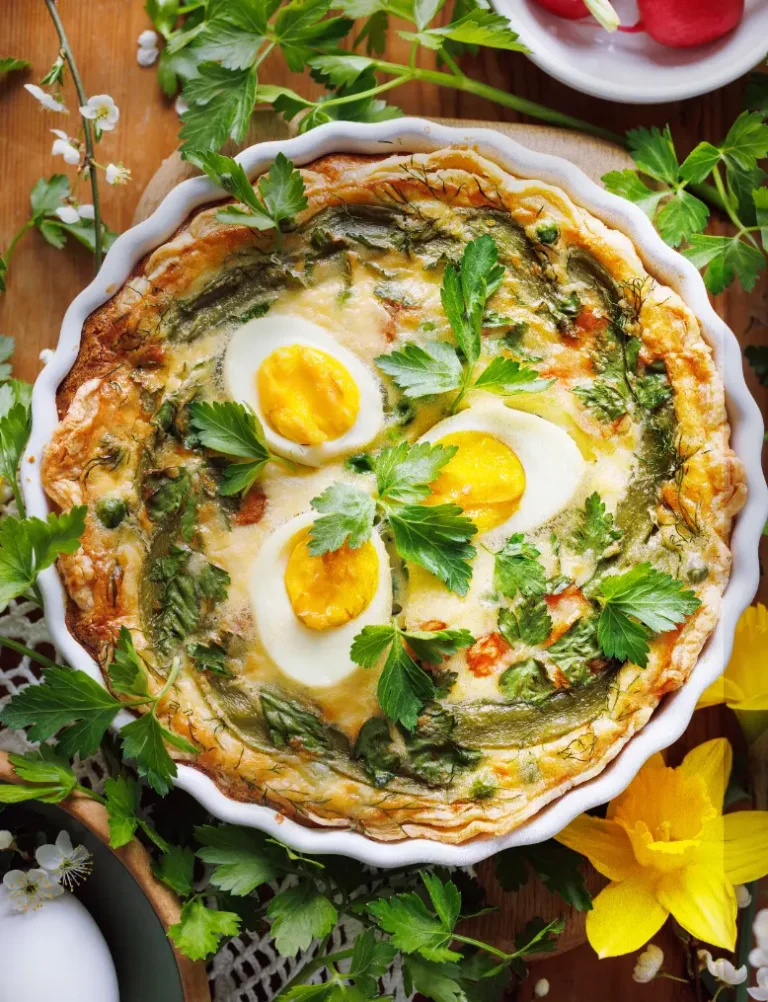
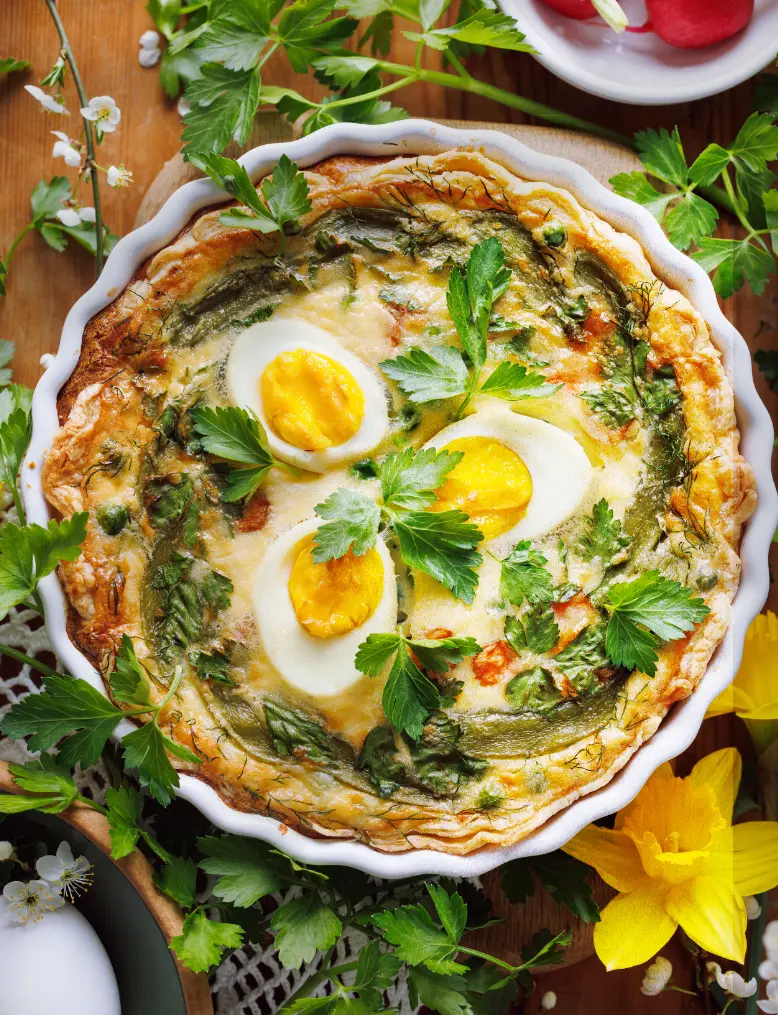
- Scatter the lardons over the base of the pastry case. Arrange the asparagus spears in a circular pattern on top, pointing outward from the centre. Pour the egg and cream mixture over carefully, right up to the top of the pastry. Scatter the remaining Gruyère over the surface. Place the three hard-boiled egg halves, cut-side up, evenly spaced around the quiche, pressing them very gently into the surface. They should sit proud of the filling.
7. Bake
- Bake at 180°C for 35-40 minutes, until the filling is just set with the very faintest wobble in the centre and the top is golden. If the pastry edges are browning too quickly, cover them loosely with strips of foil.
8. Garnish and serve
- Leave to cool for 10 minutes before serving, this helps the filling settle cleanly for slicing. Scatter flat-leaf parsley leaves and dill fronds over the top just before bringing to the table. Serve warm or at room temperature.
Notes
- Blind baking the pastry is not optional. Skipping it gives you a soggy bottom, and French quiche deserves better than that.
- The asparagus should be blanched briefly but still have a little bite going into the oven. It will continue to cook in the quiche. If it goes in already soft, it will turn mushy.
- If you can’t find smoked vegetarian lardons, dice a block of smoked vegetarian bacon instead. The smokiness matters, it’s what balances the richness of the cream and egg.
- The quiche is equally good at room temperature as it is warm, which makes it perfect for a relaxed Easter lunch where you’re not trying to time everything at once.
- Gruyère is the most authentically French choice here. Comté works just as well if that’s what you have.
About this recipe
This easter quiche belongs to a wider French tradition of tarte pascale, pastry dishes prepared specifically for the Easter weekend. Easter in France is taken seriously at the table. It traditionally centres on lamb, but the meal as a whole involves multiple courses, and a well-made quiche serves beautifully either as an elegant starter or as the main event for a lighter lunch. The hard-boiled egg set into the top of the filling before baking is the distinctly Easter touch. The egg is deeply symbolic in French Catholic tradition, representing renewal and the arrival of spring, and placing it visibly in the dish is a gesture that has been made on French Easter tables for generations.
Where quiche comes from
The best easter quiche starts with understanding where quiche itself comes from. The dish has its roots in the Lorraine region of northeastern France, where the original quiche lorraine, a simple custard of eggs, cream, and smoked lardons in a shortcrust case, was already well established by the 16th century. The name comes from the German Kuchen, meaning cake, a reminder that Lorraine changed hands between France and Germany more than once and absorbed culinary influences from both sides. The version we know today, with its properly set filling and crisp pastry, became a French institution. Every region has its own variation: Alsace adds Gruyère, Provence adds tomatoes, coastal France adds fish. The basic technique is the same everywhere.
Why asparagus for this easter quiche recipe
Asparagus earns its place here partly for flavour and partly for timing. French green asparagus comes into season at exactly Easter, which falls in March or April. It is one of those seasonal coincidences that the French take full advantage of. You will see asparagus in every French market and on every restaurant menu in spring, celebrated rather than treated as a background ingredient. Green asparagus has a more pronounced, slightly grassy flavour than the white variety that Alsace is also known for. Both work in this easy easter quiche, but green gives a more robust result.
The pastry
The pâte brisée is worth making yourself for this easter brunch quiche. The proportions are straightforward: half the weight of flour in cold butter, bound with an egg yolk and a small amount of cold water. Keep everything cold and handle the dough as little as possible.
French pâtisserie has always emphasised the sablage, the rubbing of butter into flour, and the fraisage, the final smearing of the dough with the palm of the hand to bring it together without making it elastic. These techniques are not complicated. They require a light touch and the discipline not to knead. The result is a pastry that shatters rather than bends: dry, buttery, and properly good.
A word on the lardons
The traditional version uses smoked pork lardons, which contribute both rendered fat and deep smokiness to the filling. For a vegetarian version, smoked vegetarian lardons or diced smoked vegetarian bacon are the right substitutes. The smokiness is what you are after, not the meat itself. Without it, the filling loses a layer of complexity and the whole quiche becomes considerably blander. It is worth seeking out a smoked product specifically.
The right dish for this best easter quiche
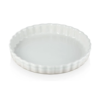
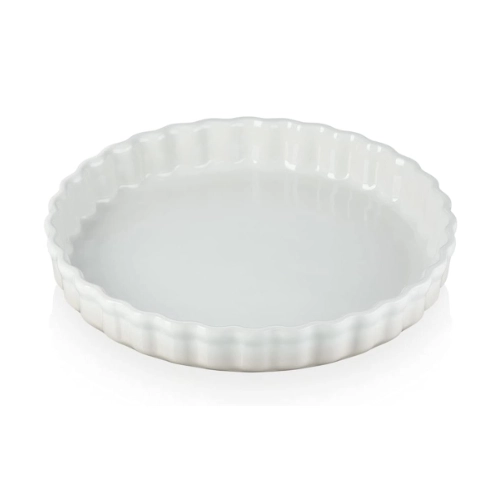
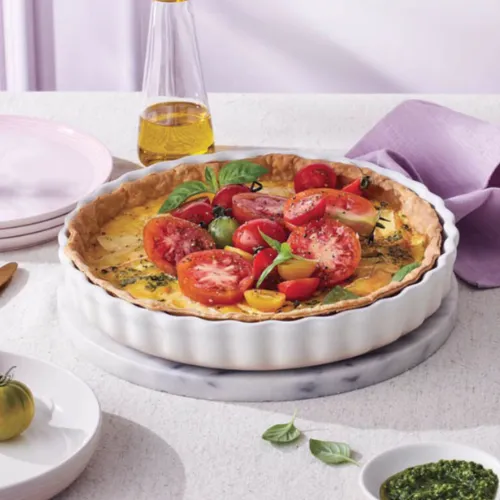
A quiche needs a dish that conducts heat evenly to the pastry base and holds the filling at a steady temperature throughout the bake. The fluted edge is not just decorative: it increases the surface area of the pastry rim and helps it bake more evenly, giving you that characteristic wavy border that makes a French tart look like a French tart.
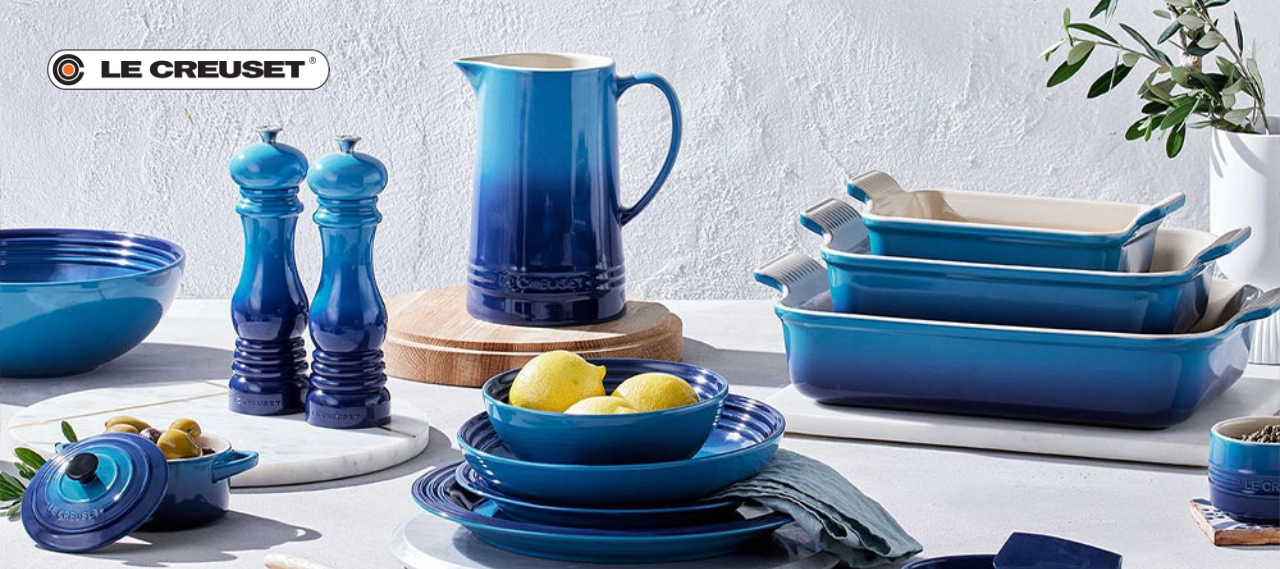
I use the Le Creuset fluted dish for this easter quiche recipe. The stoneware distributes heat gently and evenly, which is what a custard-based filling needs. Too much direct heat and the edges set before the centre has time to cook through properly. The Le Creuset gives you a consistent bake across the whole surface, a properly crisp base, and something attractive enough to bring straight to the Easter table without transferring.
Serving it
This quiche is at its best served warm, about ten minutes out of the oven when the filling has settled but still has a little warmth to it. It is also very good at room temperature, which is a practical advantage for Easter lunch when the timing of several courses can become stressful. Make it an hour ahead, leave it on the counter, and bring it to the table when you are ready.
Share your feedback and spread the love!
If you try this recipe, I’d love to hear how it turns out! Leave a ★★★★★ rating and your thoughts in the comments, it helps fellow French foodies discover this recipe too. Snap a photo and tag me @obviously.french on Instagram if you’re sharing your bake or cooking online. Don’t forget to save this recipe to Pinterest so you’ll always have it handy for your next French-inspired meal!
Disclosure: Just so you know, this post contains sponsored content and/or affiliate links, If you make a purchase through these links, I may receive a small commission. Doesn’t cost you anything extra. I only link to things that are actually worth your time. All opinions are my own!