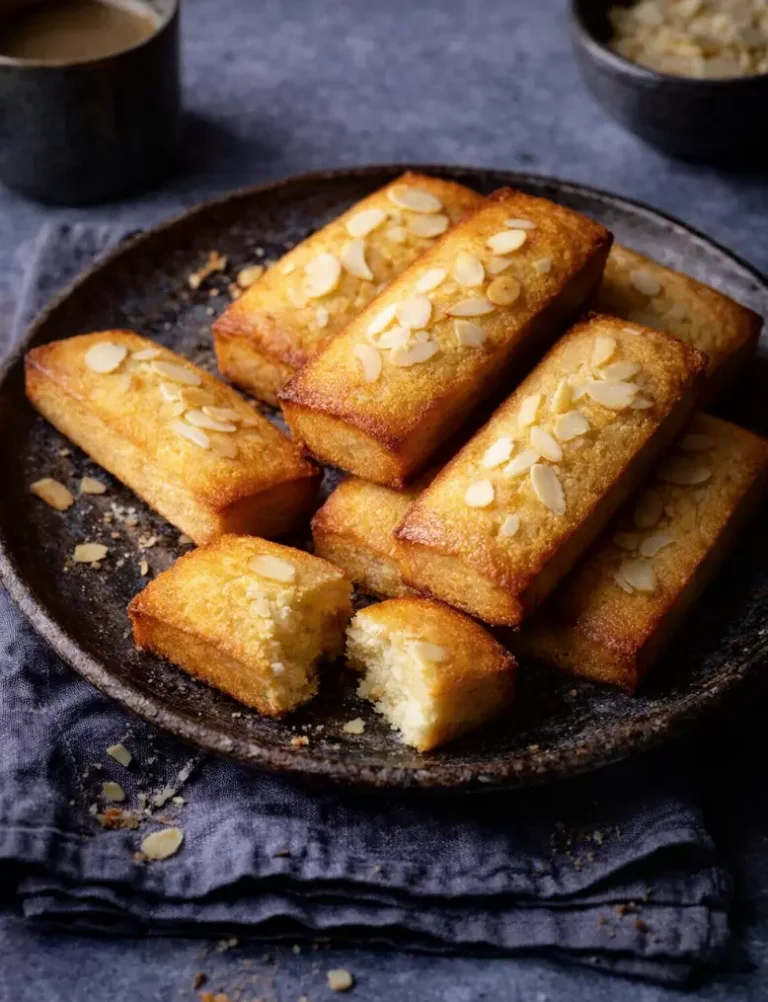
Financiers
 Prep Time 15 minutes
  Cook Time 15 minutes
  Total Time 30 minutes
  Servings 18 financiers
Ingredients
- 4 eggs only the egg whites, about 140gr
- 140 gr unsalted butter
- 120 gr ground almonds
- 140 gr icing sugar
- 50 gr plain flour
- 3 drops almond extract or vanilla extract
- slivered almonds for decoration
- 1 pinch salt
Equipment





Instructions
1. Brown the butter
- Melt the butter in a saucepan over medium heat. Once it foams, keep cooking for about 5 minutes until it turns a light golden brown and smells nutty (beurre noisette). Remove from heat and let it cool slightly.
2. Mix dry ingredients
- In a large bowl, sift together the ground almonds, icing sugar, plain flour, and a pinch of salt. This ensures an even texture throughout your batter.
3. Whisk the egg whites
- Lightly whisk the egg whites until frothy but not stiff. Avoid overbeating to keep the batter tender.
4. Combine egg whites with dry mix
- Pour the frothy egg whites into the bowl of dry ingredients. Gently fold the mixture together with a spatula until evenly combined.
5. Add browned butter and flavour
- Slowly pour the slightly cooled browned butter into the batter, stirring continuously to form a smooth mix. Add the almond or vanilla extract and mix well.
6. Chill the batter
- Place the batter in the refrigerator for 10 minutes to firm up, helping the cakes maintain their shape during baking.
7. Preheat the oven
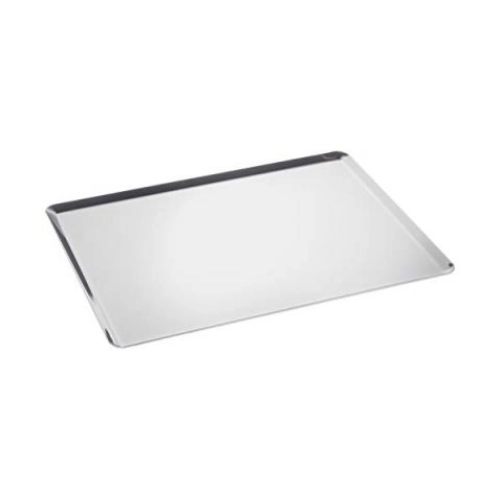
- While the batter chills, preheat your oven to 200°C (400°F) conventional heat, or 180°C (350°F) fan/Gas 6. Arrange your financier moulds on a baking tray.
8. Fill the moulds
- Spoon or pipe the batter into the mould cavities, filling each nearly to the top. Sprinkle with slivered almonds for a little extra texture.
9. Bake the financiers
- Bake in the middle of the oven for 13–15 minutes, or about 10 minutes for mini financiers, until they are golden brown with crisp edges. Check doneness with a skewer, it should come out clean or with a few crumbs.
10. Cool and serve
- Let the financiers cool in the moulds for 5 minutes, then transfer them to a wire rack to cool completely. Enjoy warm or cooled, ideally with a cup of tea.
Notes
- Financiers are a wonderful way to use leftover egg whites, and the subtle nuttiness of the browned butter is key for authenticity.
- Variations include swapping some almond flour for hazelnut or pistachio flour, topping with fresh fruits or chocolate chips, or adding citrus zest for a modern twist.
- They freeze well and keep for several days if stored airtight at room temperature.
About this recipe
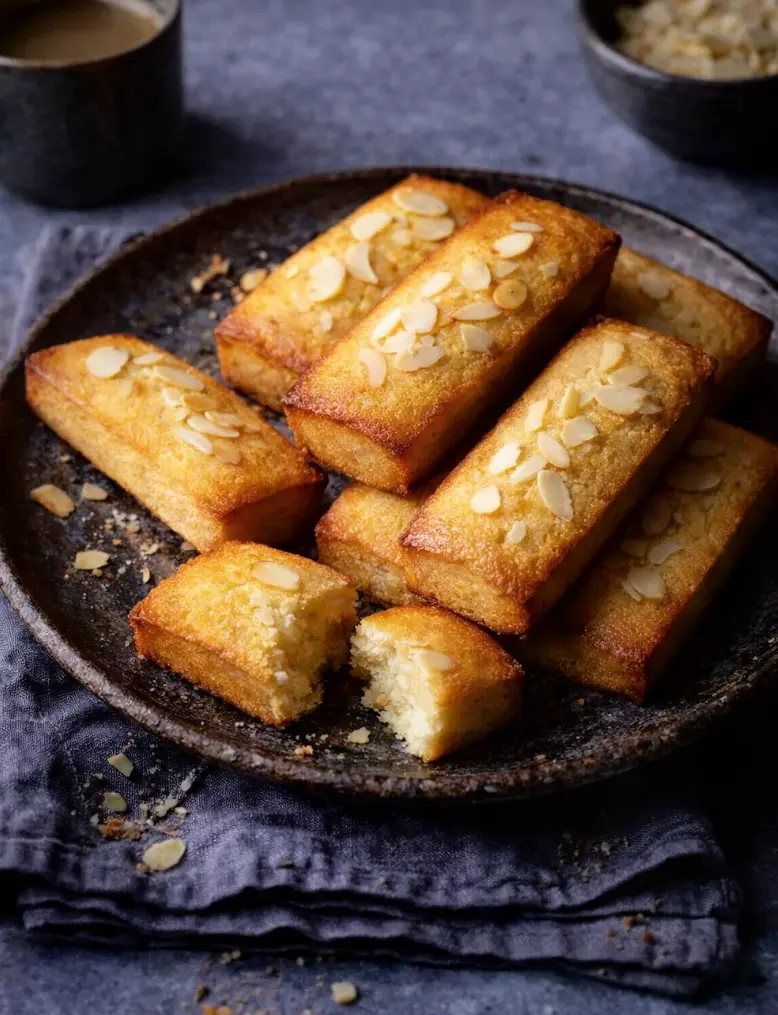
Financiers are one of the great small cakes of French baking, and also one of the most misunderstood. They look simple. They are simple. But the brown butter financier technique produces something with a depth of flavour that has nothing to do with the effort involved, which is why they have been on French pâtisserie shelves for over a century and show no signs of leaving.
Where financiers come from
The financier pastry traces its origins to a convent in Lorraine, where nuns of the Order of the Visitation made small almond cakes from egg whites, ground almonds, sugar, and butter. They called them visitandines, after their order, and they were oval-shaped and modest, practical cakes for convent life that used egg whites left over from other preparations.
The financier as we know it today came from 19th-century Paris, where a pastry chef named Monsieur Lasne had a shop near the Paris Stock Exchange. He took the visitandine recipe, changed the shape to a rectangle resembling a gold bar, and sold them to the financiers, the stock traders, who worked nearby. The name, the shape, and the location all pointed in the same direction. The cakes became the standard snack for the trading floor: elegant, compact, and easy to eat quickly between deals without making a mess.
The brown butter financier
The ingredient that separates a proper almond financier from a plain almond cake is the beurre noisette, brown butter. Butter heated past the foaming stage until the milk solids turn golden and the whole thing smells of hazelnuts and caramel. That smell is the tell: when the butter reaches that point, it is ready.
The brown butter financier gets its characteristic flavour entirely from this step. The nutty, caramelised depth that beurre noisette provides is something no other fat can replicate, and it is why financiers taste more complex than their short ingredient list suggests. Combined with finely ground almonds, the result is a financier cake that is moist in the centre, crispy at the edges, and fragrant in a way that makes the kitchen smell extraordinary while they bake.
The egg whites go in unwhipped. This is not an error in the recipe. Unwhipped whites give you a dense, fudgy centre rather than the lighter, spongier texture that whipped whites would produce. That density is what makes a financier pastry distinctive. If you whip the whites, you get a different cake.
Getting the beurre noisette right
Brown the butter over medium heat, watching it constantly. It goes through stages: melting, foaming, the foam subsiding, and then the milk solids at the bottom beginning to colour. The window between perfectly browned and burnt is short. Pull it off the heat the moment the solids turn golden and the butter smells of hazelnuts. Pour it immediately into a cold bowl to stop the cooking.
Let it cool before adding it to the other ingredients. Hot butter added to the almond and sugar mixture will cook the egg whites slightly and affect the texture.
Resting the batter
The batter benefits from resting in the fridge for at least an hour before baking, and overnight is better. The rest allows the ground almonds to absorb the liquid, which gives the financier cake a more uniform crumb and a cleaner, more intense flavour. It also firms the batter slightly, which helps it hold its shape in the mould rather than spreading.
The right mould
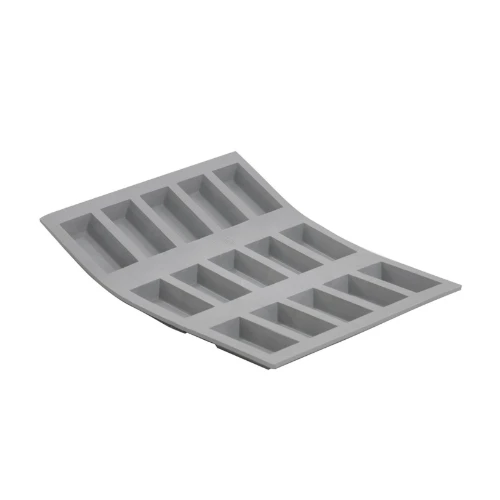
The rectangular shape is not arbitrary. The specific dimensions of the classic financier mould give you the right ratio of crispy edge to soft centre. Too wide and you lose the crispy borders that contrast with the interior. Too narrow and the whole thing is crust with nothing soft left in the middle.
You can use the De Buyer financier moulds for this and place it on the baking tray in the oven. The carbon steel conducts heat directly and efficiently, which is what creates those properly golden, crispy edges that define a good brown butter financier. The individual moulds give each financier its own heat exposure on all sides, producing an even crust all the way around rather than just on the base. They release cleanly once cooled, and the classic rectangular shape gives you the gold bar format that Monsieur Lasne intended.
Variations
The classic almond financier is the version to make first. Once you have the technique, the variations are straightforward. Replace a small portion of the ground almonds with ground pistachios. Add a spoonful of good quality cocoa. Press a raspberry into the top of each one before baking. Fold in a small amount of lemon zest. All of them work, all of them follow the same method, and all of them start with a properly made beurre noisette.
Share your feedback and spread the love!
If you try this recipe, I’d love to hear how it turns out! Leave a ★★★★★ rating and your thoughts in the comments, it helps fellow French foodies discover this recipe too. Snap a photo and tag me @obviously.french on Instagram if you’re sharing your bake or cooking online. Don’t forget to save this recipe to Pinterest so you’ll always have it handy for your next French-inspired meal!
Disclosure: Just so you know, this post contains sponsored content and/or affiliate links, If you make a purchase through these links, I may receive a small commission. Doesn’t cost you anything extra. I only link to things that are actually worth your time. All opinions are my own!